
TL;DR:
- A contract management system automates the entire contract lifecycle and centralizes storage for healthcare facilities. It improves operational control by automating workflows, extracting key data automatically, and reducing manual oversight. Proper implementation focuses on workflow mapping, automation features, and self-service templates to maximize efficiency and compliance.
A contract management system is defined as software that automates and centralizes the entire contract lifecycle, from creation and negotiation through renewal and compliance monitoring. For facility administrators in skilled nursing homes, rehabilitation centers, and post-acute care settings, this means replacing paper files and email chains with a single, searchable platform. A contract management system reduces contract creation time from days to hours by automating repetitive drafting and approval tasks. The industry standard term for this category is contract lifecycle management (CLM), and both terms are used interchangeably throughout this article.
What is a contract management system and how does it work?
A contract management system, also called CLM software, treats every contract as a structured data record rather than a static document. That distinction matters because structured data can be searched, sorted, filtered, and acted on automatically. A CMS centralizes the contract lifecycle by storing version history, tracking role-based access, and firing automated alerts when renewal dates or compliance deadlines approach.
For a healthcare facility, this translates directly into operational control. Your vendor agreements, payer contracts, staffing agency terms, and equipment leases all live in one place. Any authorized team member can pull up a contract in seconds, check its status, and see exactly what obligations are due.
The contract lifecycle management process follows a defined sequence:
- Request and intake: A department submits a contract request through a standardized form.
- Drafting: The system pulls pre-approved templates and clause libraries to build the first draft.
- Review and redlining: Stakeholders mark up the document inside the platform, with all changes tracked.
- Approval routing: The system sends the contract to the right approvers based on contract type and value.
- Execution: Digital signatures are collected and the executed contract is stored automatically.
- Obligation tracking: The system monitors key dates and sends alerts before deadlines.
- Renewal or expiration: The system flags contracts for renegotiation or auto-renewal based on configured rules.
Pro Tip: Map your current manual approval steps on paper before you configure any CMS. Organizations that map workflows before onboarding avoid the common trap of digitizing a broken process instead of fixing it.
What key features should healthcare administrators look for in a CMS?
The right contract management software for a healthcare facility does more than store files. The features below determine whether your team saves real time or simply moves paperwork from a filing cabinet to a cloud folder.
| Feature category | What it does |
|---|---|
| Centralized repository | Stores all contracts in one searchable location with version control |
| Automated alerts | Sends renewal, expiration, and obligation reminders before deadlines |
| Role-based access | Limits who can view, edit, or approve contracts based on job function |
| Audit trails | Logs every action taken on a contract for compliance and accountability |
| Template and clause library | Provides pre-approved language to speed drafting and reduce legal review |
| AI contract summarization | Condenses lengthy agreements into executive summaries for faster review |
| Key field extraction | Pulls renewal dates, payment terms, and obligations automatically from contract text |
AI capabilities deserve particular attention. AI-powered CLM platforms summarize lengthy contracts automatically, reducing the time administrators spend reading 100-page vendor agreements to find a single termination clause. That capability is not a luxury for a busy facility director managing dozens of active contracts.
Automatic extraction of key contract fields is equally critical. A CMS that requires manual data entry to populate renewal dates and payment terms loses its efficiency advantage almost immediately. Look for platforms that read contract text and populate metadata fields without human input.
Pro Tip: Ask any vendor to demonstrate live extraction of renewal dates and payment terms from a sample contract before you commit. If the demo requires manual entry, the platform will create new administrative work rather than reduce it.
For healthcare-specific needs, customizable healthcare software built for admissions workflows shows how configurable platforms can address the unique compliance and documentation requirements of post-acute care settings.
What are the operational and financial benefits of implementing a CMS?
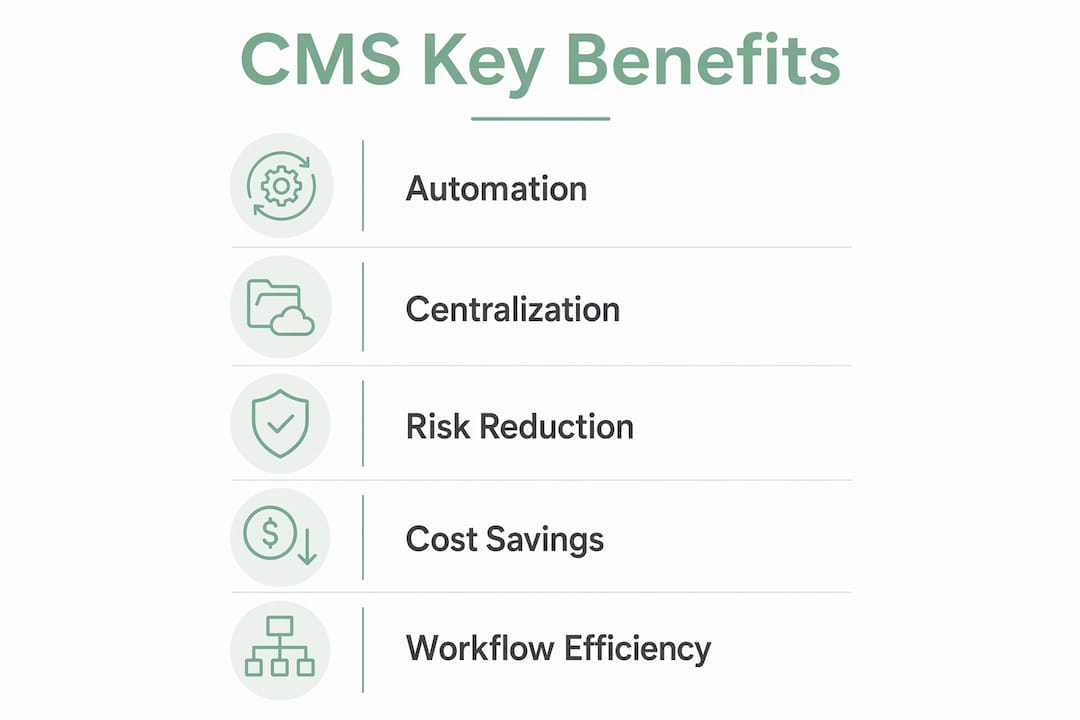
The operational benefits of contract management extend well beyond document organization. A well-configured CLM system produces measurable outcomes across time, cost, compliance, and revenue protection.

A CMS prevents revenue leakage by tracking renewal dates and price adjustment clauses in real time. For a skilled nursing facility, a missed payer contract renewal or an overlooked rate escalation clause can mean thousands of dollars in lost reimbursement.
The specific benefits your facility can expect include:
- Faster contract cycles: Automated drafting and approval routing cuts turnaround time significantly compared to manual processes.
- Reduced compliance risk: Audit trails and role-based access create a defensible record for HIPAA compliance reviews and regulatory audits.
- Proactive renewal management: Automated alerts prevent contracts from lapsing or auto-renewing on unfavorable terms.
- Improved vendor relationships: Clear obligation tracking means your facility meets its commitments, which strengthens vendor trust.
- Better decision-making: Real-time visibility into all active contracts lets administrators spot redundant vendors, consolidate spend, and negotiate from an informed position.
- Lower legal costs: Self-service templates reduce the volume of routine contracts that require legal review.
The administrative automation benefits seen in healthcare admissions apply directly to contract management. Facilities that automate repetitive administrative tasks report meaningful reductions in staff time spent on low-value work, freeing your team to focus on patient care and operational priorities.
Healthcare administrators who want to see how automated workflow benefits translate into daily operations will find that contract automation follows the same logic as admissions automation: fewer manual steps means fewer errors and faster outcomes.
How to successfully implement a contract management system in healthcare
Successful CMS implementation depends on preparation more than technology selection. The platform matters less than the process discipline your team brings to the rollout.
Start with these foundational steps:
- Audit your current contracts: Catalog every active agreement, its owner, its renewal date, and its current storage location before you migrate anything.
- Define your workflow rules: Document who approves which contract types, at what dollar thresholds, and within what timeframes.
- Build your template library: Work with legal to create pre-approved templates for your most common contract types, such as staffing agency agreements and vendor service contracts.
- Configure role-based access: Assign permissions based on job function, not individual preference, to maintain consistent access controls.
- Run a phased rollout: Start with one contract category, such as vendor agreements, before expanding to payer contracts and staffing terms.
Resistance from non-legal departments is the most common implementation obstacle. The solution is giving those departments self-service templates that let them initiate and manage routine contracts without escalating to legal for every request. When department heads can draft a standard vendor agreement in 20 minutes using an approved template, adoption follows quickly.
Pro Tip: Schedule a 30-minute training session for each department during the first two weeks after launch. Hands-on practice with real contract types from their own work drives adoption faster than any written guide.
Key Takeaways
A contract management system delivers its greatest value when it automates workflows and extracts contract data automatically, not when it simply replaces a filing cabinet with a cloud folder.
| Point | Details |
|---|---|
| Define CLM before buying | Contract lifecycle management software automates the full contract process, from drafting to renewal. |
| Prioritize workflow automation | Route contracts automatically to the right approvers to prevent delays and errors. |
| Require automatic field extraction | Platforms must extract renewal dates and payment terms without manual data entry. |
| Map processes before implementing | Document your current approval steps before configuring any software to avoid digitizing broken workflows. |
| Enable self-service templates | Empower non-legal departments with approved templates to reduce bottlenecks and drive adoption. |
Why most healthcare facilities underuse their contract management tools
The most common mistake I see healthcare administrators make with CLM software is treating it as a storage upgrade. They migrate their contracts from a shared drive to a cloud platform, set up a folder structure, and call it done. Six months later, they wonder why nothing has changed.
The real value of a contract management system is not where it stores your contracts. It is what the system does with them automatically. Facilities that configure automated renewal alerts, approval routing, and obligation tracking within the first 90 days see results. Facilities that focus on folder organization rarely do.
The second pattern I see is siloing the system inside the legal or compliance department. Contract management touches every department in a healthcare facility: nursing, finance, operations, and HR all sign agreements. When non-legal staff cannot access the system or find it too complex to use, they revert to email and spreadsheets. The self-service template approach solves this directly by giving department heads the tools to handle routine contracts themselves.
The good news is that foundational CLM features, including centralized storage, automated alerts, and workflow routing, are achievable without an enterprise-scale implementation. Start with those three capabilities and your facility will see measurable efficiency gains within the first quarter.
— Harry
How Smartadmissions supports healthcare operational efficiency
Healthcare facilities that invest in contract management software are already thinking about operational efficiency the right way. That same mindset applies to patient referral and admissions workflows, where manual processes create the same delays, errors, and revenue risk as unmanaged contracts.
Smartadmissions is built specifically for skilled nursing homes, rehabilitation centers, and post-acute care providers. The platform automates referral intake, integrates with existing EMR systems, and provides real-time eligibility verification so your admissions team spends less time on paperwork and more time filling beds. Explore referral management system examples to see how facilities like yours have improved operational efficiency across both contract and admissions workflows. For healthcare organizations looking to build visibility across all administrative functions, healthcare SEO and digital strategy resources can also support broader operational goals.
FAQ
What does a contract management system do?
A contract management system automates the full contract lifecycle, including drafting, approval routing, obligation tracking, and renewal alerts, replacing manual processes with structured workflows.
What is the difference between a CMS and contract lifecycle management?
Contract lifecycle management (CLM) is the industry standard term for the same category of software. Both terms refer to platforms that manage contracts from creation through expiration.
How does a CMS reduce risk for healthcare facilities?
A CMS reduces risk by maintaining audit trails for every contract action, enforcing role-based access controls, and sending automated alerts before renewal or compliance deadlines are missed.
Can small healthcare facilities benefit from contract management software?
Facility administrators can achieve meaningful efficiency gains with foundational features like centralized contract storage, automated renewal alerts, and approval routing without implementing a complex enterprise system.
What is the biggest implementation mistake to avoid?
The most common mistake is implementing a CMS without first mapping your current approval workflows. Digitizing a broken process produces a faster broken process, not a better one.