
In today’s competitive post-acute care landscape, skilled nursing facilities that respond fastest to referrals win more admissions. While your competition struggles with manual processes that take 30-45 minutes per referral review, forward-thinking facilities are leveraging AI referral management to slash response times and dramatically increase their bed occupancy rates.
The numbers don’t lie: facilities using AI-powered referral systems are reducing clinical review time from 30 minutes to just 5 minutes: that’s a 6x improvement. More importantly, they’re converting patients from acute to post-acute care 18.5 hours faster on average, giving them a massive competitive advantage in securing high-quality referrals.
The Hidden Cost of Slow Referral Processing
Every minute your admissions team spends manually reviewing referral packets is a minute your competitors could be accepting that same patient. Here’s the reality most SNF administrators face:
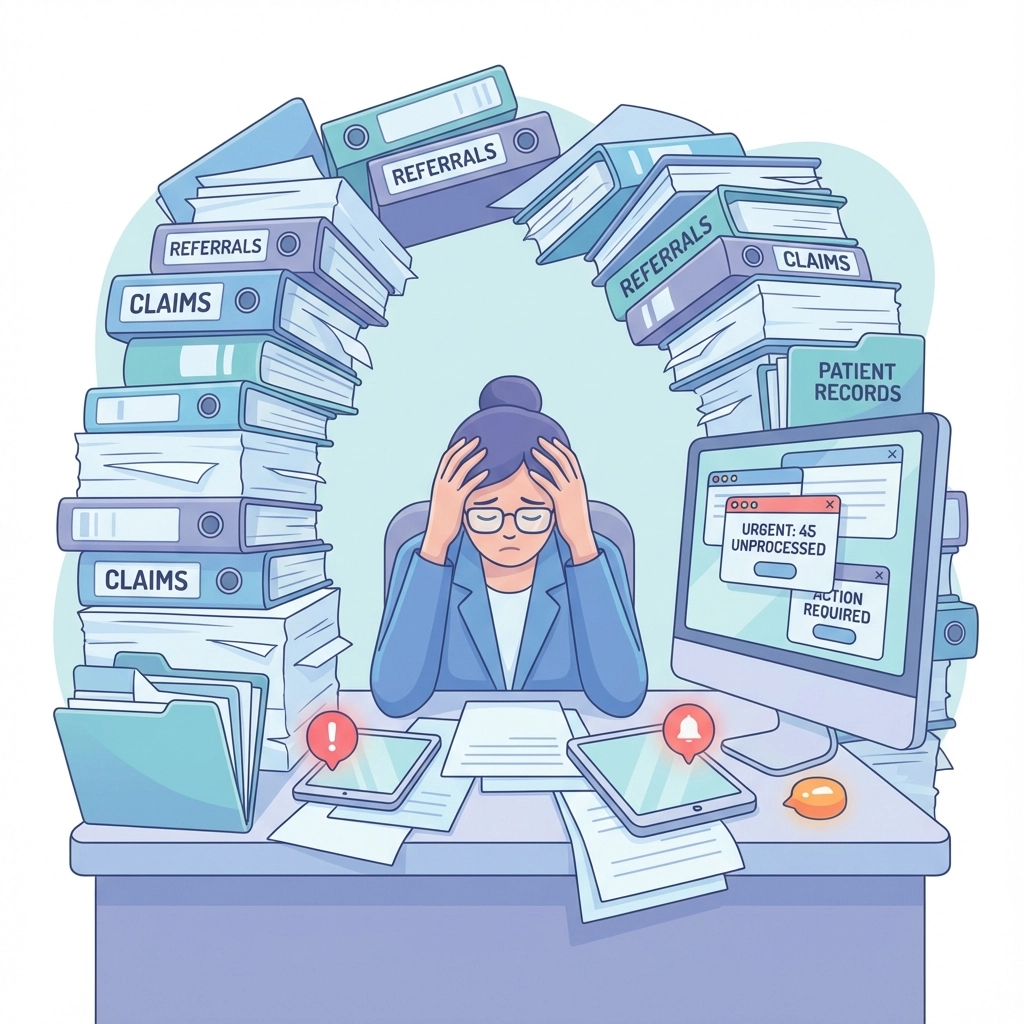
Overwhelming Documentation Volume
Skilled nursing facility referral packets routinely contain 50-100 pages of medical records, insurance information, and care coordination details. Your admissions coordinators are drowning in paperwork, trying to extract critical information from lengthy, unorganized documents.
Time-Intensive Manual Reviews
The average manual referral review takes 30-45 minutes per patient. For a facility processing 20-30 referrals daily, that’s 10-15 hours of staff time consumed just reviewing paperwork: before any actual patient care or bed assignments occur.
First-Come, First-Served Reality
Hospital discharge planners and case managers don’t wait around for slow responses. They’re calling multiple facilities simultaneously, and the first SNF to provide a confident yes or no gets the referral. Speed isn’t just convenient: it’s absolutely critical for maintaining census.
Revenue Impact
Every delayed response represents potential lost revenue. A single missed admission can cost your facility $8,000-$15,000 in lost revenue over a 20-day average stay. Multiply that across dozens of referrals monthly, and slow processing becomes a significant financial drain.
How AI Referral Management Transforms Your Admissions Process
Artificial intelligence doesn’t just speed up your existing process: it fundamentally transforms how your facility handles referrals from initial receipt through final admission decision.
Instant Document Processing and Information Extraction
AI-powered systems automatically process referral packets the moment they arrive, whether via fax, email, or secure portal. The technology:
- Extracts key clinical data from unstructured medical records in seconds
- Organizes information into standardized, easy-to-review summaries
- Flags critical alerts like high-risk medications or complex care needs
- Verifies insurance eligibility in real-time to prevent payment delays
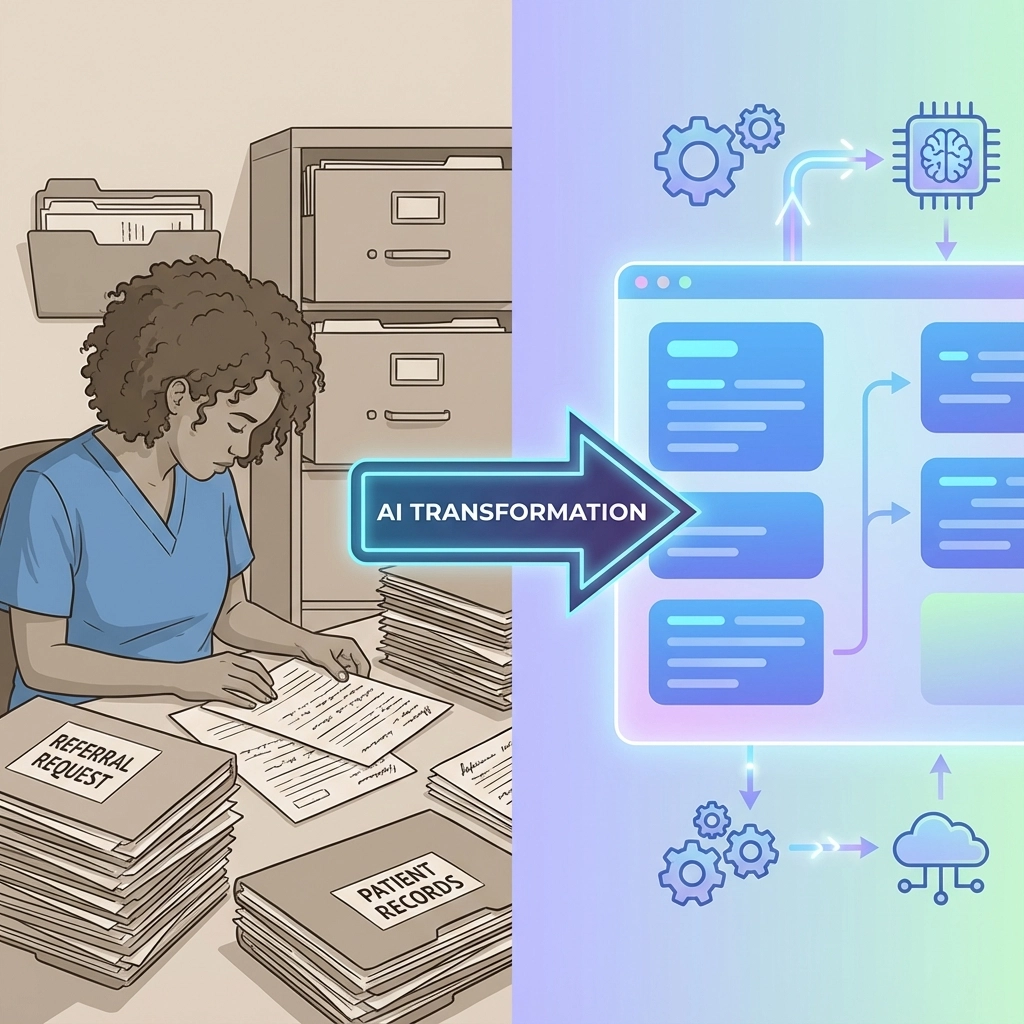
One leading platform processed over 1 million referral documents in 2024 alone, saving facilities a combined 37,580 hours of manual labor. That’s equivalent to 18 full-time employees dedicated exclusively to document processing.
Streamlined Clinical Decision-Making
Rather than forcing your clinical team to hunt through pages of disorganized information, AI presents them with clean, organized patient summaries highlighting:
- Primary diagnoses and acuity levels
- Required care services and staffing needs
- Insurance coverage and authorization status
- Potential red flags or complications
- Recommended care level and placement
This allows your admissions nurses and clinical directors to make confident decisions in 5 minutes instead of 30-45 minutes per referral.
Automated Workflow Coordination
AI systems integrate with your existing EMR and admissions workflows to:
- Auto-populate pre-admission assessments with referral data
- Trigger automated responses to referring facilities
- Schedule follow-up communications based on patient timelines
- Coordinate bed assignments with housekeeping and nursing schedules
- Generate admission paperwork pre-filled with accurate patient information
Measurable Results: What to Expect from AI Implementation
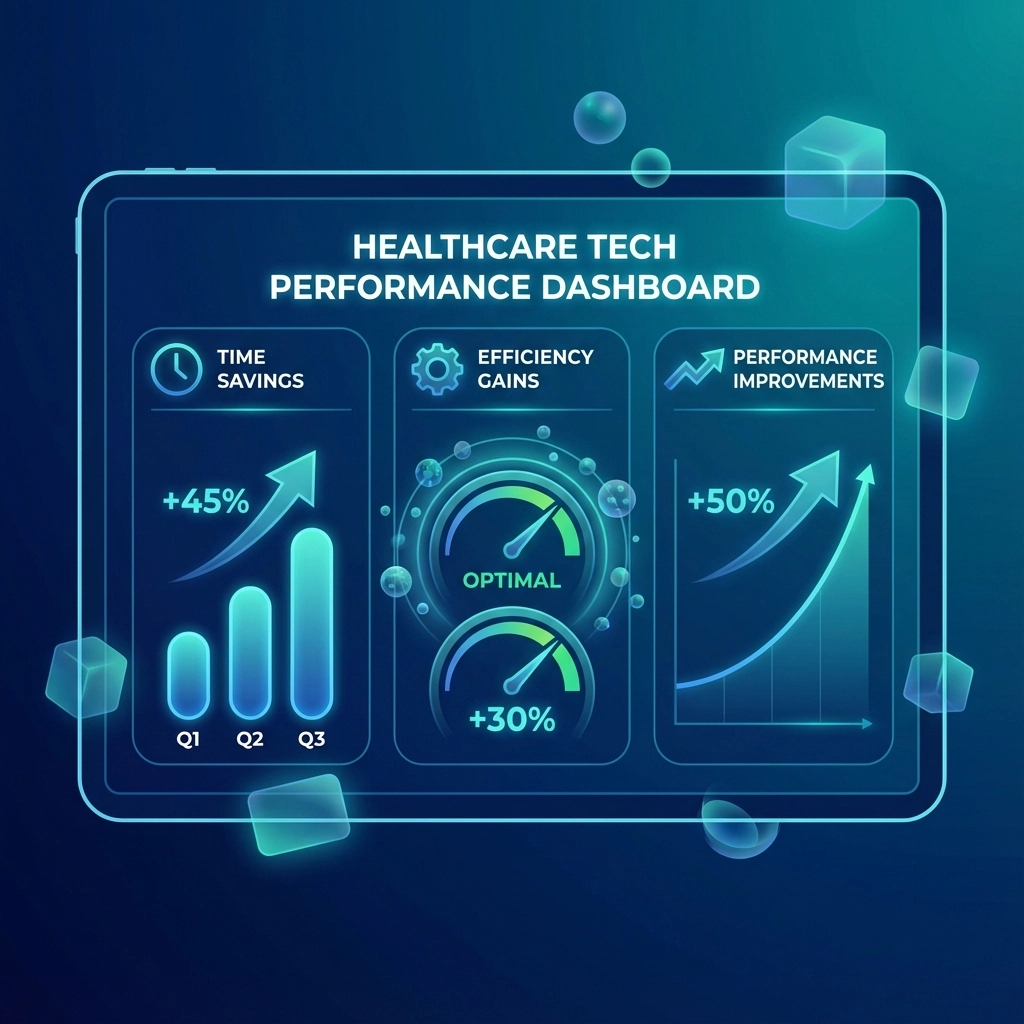
The improvements from AI referral management aren’t theoretical: they’re measurable and immediate:
Speed Improvements
- 6x faster clinical reviews (30 minutes to 5 minutes average)
- 18.5 hours faster patient transitions from acute to post-acute care
- 90% reduction in decision-making time for complex cases
Operational Efficiency
- 37,580 hours saved annually in manual document processing
- Elimination of data entry errors through automated information extraction
- Reduced phone tag with secure, automated communication workflows
Competitive Advantages
- Higher referral conversion rates due to faster response times
- Improved relationships with hospital discharge planners
- Increased census stability through more predictable admissions pipeline
- Enhanced reputation as a responsive, efficient care partner
Financial Impact
- Reduced administrative costs through staff efficiency gains
- Increased revenue from higher admission volumes
- Improved cash flow through faster insurance verification
- Lower risk of costly compliance issues or documentation errors
Key Features That Drive Results
Not all AI referral management systems are created equal. The most effective platforms combine several critical capabilities:
Real-Time Insurance Verification
Automated eligibility checks prevent the frustration of accepting patients only to discover coverage issues later. AI systems verify:
- Active insurance status
- Benefit levels and limitations
- Required authorizations
- Co-payment responsibilities
Clinical Risk Assessment
Advanced AI identifies potential complications before they become problems:
- High-risk medication interactions
- Complex wound care requirements
- Behavioral health considerations
- Specialized equipment needs
Secure Communication Workflows
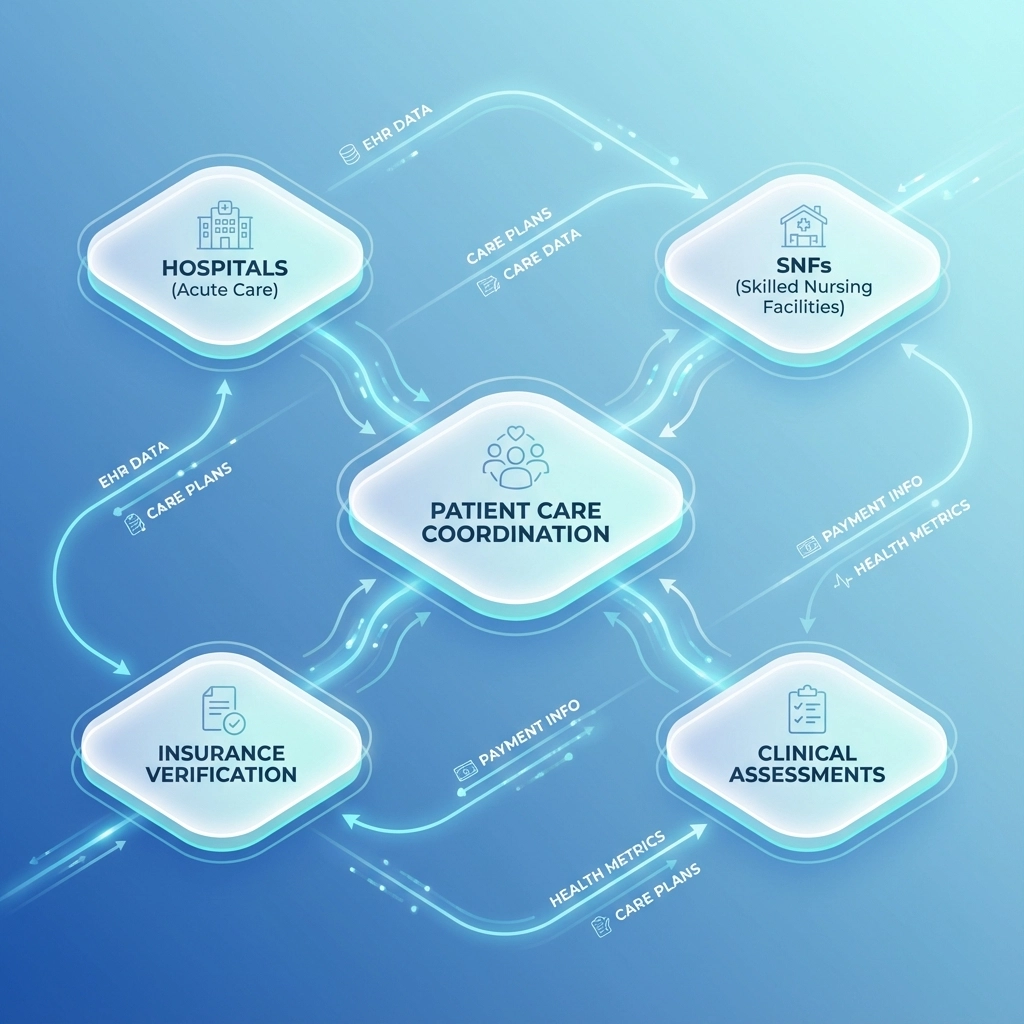
HIPAA-compliant messaging eliminates fax delays and phone tag:
- Automated status updates to referring facilities
- Real-time bed availability sharing
- Secure document exchange with hospitals and case managers
- Integrated scheduling for assessments and admissions
Implementation: Getting Started with AI Referral Management
Rolling out AI referral management doesn’t require a complete system overhaul. Most platforms integrate seamlessly with existing workflows:
Phase 1: Document Processing Automation (Week 1-2)
Start by automating the most time-intensive task: document review and information extraction. This provides immediate time savings while your team adjusts to new workflows.
Phase 2: Clinical Decision Support (Week 3-4)
Layer in AI-generated patient summaries and risk assessments to accelerate clinical decision-making. Your admission nurses quickly adapt to standardized information formats.
Phase 3: Full Workflow Integration (Week 5-8)
Complete the transformation with automated communication workflows, insurance verification, and bed management integration.
Most facilities see measurable improvements within 2-3 weeks and achieve full optimization within 60 days.
Staying Competitive in the Referral Game
The skilled nursing industry is rapidly adopting AI referral management technology. Facilities still relying on manual processes are falling behind competitors who can respond faster, more accurately, and with greater confidence.

The question isn’t whether AI will transform SNF admissions: it already is. The question is whether your facility will be among the early adopters gaining competitive advantage, or among the laggards struggling to catch up.
Every day you delay implementation is another day your competitors are filling beds faster and building stronger relationships with referring hospitals. The revenue impact compounds quickly: faster responses lead to more admissions, which creates positive cash flow to invest in even better care delivery.
Transform Your Admissions Process Today
Your facility deserves the competitive advantage that comes with AI-powered referral management. Stop losing referrals to faster competitors and start winning the admissions you need to maintain optimal census.
Ready to see how AI can transform your referral process? Schedule a personalized demo to discover how facilities like yours are filling beds faster and increasing revenue through intelligent automation.
Tags: ai referral management, fill nursing home beds faster, skilled nursing facility admissions, automated patient intake, streamline referral process, admissions automation healthcare, real-time referral response