
In the competitive world of skilled nursing facility admissions, there’s one statistic that should keep every admissions coordinator awake at night: 78% of referrals go to the facility that responds first. Not the one with the best amenities, the most experienced staff, or even the lowest rates. The first responder wins.
This isn’t just about being courteous or professional: it’s about survival in an increasingly competitive market where referral sources have dozens of options at their fingertips. The difference between responding in 5 minutes versus 45 minutes isn’t just inconvenience; it’s the difference between a full census and empty beds.
The Psychology Behind First-Response Preference
When a case manager, social worker, or hospital discharge planner submits a referral, they’re usually under pressure. They need to move patients quickly, meet discharge deadlines, and ensure continuity of care. In this high-stress environment, the facility that responds immediately sends a powerful psychological message: “We’re organized, we’re available, and we prioritize your urgent needs.”
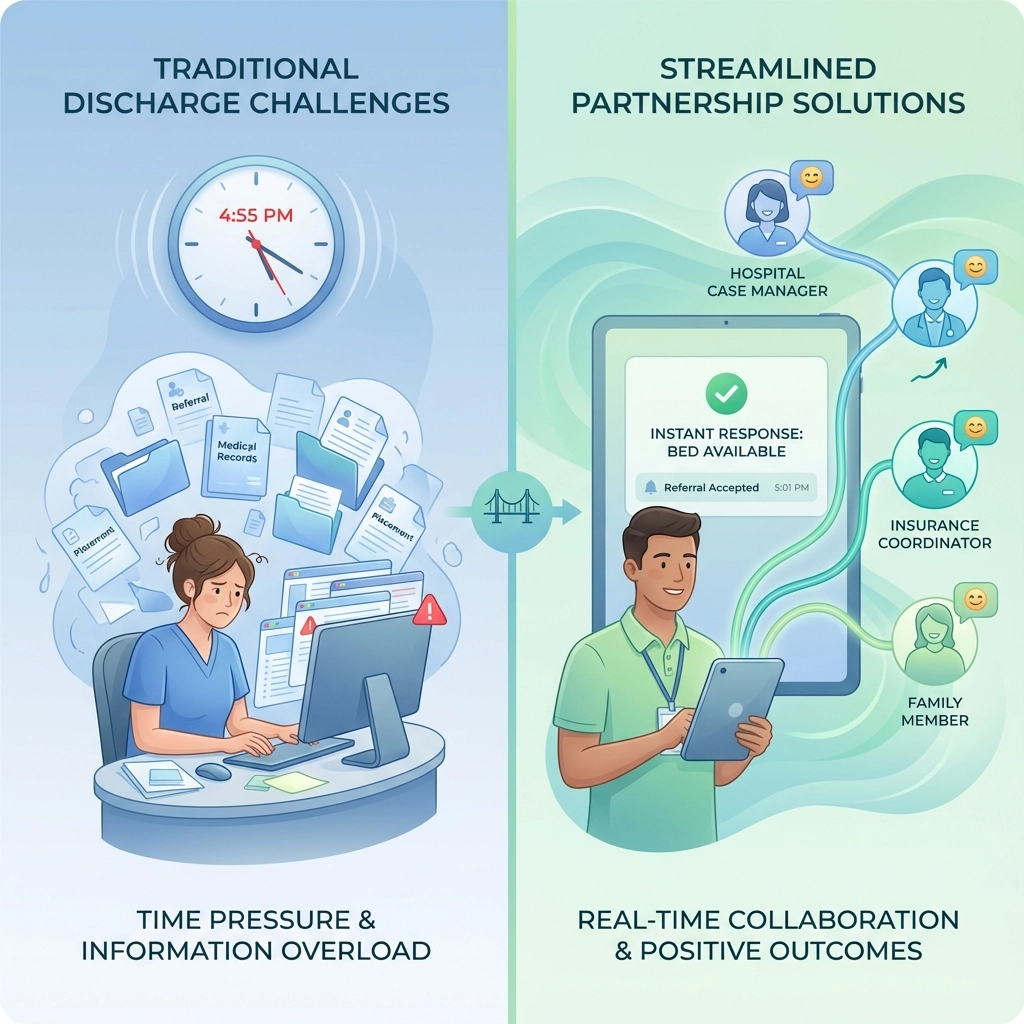
Research in customer behavior consistently shows that speed creates trust. When skilled nursing facilities respond within minutes rather than hours, referral sources perceive them as more reliable, better staffed, and more likely to provide quality care. This perception becomes reality in their decision-making process.
Consider the typical scenario: A hospital discharge planner needs to place a complex post-acute patient before 2 PM. They send the same referral to five facilities. The first facility responds in 10 minutes with preliminary acceptance and asks clarifying questions. The second responds 2 hours later. By then, the referral is already gone.
The Hidden Cost of Slow Response Times
Most skilled nursing facilities dramatically underestimate the financial impact of slow referral responses. Every delayed response doesn’t just risk losing that single admission: it damages relationships with referral sources who begin to view your facility as their backup option rather than their first choice.
Let’s break down the numbers. If your facility typically receives 50 referrals per month and converts 60% to admissions, that’s 30 new residents monthly. However, facilities with response times over 30 minutes see conversion rates drop to 35-40%. For a 120-bed facility, this difference translates to $150,000-200,000 in lost monthly revenue.
The math becomes even more stark when you consider referral source loyalty. Case managers and discharge planners develop preferences based on responsiveness. Once they categorize your facility as “slow to respond,” you’ll receive fewer referrals overall, creating a downward spiral that’s difficult to reverse.
Breaking Down Response Time Barriers
Traditional referral processing creates artificial delays at every step. The typical workflow looks like this: referral arrives via fax or email, administrative staff reviews basic information, clinical team evaluates medical complexity, insurance verification begins, and finally someone responds to the referral source. This process easily consumes 45-60 minutes for straightforward cases and hours for complex ones.
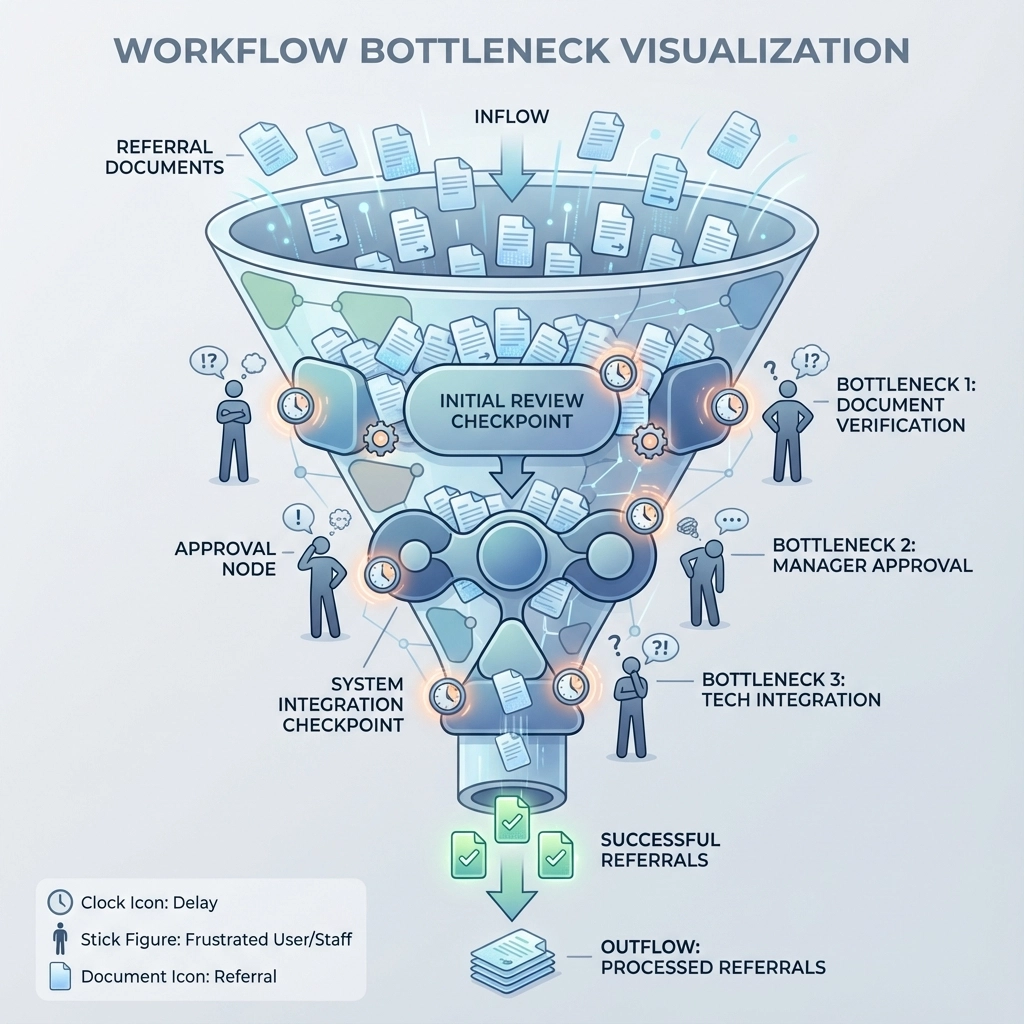
Each handoff introduces delay and potential for errors. The faxed referral sits in someone’s inbox for 15 minutes. The clinical review takes 20 minutes because the nurse is with a resident. Insurance verification requires calling multiple numbers and navigating phone trees. By the time your facility responds, the patient is already heading to your competitor.
Smart facilities are eliminating these bottlenecks through strategic automation and process redesign. The goal isn’t to remove human judgment from clinical decisions, but to accelerate routine tasks so clinical expertise can focus where it matters most.
Technology as the Great Equalizer
Here’s where the competitive landscape gets interesting: technology can instantly level the playing field between large health systems and independent facilities. Automated referral management systems can process incoming referrals, extract key information, flag potential issues, and send acknowledgment responses within minutes: regardless of your facility’s size or current staffing levels.
AI-powered systems excel at the preliminary screening that consumes so much time in traditional workflows. They can instantly identify insurance coverage issues, flag clinical red flags that require immediate attention, and even provide preliminary bed availability based on current census and pending discharges.

The most sophisticated systems go beyond just speed: they provide intelligence. When a referral arrives for a patient with specific needs (dementia care, wound management, ventilator dependency), the system immediately identifies whether your facility can provide appropriate care and routes the referral to the right clinical team member.
Real-World Implementation Strategies
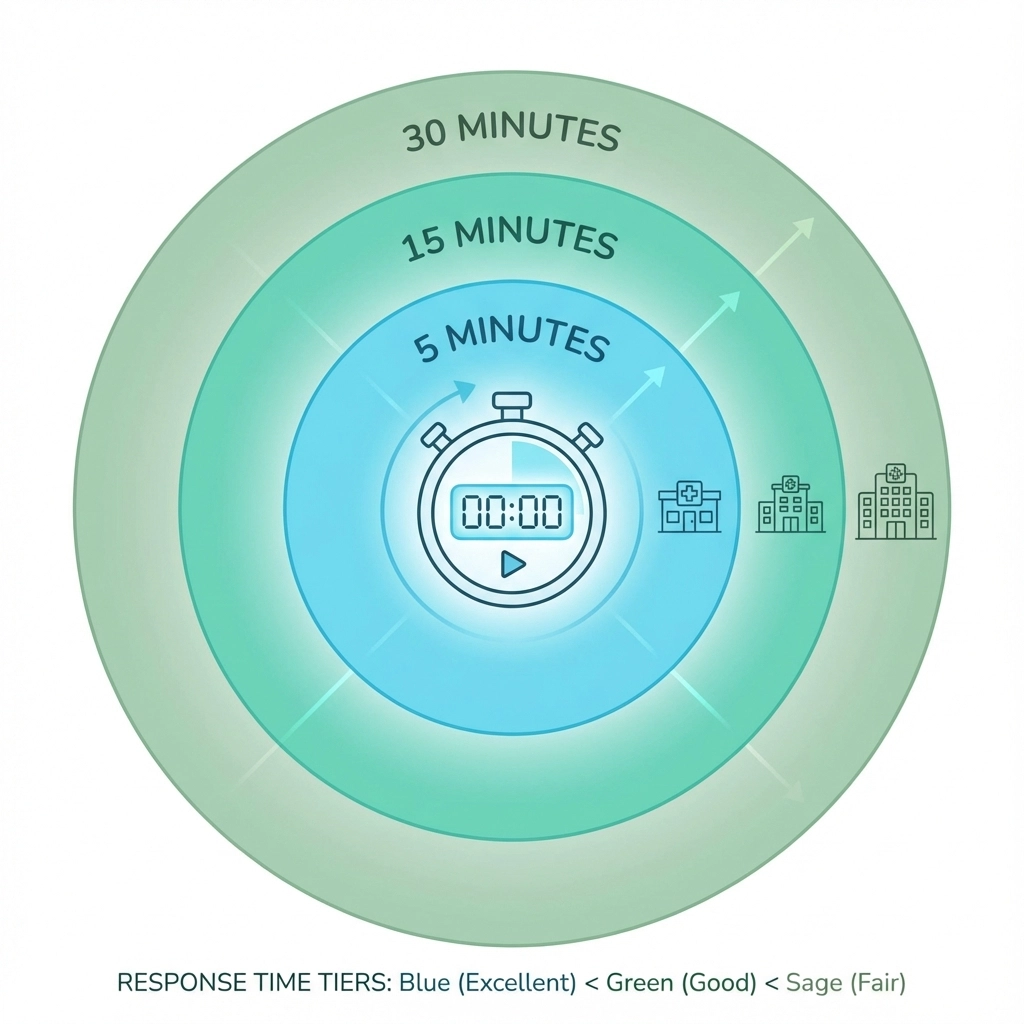
Leading facilities are implementing what’s known as the “5-Minute Rule”: every referral receives some form of response within 5 minutes of arrival. This doesn’t mean full clinical review and acceptance, but rather acknowledgment, preliminary feedback, and next steps.
The fastest responders use tiered response strategies:
- Immediate automated acknowledgment (under 1 minute): “Referral received, reviewing now”
- Preliminary response (under 5 minutes): Basic screening results and timeline for final decision
- Clinical decision (under 15 minutes): Acceptance, denial, or request for additional information
- Bed confirmation (under 30 minutes): Specific admission timeline and logistics
This approach maintains clinical quality while dramatically improving response speed. Referral sources appreciate the communication cadence, even when the final answer isn’t immediate acceptance.
Measuring Your Response Advantage
Most facilities track average response times, but the most successful ones measure response time distribution. It’s not enough to know your average is 25 minutes if 30% of referrals still take over an hour. Referral sources remember the slow responses more than the fast ones.
Key metrics to monitor include:
- Percentage of referrals acknowledged within 5 minutes
- Average time to preliminary decision
- Response time variation between shifts and days of the week
- Referral source feedback on communication timing
- Conversion rates by response time brackets
The goal is consistency. A facility that responds in 8-12 minutes for every referral will outperform one that averages 10 minutes but ranges from 3 minutes to 2 hours depending on staffing and workload.
Building Your First-Responder Culture
Speed in referral response isn’t just about technology: it requires cultural change throughout your organization. Everyone from the receptionist to the director of nursing needs to understand that referrals represent urgent revenue opportunities, not routine paperwork.
Successful facilities create “referral urgency” protocols similar to emergency response procedures. When a referral arrives, it triggers immediate action across multiple departments. Administrative staff begin insurance verification while clinical teams review medical information. This parallel processing cuts total response time significantly.
Staff training should emphasize that fast response demonstrates respect for referral sources’ time pressures and positions the facility as a reliable partner in patient care transitions.
The Competitive Moat of Speed
Perhaps most importantly, response speed creates a sustainable competitive advantage that’s difficult for competitors to replicate quickly. While facilities can match your amenities, hire similar staff, or adjust pricing relatively quickly, building systems and culture for consistent rapid response takes time and sustained effort.
Referral sources develop response time expectations based on their experience with your facility. Once they know you’ll respond within 10 minutes, they often wait for your response before contacting additional facilities. This gives you first opportunity to ask clarifying questions, address concerns, and demonstrate your expertise.
The first-responder advantage compounds over time. Fast response leads to more referrals, which provides more opportunities to demonstrate quality care, which strengthens referral source relationships, which leads to priority consideration for future complex cases.
In today’s competitive post-acute care environment, the facilities that fill nursing home beds faster aren’t necessarily those with the best marketing budgets or the most convenient locations. They’re the ones that treat every referral as an emergency and respond accordingly.
Ready to transform your facility’s referral response time and gain the first-responder advantage? Schedule a demo to see how automated referral management can help you respond to referrals in minutes, not hours.