
Choosing the right post-acute care software in 2026 isn’t just about digitizing your operations: it’s about survival in an increasingly competitive healthcare landscape. With Medicare Advantage plans tightening approval processes and discharge planners having more options than ever, the difference between responding to referrals in 45 minutes versus 5 minutes can determine whether your facility thrives or struggles to maintain census.
The stakes have never been higher. Skilled nursing facilities that haven’t embraced intelligent automation are watching competitors fill beds faster, achieve better outcomes, and operate with leaner teams. This comprehensive guide will help you navigate the complex landscape of post-acute care technology and make an informed decision that positions your facility for long-term success.
Essential Features That Define Modern Post-Acute Care Software
Real-Time Clinical Intelligence and Monitoring
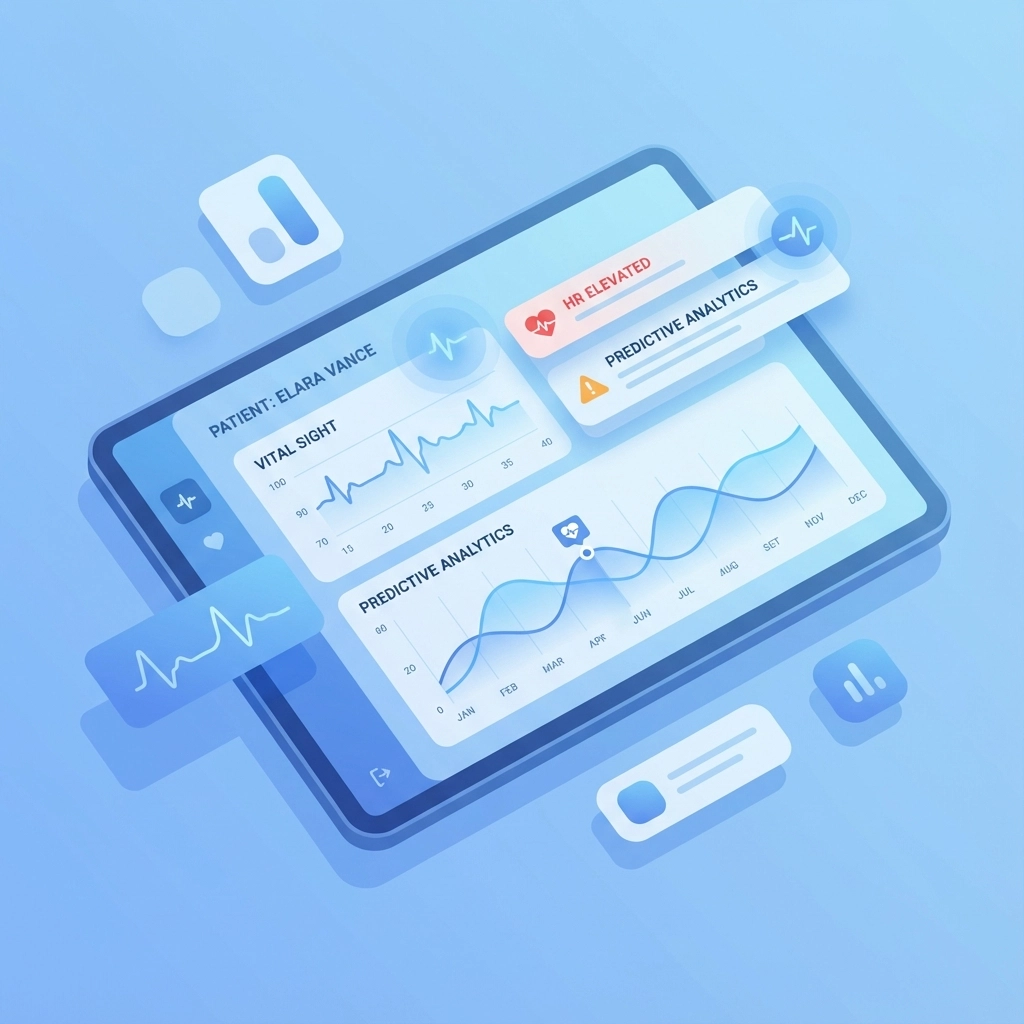
The most critical capability your software must provide is real-time data processing and intelligent alerts. Modern post-acute care software should continuously monitor patient conditions, automatically flag potential risks, and provide predictive insights that enable proactive interventions rather than reactive responses.
Look for platforms that offer integrated predictive analytics capabilities. These systems analyze patient data patterns to identify early warning signs of complications, potential readmissions, or declining conditions. The software should present this information in an intuitive dashboard that allows clinical teams to prioritize their attention effectively.
Advanced platforms now incorporate AI-powered clinical decision support that goes beyond basic alerts. They provide evidence-based recommendations, suggest care plan adjustments, and help ensure that your team never misses critical interventions that could prevent adverse outcomes.
Seamless Healthcare Ecosystem Integration
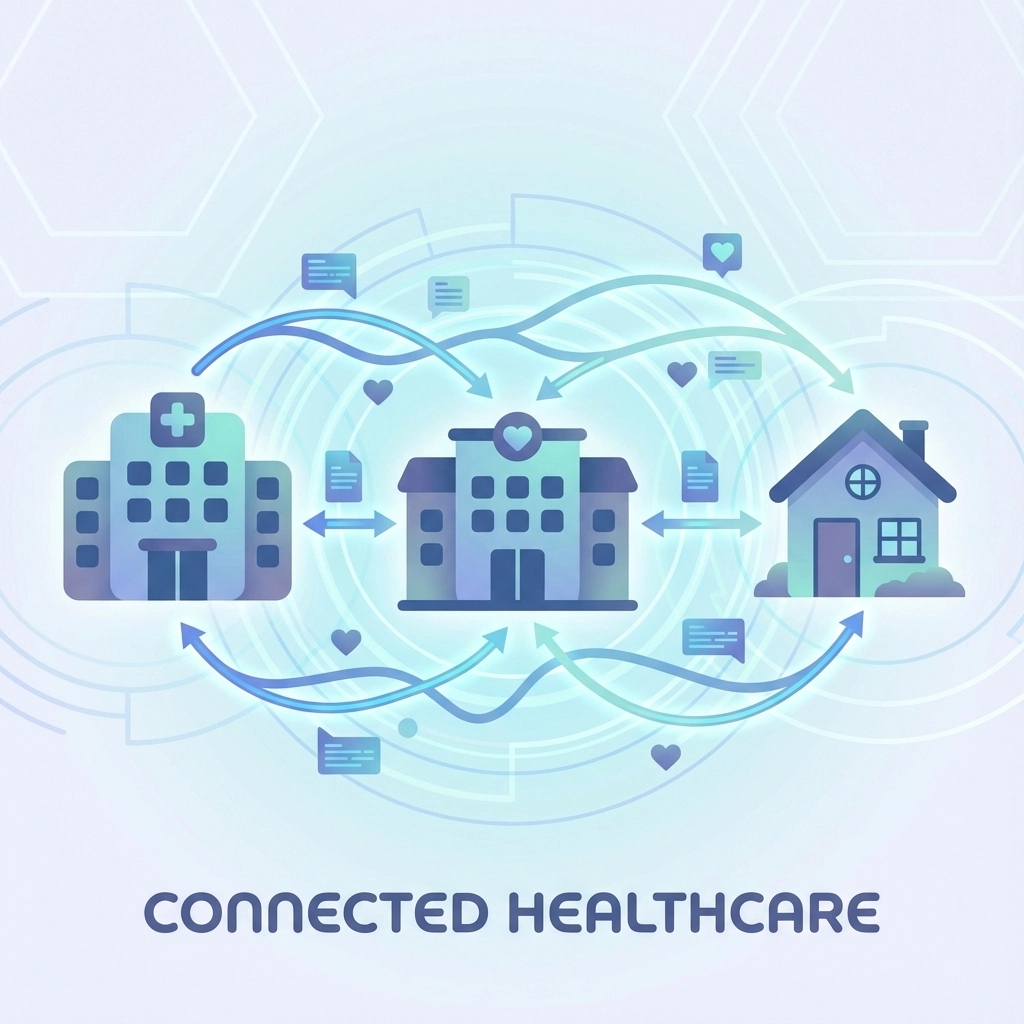
Your post-acute care software must integrate effortlessly with the broader healthcare ecosystem. This means robust connectivity with hospital EHR systems, insurance platforms, physician networks, and other post-acute providers. The days of manual data entry and phone tag for patient information are over.
Effective integration enables automatic patient information transfer when referrals come in, real-time insurance verification, and seamless communication with referring hospitals. This connectivity doesn’t just save time: it ensures care continuity and reduces the risk of medical errors that can occur when information gets lost in transition.
The best platforms also support standardized data formats like FHIR (Fast Healthcare Interoperability Resources), ensuring that your system can communicate with virtually any healthcare technology your partners use.
Intelligent Admissions Automation
This is where the competitive advantage becomes most apparent. Modern post-acute care software should automate the most time-consuming aspects of your admissions process while maintaining clinical oversight and quality standards.
Advanced admissions automation includes:
- Automatic referral intake and preliminary screening
- AI-powered clinical assessment and appropriateness determination
- Real-time insurance verification and authorization tracking
- Automated bed availability checking and assignment
- Intelligent workflow routing based on patient complexity and staff availability
The most sophisticated platforms can process a complete referral package: from initial intake through final admission decision: in under 10 minutes, compared to the industry average of 45+ minutes for manual processes.
Market Leaders and Specialized Solutions
Comprehensive EHR Platforms
PointClickCare remains a dominant force in the post-acute space, offering a cloud-based platform that combines EHR functionality with billing, analytics, and revenue cycle management. Their strength lies in their comprehensive approach and extensive integration ecosystem.
Netsmart myUnity excels in multi-setting coordination, providing a unified platform that supports skilled nursing, home health, and hospice operations. Their CareFabric framework is particularly strong for organizations operating across multiple levels of care.
MatrixCare focuses on user-friendly care management with robust analytics and patient engagement tools. They’ve made significant investments in risk management capabilities and compliance automation.
Specialized Automation Solutions
For facilities specifically looking to revolutionize their admissions process, specialized platforms like Smart Admissions offer AI-powered solutions designed specifically for post-acute referral management. These platforms excel at automated patient intake, intelligent clinical screening, and real-time response capabilities that can dramatically improve your competitive position.
Brightree specializes in home health and hospice operations, with strong electronic visit verification and scheduling capabilities. SNF Metrics provides real-time analytics and revenue cycle optimization specifically tailored for skilled nursing facilities.
Implementation Strategy and Change Management
Phased Rollout Approach
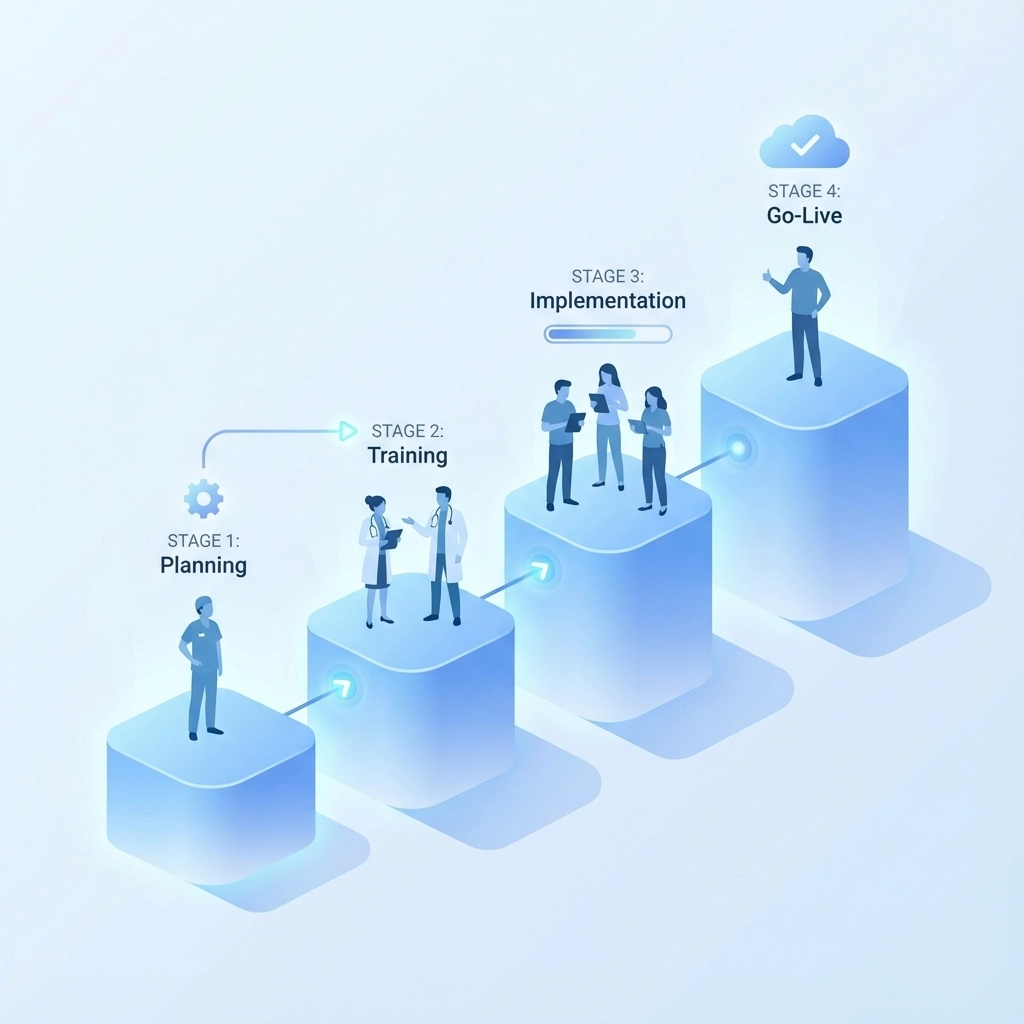
Successful post-acute care software implementation requires a carefully orchestrated rollout strategy. Start with your admissions department, as this is typically where you’ll see the fastest ROI and the most dramatic efficiency gains. Once your team becomes comfortable with automated referral processing, gradually expand to clinical documentation, billing, and other operational areas.
Plan for a 90-day intensive adoption period. Week 1-2 should focus on core staff training and parallel processing (running both old and new systems). Weeks 3-6 involve gradual transition to the new platform with heavy support. Weeks 7-12 focus on optimization and advanced feature adoption.
Staff Training and Adoption
The most sophisticated software is worthless if your team doesn’t embrace it. Develop role-specific training programs that focus on how the new technology makes each person’s job easier and more effective, rather than just how to use the features.
Identify early adopters and technology champions within each department. These individuals can provide peer support and help overcome resistance from team members who may be hesitant about changing established workflows.
ROI Analysis and Financial Justification
Quantifiable Benefits
When evaluating post-acute care software, focus on measurable improvements that directly impact your bottom line:
Reduced Response Time: Cutting referral processing from 45 minutes to 5 minutes allows your admissions team to handle 5-10x more referrals per day with the same staffing level.
Increased Admission Rate: Facilities using AI-powered admissions automation typically see 20-40% higher conversion rates on competitive referrals due to faster response times and more comprehensive information gathering.
Administrative Cost Reduction: Automation of routine tasks like insurance verification, clinical screening, and documentation can reduce administrative labor costs by 30-50% in the first year.
Improved Census Management: Real-time bed tracking and intelligent referral matching help maintain optimal census levels, directly impacting revenue per available day.
Hidden Cost Considerations
Don’t forget to factor in the hidden costs of your current manual processes. Calculate the true cost of:
- Staff overtime due to inefficient workflows
- Lost referrals due to slow response times
- Compliance violations and associated penalties
- Clinical errors resulting from information gaps
- Revenue cycle delays due to poor documentation
Future-Proofing Your Technology Investment
Artificial Intelligence and Machine Learning
The most forward-thinking post-acute care software platforms are already incorporating advanced AI capabilities that go beyond basic automation. Look for systems that offer machine learning algorithms that improve over time, becoming more accurate at predicting patient outcomes, optimizing care plans, and identifying operational inefficiencies.
These AI capabilities should be transparent and explainable, allowing clinical staff to understand and trust the recommendations being made. The goal is to augment human expertise, not replace it.
Regulatory Compliance and Reporting
Choose platforms that automatically adapt to changing regulatory requirements. The best systems update their compliance modules automatically, ensuring that your facility remains current with CMS requirements, state regulations, and accreditation standards without manual intervention.
Advanced reporting capabilities should provide not just compliance documentation, but actionable insights that help you identify opportunities for quality improvement and operational optimization.

Making Your Decision: Key Questions to Ask
Before making your final selection, ensure you can answer these critical questions:
- Speed: How quickly can the platform process a complete referral from intake to admission decision?
- Integration: What existing systems will it connect with, and how seamless is the data flow?
- Scalability: Can the platform grow with your organization and adapt to changing needs?
- Support: What level of implementation support and ongoing assistance is provided?
- ROI Timeline: When can you expect to see measurable returns on your investment?
- Compliance: How does the platform help ensure ongoing regulatory compliance?
- User Experience: How intuitive is the interface for staff with varying technology comfort levels?
Taking the Next Step
Choosing post-acute care software in 2026 is ultimately about choosing your facility’s competitive future. The gap between facilities using intelligent automation and those relying on manual processes will only widen as the technology continues advancing.
The most successful post-acute care providers are already leveraging AI-powered platforms to respond faster, make better decisions, and deliver superior outcomes. The question isn’t whether you need to modernize your technology: it’s whether you can afford to wait any longer.
Ready to see how AI-powered admissions automation can transform your facility’s operations? Schedule a personalized demo to discover how you can start processing referrals in minutes instead of hours, increase your admission rates, and position your facility as the preferred choice for discharge planners in your market.