
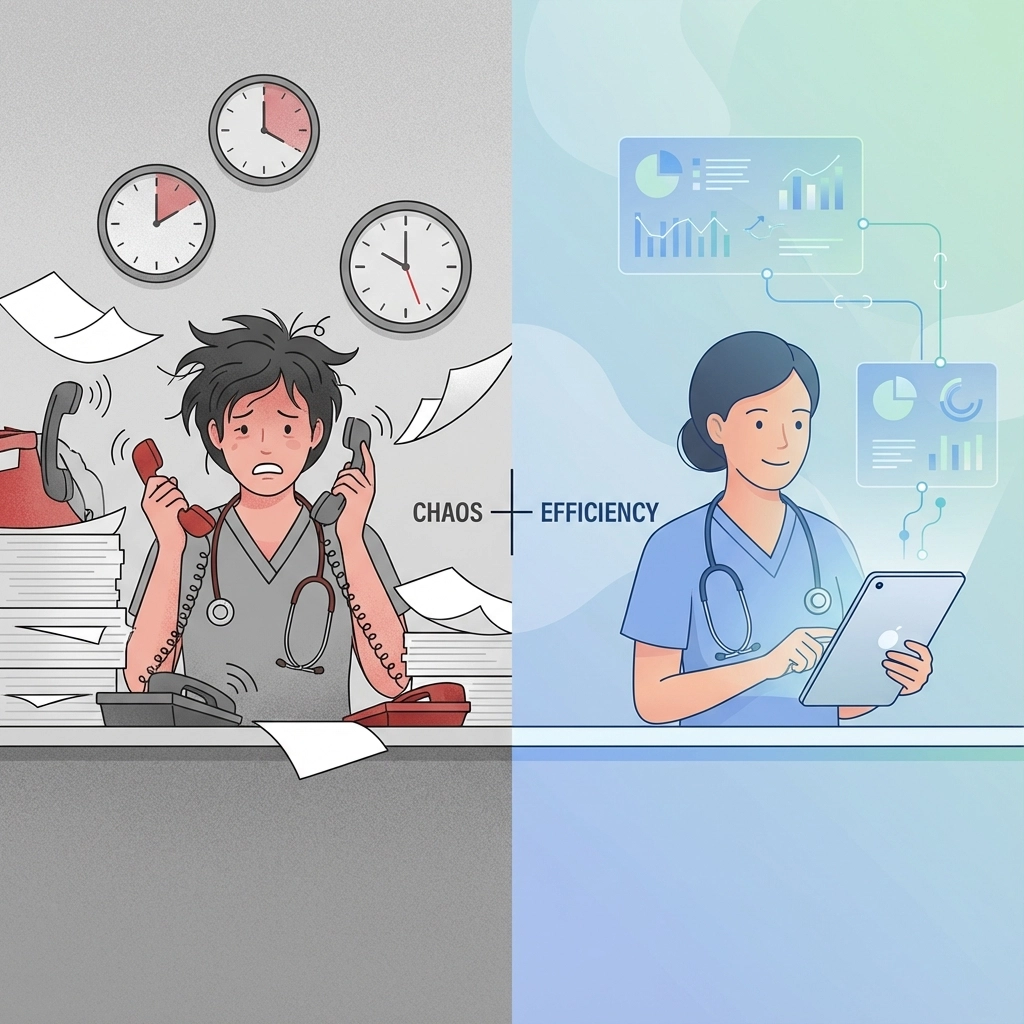
Picture this: It’s 3 PM on a Wednesday, and your admissions team is drowning in referrals. Each one takes 45 minutes of manual work, printing faxes, making phone calls, entering data into multiple systems, chasing down missing insurance information, and coordinating with clinical staff. By the time you respond to a referral, three other facilities have already said yes to that patient.
Sound familiar? You’re not alone. Most skilled nursing facilities are still trapped in this time-consuming cycle, losing potential admissions to competitors who can respond faster. But here’s the thing: the smartest facilities have already cracked the code, cutting their referral processing time from 45 minutes down to just 5 minutes.
The Hidden Cost of Slow Referral Processing
Before diving into the solution, let’s talk about what those extra 40 minutes per referral are really costing you. When your admissions team spends nearly an hour on each referral, several problems compound:
Patient Loss to Competitors: In post-acute care, speed wins. Hospitals and case managers typically accept the first qualified facility that responds. If you’re taking 45 minutes while your competitor responds in 5 minutes, guess who’s getting the admission?
Staff Burnout: Your admissions coordinators are working overtime just to keep up with basic referral processing, leaving no time for relationship building or strategic outreach that could bring in more referrals.
Missed Revenue Opportunities: Every delayed response means potential revenue walking out the door. With average daily rates ranging from $350-500 per day, each lost admission represents thousands in missed revenue.
Operational Inefficiency: Manual processes create bottlenecks that affect your entire operations team, from clinical assessments to bed management.
How Smart Facilities Transformed Their Referral Process
The facilities cutting referral time to 5 minutes didn’t just work harder: they worked smarter. They implemented AI-powered referral management systems that automate the most time-consuming aspects of referral processing.
Here’s what happens when a referral comes in at a smart facility:
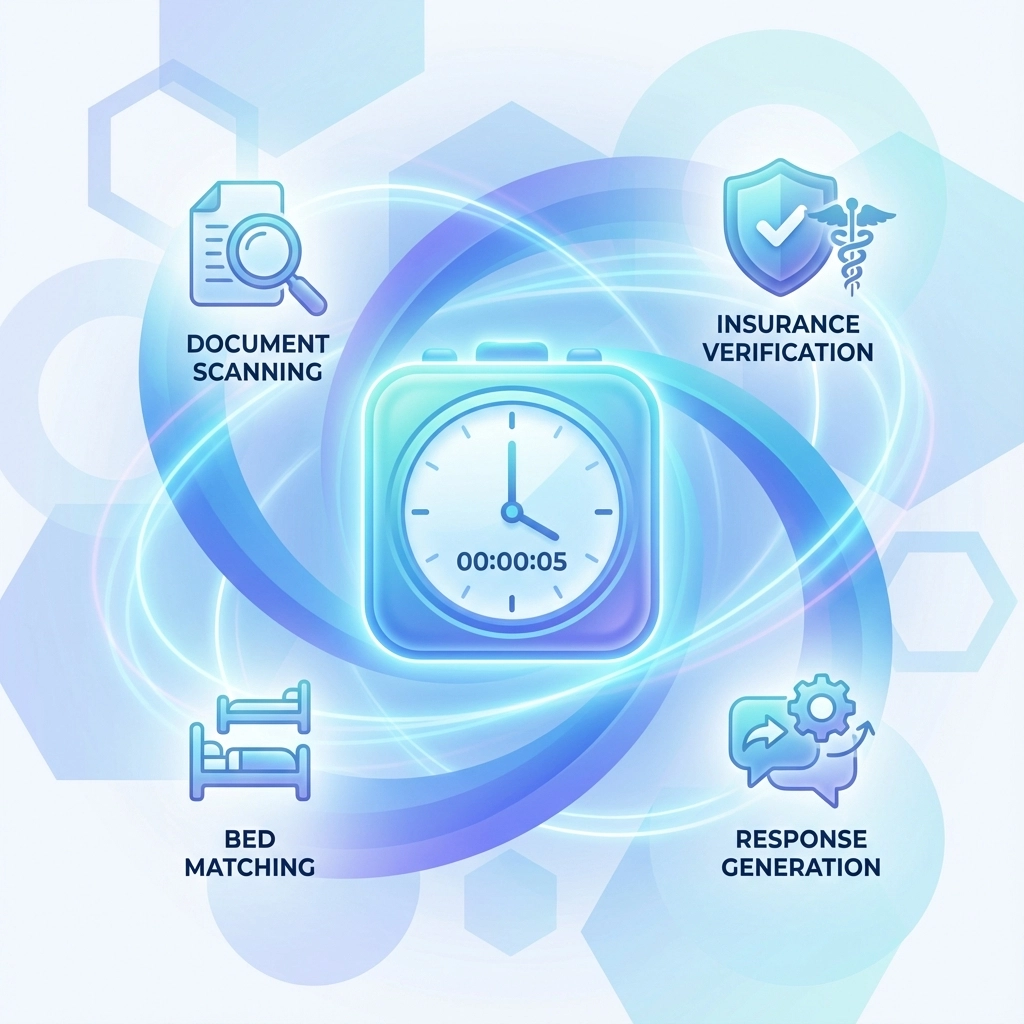
Automated Data Capture: Instead of manually entering patient information from faxes, the system automatically extracts and digitizes all relevant data: demographics, insurance details, clinical information, and physician notes.
Instant Insurance Verification: Rather than spending 15-20 minutes calling insurance companies, the system performs real-time eligibility checks and benefit verification within seconds.
Smart Clinical Matching: AI algorithms instantly match patient needs with available beds and appropriate care levels, eliminating the back-and-forth between admissions and clinical staff.
Automated Response Generation: The system generates appropriate responses: whether accepting, declining, or requesting additional information: based on predetermined criteria and bed availability.
The Technology Behind the 5-Minute Miracle
Modern referral management platforms leverage several key technologies to achieve these dramatic time savings:
Intelligent Document Processing
Advanced optical character recognition (OCR) and natural language processing (NLP) technologies can read and extract information from any referral format: whether it’s a fax, email, or electronic submission. This eliminates the 10-15 minutes typically spent manually entering patient data.
Real-Time Integration
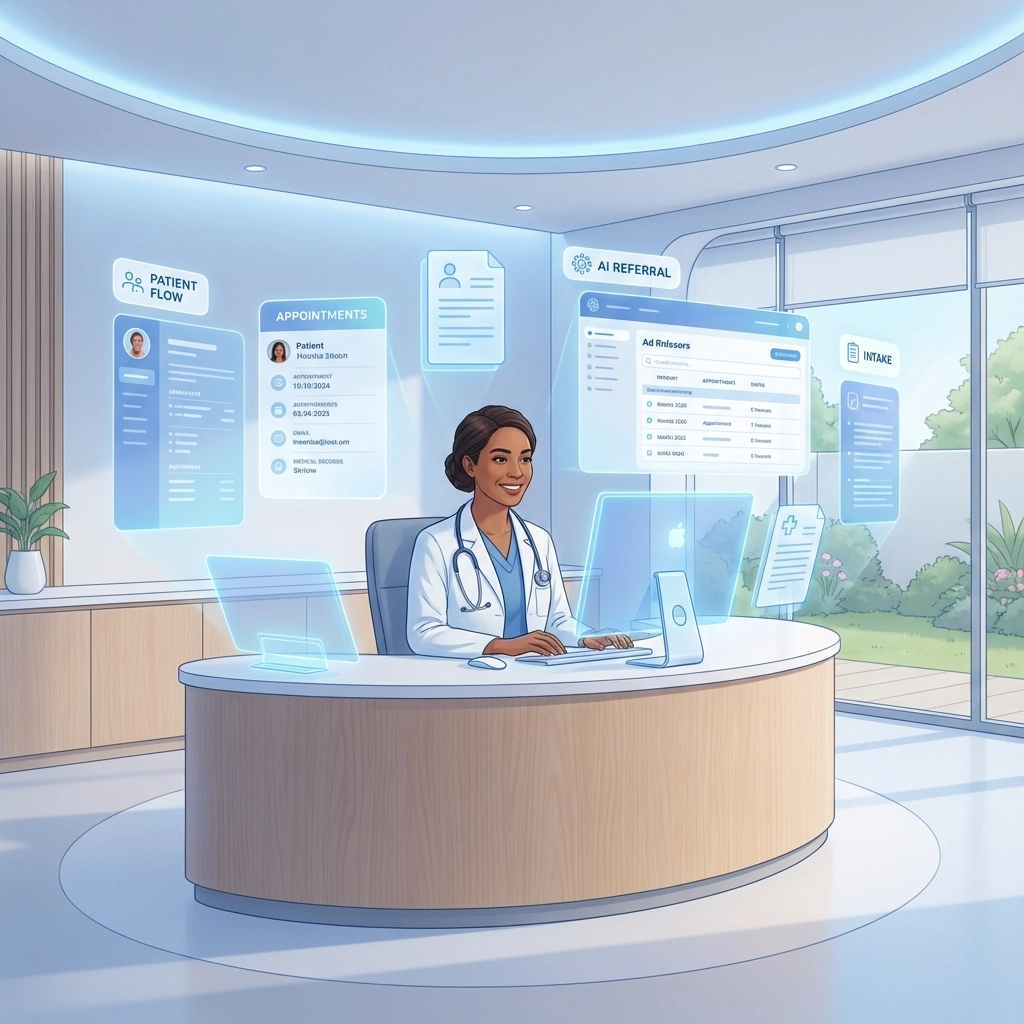
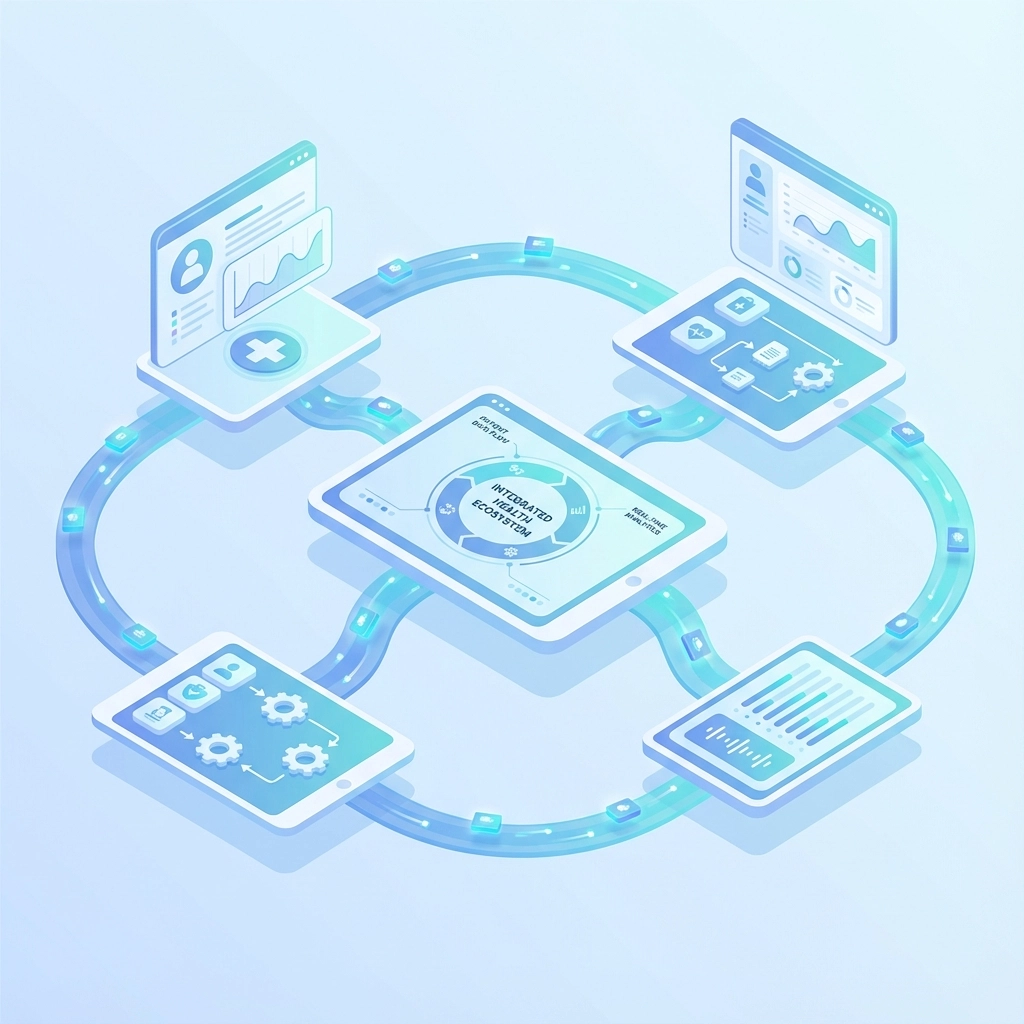
Smart systems integrate directly with your existing EMR, billing software, and bed management tools. Patient information flows seamlessly between systems without manual intervention, saving another 10-15 minutes per referral.
Automated Workflows
Predefined workflows automatically route referrals based on patient acuity, insurance type, and bed availability. This eliminates the time spent coordinating between different departments and staff members.
Real Results from Real Facilities
The transformation isn’t just theoretical: facilities implementing automated referral management are seeing dramatic improvements:
Processing Time Reduction: Automated referral platforms can reduce referral processing time by up to 80%. One facility using advanced referral technology cut their average processing time from over 24 hours to just 4-5 hours: an 83% decrease.
Admission Rate Increases: Facilities responding faster are winning more admissions. Smart facilities typically see a 20-30% increase in admission rates after implementing automated referral management.
Conversion Rate Improvements: Faster response times improve referral-to-admission conversion rates by 15-25%, as patients and referral sources appreciate the quick, professional response.
Staff Productivity Gains: Admissions coordinators can handle 3-4 times more referrals in the same amount of time, freeing them up for relationship building and strategic outreach activities.
The 5-Minute Referral Process Breakdown
Here’s exactly how a 5-minute referral process works in practice:
Minutes 0-1: Automated Receipt and Data Extraction
The referral arrives (via fax, email, or portal) and is automatically processed. AI extracts all patient information, clinical data, and insurance details without human intervention.
Minutes 1-2: Instant Insurance Verification
The system performs real-time eligibility checks and benefit verification, providing immediate confirmation of coverage and authorization requirements.
Minutes 2-3: Clinical and Bed Matching
AI algorithms match patient care needs with available beds and appropriate care levels. If no suitable beds are available, the system automatically generates a professional decline response.
Minutes 3-4: Automated Decision Making
Based on predefined criteria (insurance acceptance, care capabilities, bed availability), the system makes an initial acceptance or decline decision.
Minutes 4-5: Response Generation and Dispatch
An appropriate response is automatically generated and sent to the referral source, with all necessary information and next steps clearly outlined.
Implementation: Making the Transition
Moving from a 45-minute to a 5-minute referral process doesn’t happen overnight, but it doesn’t have to be overwhelming either. Here’s how leading facilities approach the transition:
Phase 1: Assessment and Planning
Start by documenting your current referral process and identifying the biggest time wasters. Most facilities find that data entry, insurance verification, and internal coordination consume the most time.
Phase 2: Technology Integration
Implement an AI-powered referral management platform that integrates with your existing systems. Look for solutions that offer robust automation capabilities and real-time processing.
Phase 3: Workflow Optimization
Redesign your referral workflows to take advantage of automation capabilities. This might involve retraining staff, updating job responsibilities, and establishing new performance metrics.
Phase 4: Continuous Improvement
Monitor key metrics like response time, admission rates, and conversion ratios. Use this data to continuously refine your automated workflows and decision criteria.
The Competitive Advantage
In today’s competitive post-acute care market, referral speed isn’t just nice to have: it’s essential for survival. Facilities that can respond to referrals in 5 minutes instead of 45 minutes gain several critical advantages:
First-Mover Advantage: Being first to respond significantly increases your chances of securing the admission, especially for desirable patients with good insurance coverage.
Referral Source Relationships: Hospitals and case managers remember which facilities respond quickly and professionally. This builds trust and increases future referral volume.
Operational Efficiency: Faster processing means your team can handle more volume without additional staffing, improving your bottom line.
Market Positioning: Speed becomes a differentiator that sets you apart from competitors still relying on manual processes.
Beyond Speed: Quality Improvements
While speed is crucial, the benefits of automated referral management extend beyond just processing time:
Improved Accuracy: Automated data entry eliminates human error, ensuring patient information is captured correctly the first time.
Better Documentation: Digital processes create clear audit trails and comprehensive records for compliance and quality purposes.
Enhanced Communication: Automated systems provide real-time visibility into referral status for all stakeholders.
Data-Driven Insights: Comprehensive reporting helps identify trends, optimize capacity, and improve overall performance.
Taking Action: Your Next Steps
If you’re still spending 45 minutes per referral while your competitors are down to 5 minutes, every day you wait is revenue walking out the door. The technology exists today to make this transformation possible, and the facilities implementing it are already gaining significant competitive advantages.
The question isn’t whether you can afford to implement automated referral management: it’s whether you can afford not to. With admission rates increasing by 20-30% and processing efficiency improving by up to 80%, the return on investment is clear and immediate.
Ready to join the smart facilities cutting referral time to 5 minutes? Learn more about Smart Admissions and discover how AI-powered referral management can transform your admissions process. Your admissions team: and your bottom line( will thank you.)