
TL;DR:
- Post-acute referral networks connect hospitals with care facilities to ensure safe patient transitions after discharge. Managing these networks effectively reduces readmissions, improves bed occupancy, and enhances patient safety through precise, data-driven coordination.
Post-acute referral networks are structured systems that connect hospitals with skilled nursing facilities, inpatient rehabilitation centers, home health agencies, and other post-acute care providers to ensure safe, coordinated patient transitions after discharge. Understanding post-acute referral networks is not optional for healthcare administrators and referral coordinators. It is a clinical and financial priority. Over 40% of episodic healthcare spending occurs in the 90-day post-discharge window. That figure means every referral decision your team makes carries direct consequences for patient outcomes and facility revenue.
What are the key components of post-acute referral networks?
Post-acute referral networks include four primary care settings: skilled nursing facilities (SNFs), inpatient rehabilitation facilities (IRFs), long-term acute care hospitals (LTACHs), and home health agencies. Each setting serves a distinct patient population based on clinical need, payer eligibility, and functional status. Knowing which setting fits which patient is the foundation of effective post-acute services coordination.

The stakeholders in these networks include hospital discharge planners, case managers, referral coordinators, attending physicians, and post-acute facility admissions teams. Each role carries specific responsibilities. Case managers assess clinical readiness for discharge. Referral coordinators manage the logistics of placement. Post-acute admissions teams evaluate clinical documentation and confirm bed availability.
Referral workflows typically follow this sequence:
- Referral initiation: The hospital case manager identifies a discharge need and selects appropriate PAC settings based on clinical criteria.
- Documentation transfer: Clinical records, insurance authorizations, and physician orders are sent to the receiving facility.
- Eligibility review: The post-acute provider verifies payer coverage and clinical fit.
- Acceptance or decline: The facility accepts the referral, requests more information, or declines based on capacity or clinical complexity.
- Transition coordination: Transport, equipment, and caregiver instructions are confirmed before discharge.
| PAC Setting | Eligibility Criteria | Primary Services |
|---|---|---|
| Skilled nursing facility | Medicare Part A, 3-day hospital stay | Nursing care, physical and occupational therapy |
| Inpatient rehab facility | Requires 3 hours of therapy daily, 5 days per week | Intensive multidisciplinary rehabilitation |
| Long-term acute care hospital | Medically complex, average stay over 25 days | Ventilator weaning, wound care, complex medical management |
| Home health agency | Homebound status, physician order required | Nursing visits, therapy, aide services |
Why is referral integrity critical to patient outcomes?
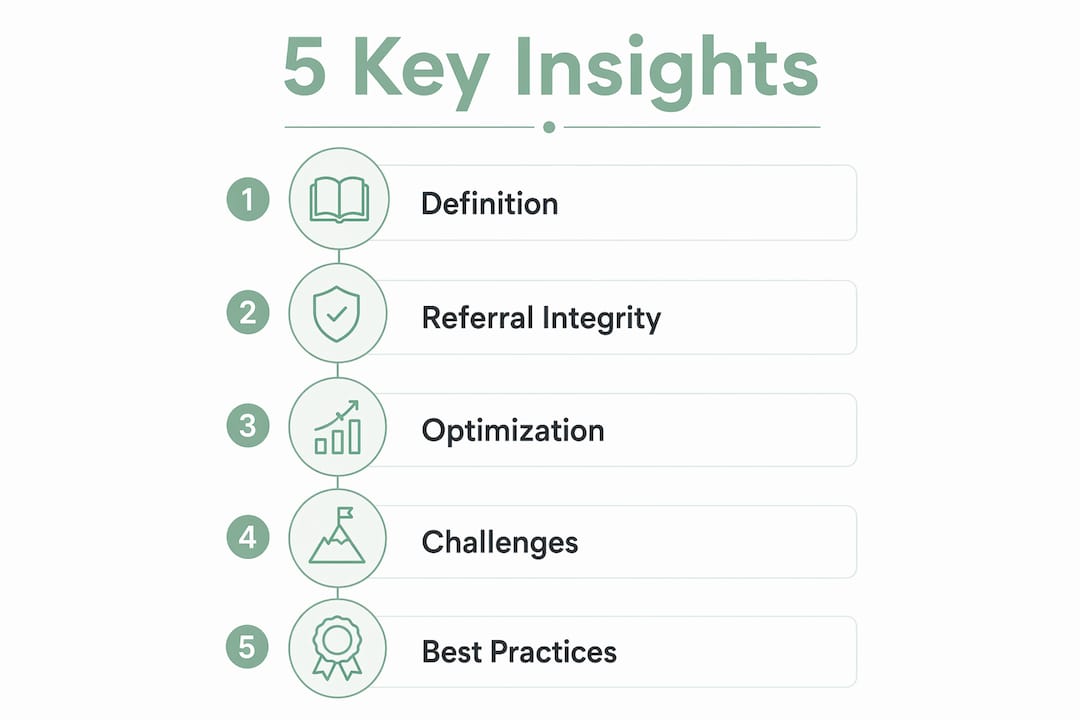
Referral failures are clinical and safeguarding failures, not administrative inconveniences. A missed follow-up or delayed placement can result in hospital readmission, medication errors, or patient harm. Your team must treat referral management with the same rigor applied to medication safety protocols.
Closed-loop referral management systems address this risk directly. These systems track every referral through defined queue statuses, from initiation through acceptance, transition, and follow-up confirmation. Queue aging metrics and barrier categories trigger mandatory escalations to designated clinical authorities when a referral stalls beyond a set threshold. That escalation structure prevents referrals from falling through the cracks during high-volume discharge periods.
Key elements of a closed-loop referral system include:
- Defined queue statuses with time-based escalation triggers
- Barrier categorization to identify systemic delays (insurance, documentation, capacity)
- Designated clinical authority for escalation decisions
- Outcome tracking linked back to the originating referral
Referral management must be treated with clinical rigor akin to medication safety. Metrics, escalation protocols, and governance forums are not administrative overhead. They are patient safety infrastructure.
Pro Tip: Establish a monthly governance forum that reviews referral queue aging reports, barrier trends, and readmission data. This creates a learning cycle that catches systemic problems before they become patient safety events.
Facilities that apply 5 proven ways to minimize referral errors consistently report fewer avoidable readmissions and stronger relationships with hospital referral partners.
How can administrators optimize patient transitions through better network management?
Early discharge planning is the single most effective strategy for improving post-acute care pathways. A longitudinal discharge plan created before a procedure or admission outlines expected care settings, equipment needs, caregiver roles, and contingency options. This “true north” plan prevents reactive decisions at the moment of discharge when time pressure distorts clinical judgment.
Interdisciplinary teams drive better discharge decisions than any single clinician working alone. When physicians, nurses, social workers, therapists, and case managers align on a patient’s goals and functional trajectory, the resulting placement is more accurate and more durable. Misaligned placements generate unnecessary SNF days, avoidable readmissions, and patient dissatisfaction.
- Start discharge planning at admission. Document the expected care pathway, target setting, and functional goals within 24 hours of admission.
- Apply the least restrictive setting principle. Prioritize the least intensive PAC setting when clinical outcomes are equivalent. Home health costs less and preserves patient independence more than SNF placement.
- Engage interdisciplinary teams in placement decisions. Therapy, nursing, and social work input prevents mismatches between patient need and setting capability.
- Evaluate virtual-first PAC options. A virtual-first post-acute program enrolled 438 patients with a 95% completion rate, demonstrating that remote monitoring can safely replace hospital days for appropriate patients.
- Use data to select and manage network partners. Track referral acceptance rates, average length of stay, and readmission rates by partner facility to identify your highest-performing relationships.
| Optimization Strategy | Primary Benefit | Key Metric to Track |
|---|---|---|
| Early discharge planning | Reduces reactive placements | Days from admission to plan completion |
| Least restrictive setting selection | Lowers cost per episode | Home health vs. SNF placement ratio |
| Interdisciplinary team alignment | Improves placement accuracy | Readmission rate by discharge setting |
| Virtual-first PAC programs | Reduces unnecessary hospital days | Program completion rate |
| Data-driven partner selection | Improves referral responsiveness | Partner acceptance rate and response time |
Data analytics for post-acute admissions gives your team the visibility to make these decisions with confidence rather than guesswork.
What operational challenges affect post-acute referral networks?
Payer restrictions create the most immediate barrier to effective discharge planning. Medicare Advantage plans, Medicaid managed care contracts, and commercial insurers each maintain preferred provider lists that constrain where your team can place patients. When a patient’s insurer does not contract with the most clinically appropriate facility, your case managers face a choice between clinical fit and financial coverage. That tension is a daily reality in most hospital discharge planning departments.
Information gaps between hospitals and post-acute providers compound the problem. Incomplete clinical documentation, delayed authorization responses, and inconsistent EMR data formats slow every referral. Post-acute facilities that receive incomplete referral packets spend hours requesting missing records, which delays bed assignment and frustrates hospital partners.
Care disparities represent a less visible but equally serious challenge. Hospitals that concentrate referrals on preferred high-volume SNF partners may inadvertently exclude complex patients, including those with dementia or behavioral health needs, from facilities with the informal integration activities those patients require. The result is a two-tier system where high-need patients land in settings least equipped to support them.
Practical responses to these challenges include:
- Invest in informal integration activities. Regular joint case conferences between hospital and SNF teams build the trust and communication habits that formal contracts alone cannot create.
- Standardize referral documentation. Use FHIR and HL7 standards to reduce data format mismatches between hospital EMR systems and post-acute intake platforms.
- Monitor placement equity. Track referral patterns by patient complexity and diagnosis to identify whether your network systematically underserves specific populations.
- Build contingency pathways. Maintain relationships with multiple facilities in each care category so payer restrictions do not force a single, suboptimal placement.
What are the best practices for managing referral networks in 2026?
Referral management automation is the clearest operational improvement available to most post-acute facilities right now. Automating referral intake, eligibility verification, and documentation requests cuts processing time and reduces the manual burden on your admissions staff. Reducing referral processing time directly improves bed fill rates because faster responses win more referrals from hospital partners who need quick placement confirmations.
EMR integration is the technical foundation that makes automation work. When your admissions platform connects directly to hospital EMR systems and insurance portals, your team receives complete clinical and eligibility data at the moment of referral. That eliminates the back-and-forth that currently consumes hours of staff time per referral.
Best practices for 2026 include:
- Automate referral intake and triage. Use AI-assisted tools to flag high-priority referrals and route them to the appropriate clinical reviewer immediately.
- Integrate EMR and insurance portals. Real-time eligibility verification at the point of referral prevents authorization delays and reduces denials.
- Track referral performance metrics. Monitor acceptance rate, response time, and conversion rate by referral source to identify where your network is losing volume.
- Conduct quarterly network reviews. Evaluate partner performance data and adjust your preferred partner relationships based on outcomes, not just volume.
Pro Tip: Set a response time target for every inbound referral, such as a two-hour acknowledgment and a four-hour clinical decision. Post that standard with your hospital partners. Facilities that commit to response time targets win disproportionate referral volume from discharge planners who need reliable placement partners.
Referral tracking improvements that tie directly to bed occupancy give your leadership team the data they need to make confident network decisions.
Key Takeaways
Effective post-acute referral network management requires clinical governance, early discharge planning, and data-driven partner selection to reduce readmissions and improve bed occupancy.
| Point | Details |
|---|---|
| Referral failures are clinical risks | Treat missed or delayed referrals as patient safety events, not administrative errors. |
| Early discharge planning prevents reactive placements | Create a longitudinal discharge plan at admission to guide every transition decision. |
| Least restrictive settings reduce costs | Choose home health over SNF placement when clinical outcomes are equivalent. |
| Closed-loop systems prevent leakage | Queue aging metrics and escalation protocols keep every referral moving to resolution. |
| Automation accelerates bed fill rates | EMR integration and AI-assisted intake cut processing time and improve referral responsiveness. |
What I’ve learned from watching referral networks fail quietly
The most dangerous referral failures are not the ones that generate incident reports. They are the ones that look fine on paper. A patient gets placed. The bed fills. The case closes. But three weeks later, that patient is back in the emergency department because the receiving facility lacked the informal integration capacity to manage their complexity. Nobody flags it as a referral failure. It gets coded as a readmission.
I have seen this pattern repeat across facilities that pride themselves on low vacancy rates and strong hospital relationships. The problem is that volume metrics and preferred partner lists create a false sense of network health. Concentrating referrals on high-volume SNF partners feels efficient until you examine the outcomes for your most complex patients. Those patients are quietly absorbing the cost of a network that was not built with them in mind.
The administrators who manage this well share one habit: they review referral outcomes by patient complexity, not just by volume. They ask which patients readmitted, which facilities sent them back, and what the clinical record shows about the transition. That discipline is uncomfortable because it surfaces gaps in relationships your team has invested years building. But it is the only way to build a network that actually performs under clinical pressure.
My honest recommendation is to treat your governance forum as a clinical meeting, not an operations meeting. Bring readmission data, queue aging reports, and barrier categories to the table alongside your case managers and clinical leads. The conversation changes when the data is in the room.
— Harry
How Smartadmissions supports your referral network performance
Managing a high-performing post-acute referral network requires more than good intentions. It requires systems that give your team accurate data, fast intake processing, and clear visibility into every referral in your queue.
Smartadmissions is built specifically for skilled nursing facilities, rehabilitation centers, and post-acute providers who need to reduce referral review times and fill beds faster. The platform integrates with your existing EMR and insurance portals to deliver real-time eligibility verification and clinical documentation at the point of referral. Your admissions team spends less time chasing records and more time making placement decisions. Explore referral management systems for efficiency and see how facilities are cutting intake time and improving occupancy with the right tools in place.
FAQ
What is a post-acute referral network?
A post-acute referral network is a structured system connecting hospitals with skilled nursing facilities, inpatient rehab centers, home health agencies, and other providers to coordinate patient transitions after hospital discharge.
Why do referral failures cause readmissions?
Referral failures are clinical and safeguarding failures that result in missed follow-ups, incomplete care handoffs, and gaps in medication management, all of which drive preventable hospital readmissions.
What does the 3-hour rule mean for inpatient rehab placement?
Inpatient rehabilitation facilities require patients to tolerate at least 3 hours of combined therapy daily, 5 days per week, per 2026 Medicare guidelines. Patients who cannot meet this threshold are not eligible for IRF placement.
How does early discharge planning improve post-acute care pathways?
A longitudinal discharge plan created at admission outlines the expected care setting, equipment needs, and caregiver roles, which prevents reactive placement decisions and reduces avoidable SNF days.
What metrics should administrators track to evaluate referral network performance?
Track referral acceptance rate, response time by partner facility, readmission rate by discharge setting, and queue aging by barrier category to identify where your network is losing efficiency or creating clinical risk.