
TL;DR:
- EMR integration connects healthcare systems to enhance patient safety, reduce medication errors, and improve clinical workflows. It automates billing, strengthens decision support, and enables better population health management. Successful adoption depends on workflow redesign, staff training, and data standardization.
EMR integration is defined as the process of connecting electronic medical records systems with other healthcare software, devices, and billing platforms to enable continuous, bi-directional data exchange. The advantages of EMR integration extend well beyond paperless charting. They include measurable reductions in medication errors, significant time savings for clinical staff, and direct improvements to your facility’s revenue cycle. For healthcare administrators and IT managers at skilled nursing facilities, rehabilitation centers, and post-acute care providers, understanding these benefits is the first step toward making integration a strategic priority rather than an IT project.
1. Advantages of EMR integration for patient safety
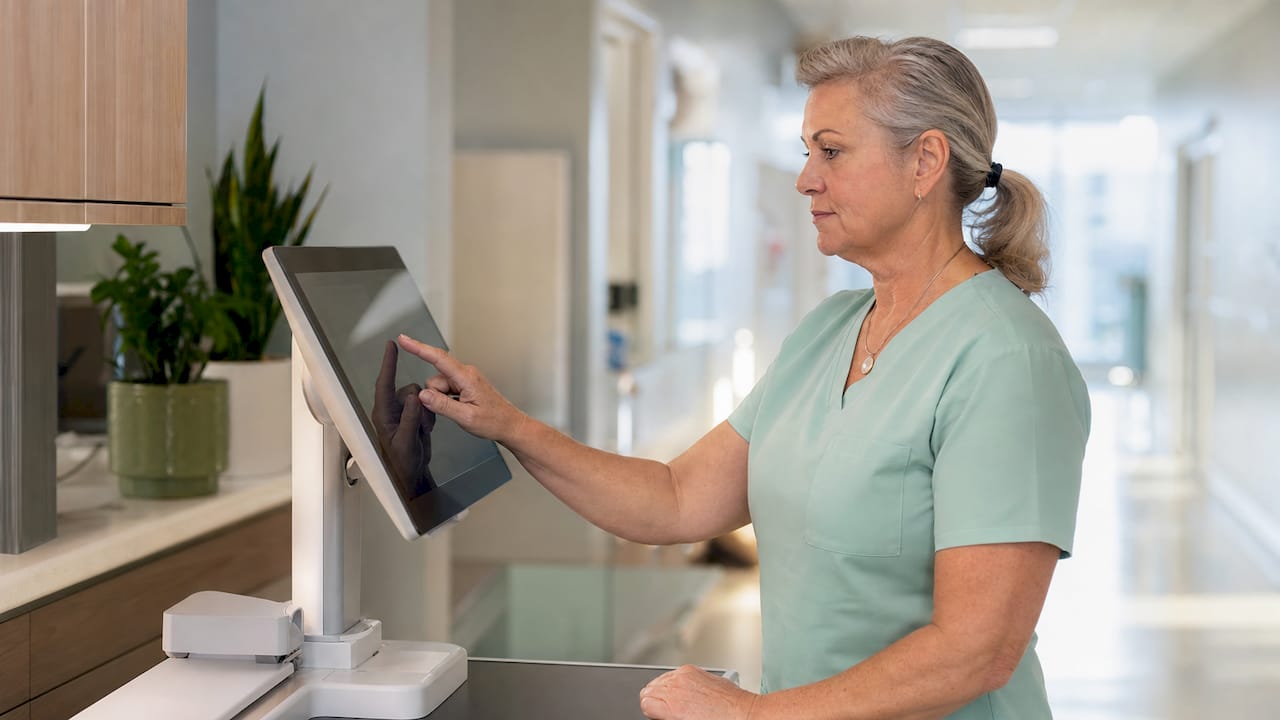
Fully integrated EMR systems reduce medication errors by 30–38% through real-time clinical decision support. That reduction comes from automated alerts that fire at the point of prescribing, catching drug interactions, allergy conflicts, and dosing errors before they reach the patient.
The specific mechanisms that drive this improvement include:
- Allergy alerts: The system cross-references a patient’s allergy history against every new prescription in real time.
- Drug interaction checks: Integrated platforms flag dangerous combinations across a patient’s full medication list, not just the current order.
- Dosing range alerts: Alerts trigger when a prescribed dose falls outside evidence-based ranges for a patient’s age, weight, or renal function.
- Duplicate therapy warnings: The system identifies when two orders serve the same clinical purpose, preventing redundant treatment.
Pro Tip: Configure alert thresholds carefully during setup. Alerts set too broadly create noise that clinicians learn to dismiss. Alerts set too narrowly miss genuine risks. Work with your clinical informatics team to calibrate thresholds before go-live.
These safety gains depend on data quality. If patient allergy records are incomplete or medication histories are fragmented across disconnected systems, even a well-configured integration will miss critical flags. Standardized documentation practices are not optional. They are the foundation that makes every safety alert reliable.
2. Time savings in clinical and administrative workflows
Integrated EMR workflows save 45–90 minutes per provider per day by eliminating redundant data entry and manual record retrieval. At a facility with 10 providers, that translates to 450–900 minutes of recovered clinical time every single day.
The time savings come from three specific workflow changes:
- Automated data population: Lab results, imaging reports, and vital signs flow directly into the patient record without manual transcription.
- Pre-populated intake forms: Patient demographics, insurance details, and prior authorization data carry forward from referral to admission without re-entry.
- Centralized documentation: Providers access a single record rather than toggling between a billing system, a pharmacy platform, and a separate clinical notes tool.
Pro Tip: Map your current workflow before integration, not after. If your team spends 20 minutes manually copying referral data into your EMR today, integration eliminates that step. But only if the receiving fields in your EMR are mapped correctly to the sending system’s data structure.
Recovered time does not automatically shift to patient care. Facilities that redesign workflows alongside integration see the greatest gains. Those that simply connect systems without process analysis often find that staff fill recovered time with other administrative tasks rather than direct care delivery.
3. Improved clinical decision support and care adherence
EMR-linked clinical decision support (CDS) embeds evidence-based guidance directly into the provider’s workflow at the moment a clinical decision is made. A pediatric care study published in the Merck Manual showed that CDS referral rates improved from 3.9% to 17.1% for hypertension counseling after EMR-linked decision support was activated. That is a 4.4x increase in guideline-adherent referrals without adding staff or changing protocols.
“EMR integration should be viewed as a clinical and operational strategy shifting focus from data entry to continuous data flow essential for value-based care.” — Circle Care Health
The practical benefits of integrated CDS include:
- Automatic prompts for preventive screenings based on patient age and diagnosis history
- Referral suggestions triggered by lab values that cross clinical thresholds
- Care gap alerts that surface during routine visits, not just annual reviews
- Guideline-based order sets that reduce practice variability across providers
For skilled nursing and post-acute care facilities, decision support tools tied to integrated EMR data directly improve the quality and speed of referral decisions. When your clinical data is unified, your decision support is only as good as the data feeding it.
4. Revenue cycle management and billing accuracy
Integrated EMR and billing systems automate coding and reduce claim denials, accelerating reimbursement cycles and improving your facility’s financial position. When clinical documentation flows directly into your billing platform, the risk of coding errors caused by manual transcription drops significantly.
The financial benefits of EMR and billing integration include:
- Automated code generation: Diagnosis and procedure codes populate from clinical notes, reducing coder workload and human error.
- Real-time eligibility verification: Insurance status is confirmed at the point of admission, not after a claim is submitted and denied.
- Faster claim submission: Completed documentation triggers claim generation without waiting for manual review cycles.
- Denial pattern tracking: Integrated analytics identify recurring denial reasons, allowing your billing team to address root causes rather than just resubmitting claims.
Claim denial rates are one of the clearest financial indicators of integration quality. Facilities with fragmented systems often see denials caused by mismatched patient identifiers, missing authorization codes, or outdated insurance information. Integration eliminates each of those failure points by maintaining a single, accurate patient record across clinical and financial systems.
5. Population health management and advanced analytics
Integrated EMR data enables population health management by providing a unified dataset for tracking KPIs such as readmission rates, treatment efficacy, and care gap prevalence. Fragmented systems produce fragmented data. A unified integration produces a single source of truth that your analytics team can actually use.
| Analytics Use Case | Fragmented Systems | Integrated EMR |
|---|---|---|
| Readmission rate tracking | Manual chart review required | Automated reporting from unified data |
| Care gap identification | Reactive, based on complaints | Proactive, triggered by data thresholds |
| Treatment outcome analysis | Delayed, incomplete datasets | Real-time, cross-system visibility |
| Population risk stratification | Not feasible at scale | Automated by diagnosis and utilization data |
Pro Tip: Start with two or three KPIs your leadership team already tracks manually. Build your first integration-powered reports around those metrics. Demonstrating value on familiar data points builds organizational confidence in the broader integration program.
Value-based care contracts require this level of data visibility. Payers increasingly tie reimbursement to outcome metrics that can only be measured accurately when clinical, operational, and financial data are connected. Facilities without integrated EMR data are at a structural disadvantage in those negotiations.
6. Streamlined patient intake and referral management
Integrated EMRs eliminate the manual steps that slow down patient intake at skilled nursing facilities and rehabilitation centers. When referral data, clinical assessments, and insurance information flow directly into your EMR at the point of referral, your admissions team can review and accept patients faster. That speed directly affects bed occupancy rates and revenue.
The intake benefits of EMR integration are specific and measurable:
- Referral documents attach automatically to the patient record without manual upload
- Prior authorization status updates in real time rather than requiring phone follow-up
- Clinical eligibility criteria are checked against the incoming referral data before a bed is committed
- Admissions staff spend time on clinical judgment, not data re-entry
Platforms like Smartadmissions are built specifically for this workflow. Smartadmissions integrates with existing EMR systems and insurance portals to automate eligibility verification, clinical assessments, and documentation management at the point of referral. The result is faster admissions decisions and higher bed fill rates without adding administrative headcount.
7. What implementation factors determine EMR integration success?
EMR integration success depends on workflow design and staff training far more than on technical connectivity alone. The technical connection between two systems is the starting point, not the finish line.
The factors that most directly influence whether your integration delivers its full benefits include:
- Workflow mapping: Document every current process before integration. Automating a broken workflow produces faster broken results.
- Staff training: Clinical and administrative staff must understand what the integration does and does not do. Gaps in training produce workarounds that undermine data integrity.
- Data standardization: Standardized documentation practices must be in place before integration goes live. Data quality does not improve automatically with integration.
- Alert configuration: Poorly configured integrations cause alert fatigue, which increases clinician burnout and reduces the clinical value of decision support.
- Data synchronization testing: Edge cases in data flow, such as patients with multiple identifiers or records spanning multiple facilities, must be tested before go-live to prevent database drift over time.
Pro Tip: Assign a clinical champion for your integration project. This person bridges the gap between your IT team and your clinical staff. Without clinical ownership, even technically sound integrations fail to change practice.
Most certified EHR platforms include FHIR API access without extra licensing fees. The operational cost is in the testing, training, and ongoing data integrity work that follows the initial connection. Budget for that work explicitly, or your integration will underperform from day one.
Key takeaways
EMR integration delivers its greatest value when clinical, operational, and financial data are unified in a single, continuously updated record that supports both patient care and administrative efficiency.
| Point | Details |
|---|---|
| Patient safety improvement | Integrated EMRs reduce medication errors by 30–38% through real-time alerts and decision support. |
| Provider time recovery | Integration saves 45–90 minutes per provider per day by eliminating redundant data entry. |
| Clinical decision support | EMR-linked CDS increased hypertension referral rates from 3.9% to 17.1% in a pediatric study. |
| Revenue cycle accuracy | Automated coding and real-time eligibility checks reduce claim denials and speed reimbursement. |
| Implementation discipline | Workflow mapping and staff training determine integration outcomes more than API connectivity alone. |
Why EMR integration is an operational strategy, not an IT project
I’ve worked with healthcare administrators who approached EMR integration as a technology deployment. They assigned it to IT, set a go-live date, and measured success by whether the systems connected. Most of them were disappointed with the results.
The facilities that get the most from integration treat it as an operational strategy. They redesign workflows before connecting systems. They train clinical staff on what the data means, not just how to enter it. They assign clinical leadership to own the outcomes, not just the technical team.
The most underappreciated benefit of integration is what it does to organizational decision-making. When your clinical, billing, and referral data are unified, your leadership team can see patterns that were previously invisible. Readmission spikes, denial clusters, and care gaps become visible in real time rather than in quarterly reports. That visibility changes how administrators manage their facilities.
The future of value-based care requires this level of data connectivity. Facilities that invest in high-quality integration now will have a structural advantage as payer contracts increasingly tie reimbursement to outcome data. Those that delay will find themselves negotiating from a position of data poverty.
— Harry
How Smartadmissions supports your EMR integration goals
Connecting your EMR to referral and admissions workflows is where many facilities see the fastest return on their integration investment.
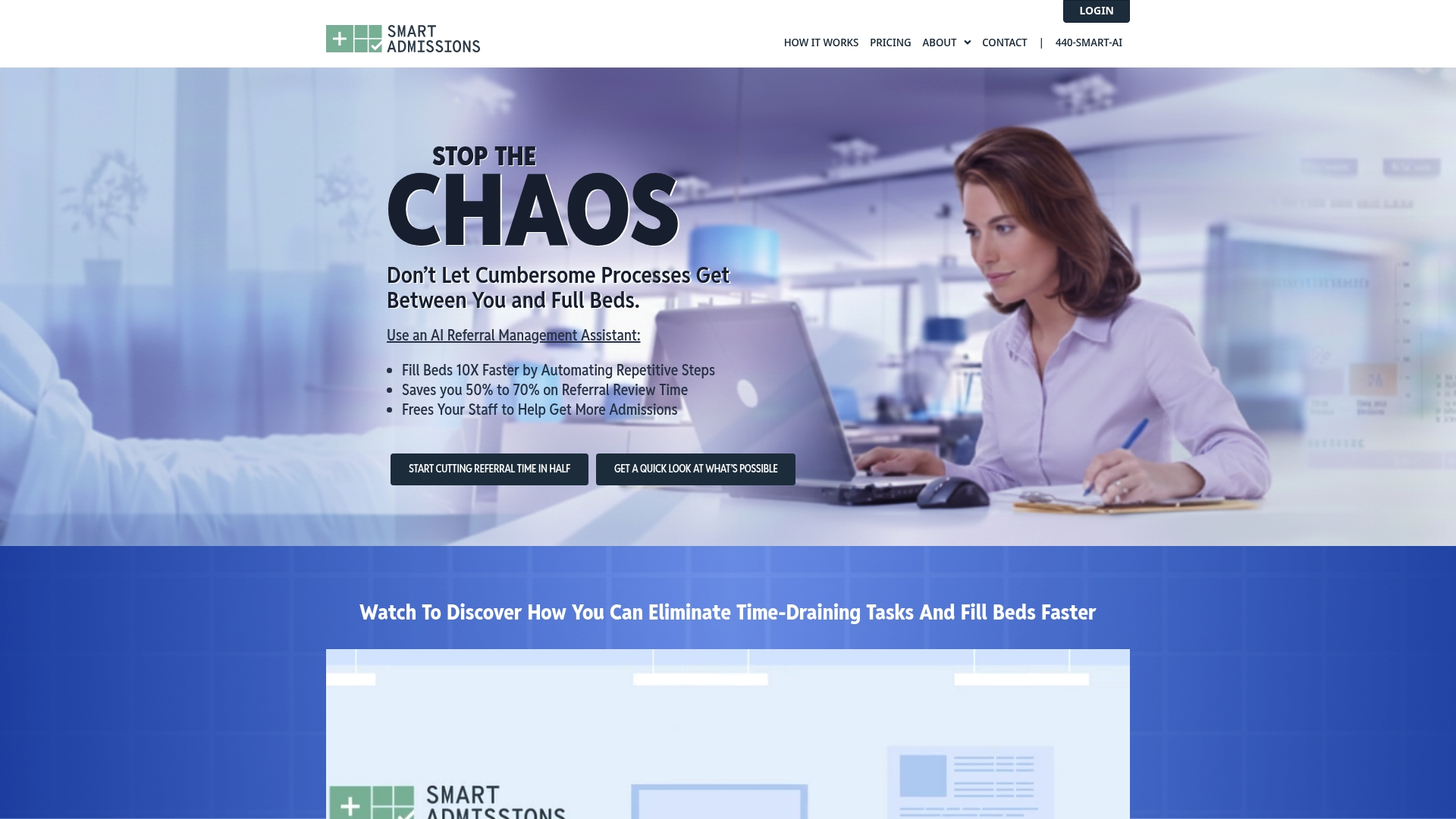
Smartadmissions is built specifically for skilled nursing facilities, rehabilitation centers, and post-acute care providers that need their EMR data to work harder at the point of admission. The platform integrates with existing EMR and insurance systems to automate eligibility verification, clinical documentation, and referral review. If you want to see how integrated referral workflows perform in practice, the referral management examples on the Smartadmissions site show real use cases across post-acute care settings. You can also explore how to integrate EMR with referrals for a practical walkthrough of the intake workflow.
FAQ
What are the main advantages of EMR integration?
The primary advantages of EMR integration include reduced medication errors, faster clinical workflows, improved billing accuracy, and unified data for population health management. Integrated systems also support real-time clinical decision support that improves care adherence.
How does EMR integration reduce medication errors?
Fully integrated EMR systems reduce medication prescribing errors by 30–38% through automated alerts that check for drug interactions, allergy conflicts, and dosing errors at the point of prescribing.
What is the biggest challenge in EMR integration?
The biggest challenge is workflow design and staff training, not technical connectivity. Poorly configured integrations cause alert fatigue and data quality problems that reduce clinical effectiveness and increase burnout.
Does EMR integration improve revenue cycle management?
Yes. Integrated EMR and billing systems automate code generation, verify insurance eligibility in real time, and reduce claim denials by maintaining a single accurate patient record across clinical and financial systems.
How does EMR integration support patient intake at skilled nursing facilities?
Integration allows referral data, clinical assessments, and insurance information to flow directly into the EMR at the point of referral. That eliminates manual re-entry, speeds admissions decisions, and improves bed fill rates.