
TL;DR:
- Responsive healthcare support directly improves patient satisfaction, bed occupancy, and regulatory compliance through timely, consistent communication. Implementing structured SLAs, automation, and effective triage mechanisms enhances responsiveness at scale, reduces manual workload, and ensures audit readiness. Proactive digital and operational strategies are essential for turning responsiveness into a competitive advantage and operational excellence.
Responsive customer support is defined as the organizational capability to acknowledge, triage, and resolve patient and referral inquiries within measurable time standards that protect both care quality and operational throughput. In healthcare admissions, this capability is not a service amenity. It is a direct driver of patient satisfaction, bed fill rates, and regulatory standing. Research confirms that patients waiting under 30 minutes were 3.36 times more likely to report good responsiveness than those waiting over an hour. That single data point reframes why responsive customer support belongs at the center of every admissions team’s operating model, not at the margins of it.
Why responsive customer support defines patient experience
Patient experience in healthcare is shaped by two distinct dimensions of support: informational and emotional. Informational support covers the accuracy and timeliness of clinical and administrative communication. Emotional support covers how heard, respected, and reassured a patient feels during each interaction. Both dimensions depend on responsiveness, and both directly affect perceived care quality.
The evidence on wait times is unambiguous. Satisfaction drops significantly when response times exceed nine days compared to responses delivered within three days. That finding applies directly to health hotlines and patient inquiry systems, which mirrors the experience your admissions team creates every time a referral sits unacknowledged in a queue.
“Organizations investing in intelligent service operations differentiate through customer experience rather than products.” — Deloitte Digital
Speed alone does not complete the picture. Research on online healthcare satisfaction shows that consultation frequency and interaction rounds matter more than raw response time for perceived informational and emotional support. This means your team’s goal is not simply to reply fast. It is to reply consistently, with enough context and follow-through to close the loop for the patient or referral source.
Digital channels reinforce this goal. Synchronous communication tools, including secure messaging portals and real-time chat, give patients and referring providers a direct line that reduces the anxiety of waiting for a callback. When your admissions workflow integrates these channels, you shift from reactive to proactive engagement, which is where patient intake efficiency gains become measurable.

What operational strategies drive responsiveness in healthcare support?
Responsiveness at scale requires architecture, not just effort. The three structural components that consistently deliver results are service level agreements (SLAs), automation, and triage design.
Defining SLAs that protect patient access
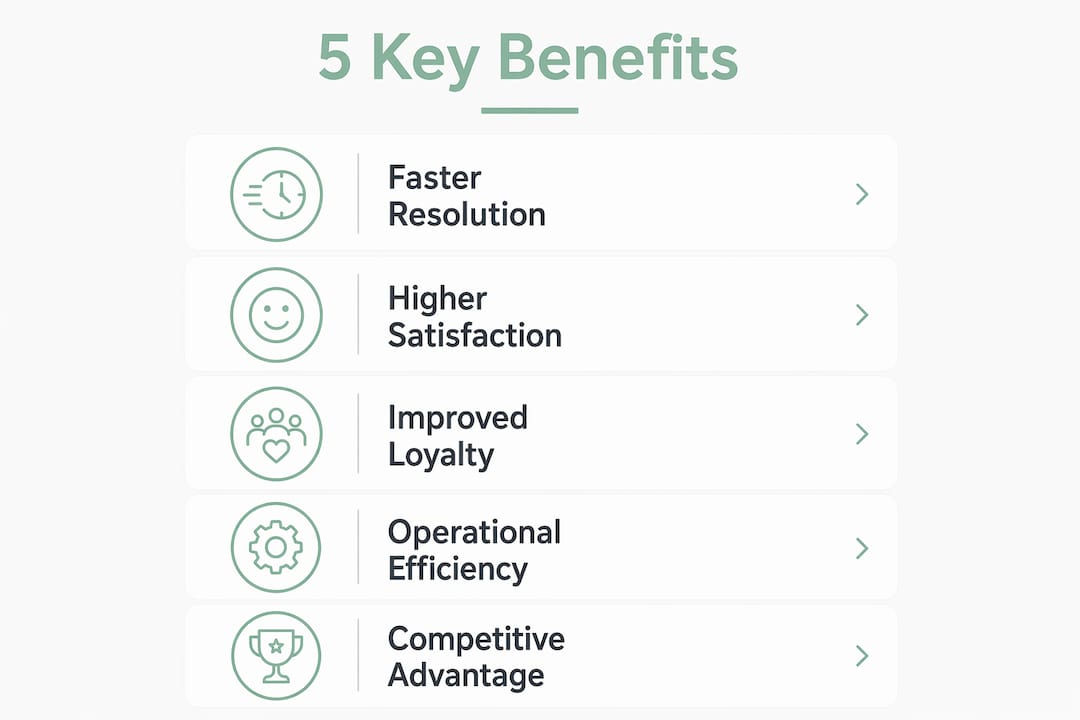
SLAs in healthcare contact and admissions centers cover more than speed. According to Hugo, healthcare SLA components include average speed of answer, abandonment rates, first contact resolution, and audit-proof compliance reporting. Each metric maps directly to a patient outcome. High abandonment rates signal that patients are giving up before reaching your team. Low first contact resolution means patients are calling back, consuming staff time and eroding trust.
Your SLA framework should set explicit targets for each of these metrics, assign ownership to specific roles, and tie performance reviews to the data. Without that structure, responsiveness remains aspirational rather than operational.
Using automation to handle volume without adding headcount
- Deploy AI-powered routing to direct referral inquiries to the correct clinical or administrative specialist within seconds of receipt.
- Configure automated acknowledgment messages that confirm receipt and state the expected response window, reducing inbound follow-up calls.
- Use intent detection tools to categorize incoming requests by urgency, separating time-sensitive clinical queries from routine documentation requests.
- Integrate knowledge management systems so staff can retrieve accurate answers without escalating every non-standard question.
- Apply reply suggestion tools that surface pre-approved responses for common scenarios, cutting average handle time without sacrificing accuracy.
AI-powered engagement models in healthcare support can reduce handling time by 42%, speed up responses by 60%, and improve Net Promoter Score by 20 points. Those gains come from automation in routing, knowledge management, and reply suggestions, not from hiring more staff.
| Strategy | Manual approach | Automated approach |
|---|---|---|
| Referral triage | Staff reviews each referral individually | AI categorizes by urgency and routes automatically |
| Acknowledgment | Staff sends confirmation manually | System sends instant confirmation on receipt |
| Documentation retrieval | Staff searches multiple systems | Integrated EMR pulls records in real time |
| Response drafting | Staff writes from scratch | Reply suggestions surface pre-approved content |
Pro Tip: Publish your first-response standards internally and display expected response windows in your patient-facing portal. Transparency about timing reduces inbound follow-up calls and sets clear expectations before anxiety builds.
Healthcare workflow automation examples show that the highest-impact gains come from automating triage rules and intent detection rather than simply adding staff to an already strained admissions team.
What challenges affect responsiveness effectiveness in healthcare?
Responsiveness in healthcare is not a simple speed problem. Several factors complicate how quickly and how well your team can respond, and ignoring them produces compliance risk alongside patient dissatisfaction.
Key challenges your admissions and support teams face include:
- Patient safety inquiries require trained staff. Research consistently shows lower satisfaction scores in safety-related service interactions because patients expect clinical authority, not scripted responses. Routing these cases to untrained staff damages trust faster than a slow response does.
- HIPAA compliance constrains channel flexibility. Not every fast communication channel is a compliant one. Your response architecture must account for encryption, access controls, and audit trails before deploying new messaging tools.
- High-volume periods create triage failures. Seasonal admission surges, flu season, and post-acute discharge waves overwhelm manual workflows. Without pre-built triage rules, urgent referrals compete with routine inquiries for the same staff attention.
- Quality verification slows response cycles. In regulated environments, responses often require clinical review before they reach the patient or referral source. This is necessary, but it must be built into your SLA targets rather than treated as an exception.
SLAs tied to privacy obligations require real-time dashboards and QA reviews to demonstrate compliance during audits. That means your responsiveness infrastructure must generate evidence, not just performance. A fast response that cannot be audited creates regulatory exposure.
Pro Tip: Build a separate response pathway for patient safety inquiries with dedicated staff, a longer SLA window, and mandatory clinical review. Speed matters less than accuracy in these cases, and your SLA framework should reflect that distinction explicitly.
How can admissions teams apply responsiveness to patient intake?
Admissions workflows are where responsiveness principles translate directly into revenue and patient outcomes. A bed that sits empty because a referral went unacknowledged for four hours is a measurable financial loss. A patient who receives a same-day confirmation and clear next steps is significantly less likely to disenroll before admission.
Your admissions team can build responsiveness into intake operations through the following structure:
- Triage rules at intake: Classify incoming referrals by acuity, payer type, and documentation completeness on receipt. Route high-acuity, high-revenue referrals to senior admissions coordinators within a defined window.
- Automated confirmation messaging: Wire your intake system to send an immediate acknowledgment to the referring provider and the patient upon referral receipt. Publishing first-response standards and confirming next steps reduces friction in complex workflows and lowers patient anxiety.
- Digital patient intake portals: Replace paper-based intake forms with secure digital portals that patients complete before arrival. This reduces day-of processing time and gives your team a complete clinical picture before the first conversation.
- Automated appointment reminders: Send reminders at 72 hours, 24 hours, and two hours before scheduled admissions. Digital communication tools embedded in healthcare admissions reduce no-shows and keep workflows on schedule.
- EMR-integrated documentation management: Connect your intake system to your Electronic Health Record so that clinical assessments, insurance eligibility checks, and prior authorization requests run in parallel rather than sequentially.
| Intake stage | Responsiveness metric | Target standard |
|---|---|---|
| Referral receipt | Time to acknowledgment | Under 15 minutes |
| Clinical review | Time to accept or decline decision | Under 4 hours |
| Patient contact | Time to first outreach | Same business day |
| Documentation completion | Time to complete intake packet | Before admission date |
Digital patient intake tools for skilled nursing facilities demonstrate that structured response-time architecture at each intake stage reduces administrative rework and improves bed fill rates without requiring additional staff.
Key takeaways
Responsive customer support in healthcare admissions is an operational capability that directly determines patient satisfaction, bed occupancy rates, and regulatory compliance.
| Point | Details |
|---|---|
| Speed drives satisfaction | Patients waiting under 30 minutes are 3.36 times more likely to report good responsiveness. |
| SLAs create accountability | Define speed, quality, and compliance targets with audit-ready reporting to sustain performance. |
| Automation multiplies capacity | AI routing and reply suggestions can reduce handling time by 42% without adding headcount. |
| Triage design protects quality | Separate safety-related inquiries from routine requests to maintain accuracy under volume pressure. |
| Intake architecture converts referrals | Structured response windows at each admissions stage reduce no-shows and improve bed fill rates. |
The real cost of treating responsiveness as optional
I have worked with enough healthcare administrators to recognize a pattern. Responsiveness gets treated as a staffing problem. If response times are slow, the instinct is to hire more coordinators. That instinct is understandable, but it misses the structural cause entirely.
The facilities that consistently outperform on patient satisfaction and bed fill rates are not the ones with the largest admissions teams. They are the ones that have designed their workflows so that every referral triggers an automatic acknowledgment, every inquiry reaches the right person without a manual handoff, and every SLA target is visible on a real-time dashboard. The technology does not replace judgment. It removes the friction that prevents your team from applying their judgment where it matters.
What I find most underestimated is the compliance dimension. Administrators focus on speed because speed is visible. But in a regulated environment, a fast response that cannot be audited is a liability. The facilities that build responsiveness correctly treat speed and documentation as inseparable. Every interaction generates a record. Every SLA breach triggers a review. That discipline is what converts responsiveness from a service quality metric into a genuine operational advantage.
The other thing worth saying directly: patient expectations have shifted. Referring physicians and discharge planners now compare your admissions team’s responsiveness to the experience they get from consumer-grade digital services. If your team takes four hours to acknowledge a referral that a competitor acknowledges in fifteen minutes, the referral source notices. Responsiveness is now a competitive differentiator in post-acute care, whether your facility has formally recognized that or not.
— Harry
See how Smartadmissions improves your admissions responsiveness
Smartadmissions is built specifically for skilled nursing facilities, rehabilitation centers, and post-acute care providers that need faster, more reliable admissions workflows without adding administrative burden to their teams.
The platform automates referral triage, generates instant acknowledgment messages, integrates with your existing EMR, and provides real-time dashboards that track every SLA metric your compliance team needs. Facilities using Smartadmissions report measurable gains in bed fill rates and referral response times. Explore referral management systems for efficiency to see how structured automation transforms admissions performance, or review automated vs. manual admissions to quantify the operational gap your current process may be creating.
FAQ
Why does responsive customer support matter in healthcare admissions?
Responsive customer support directly affects bed fill rates, patient satisfaction, and referral source loyalty. Patients waiting under 30 minutes report good responsiveness at 3.36 times the rate of those waiting over an hour, making speed a measurable clinical and financial variable.
What is a realistic first-response target for admissions teams?
A first-response target of under 15 minutes for referral acknowledgment is achievable with automated confirmation messaging and triage routing. Publishing this standard internally and externally sets expectations and reduces inbound follow-up calls.
How does automation improve responsiveness without increasing staff costs?
AI-powered routing, intent detection, and reply suggestion tools can reduce handling time by 42% and speed up responses by 60%. These gains come from removing manual steps in triage and documentation, not from replacing clinical judgment.
What compliance requirements affect responsiveness in healthcare support?
HIPAA mandates that all patient communication channels meet encryption and audit standards. SLAs in regulated healthcare environments must include audit-ready dashboards and QA review cycles to demonstrate compliance during inspections.
How do digital intake tools reduce no-shows and improve patient flow?
Digital communication tools embedded in admissions workflows, including automated reminders at 72 hours, 24 hours, and two hours before admission, reduce no-shows by keeping patients informed and engaged from referral acceptance through arrival.