
TL;DR:
- Centralized referral tracking consolidates all patient referral data into one system, improving visibility and reducing leakages. It lowers staff workload through automation and enhances closed-loop rates, leading to higher revenue and better patient experience. Implementing the right features and integrations enables healthcare providers to optimize operations and foster trust with referring physicians.
Centralized referral tracking is the process of consolidating all patient referral data into a single system that provides complete visibility, automated workflows, and real-time status updates across your entire referral pipeline. For skilled nursing facilities, rehabilitation centers, and post-acute care providers, fragmented referral data spread across spreadsheets, fax inboxes, and email threads creates costly blind spots. This guide explains why use centralized referral tracking matters for your admissions team, what measurable gains you can expect, and how to implement it effectively using 2026 case study data from organizations like US Tech Automations and SimpleRef.
Why use centralized referral tracking to protect revenue?
Referral leakage is the loss of patients who are referred to your facility but never complete the intake process. It is one of the most direct causes of revenue loss in post-acute care. Referral leakage dropped from 31% to 6% in a 2026 case study after a healthcare organization implemented centralized tracking automation. That single improvement recovered an estimated $380,000 annually.
The financial mechanism is straightforward. When referrals fall through the cracks, beds stay empty and revenue is lost. A centralized system keeps every referral visible and moving through defined stages, so your team can intervene before a patient disengages.
Closed-loop referral rates tell you whether a referral was actually completed. A closed loop means the referring provider has confirmation the patient scheduled, was seen, and that consult notes were received. Closed-loop documentation improved from 62% to 94% in the same 2026 case study. That gap between 62% and 94% represents patients who previously fell through without any follow-up.
Key drivers of leakage reduction in centralized systems include:
- Automated patient scheduling nudges that prompt patients to book appointments without requiring staff to make manual calls
- Stage-based pipeline visibility that flags referrals stalled at any point in the workflow
- In-network retention alerts that notify coordinators when a patient risks being redirected to an out-of-network provider
- Automated consult note requests sent directly to specialist offices after appointments are completed
Patient scheduling outreach accounted for the largest single portion of leakage reduction, cutting approximately 17 percentage points from the total 25-point improvement. That finding confirms that patient engagement automation is not a secondary feature. It is the core driver of revenue recovery.
How does centralized tracking reduce staff workload?
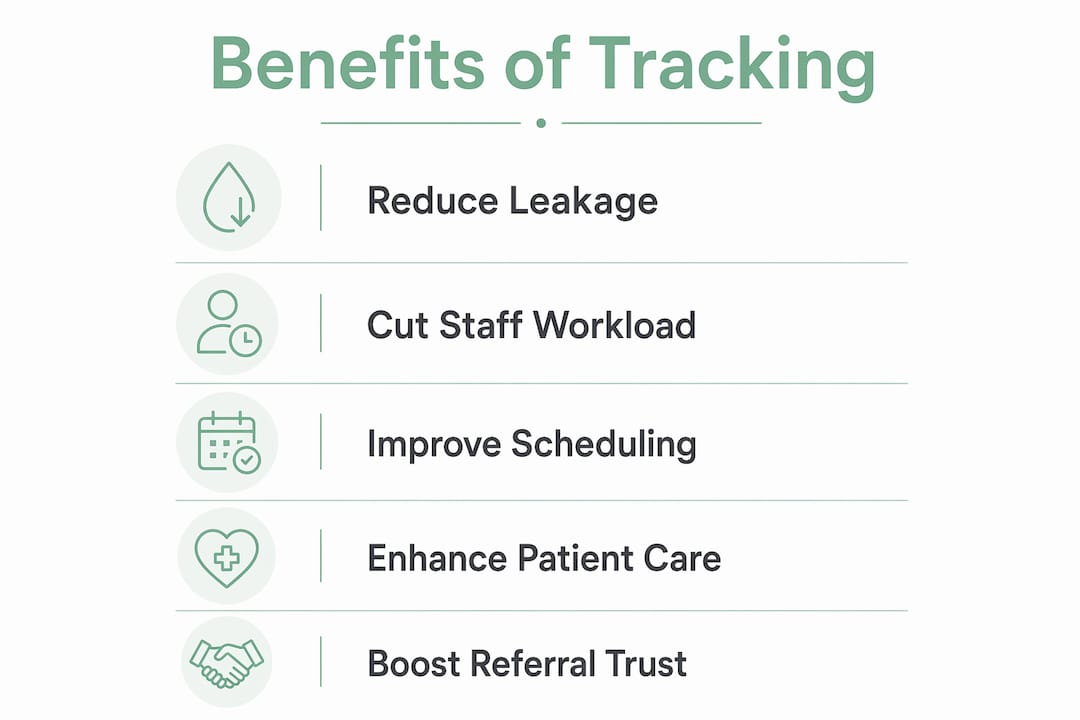
Care coordinators spend a significant portion of their day on manual follow-up tasks: calling patients to confirm appointments, chasing specialist offices for consult notes, and updating referral statuses in spreadsheets. Centralized referral tracking automates all three.

Care coordinator FTE dropped from 1.8 to 0.9 after one organization implemented automated referral tracking workflows. That is roughly a 50% reduction in labor cost for referral coordination. The same automation increased patient scheduling reach from 61% to 91%, meaning staff contacted more patients while doing less manual work.
Consult note receipt time also improved dramatically. Consult note receipt time fell from 23 to 8 days after automation replaced manual follow-up calls to specialist offices. Faster note receipt means your clinical team can make admission decisions sooner and reduce delays in bed placement.
The AMA 2024 Physician Burnout Survey reports that 53% of physicians experience burnout, with administrative work cited as the top cause. Centralized referral tracking directly reduces that administrative load by removing repetitive coordination tasks from clinical staff.
Pro Tip: Before implementing any centralized system, document how many hours per week your care coordinators spend on manual referral follow-ups. That baseline number becomes your ROI benchmark after go-live.
The efficiency gains extend beyond individual staff members. When your team spends less time on coordination, they spend more time on clinical assessment and patient communication. That shift improves both care quality and staff retention.
What features and best practices make centralized tracking work?
A centralized referral tracking system works only when it is built on the right structural foundations. The most common failure point is implementing a new tool without redesigning the workflow around it.
-
Establish a single source of truth. All referral data must live in one system. Spread-out tools cause loss of trust within 6 months as staff begin maintaining their own shadow records. Once staff stop trusting the central system, you are back to spreadsheet chaos.
-
Build stage visibility with a pipeline or Kanban board. Your dashboard should answer three questions instantly: how many referrals are pending action, how many are stalled, and at which stage. Referral tracking dashboards designed around these operational questions give coordinators the clarity to act without digging through records.
-
Set automated alerts for stalled referrals. Define a maximum time limit for each stage. If a referral sits in “awaiting scheduling” for more than 48 hours, the system should alert the assigned coordinator automatically.
-
Measure your baseline closed-loop rate before go-live. Baseline auditing of referral loops is the only way to prove that improvements come from the system rather than from increased referral volume. Audit scheduled referrals, completed appointments, and notes received as three separate metrics.
-
Integrate with your EHR and scheduling platforms. Effective referral tracking requires integration with multiple EHR systems, fax capture for non-digitized specialists, patient scheduling notification sequences, and consult note automation. Without these integrations, your team still handles data entry manually.
Pro Tip: Map your current referral workflow on a whiteboard before selecting a platform. Identify every handoff point where data currently leaves your control. Those handoff points are where your centralized system needs the tightest integration.
How does centralized tracking improve patient experience?
Patients referred to a skilled nursing facility or rehabilitation center are often in a vulnerable state. Delays in scheduling, missed follow-ups, or lost paperwork directly affect their care outcomes. Centralized referral tracking addresses all three.
Real-time tracking and automated reminders reduce wait times by giving both patients and providers immediate visibility into referral status. When a patient knows their referral is active and moving, they are more likely to follow through with scheduling.
The benefits for patient experience and care coordination include:
- Faster scheduling because automated nudges reach patients within hours of referral, not days
- Specialist consult note delivery sent automatically to referring providers after appointments, closing the communication loop without manual requests
- Reduced wait times because stalled referrals are flagged and resolved before patients disengage
- Stronger provider relationships because referring physicians receive timely updates and consult notes, which builds trust in your facility as a reliable care partner
When referring physicians trust that your team follows through on every referral, they send more referrals. That trust is built through consistent, documented follow-up. Centralized tracking makes that consistency automatic rather than dependent on individual staff performance.
Manual tracking vs. centralized referral tracking: a direct comparison
Manual referral tracking relies on spreadsheets, phone calls, fax confirmations, and individual email inboxes. Each of those tools works in isolation but creates gaps when a referral moves between them.
Referral management systems eliminate manual faxes and calls by replacing them with automated digital workflows that track every stage without human intervention. The difference in outcomes is significant.
| Feature | Manual tracking | Centralized automated tracking |
|---|---|---|
| Referral status visibility | Requires staff to check multiple tools | Real-time dashboard view for all referrals |
| Closed-loop rate | Typically below 65% | Achievable above 90% with automation |
| Consult note receipt time | 20+ days average | Under 10 days with automated requests |
| Staff time on follow-ups | High, repetitive manual calls | Reduced by up to 50% through automation |
| Referral leakage rate | Often above 25% | Reducible to under 10% with nudge automation |
| EHR integration | None or partial | Full integration with FHIR and HL7 standards |
The table above reflects a consistent pattern. Manual systems are not just slower. They are structurally unable to scale because every additional referral adds a proportional amount of manual work. Centralized systems add capacity without adding headcount.
You can learn more about the differences between manual and automated admissions to see how these gaps affect bed occupancy and revenue at the facility level.
Key Takeaways
Centralized referral tracking reduces leakage, cuts staff workload, and improves closed-loop rates by replacing fragmented manual processes with a single automated system.
| Point | Details |
|---|---|
| Revenue recovery is measurable | Reducing leakage from 31% to 6% recovered an estimated $380,000 annually in one 2026 case study. |
| Staff workload drops significantly | Automation cut care coordinator FTE by roughly 50% while increasing patient scheduling reach from 61% to 91%. |
| Baseline audits are non-negotiable | Measure closed-loop rates before go-live to prove system impact versus natural volume changes. |
| Patient nudges drive the most leakage reduction | Automated scheduling outreach accounted for the largest single reduction in referral leakage. |
| EHR integration is required for full effectiveness | Systems without EHR, fax capture, and scheduling integration still require manual data entry at key handoff points. |
The case for acting on referral data you already have
I have worked with healthcare administrators who knew their referral process was broken but delayed fixing it because the problem felt too embedded in daily operations to address. The most common reason for delay is not cost or complexity. It is the absence of a clear baseline. When you cannot prove how bad the current state is, it is hard to justify the change.
The most important step any admissions team can take is a two-week audit of their current referral loop. Count how many referrals were sent, how many patients scheduled, how many appointments were completed, and how many consult notes came back. That audit will almost always reveal a closed-loop rate below 70%. That number is your starting point.
What I find consistently underestimated is the compounding effect of small automation changes. Automated scheduling nudges feel like a minor feature. But when they account for 17 percentage points of leakage reduction, they become the highest-return item in your entire admissions workflow. The facilities that see the biggest gains are not the ones that overhauled everything at once. They are the ones that identified their single biggest drop-off point and automated it first.
Centralized tracking also changes how your team makes decisions. When referral data is trusted and current, coordinators stop spending time verifying status and start spending time on cases that need clinical judgment. That shift is where the real operational value lives. The data does not just report what happened. It tells your team what to do next.
— Harry
Referral management tools worth exploring for your facility
Healthcare admissions teams looking to put these principles into practice have several platforms to evaluate. Smartadmissions is built specifically for skilled nursing facilities, rehabilitation centers, and post-acute care providers, with AI-powered referral management that integrates directly with existing EHR systems and insurance portals.
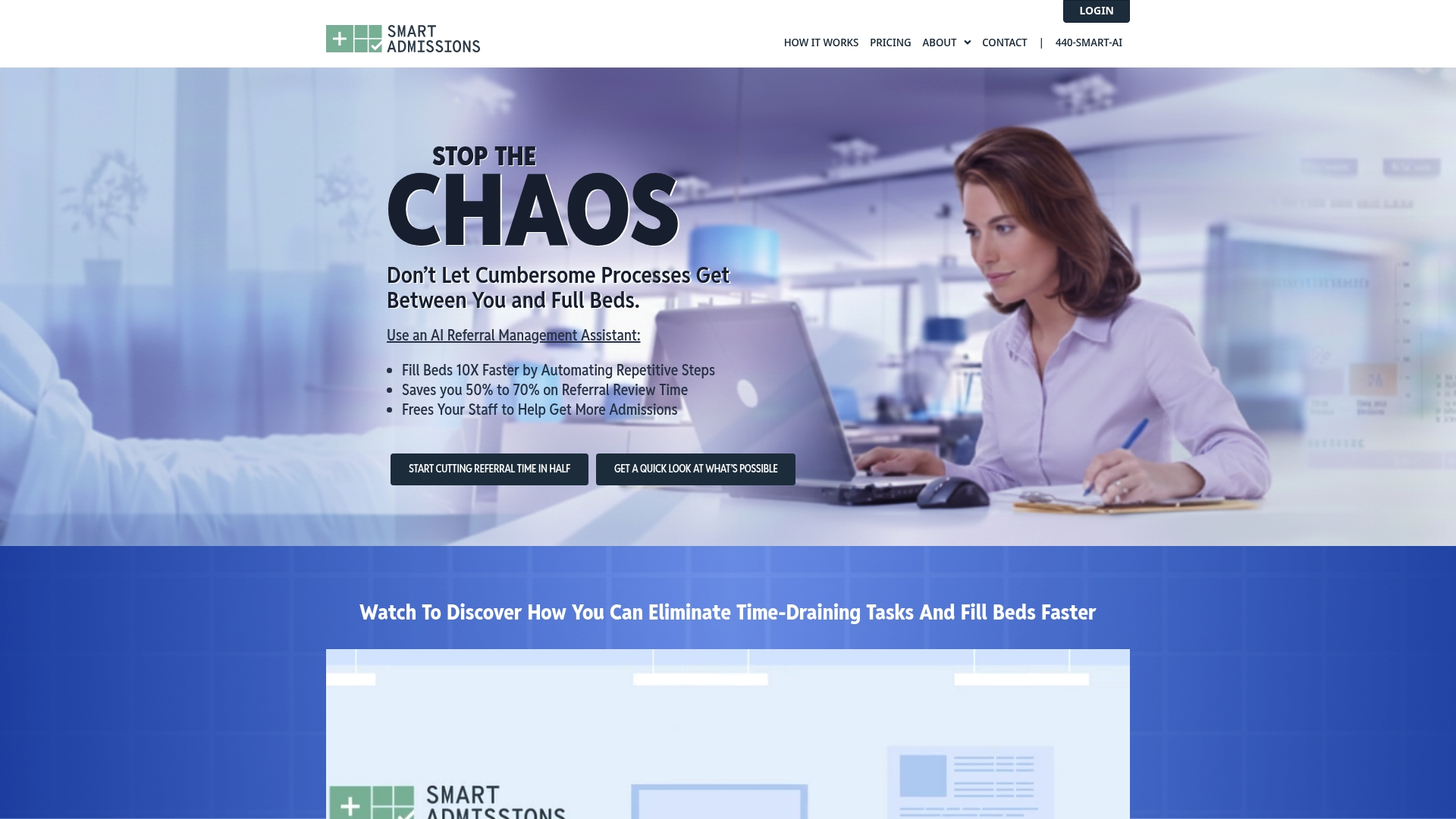
Smartadmissions automates patient eligibility verification, clinical assessments, and documentation management to reduce referral review times and fill beds faster. For teams ready to move beyond spreadsheets, the 7 examples of referral management systems page provides a practical comparison of platforms by feature set and use case. You can also review referral tracking best practices to see how centralized dashboards translate into higher bed occupancy for facilities at different stages of automation maturity.
FAQ
What is centralized referral tracking in healthcare?
Centralized referral tracking is a system that consolidates all patient referral data into one platform, providing real-time status visibility, automated follow-ups, and closed-loop documentation across the entire referral pipeline.
How does centralized tracking reduce referral leakage?
Automated patient scheduling nudges and stage-based pipeline alerts prevent referrals from stalling. One 2026 case study showed leakage dropping from 31% to 6% after implementing centralized tracking automation.
What is a closed-loop referral rate?
A closed-loop referral rate measures the percentage of referrals where the referring provider received confirmation that the patient scheduled, was seen, and that consult notes were returned. Rates above 90% are achievable with full automation.
How does centralized referral tracking affect staff workload?
Automation of follow-up calls, scheduling nudges, and consult note requests can cut care coordinator time by roughly 50%, freeing staff for clinical tasks that require direct judgment rather than administrative coordination.
Does centralized referral tracking require EHR integration?
Full effectiveness requires integration with your EHR system, fax capture for non-digitized specialists, and patient scheduling notification workflows. Systems without these integrations still require manual data entry at critical handoff points.