
Matching referral and admissions software to facility needs is difficult when no product offers clear pricing or simple integrations across common EHR systems. Most competitors require enterprise quotes, limit EHR compatibility, or demand lengthy onboarding and IT support. This comparison shows pricing, integration, and workflow features across six Mediform.ai alternatives so your admissions team can pick one without hidden costs or tech gaps.
Table of Contents
- Smart Admissions
- MedFlo AI
- Hatch
- SocialRoots AI
- AIDA Healthcare
- MDreferralPRO
- Comparison of alternatives
Smart Admissions
At a Glance
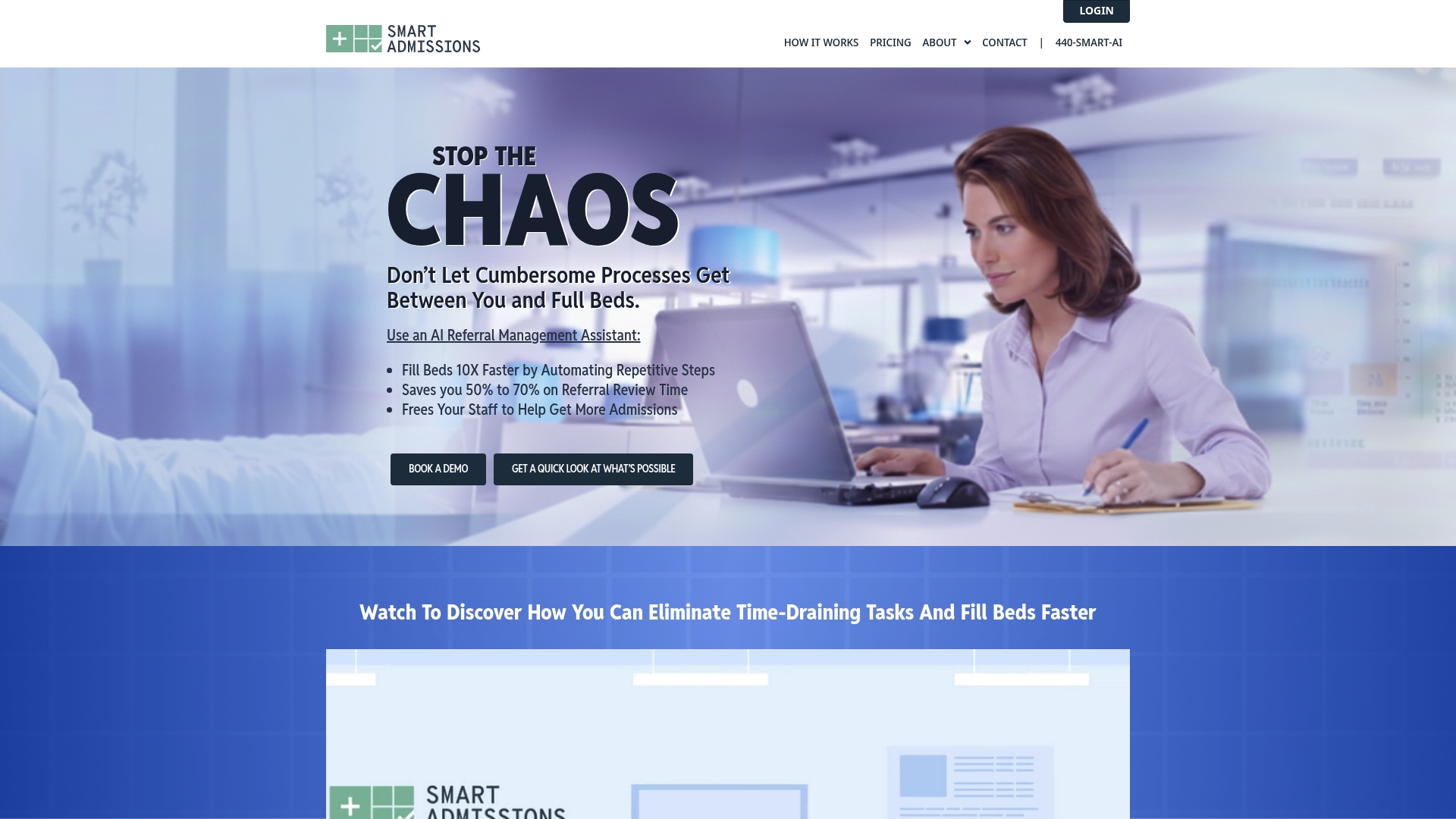
Smart Admissions’ marketing materials state it reduces referral review time from 45 minutes to under 5 minutes. That claim highlights dramatic intake efficiency when the system is fully adopted. The product targets skilled nursing, rehabilitation, and post-acute care referral flows for faster decision making.
Core Features
The platform centralizes referral intake and pipeline tracking while issuing automatic routing and status updates to your admissions team. It performs real time insurance eligibility verification, supports EMR integration with two way data sync, and runs a facility specific decision engine that offers accept/deny recommendations and notifications. Additional capabilities include medication cost threshold analysis, referral analytics and revenue metrics, plus HIPAA compliant audit trails for documentation and compliance.
Key Differentiator
The facility specific decision engine applies your center’s acceptance rules to each referral and then returns a clear recommendation and notification. That automated rule set reduces manual triage and keeps clinical reviewers focused on edge cases.
Pros
According to the company, Smart Admissions speeds bed placement by 3–5 days, which shortens vacancy cycles and improves revenue capture. The vendor also reports large cuts to administrative work through automated referral routing and eligibility checks, freeing staff hours each week. The product includes real time dashboards and referral analytics that give admissions directors visibility into pipeline, payer mix, and revenue opportunities. Easy onboarding and customizable features help your team adapt the system to facility processes.
Cons
- Pricing may be a barrier for very small facilities.
Notable Integrations
- EMR: PointClickCare
Who It’s For
Smart Admissions suits skilled nursing and post-acute care administrators who manage high referral volumes and need faster admissions. Your team will benefit if you rely on timely insurance checks, EMR data exchange, and structured decision rules to accept referrals. Facilities with dedicated staff for onboarding will realize the platform’s full benefits faster.
Unique Value Proposition
The platform pairs real time insurance eligibility verification with two way EMR data sync so clinical and financial checks occur before bed assignment. That combination reduces manual verification steps and shortens the calendar from referral receipt to admission. For admissions teams, this converts referral volume into billable placements with fewer manual handoffs.
Real World Use Case
The vendor reports a rehabilitation facility reduced referral response time from 45 minutes to 10–15 minutes after deployment. That reduced reviewer time allowed staff to handle more referrals per shift and increased admissions while lowering paperwork burden.
Pricing
The published starting price is $597/month for the standard plan. Annual billing is available with a 10% discount. Final pricing is customized by facility size and scope, so your quote will reflect bed count and integration needs.
Website: https://smartadmissions.ai
MedFlo AI
At a Glance
A vendor case study reports a facility cut referral processing from 4 hours to 15 minutes and raised census by 23% in one quarter. That example anchors MedFlo AI’s emphasis on accelerating hospital discharge workflows and improving bed fill for skilled nursing facilities. The claim is presented as the vendor’s reported outcome rather than an independently verified result.
Core Features
MedFlo AI combines AI Document Intelligence for fast clinical data extraction with automated insurance checks and background screening. The platform also offers Facility Match Intelligence that pairs patient needs to facility capabilities and census analytics for occupancy and payer mix analysis. These capabilities connect to EHR and referral systems so your team sees eligibility, clinical fit, and authorization status before discharge.
Key Differentiator
MedFlo AI focuses its automation on the end to end referral and admission path while linking to common hospital systems. Its integration with Epic and PointClickCare and support for HL7 FHIR allow the platform to pull referral documents and push placement decisions into existing clinical workflows. That combination narrows its scope to facilities that need both clinical extraction and placement matching.
Pros
The product reduces manual review by extracting structured clinical data from referral documents and verifying benefits automatically. Real time insurance validation and background checks lower the chance of rejected placements and reduce administrative rework. Integration with major EHR and referral platforms helps your admissions staff avoid duplicate entry and speeds decision making across hospital discharge teams and receiving facilities.
Cons
-
May not work well for facilities without compatible EHRs or referral platforms. Integration requires existing system support.
-
Pricing is customized and often requires enterprise negotiation, which can lengthen procurement timelines.
-
Some vendor claims rely on customer case studies rather than third party validation. Expect to request reference visits.
When It May Not Fit
If your facility relies on a legacy or homegrown referral feed it may lack the connectors MedFlo AI needs. Organizations that require public vendor price sheets for budgeting will find the enterprise quote model cumbersome. Small facilities with minimal referral volume may not achieve a fast return on investment compared with lighter weight tools.
Notable Integrations
Epic
PointClickCare
eFax
Medicare/Medicaid systems
HL7 FHIR
Who It’s For
Post acute care operators, skilled nursing facilities, and hospital discharge teams that process moderate to high referral volumes. Best fit for organizations that already use Epic or PointClickCare and want to reduce back and forth on eligibility, clinical match, and authorizations. Your admissions staff should be ready to adopt new integrations and workflow rules.
Real World Use Case
A skilled nursing facility moved from manual intake to MedFlo AI and, per the vendor case study, shortened referral processing dramatically and increased census during the first quarter after deployment. Your team would use the platform to pre verify insurance, screen backgrounds, and confirm clinical match before accepting a patient. That reported outcome illustrates how automation can free staff time for care coordination.
Pricing
MedFlo AI uses custom pricing tailored to facility size, referral volume, and selected features. Pricing typically emerges from enterprise quotes and requires direct negotiation with the vendor.
Website: https://medfloai.com
Hatch
At a Glance
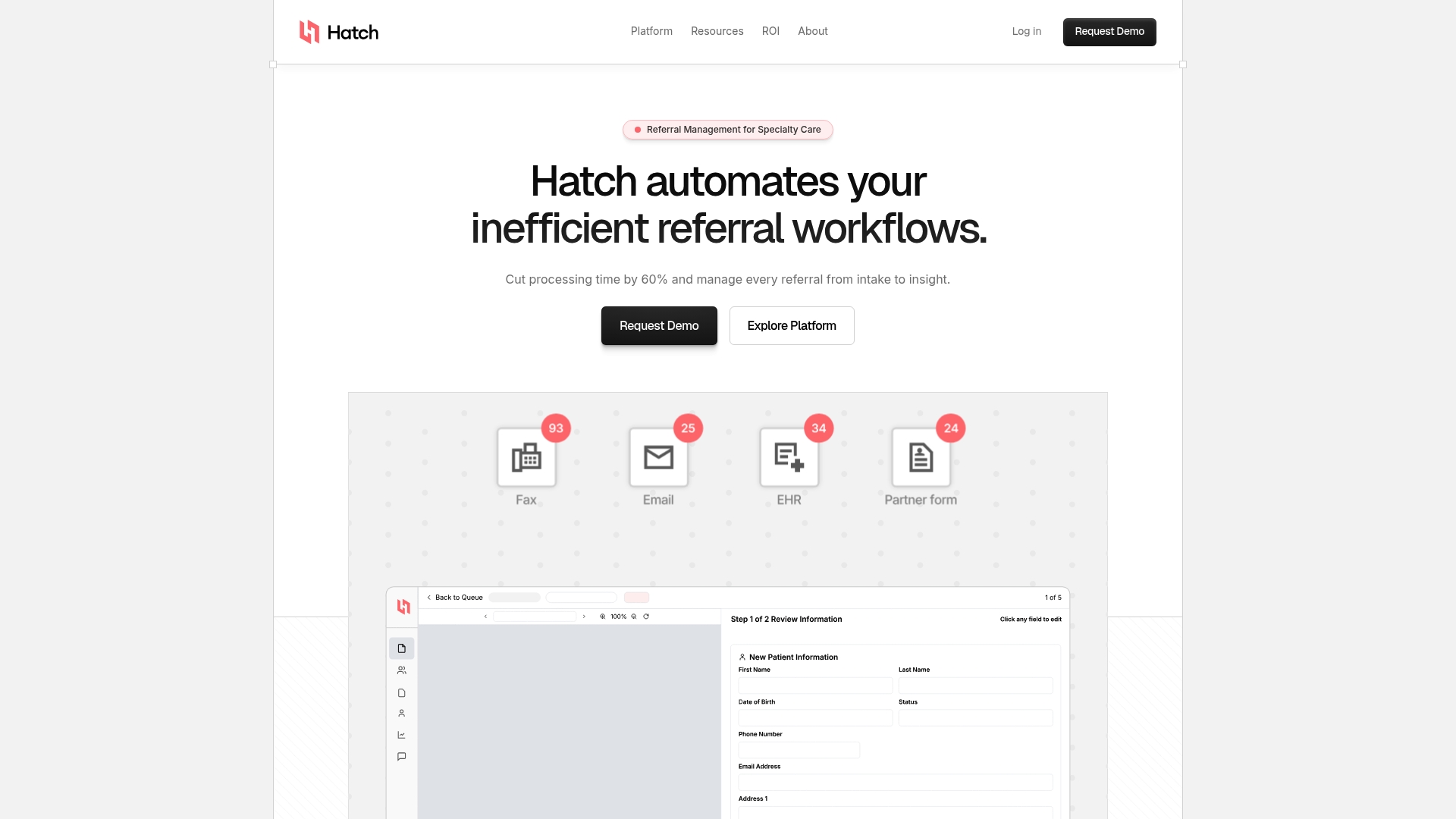
Hatch reports a 60% reduction in referral processing time. The platform treats each referral as a first class object with its own lifecycle and bidirectional EHR sync. That referral first architecture preserves a single record while tracking status and messages across patients and partners.
Core Features
Hatch combines AI powered document intake and classification with a centralized referral queue and real time tracking to keep referrals visible from intake through scheduling. It includes secure messaging for patients and external partners and maintains bidirectional EHR integration so the EHR remains synchronized. The system surfaces pipeline insights to help your team identify bottlenecks and prioritize referrals.
Key Differentiator
Hatch is built around the referral as a first class object rather than as a byproduct of the EHR. That referral centered model stores status, messages, and documents with the referral lifecycle and then syncs back to the EHR. This design reduces the need to search across systems when multiple staff or external partners collaborate on a referral.
Pros
The vendor claims the 60% reduction in intake time, which speaks to its automated document processing and intake automation. Centralized referral queues give your admissions and scheduling teams a single place to triage and act. The platform keeps the EHR as the system of record while adding messaging and tracking that improve communication with patients and referring partners.
Cons
-
Implementation can be challenging in complex, decentralized organizations. Third party reviews note configuration and workflow mapping may require significant IT and clinical staff time.
-
Integrations are focused on EHR systems and standard healthcare tooling. There is no public listing of broad third party connectors beyond healthcare systems.
-
Functionality depends heavily on EHR compatibility and setup. Organizations with highly customized EHR instances may face additional integration work.
When It May Not Fit
If your organization requires many integrations outside healthcare systems, Hatch may leave gaps for nonclinical tools. Highly customized or decentralized EHR environments may face long implementations and extra engineering effort. Small practices with minimal referral volume may not realize the same operational gains as larger specialty groups.
Notable Integrations
Hatch integrates with EHR systems using bidirectional sync so referrals and updates remain consistent between the platform and your records.
Who It’s For
Specialty care practices and health systems that handle high referral volumes will find Hatch relevant. Your admissions and referral teams benefit when multiple staff and external partners must coordinate on each case. Groups that want to keep the EHR as the primary record while adding referral tracking will see the most value.
Real World Use Case
A multi location orthopedic practice reports reduced referral intake processing time by 60% after deploying Hatch. The practice automated follow up messaging and cut manual data entry by routing documents through AI powered intake. That reduction helped teams uncover scheduling bottlenecks and reduce time to clinical review.
Pricing
Pricing is not publicly listed. The vendor indicates pricing is likely custom and enterprise based and typically depends on deployment scope, number of sites, and integration depth.
Website: https://hatchcare.com
SocialRoots AI
At a Glance
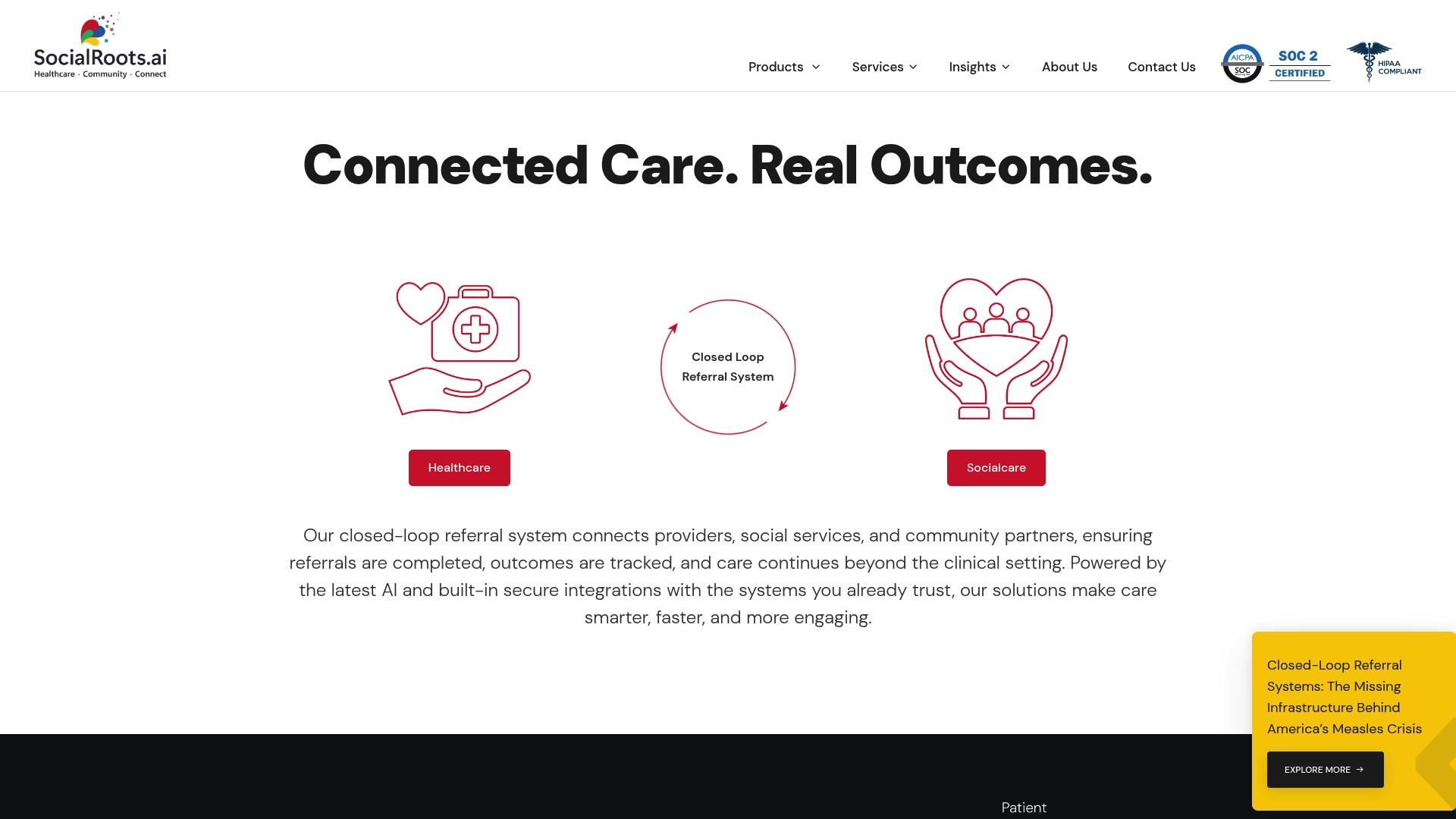
Closed-loop referral management connects providers, social services, and community partners to reduce missed referrals and follow up gaps. According to the company, SocialRoots AI combines AI, blockchain, and standards based APIs to support integration with major EHR platforms. That combination targets organizations that need referral closure, compliance tracking, and data interoperability across care teams.
Core Features
The platform groups referral workflows, compliance tools, and EHR monitoring into a single suite so teams can manage tasks from one place. Key modules include EHR Log Tracker for security and audit monitoring, FQHC compliance software for federally qualified health centers, and a Pillar healthcare management system that implements interoperability standards. Advanced analytics and patient engagement features report trends and surface care opportunities.
Key Differentiator
SocialRoots AI focuses on delivering a full healthcare management stack that pairs AI assisted workflows with standards based integration to major EHRs. That focus on end to end functionality and rapid deployment separates it from single function point solutions and addresses broader IT consolidation projects.
Pros
Deep healthcare IT and analytics expertise supports compliance and operational reporting while the security features help maintain audit readiness. The product emphasizes rapid deployment and customization, which helps teams migrate during IT upgrades or mergers. Integrations with Epic and Cerner are presented as a core capability, and the analytics and patient engagement modules extend the suite into care coordination and outreach.
Cons
-
No public pricing: detailed rates are not listed and pricing appears tailored to each client.
-
Integration complexity: complex healthcare environments may require custom development and longer implementation time.
-
EHR dependency: functionality relies on third party EHR systems and their export or API policies.
When It May Not Fit
Organizations with limited IT resources or small clinics that need an out of the box, low touch solution may struggle with customization demands. If you require transparent, fixed pricing up front, this offering may not meet that need. Teams depending on a single, lightweight referral form may find the suite more than they require.
Who It’s For
Health systems, community health centers, and clinics that plan EHR modernization or consolidation will find the suite relevant. Administrators who need compliance monitoring and referral closure across community partners will get the most value. IT teams preparing for M and A activity or major upgrades will benefit from the deployment and integration focus.
Real World Use Case
A hospital system migrating from multiple legacy EHRs used SocialRoots AI to unify referral workflows, track logins and audits, and run analytics for capacity planning. During the migration, the compliance tools supported policy mapping and the referral module connected community partners to close care gaps.
Pricing
Pricing is customized and not publicly listed. The vendor appears to offer client specific quotes based on deployment scope, integration needs, and support levels. Procurement teams should request a detailed quote and an integration timeline as part of vendor evaluation.
Website: https://socialroots.ai
AIDA Healthcare
At a Glance
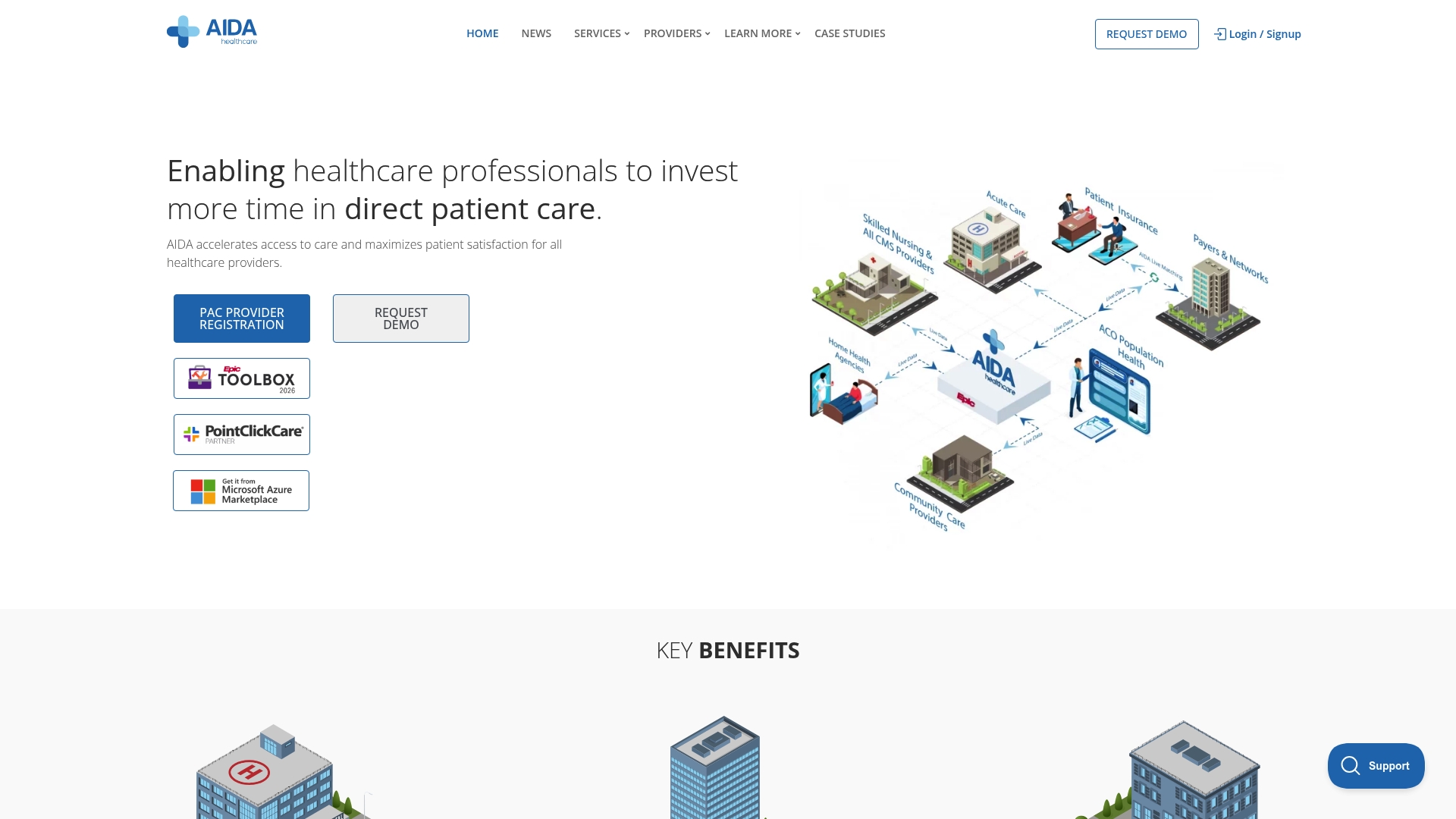
File-less, real-time record access inside Epic reduces manual paperwork for hospital discharge and placement workflows. The platform pairs automated placement matching with secure messaging to move referrals faster. That combination targets complex transfers between hospitals, post-acute providers, payers, and patients.
Core Features
AIDA provides an Epic app with SDK integrations that include single sign-on, an embedded user interface, and file-less record access. The vendor advertises compliance with HITRUST and HIPAA, and the platform uses secure channels for provider and patient communication. Automated matching algorithms and real-time analytics help prioritize placement options and monitor workflow performance.
Key Differentiator
The standout capability is in-app, file-less data exchange inside Epic that removes manual document handling during transitions of care. This direct integration keeps clinical context inside the EHR and reduces the need to switch between external tools.
Pros
Deep Epic integration reduces clicks and duplicate documentation for admissions teams working inside the hospital EHR. Advanced analytics deliver operational and clinical visibility that helps identify bottlenecks and measure referral outcomes. Post-acute providers can access referral and admission modules at no cost, which can increase participation across a regional network.
Cons
-
Primarily optimized for Epic environments. Facilities using other EHRs will need customization or middleware.
-
Implementation requires dedicated IT resources and coordination with an Epic integration team.
-
The platform depends on timely provider engagement and high data quality to perform automated matching.
When It May Not Fit
Large systems running non-Epic EHRs will face higher integration time and cost. Organizations without internal integration staff will need outside technical support during setup. Teams that require full offline functionality may find the platform limited for on-site or low-connectivity settings.
Notable Integrations
- Epic EHR (Epic App for Epic)
- PointClickCare
- Azure Marketplace
Who It’s For
Large hospitals, health systems, and post-acute networks using Epic EHR that want tighter coordination across discharge and placement workflows. Admissions leaders and care transition managers who need embedded EHR tools and analytics to measure transfer performance will find the product aligned with their operational goals.
Real World Use Case
According to the company, a regional hospital system reduced length of stay by 10% after integrating AIDA for discharge coordination. That figure translated into faster placements, fewer bed holds, and clearer communication with receiving providers.
Pricing
Not applicable — informational only. Public pricing is not listed by the vendor.
Website: https://aidahealthcare.com
MDreferralPRO
At a Glance
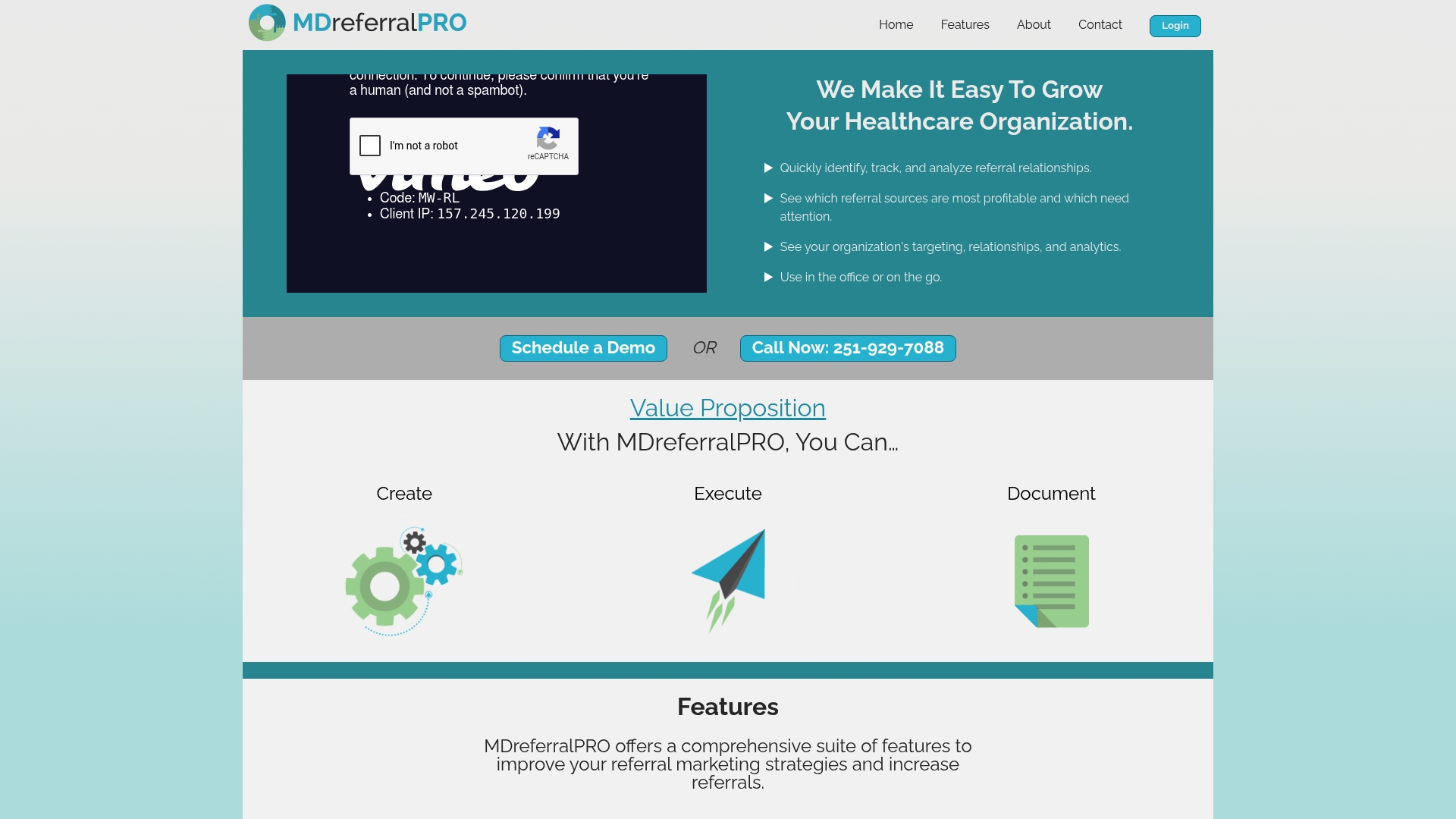
Integrated geo-targeting ties referral activity to location data, letting your team focus outreach where referral volume already exists. The product pairs that geographic view with real-time analytics and a business intelligence dashboard for referral source tracking. Visit and notes fields support in-office and mobile documentation to keep context with each referral.
Core Features
Geo-targeting and referral source tracking connect provider locations to referral trends, so you can prioritize outreach by place and source. The physician and facility directory merges contact records with visit and notes information so referral context stays with each contact. Advanced analytics populate a business intelligence dashboard that reveals trend lines and supports campaign planning.
Key Differentiator
The defining feature is the combination of integrated geo-targeting and real-time analytics that targets outreach and measures source performance. That pairing aims to let physician liaisons see where outreach will likely move referral volume and which referrers respond.
Pros
MDreferralPRO centralizes referral contacts, engagement activity, and encounter notes so your liaison spends less time reconciling spreadsheets. The dashboard and analytics provide clear trend views for planning outreach and for spotting high-value referrers. Mobile-capable features let staff log outreach and update notes while they are onsite or traveling between clinics.
Cons
-
Limited integrations could restrict connectivity with other healthcare IT systems.
-
Pricing is not published; the vendor lists the product as informational only.
-
No integrations are listed publicly, which means your IT team may need to build custom connections for EMR or scheduling systems.
Who It’s For
Physician liaisons, healthcare marketing teams, and referral program managers who run targeted outreach campaigns and need geographic context will find this a good match. Your facility benefits if you already track referral sources and want analytics to guide outreach. It is less suitable if you need ready-made EMR integrations out of the box.
Real World Use Case
A hospital maps referral volume by provider location, identifies physicians who consistently send patients, and tracks outreach calls and visits in the same system. The team uses dashboard trend views to plan visits and to measure whether specific outreach lifts referrals from targeted physician groups.
Pricing
Not applicable — informational only. The company does not publish standard pricing on its site, so contact the vendor for quotes and deployment options.
Website: https://mdreferralpro.com
Comparison of alternatives
Selecting the ideal referral management and admissions tool involves careful evaluation of features tailored to healthcare facility needs. This comparison evaluates leading solutions, highlighting the strengths and limitations of each to guide informed decisions.
Integration speed and compatibility
Smart Admissions offers real-time EMR integration with two-way data exchange, enabling a workflow within facilities using compatible systems like PointClickCare. On the other hand, MedFlo AI demonstrates a broader outreach by integrating with industry standards Epic and HL7 FHIR, which may appeal to facilities entrenched in those platforms. This flexibility positions MedFlo AI as a favorable option for facilities with legacy systems requiring diverse integration. Conversely, facilities with niche, facility-unique needs may derive greater value from Smart Admissions given its customizable decision-support functionalities.
Cost transparency and pricing models
Smart Admissions provides clear and upfront pricing starting at $597/month with documented potential discounts for annual billing. In contrast, several competitors, including MedFlo AI and Hatch, require fully customized pricing through enterprise quotes. This can create barriers for smaller facilities or institutions with strict budget constraints. Organizations prioritizing upfront cost predictability may therefore find Smart Admissions’ pricing model advantageous, especially compared to options requiring extended procurement discussions.
Best fit
- Facilities experiencing significant referral traffic but requiring proactive decision-making expertise will benefit most from Smart Admissions’ customizable triage systems, facilitating faster and more accurate admission handling.
- Organizations leveraging Epic or FHIR-compatible healthcare systems might find MedFlo AI advantageous, given its advanced integration capabilities with these platforms.
- Referral networks emphasizing referral source analytics and outreach benefits will see value in MDreferralPRO, particularly for its geo-targeting capabilities.
Our pick
The customizable facility-specific decision model positioning of Smart Admissions establishes it as the primary recommendation for organizations focusing on efficiency gains through highly adaptable operational processes. Additionally, it is noteworthy to mention that for facilities without integrated EHRs or reliance on straightforward referral tools, competitor options may provide alternative value depending on specific challenges.
Referral and admissions software solutions streamline patient intake, placement efficiencies, and workflow integration.
| Product | Core Features | Key Differentiator | Best For | Pricing | Notable Limitation |
|---|---|---|---|---|---|
| Smartadmissions | Centralized tracking, insurance checks, facility engine | Facility-specific decision engine | Skilled nursing facilities, high referral volume | $597/month | Pricing may be high for small facilities |
| MedFlo AI | AI Document Intelligence, census analytics | End-to-end referral and admission automation | Post-acute care using Epic and PointClickCare | Price not published | May not fit legacy or custom referral systems |
| Hatch | Document intake, referral lifecycle tracking | Referral-first architecture | Specialty care practices with high referral volume | Price not published | Integration depends on EHR setup |
| SocialRoots AI | Secure referral workflows, standards-based APIs | Full-stack healthcare management | Health systems planning IT upgrades | Price not published | Requires significant IT for customization |
| AIDA Healthcare | Epic-integration, secure workflow management | In-app record access within Epic | Hospitals using Epic for discharge workflows | Price not published | Primarily optimized for Epic environments |
| MDreferralPRO | Geo-targeting analytics, referral logs | Integrated geographic analytics for outreach | Referral program managers tracking source trends | Price not published | Limited integrations with other systems |
How Can Skilled Nursing Facilities Overcome Referral Management Challenges?
Managing high referral volumes while ensuring timely insurance verification and clinical assessments requires a focused solution. Smartadmissions is designed for skilled nursing homes, rehabilitation centers, and post-acute care providers facing these challenges. The platform reduces referral review times significantly by automating administrative tasks and integrating directly with Electronic Medical Records and insurance portals.
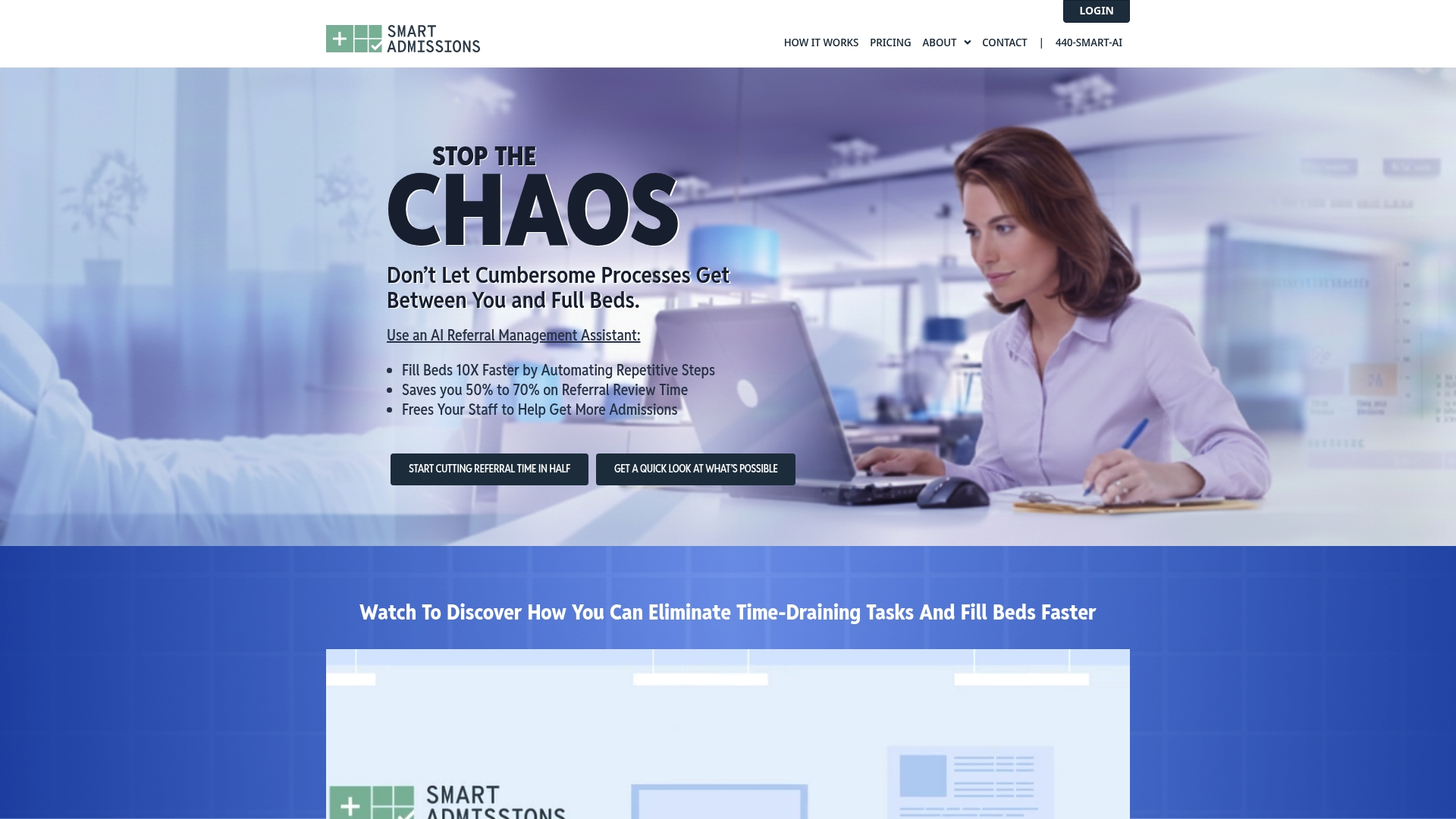
Your admissions team can benefit from actionable insights that improve bed fill rates and reduce manual work, leading to faster placements and increased revenue. Explore how Smartadmissions supports your facility’s specific acceptance rules and real-time insurance eligibility verification. Visit Smartadmissions to request a demo and see how your referral process can become more efficient and reliable.
FAQ
How does Smartadmissions improve referral processing time?
Smartadmissions reduces referral review time from 45 minutes to under 5 minutes. This efficiency allows your admissions team to process referrals much faster, leading to quicker bed placements and revenue capture.
What is the difference between Smartadmissions and MedFlo AI?
MedFlo AI excels in automated insurance checks and clinical data extraction through its AI Document Intelligence feature. In contrast, Smartadmissions offers a facility-specific decision engine that provides accept/deny recommendations based on your center’s rules, making it particularly effective for skilled nursing facilities with structured admission processes.
Which platform supports real-time insurance eligibility verification?
Smartadmissions supports real-time insurance eligibility verification. This capability helps your admissions team ensure that insurance details are confirmed before bed assignments, thus reducing manual verification processes.
Can I use Smartadmissions if my facility requires extensive integration with EMR systems?
Yes, Smartadmissions supports EMR integration with two-way data synchronization. This feature facilitates streamlined operations across your admissions and clinical workflows, enhancing efficiency in managing referrals.
How does Smartadmissions compare in terms of pricing tiers?
Smartadmissions starts at $597/month for the standard plan, while pricing for competitors like MedFlo AI is customized based on facility size and selected features. Understanding the pricing model of Smartadmissions can help you assess the potential return on investment for your facility.