
TL;DR:
- Healthcare referral partnerships help providers send more patients through trust and clinical fit, increasing admissions. Maintaining active, structured relationships with regular communication improves referral volume, patient value, and operational efficiency. Investing in formal programs and EMR integration boosts long-term success and fills beds more reliably.
Referral partner relationships in healthcare are defined as formal or informal agreements between providers, physicians, discharge planners, and care coordinators who send patients to your facility based on trust and clinical fit. Understanding why maintain referral partner relationships matters is the foundation of any sustainable admissions strategy. Referral leads close at 40%–60% compared to 8%–15% for cold outreach. That gap represents the difference between a full census and chronic vacancy. For skilled nursing homes, rehabilitation centers, and post-acute care providers, a well-maintained referral network is the most cost-effective patient acquisition channel available.
Why maintain referral partner relationships in healthcare
Strong referral partnerships do not happen by accident. They require deliberate, consistent effort from your admissions and leadership teams. The payoff is measurable: referred patients show 16% higher lifetime value and 18% lower churn than patients acquired through other channels. That means fewer gaps in care continuity, more predictable revenue, and a stronger reputation across your referral network.
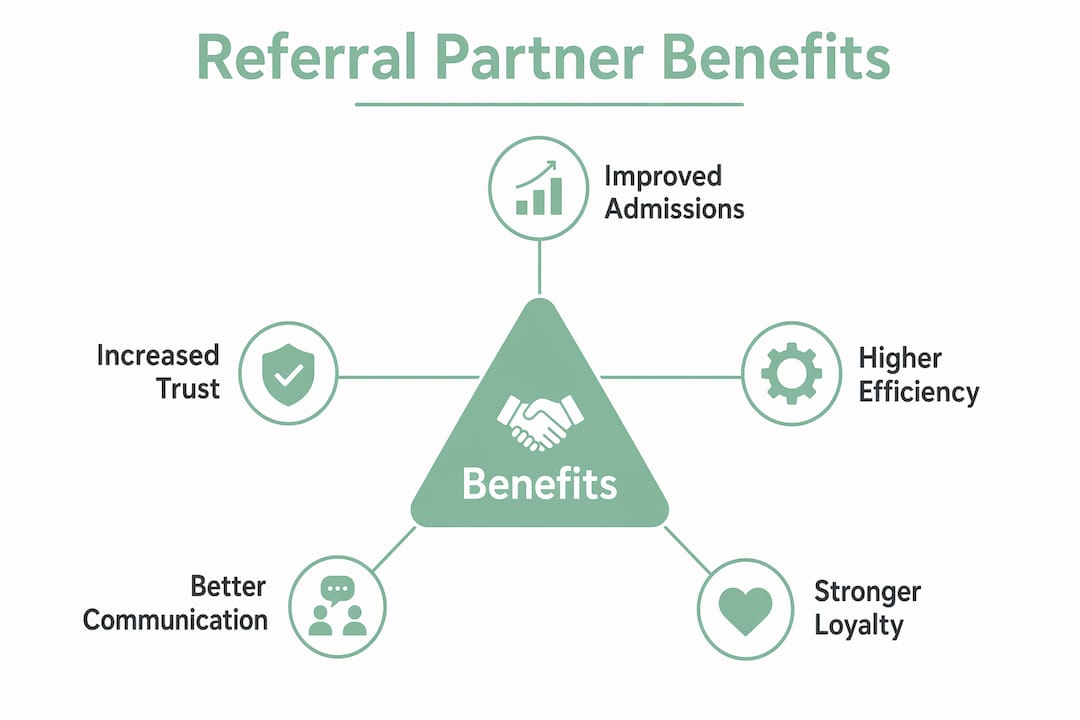
The benefits of referral partnerships extend well beyond individual admissions. When a hospital discharge planner trusts your facility, they send you patients consistently, not just when they have no other option. That trust is built through reliable communication, clean documentation, and demonstrated clinical outcomes. Each successful admission reinforces the relationship and makes the next referral more likely.

Healthcare administrators who treat referral partnerships as a growth channel, rather than a passive intake function, see compounding returns. Your facility becomes the preferred destination for aligned providers. That preference is not accidental. It is earned through structured engagement and consistent follow-through.
Tangible advantages your facility gains
- Higher close rates: Referral leads convert 3–5 times more than cold outbound leads, reducing the effort required per admission.
- Lower acquisition costs: Facilities that formalize referral programs reduce cold outbound spending by 40%–70%, improving profit margins directly.
- Stronger reputation: Consistent referral volume signals clinical credibility to the broader provider community.
- Wider network reach: Each satisfied referral partner introduces your facility to their own professional network, expanding your reach without additional marketing spend.
Structured referral programs achieve 87% sales effectiveness compared to 42% without a formal program. That nearly doubles your admissions team’s output from the same number of conversations.
What are the most common pitfalls in managing referral relationships?
Passive referral strategies are the leading cause of inconsistent admissions volume. Many facilities assume that good clinical outcomes will generate referrals automatically. They do not. Passive approaches lose momentum quickly, and without active nurturing, even strong partners stop sending patients within months.
The second major pitfall is failing to close the feedback loop. Referrers stop sending leads when they receive no updates on the patients they referred. A discharge planner who sends a patient to your facility and never hears back has no reason to prioritize you next time. Closing that loop, even with a brief status update, maintains trust and keeps your facility top of mind.
A third failure point is the absence of ownership. Partnerships without a dedicated owner deteriorate through neglect. When no one is responsible for a relationship, no one maintains it. Quarterly check-ins, partner updates, and proactive outreach all require an assigned person with clear accountability.
Common pitfalls to watch for include:
- No CRM documentation of referral interactions, making ROI measurement impossible
- Inconsistent communication that leaves partners feeling deprioritized
- Treating all referral partners equally instead of tiering by volume and strategic value
- Failing to reciprocate by sending referrals back to aligned partners
Pro Tip: Assign each key referral partner to a named relationship manager on your admissions team. Review that list quarterly and replace any partner who has gone more than 90 days without contact.
How can administrators build a systematic process to nurture referral partnerships?
Formalizing your referral program is the single most effective step you can take. Referrals are systematic, not random, and facilities that treat them as a managed process consistently outperform those that rely on goodwill alone. A formal program defines who your partners are, what you offer them, and how you will communicate on an ongoing basis.
A practical framework for building referral relationships looks like this:
- Map your current referral sources. Identify every hospital, physician practice, home health agency, and care coordinator who has sent you a patient in the past 12 months. Segment them by volume and clinical alignment.
- Assign relationship owners. Each tier-one partner gets a named contact on your team. That person owns the relationship, tracks interactions in your CRM, and schedules quarterly check-ins.
- Implement CRM tracking for referrals. Document every interaction, referral outcome, and partner communication. Without this data, you cannot measure what is working or identify at-risk relationships.
- Give referrals first. Reciprocity builds trust faster than any other tactic. When you actively send patients or leads to your partners, they prioritize you in return.
- Close every feedback loop. After each referral, notify the referring provider of the admission outcome. A brief update call or secure message takes two minutes and reinforces the relationship significantly.
Pro Tip: Treat your top 10 referral partners the way you treat your most important clients. Schedule a formal quarterly review, share outcome data, and ask what you can do better. That level of attention is rare and memorable.
Healthcare administrators who want to improve their referral intake communication will find that structured touchpoints, not volume of contact, drive partner loyalty. One meaningful quarterly call outperforms a dozen generic email blasts.
Treating referral partners like top-tier clients, with a structured service matrix and consistent engagement, is the approach that separates high-performing facilities from those with erratic census numbers. Your partners notice the difference between a facility that follows up and one that goes silent after the admission.
How do referral partnerships affect admissions efficiency and bed occupancy?
Strong referral networks directly improve the speed and quality of your patient intake process. Trusted partners send complete, accurate referral packets because they know your documentation requirements. That accuracy reduces back-and-forth, cuts review time, and accelerates bed assignment. Facilities with well-managed referral documentation report fewer errors at intake and faster time to admission.
The operational impact extends to bed occupancy. When your referral partners prioritize your facility, you receive earlier notification of pending discharges from hospitals. That lead time lets your admissions team prepare beds, verify insurance eligibility, and complete clinical assessments before the patient arrives. The result is higher occupancy and less downtime between admissions.
EMR integration amplifies these gains. When your referral management system connects with your Electronic Medical Record platform using FHIR or HL7 standards, incoming referral data populates patient records automatically. Your team spends less time on manual data entry and more time on clinical review and partner communication.
| Operational area | Impact of strong referral partnerships |
|---|---|
| Referral close rate | 40%–60% vs. 8%–15% for cold leads |
| Patient lifetime value | 16% higher than non-referred patients |
| Churn rate | 18% lower than non-referred patients |
| Outbound marketing spend | Reduced by 40%–70% with formal programs |
| Admissions team effectiveness | 87% with structured programs vs. 42% without |
Facilities that connect EMR integration with referral workflows gain a measurable advantage in intake speed. Real-time eligibility verification and automated clinical assessments reduce the administrative burden on your staff and improve the experience for referring providers. That improved experience feeds back into the relationship, making partners more likely to send future referrals your way.
Healthcare administrators who want to increase bed fill rates should also review their patient referral strategies alongside their partner engagement practices. The two functions reinforce each other when managed together. Improving your online visibility through healthcare SEO also supports inbound referral volume by making your facility easier for providers to find and evaluate.
Key Takeaways
Maintaining referral partner relationships is the highest-return admissions strategy available to healthcare facilities, combining lower acquisition costs, higher close rates, and stronger long-term patient value.
| Point | Details |
|---|---|
| Referral leads convert far better | Referral leads close at 40%–60%, compared to 8%–15% for cold outreach. |
| Formal programs multiply effectiveness | Structured referral programs achieve 87% sales effectiveness versus 42% without one. |
| Feedback loops prevent partner attrition | Notifying referrers of admission outcomes maintains trust and keeps referrals flowing. |
| Ownership prevents relationship decay | Assigning a named relationship manager to each key partner prevents neglect and inconsistency. |
| EMR integration accelerates intake | Connecting referral data with your EMR reduces manual entry and speeds bed assignment. |
The mindset shift that most facilities miss
Most healthcare administrators I speak with understand that referral relationships matter. What they underestimate is how quickly those relationships decay without intentional maintenance. A partner who sent you 20 patients last year will not automatically send you 20 this year. Relationships require ongoing investment, and in healthcare, that investment is almost always underbudgeted.
The facilities that consistently outperform their peers on census numbers share one trait: they treat referral partnership management as a core operational function, not a side task for the admissions coordinator. They assign ownership, track interactions, close feedback loops, and give referrals before expecting to receive them. That last point is the one most administrators resist. Sending a patient to a competing facility feels counterintuitive. But reciprocity is the fastest trust-builder in any professional relationship, and in healthcare networks, trust is the currency that drives admissions.
I have also seen facilities invest heavily in marketing while neglecting the 10 hospital discharge planners who could fill their census without a single ad dollar spent. The math is straightforward. A referred patient costs a fraction of a cold-acquired one and stays longer. The ROI on a quarterly check-in call with a key partner is higher than almost any marketing campaign your facility could run.
The shift from a transactional mindset to a service-oriented partnership approach is not complicated. It requires consistency, accountability, and the willingness to give value before you ask for it. Facilities that make that shift stop chasing admissions and start receiving them.
— Harry
How Smartadmissions supports your referral partner strategy
Smartadmissions is built for skilled nursing homes, rehabilitation centers, and post-acute care providers who want to turn referral management into a reliable admissions engine.
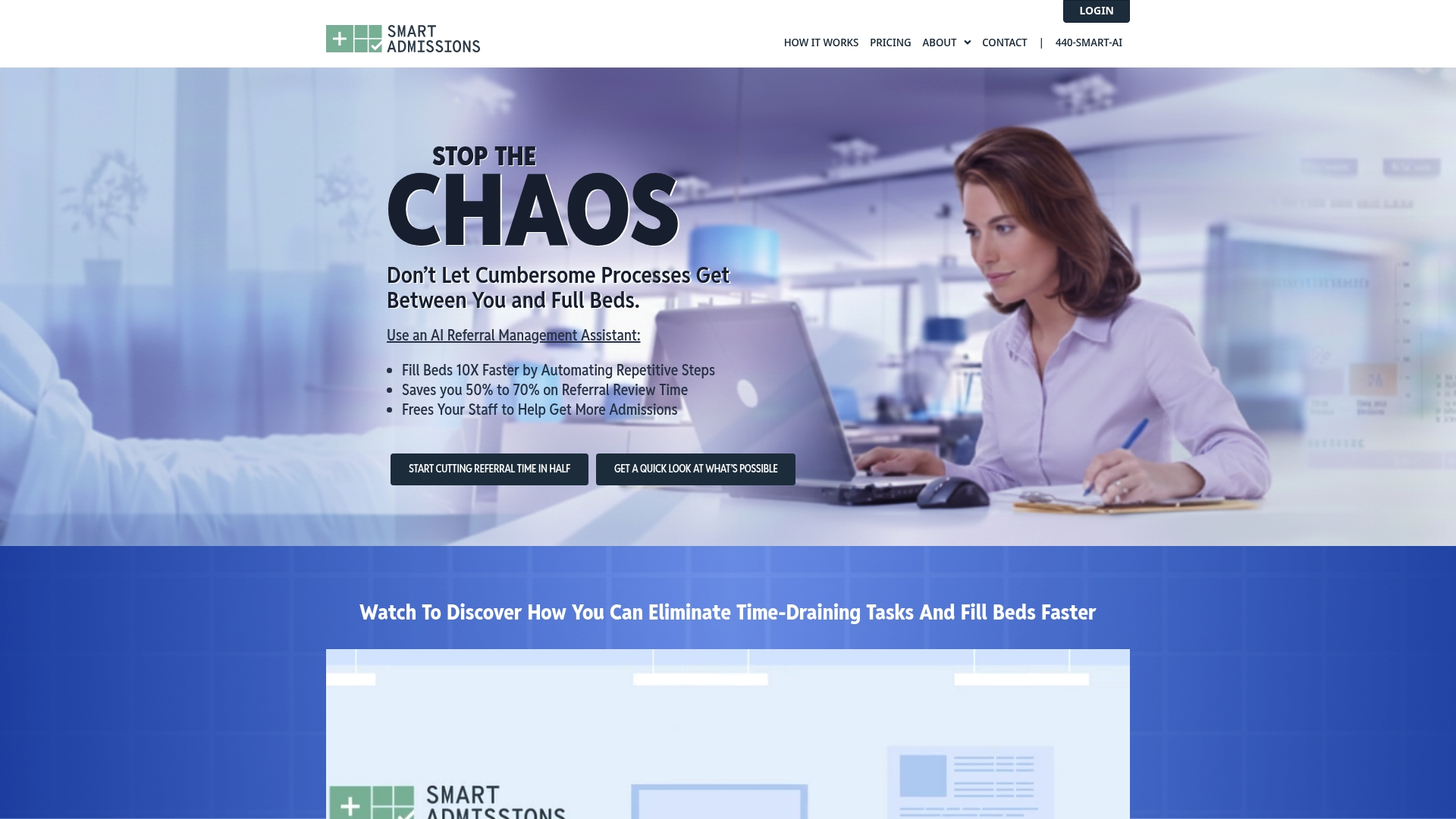
The platform’s AI-powered referral management assistant integrates with your existing EMR using FHIR and HL7 standards, automating eligibility verification, clinical assessments, and documentation intake. That automation frees your admissions team to focus on partner communication and relationship maintenance rather than manual data entry. Explore referral management system examples to see how facilities like yours have structured their programs for consistent results. You can also review top referral management tools for 2026 to identify the right technology fit for your team’s workflow and partner engagement goals.
FAQ
What does it mean to maintain a referral partner relationship?
Maintaining a referral partner relationship means consistent, structured communication with providers who send patients to your facility, including regular check-ins, feedback on referral outcomes, and reciprocal support. It is an active process, not a passive one.
How often should you contact referral partners?
Quarterly formal check-ins are the minimum for tier-one partners, with brief status updates after each referral. Facilities that assign a dedicated relationship owner to each key partner maintain the most consistent contact cadence.
Why do referral partnerships fail over time?
Referral partnerships fail primarily due to passive management, lack of feedback to referring providers, and no assigned ownership. Without active nurturing, even strong partnerships lose momentum within months.
How does EMR integration support referral partner relationships?
EMR integration using FHIR or HL7 standards allows referral data to populate patient records automatically, reducing errors and speeding intake. Faster, cleaner admissions improve the referring provider’s experience and strengthen the partnership.
What is the value of referrals compared to other patient acquisition methods?
Referred patients have 16% higher lifetime value and 18% lower churn than non-referred patients, making referral partnerships the highest-value acquisition channel for most healthcare facilities.