
TL;DR:
- Referral criteria are measurable rules that determine which patients a skilled nursing or rehab facility accepts. Clear criteria, aligned with clinical standards and supported by technology, ensure consistent, compliant admissions and improve outcomes.
Referral criteria are the structured, measurable rules that determine which patients your skilled nursing or rehabilitation facility accepts from external referral sources. Knowing how to set referral criteria correctly is the difference between a well-managed census and a reactive admissions process that strains your staff and misses clinical goals. The 2025 AAHA Referral Guidelines confirm that clear responsibilities across primary and specialty care reduce stress and improve clinical outcomes during referrals. This guide gives your admissions team a practical, step-by-step framework grounded in current clinical standards and operational best practices.
How to set referral criteria: prerequisites and key components
Before writing a single eligibility rule, your team needs the right inputs and the right people in the room. Skipping this step produces criteria that look good on paper but fail in practice.

| Prerequisite | Details |
|---|---|
| Key stakeholders | Admissions staff, attending clinicians, social workers, and referral coordinators |
| Patient clinical data | Diagnosis, acuity level, functional status, and documented rehab potential |
| Insurance and payer status | Medicare, Medicaid, and commercial insurance verification documents |
| EMR access | Real-time patient records shared between referring and receiving facilities |
| Referral management platform | Software that tracks referral status, documents decisions, and flags gaps |
| Compliance framework | HIPAA-compliant data sharing protocols and FHIR/HL7 data standards |
Admissions staff and clinicians must align on what “clinically appropriate” means for your specific facility before any criteria go live. A rehabilitation center focused on orthopedic recovery has different thresholds than a skilled nursing facility managing complex wound care. Technology solutions such as EMR integration and referral management software improve referral accuracy, reduce errors, and enhance information sharing among care teams. Getting your data infrastructure in place first means your criteria will be enforceable from day one.
Pro Tip: Run a 30-day audit of your last 100 referrals before drafting criteria. Identify which cases you accepted, which you declined, and why. That data becomes your first draft.
How do you define clear eligibility rules and referral guidelines?
Effective referral guidelines separate clinical inclusion criteria from operational exclusion rules. Both categories are necessary, and confusing them creates gaps that referral sources will exploit.
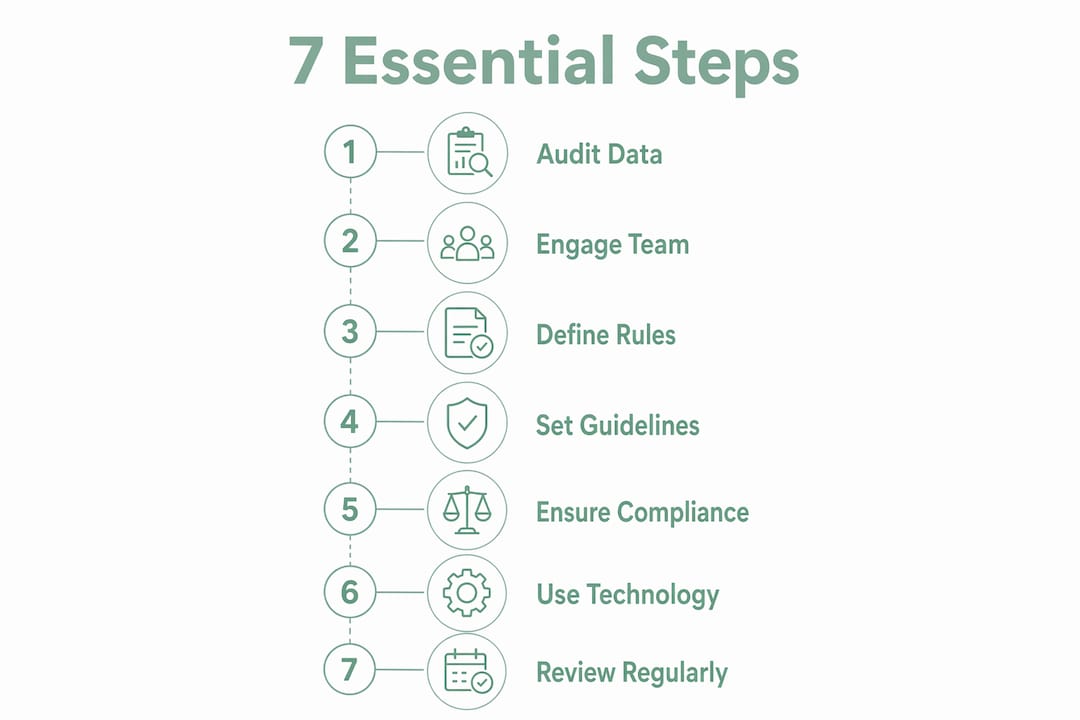
Follow these seven steps to build guidelines your team can actually use:
-
Define clinical inclusion criteria. List the diagnoses, acuity levels, and functional statuses your facility is equipped to manage. Be specific: “post-surgical orthopedic patients requiring daily physical therapy” is enforceable; “rehab patients” is not.
-
Set clinical exclusion criteria. Identify conditions your facility cannot safely manage, such as patients requiring ventilator support if your unit is not certified for it. Document these exclusions in writing and review them with your clinical director.
-
Establish insurance eligibility rules. Require verified insurance authorization before a referral advances past the initial review stage. Unverified payer status is the single most common cause of post-admission revenue loss.
-
Exclude internal prospects. Industry standards for referral attribution require that referrals be net-new to qualify, excluding self-referrals and existing prospects. Apply the same logic to your facility: a patient already in your system does not count as a new referral.
-
Define your attribution window. Standard B2B referral programs set attribution windows of 30–60 days. Your facility should set a comparable window so that referral credit is assigned to the correct source without ambiguity.
-
Document rehab potential thresholds. Require a standardized functional assessment, such as a Barthel Index or FIM score, as part of every referral packet. This gives your clinical team an objective basis for acceptance decisions.
-
Build a referral criteria checklist. Consolidate all inclusion and exclusion rules into a single one-page checklist that admissions staff complete for every incoming referral. Consistency depends on a repeatable process, not individual judgment.
Preventing referral drift requires structured, content-rich communication focusing on patient costs, prognosis, and management, not just administrative intake. Drift happens when criteria are applied inconsistently over time, usually because the rules exist in someone’s head rather than in a written document. A checklist eliminates that risk.
Pro Tip: Review your exclusion criteria quarterly. Facilities evolve, staff skills change, and a condition you could not manage last year may be well within your capacity today.
What processes ensure consistency, attribution, and compliance?
Writing good criteria is only half the work. The other half is building the operational controls that make those criteria stick across every shift, every referral coordinator, and every referral source.
The foundation of a consistent referral program is a single source of truth. Pre-defining tie-break policies helps resolve conflicts over referral attribution before they become disputes. Your policy document should name the owner of each decision: who approves acceptance, who handles exceptions, and who resolves attribution conflicts when two referral sources claim the same patient.
“Avoid rewarding referrals too early; anchor rewards or acceptance to verified clinical or operational milestones to maintain referral quality and prevent fraud. This ensures incentives align with real, sustainable admissions.”
Key operational controls your facility should put in place include:
- Attribution policy: Document the exact window and tie-break rule in writing. Post it where every admissions staff member can access it.
- Approval triggers: Tie referral acceptance to verified milestones such as confirmed insurance authorization, completed clinical assessment, and signed consent forms.
- Anti-fraud rules: Require identity verification for all referral sources. Explicit rules on self-referral and time-bound attribution maintain referral program integrity.
- Exception handling: Name one person who has authority to approve exceptions. Without a named owner, exceptions become the default, and your criteria lose meaning.
- Audit trail: Log every referral decision, including the reason for acceptance or decline. This record protects your facility during compliance reviews and supports continuous quality improvement.
Embedding referral promotion as an ongoing operational habit integrated into patient intake workflows, rather than treating it as a one-time event, increases referrals and compliance over time. Your criteria should live inside your intake workflow, not in a separate policy binder that no one opens.
How does technology support effective referral criteria implementation?
Technology does not replace good criteria. It enforces them at scale and removes the manual steps that introduce errors and delays.
The table below shows the technology categories most relevant to referral criteria enforcement and what each one delivers:
| Technology category | Core function | Benefit to referral criteria |
|---|---|---|
| EMR integration | Real-time patient record sharing | Eliminates duplicate data entry and supports clinical review |
| Referral management platform | Tracks referral status and documents decisions | Creates an audit trail and enforces checklist completion |
| Insurance verification portal | Automated payer eligibility checks | Prevents unverified referrals from advancing |
| Clinical assessment tools | Standardized scoring (Barthel Index, FIM) | Provides objective data for acceptance decisions |
| Analytics dashboard | Tracks referral volume, source, and outcome | Identifies criteria gaps and referral source performance |
EMR integration and referral management software improve referral accuracy, reduce errors, and enable real-time status tracking across care teams. That means your admissions staff spends less time chasing fax confirmations and more time on clinical review. Smartadmissions integrates directly with existing EMR systems and insurance portals to automate eligibility verification and documentation management, which keeps your criteria enforcement consistent regardless of who is on shift.
Ongoing communication throughout the referral lifecycle is equally critical. Referral sources need structured updates on patient status, not just an acceptance or decline notification. Facilities that provide consistent, content-rich communication to referring providers see stronger referral relationships and higher-quality incoming cases. Structured communication also reduces family stress during transitions, which aligns directly with the family-centered care standards outlined in the 2025 AAHA Referral Guidelines.
Pro Tip: Set automated status notifications at three points: referral received, clinical review complete, and admission confirmed. Referral sources that receive consistent updates send more referrals.
Key Takeaways
Effective referral criteria combine clinical specificity, operational controls, and technology enforcement to produce consistent, compliant admissions decisions.
| Point | Details |
|---|---|
| Start with a data audit | Review your last 100 referrals to identify patterns before writing any eligibility rules. |
| Separate clinical and operational rules | Clinical inclusion criteria and operational exclusion rules serve different purposes and must both be documented. |
| Anchor acceptance to verified milestones | Tie referral acceptance to confirmed insurance authorization and completed clinical assessments, not just intake requests. |
| Create a single source of truth | One policy document with named owners prevents attribution disputes and staff confusion. |
| Use technology to enforce criteria | EMR integration and referral management platforms make criteria consistent across every shift and every referral source. |
What I’ve learned from watching facilities get referral criteria wrong
Most facilities I have worked with do not fail because their criteria are too strict. They fail because their criteria are too vague. “Medically stable” is not a criterion. “Medically stable with a documented Barthel Index score above 40 and confirmed Medicare Part A eligibility” is a criterion. The difference between those two statements is the difference between a consistent admissions process and a daily negotiation between your admissions coordinator and a hospital discharge planner.
The second mistake I see consistently is treating criteria as a one-time project. Your facility’s capabilities change. Your payer mix shifts. New clinical staff bring new competencies. Criteria that were accurate 18 months ago may now be turning away patients you could serve well, or accepting patients your team is not equipped to manage. A quarterly review with your clinical director and admissions lead takes less than an hour and prevents months of operational friction.
The third lesson is harder to hear: technology only works if your criteria are already clear. I have seen facilities invest in referral management platforms and still struggle, because the platform was enforcing vague rules at scale. Fix the criteria first. Then automate. The referral prioritization process becomes far more manageable once your eligibility rules are specific enough to apply without judgment calls.
— Harry
Smartadmissions helps your team put these criteria into practice
Setting referral criteria is the first step. Enforcing them consistently across every referral, every shift, and every payer type is where most facilities need support.
Smartadmissions is built for skilled nursing and rehabilitation facilities that need to move faster without sacrificing clinical accuracy. The platform automates eligibility verification, integrates with your existing EMR, and gives your admissions team a real-time view of every referral in the pipeline. Explore the referral management systems guide to see how different platform types compare, or review the referral documentation best practices to make sure your intake process captures everything your criteria require. Your team deserves a process that works as hard as they do.
FAQ
What are referral criteria in healthcare?
Referral criteria are the documented clinical and operational rules that determine which patients a skilled nursing or rehabilitation facility will accept from external referral sources. They typically include diagnosis requirements, acuity thresholds, insurance eligibility, and functional assessment scores.
How do you choose referral criteria for a skilled nursing facility?
Start by auditing recent admissions to identify which patient types your facility manages successfully, then define clinical inclusion and exclusion rules based on your staffing, equipment, and payer mix. The 2025 AAHA Referral Guidelines recommend aligning criteria with documented clinical responsibilities and communication standards.
What is a referral attribution window?
A referral attribution window is the defined time period during which a referral source receives credit for a patient admission. Industry standards set these windows at 30–60 days to maintain pipeline accuracy and prevent disputes between referral sources.
How do you prevent referral drift?
Referral drift occurs when criteria are applied inconsistently over time. Prevent it by maintaining a written checklist, naming a policy owner, and conducting quarterly reviews of your acceptance and decline decisions against your documented criteria.
What technology supports referral criteria enforcement?
EMR integration, automated insurance verification portals, and referral management platforms are the three core technology categories. Together, they create an audit trail, reduce manual errors, and ensure your criteria are applied consistently regardless of who handles the intake.