
Patient admission status tracking is the facility-level system that gives your admissions team a single, real-time view of every referral from first receipt through bed assignment, covering payer eligibility, clinical review, and estimated arrival time. The recommended approach is straightforward: centralize all intake into one platform, run clinical and financial checks in parallel rather than sequentially, and expose a live status dashboard to both hospital liaisons and your internal team.
The immediate first step is to stop routing referrals through email inboxes or fax queues and move them into a structured intake system with timestamps, ownership fields, and status stages. That single change eliminates the most common source of referral leakage: a packet that arrived but was never formally acknowledged.
- Centralize intake into a single platform with a defined referral pipeline
- Run eligibility and clinical review in parallel to cut decision time
- Expose live status to hospital liaisons so they stop calling for updates
- Pilot with one high-volume hospital before expanding to all referral sources
- Evaluate Smartadmissions as your first platform candidate — it covers all of the above in one AI-powered SaaS built specifically for SNFs and post-acute providers
Key Takeaways
Effective patient admission status tracking requires centralizing intake, running clinical and financial checks in parallel, and measuring time-to-first-response as the leading indicator of bed fill performance.
| Point | Details |
|---|---|
| Centralize before automating | Move all referrals into one structured pipeline with timestamps before adding automation layers. |
| Parallel checks cut decision time | Running eligibility and clinical review simultaneously reduces referral-to-decision time from 48 hours to 6–12 hours in practice. |
| Five core KPIs to track | Measure time to first response, referral-to-decision time, bed fill rate, conversion rate, and referral completeness rate weekly. |
| Compliance is non-negotiable | Require a HIPAA BAA, role-based access, and full audit logs from every vendor before any PHI flows to their system. |
| Smartadmissions fits the criteria | Smartadmissions covers EMR integration, real-time eligibility, configurable rules, and a full audit trail with dedicated onboarding support. |
Table of Contents
- What does patient admission status tracking actually cover?
- Why tracking improves outcomes — and which KPIs prove it
- What barriers slow SNF admissions, and how does tracking fix them?
- How to implement admission status tracking in 5 phases
- What data flows and integrations does your system need?
- What should your admissions KPI dashboard display?
- Screening, gatekeepers, and post-admission monitoring
- HIPAA compliance and data security checks you cannot skip
- How to evaluate and choose the right tracking solution
- Before and after: what a tracking implementation looks like
- What daily tracking actually changes for your team
- Smartadmissions cuts referral-to-decision time for SNFs
- Sources
What does patient admission status tracking actually cover?
The term “patient admission status tracking” is a practical, operational phrase rather than a formal clinical standard. The recognized industry term for the broader discipline is referral and admissions management, and a capable system covers every stage from referral receipt to post-admission monitoring.
Your admissions checklist for skilled nursing should map to these core features:
- Intake capture: structured referral receipt with source, timestamp, and assigned owner
- Referral parsing: extraction of diagnosis, functional status, isolation needs, and payer from incoming documents
- Payer and eligibility verification: real-time or near-real-time insurance checks against payer portals
- Clinical flags: automatic identification of high-acuity needs, infection precautions, or equipment requirements
- Bed inventory: live view of available beds by unit, level of care, and gender
- ETA and transport coordination: expected discharge date, transport status, and arrival window
- Status timeline: a visible audit trail of every status change with user and timestamp
- Audit trail: immutable log for compliance and internal review
Minimum technical requirements include role-based user access, encrypted data transmission, audit logs retained per your retention policy, and read-access integration with at least one EMR and one payer portal. Standardized referral documentation templates reduce incomplete packets from the start and support consistent first-pass screening.
Why tracking improves outcomes — and which KPIs prove it
Faster decisions fill beds faster. Automation and EMR integration can materially accelerate bed occupancy, and reduce manual administrative time when properly implemented. The operational benefits your team should expect include fewer incomplete referrals reaching clinical review, lower staff time per referral decision, higher conversion from referral to admission, and cleaner payer authorization throughput.
| KPI | Definition | Measurement Frequency | Owner |
|---|---|---|---|
| Time to first response | Minutes from referral receipt to first acknowledgment | Daily | Admissions coordinator |
| Referral-to-decision time | Hours from receipt to accept/decline | Daily | Admissions director |
| Time from acceptance to bed placement | Hours from accept to patient arrival | Weekly | Admissions + clinical lead |
| Bed fill rate | Occupied beds as % of licensed capacity | Weekly | Administrator |
| Admission conversion rate | Accepted referrals as % of total received | Weekly | Admissions director |
| Referral completeness rate | % of referrals arriving with full required documentation | Weekly | Admissions coordinator |
Measure each KPI for four weeks before go-live to establish a baseline. Post-implementation, review daily KPIs in your morning standup and weekly KPIs in your leadership review. Centralizing referrals and tracking referral stages reduces referral leakage and speeds decision-making across all of these metrics.
What barriers slow SNF admissions, and how does tracking fix them?
A multi-site qualitative study found that SNF screening and admission processes vary widely, driven by inconsistent documentation, hospital staff unfamiliarity with SNF capabilities, and hospital payment models that push rapid discharge. Each barrier has a direct mitigation inside a well-configured tracking system.
- Incomplete documentation: Automated intake templates flag missing fields before clinical review begins, so your team requests only what is absent rather than re-reading every packet. Centralized documentation management reduces errors and prevents packets from stalling in a coordinator’s inbox.
- Hospital staff unfamiliarity with SNF processes: A live status portal gives hospital case managers real-time visibility into where their referral stands, which replaces the phone calls that consume liaison time and builds trust over repeated referrals.
- Payment-driven rapid discharges: When hospitals push discharge before documentation is complete, eligibility automation catches payer gaps early so your team can request authorization before the patient arrives rather than after.
- Gatekeeper variability: Configurable acceptance rules standardize first-pass screening so every coordinator applies the same clinical and financial criteria, regardless of who is on shift.
Pro Tip: Start your pilot with the single hospital that sends your highest referral volume. Consistent volume from one source lets you justify EMR read-access and virtual physician consult investments quickly, and the data you collect in weeks one through four will be statistically meaningful enough to present to leadership.
How to implement admission status tracking in 5 phases
Follow this ordered checklist. Each phase has a recommended owner and a realistic timeline for a mid-size SNF or rehabilitation center.
-
Pre-launch (Weeks 1–2) — Admissions director + IT lead
- Define pilot scope: one referral source, one unit, or one payer type
- Identify integration targets: primary EMR, payer eligibility portal
- Set success metrics: target time-to-first-response and conversion rate
- Confirm HIPAA BAA with vendor and data-sharing agreements with pilot hospital
-
Configuration (Weeks 2–3) — Admissions lead + vendor onboarding team
- Build intake templates using step-by-step admissions workflow guidance
- Map data fields between EMR and referral system
- Set acceptance rules: automatic fit, automatic no-go, and operator-review triggers
-
Parallel validation (Weeks 3–4) — Admissions coordinator + clinical lead
- Run new system alongside existing process
- Compare decision times and completeness rates between the two tracks
- Adjust rules based on false positives and missed flags
-
Training (Week 4) — Admissions director + vendor support
- Train all coordinators on status updates, escalation paths, and dashboard reading
- Train hospital liaisons on the status portal and how to submit referrals
-
Go-live and 30-day review (Week 5 onward) — Admissions director
- Decommission parallel process
- Review KPIs weekly for the first 30 days
- Expand to additional referral sources after hitting baseline targets
What data flows and integrations does your system need?
EMR integration improves access to medications and hospitalization notes, reduces manual follow-up requests, and supports accurate clinical reconciliation at intake. Your tracking platform needs read-access to at least these systems:
| Integration | Data Flowing In | Priority |
|---|---|---|
| EMR/EHR (e.g., PointClickCare, MatrixCare) | Meds, diagnoses, hospitalization notes, isolation flags | Critical |
| Payer eligibility portal | Insurance status, authorization, benefit limits | Critical |
| Bed management / census system | Available beds by unit and level of care | Critical |
| Transport / dispatch system | ETA, transport status | High |
| Staffing roster | Nurse-to-patient ratios, specialty coverage | Medium |
The minimum data schema for each referral record should include: patient demographics, recent hospitalization summary, active problem list, current medications, isolation or infection precaution needs, payer and authorization status, expected discharge date, referring clinician name and contact, and a current status timestamp. Clear field mapping and defined ownership between your EMR and referral system reduces duplicate data entry and improves intake reliability from day one.
Use read-only EMR access during the pilot. Write-back access requires additional credentialing and a broader data-sharing agreement; introduce it only after the read-only integration is stable.
What should your admissions KPI dashboard display?
Your daily dashboard needs five panels: pipeline volume by referral source, time-to-first-response by coordinator, stuck referrals with blocker reason, bed occupancy and next expected arrival, and payer tasks pending authorization. Weekly leadership reviews add the conversion funnel and referral completeness trend.
| Alert | Threshold | Notify |
|---|---|---|
| No first response | Referral open > 2 hours | Admissions director |
| Missing authorization | Accepted referral, no auth after 24 hours | Admissions coordinator + billing |
| Stuck in clinical review | Clinical review open > 4 hours | Clinical lead |
| Bed assignment overdue | Accepted > several hours, no bed assigned | Administrator |
Read the pipeline volume panel first in your morning standup. Any referral flagged as stuck with a blocker reason gets assigned to a named owner before the meeting ends. In weekly leadership reviews, focus on the conversion funnel: the ratio of received to accepted to admitted tells you whether your acceptance rules are calibrated correctly or whether you are declining referrals you could serve.
Screening, gatekeepers, and post-admission monitoring
Standardize your first-pass review into three buckets: automatic fit (meets all clinical and financial criteria, proceed to bed assignment), automatic no-go (hard exclusion such as ventilator dependency beyond your license), and operator review (anything that requires a clinical judgment call). Define the triggers for each bucket in your rules engine before go-live.
Gatekeeper roles and handoff points should be explicit:
- Admissions liaison: receives referral, confirms completeness, triggers eligibility check, routes to clinical review
- Admissions nurse: reviews clinical flags, contacts referring team for missing clinical details, recommends accept or decline
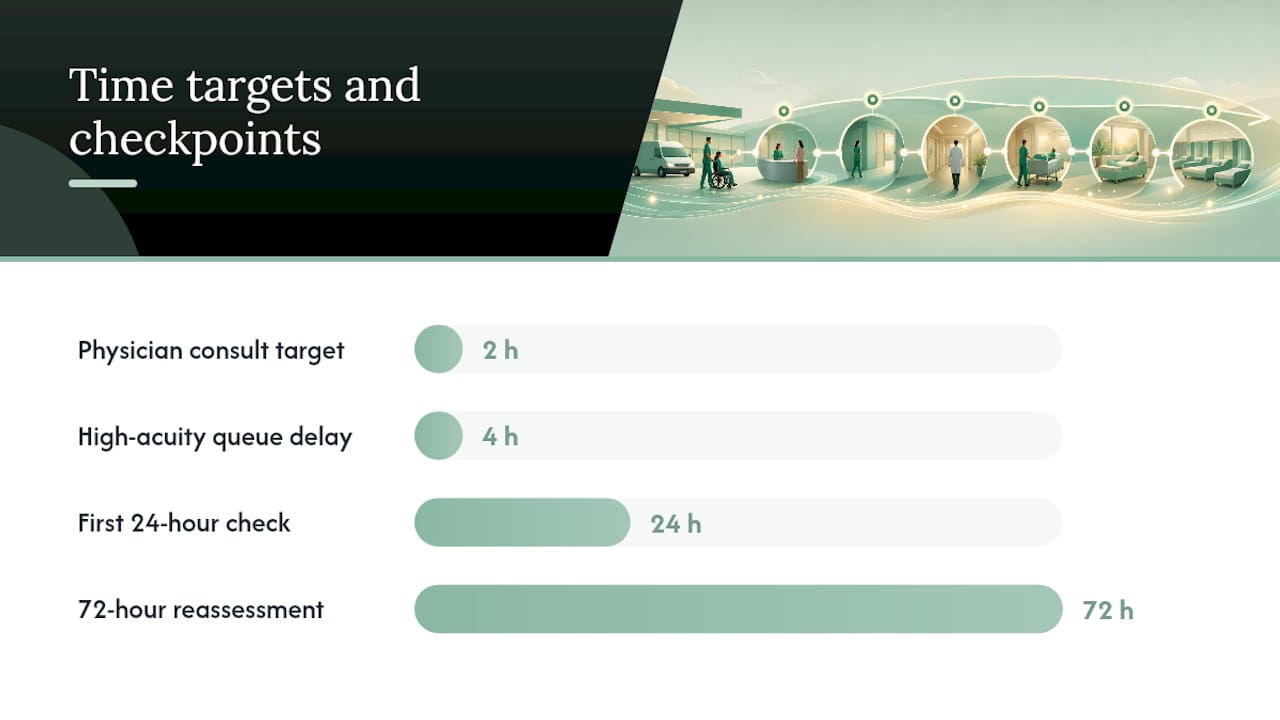
- Physician consultant: reviews complex cases flagged by the nurse; target a response time of two hours for inpatient consults
For post-admission monitoring, schedule a structured first-24-hour check covering medication reconciliation, isolation precaution confirmation, and functional status verification against the referral record. Reassess at 72 hours and at seven days. Use your admissions decision-making guide to define which findings at each checkpoint trigger a care plan adjustment.
Pro Tip: Risk-stratify your clinical review queue by acuity score rather than arrival order. High-acuity referrals that sit in queue for four hours while a lower-acuity case is reviewed first create the exact discharge delays that damage hospital relationships. Build the sort order into your rules engine from day one.
HIPAA compliance and data security checks you cannot skip
Every vendor you evaluate must clear these requirements before you sign a contract. Encryption, role-based access controls, and documented compliance controls are the baseline for any platform handling protected health information.
- HIPAA Business Associate Agreement (BAA): required before any PHI flows to the vendor’s system
- Audit logs: every access, status change, and data export must be logged with user ID and timestamp
- Role-based access controls (RBAC): coordinators, nurses, physicians, and administrators each see only the data their role requires
- Encryption in transit and at rest: TLS 1.2 or higher in transit; AES-256 or equivalent at rest
- EMR credentialing: hospital EMR access requires formal credentialing; document the approval chain
- Retention policy: retain admissions logs for a minimum of six years per HIPAA’s standard retention guidance, or longer if your state requires it
- Incident response plan: confirm the vendor has a documented breach notification process that meets HIPAA’s 60-day notification requirement
Store your BAA, credentialing approvals, and audit log export schedule in a single compliance folder reviewed quarterly by your administrator.
How to evaluate and choose the right tracking solution
A side-by-side review of manual versus automated admissions identifies speed, consistency, auditability, integration depth, and staff effort as the five core differentiators. Use those five dimensions as your evaluation framework.
Vendor selection checklist:
- EMR integration depth (read-only vs. bidirectional, supported systems)
- Payer eligibility verification (real-time API vs. batch)
- Configurable rules engine (can you set your own acceptance criteria?)
- Audit trail completeness (every status change logged with user and timestamp)
- Reporting and analytics (conversion funnel, time-to-decision, completeness rate)
- Onboarding support (dedicated implementation manager, timeline, training materials)
- Security posture (BAA, encryption standards, SOC documentation)
- Pricing model (per-bed, per-referral, or flat subscription)
Pilot success criteria to capture over 30 days:
- Time-to-first-response reduced from baseline
- Admission conversion rate increased from baseline
- Manual hours per referral reduced from baseline
- Referral completeness rate above 85%
Smartadmissions maps directly to this checklist: EMR and payer portal integration, configurable acceptance rules, real-time eligibility verification, a full audit trail, and analytics covering the full conversion funnel. Onboarding includes a dedicated implementation team and workflow templates your coordinators can use from day one.
Before and after: what a tracking implementation looks like
The following is an illustrative example of the operational shift a mid-size SNF typically experiences after moving from manual inboxes to a centralized tracking system.
Before implementation:
- Referrals arrive by fax and email, no central queue
- Average referral-to-decision time was relatively long before implementation
- Referral completeness rate was moderate before implementation
- Bed fill lag from acceptance to arrival was several days before implementation
- Coordinators spend significant time on status calls to hospitals
After implementation:
- All referrals enter a single structured pipeline with timestamps
- First response time was significantly improved after implementation
- Referral completeness rate improved to a high level after implementation
- Bed fill lag was reduced to about a day after implementation
- Hospital liaisons check status in the portal rather than calling
The shift from a 48-hour decision cycle to a 6–12-hour first response is the single most visible change hospital case managers notice, and it directly affects how often they send your facility referrals first.
What daily tracking actually changes for your team
Running a live admissions pipeline changes the texture of the workday in ways that matter beyond the KPIs. Coordinators stop spending the first hour of every shift reconstructing where each referral stands. Liaisons stop calling because they can see status themselves. Physicians get routed only the cases that genuinely need their judgment, not every referral that arrived overnight.

The cultural shift takes longer than the technical one. Training staff to trust the system’s status over their own mental model of “where things are” requires consistent reinforcement in the first 30 days. Weekly standups that reference the dashboard by name, and a clear escalation path when the system flags something unexpected, build that trust faster than any onboarding document alone.
Smartadmissions cuts referral-to-decision time for SNFs
Faster bed fill starts with fewer manual steps between referral receipt and acceptance. Smartadmissions delivers exactly that: an AI-powered platform built for SNFs and post-acute providers that automates eligibility checks, parses clinical documentation, integrates with your EMR, and surfaces a live status view your hospital partners can access directly.
Your team gets configurable acceptance rules, a full audit trail, and analytics covering every stage of the referral management pipeline. Onboarding includes a dedicated implementation team, workflow templates, and training materials designed for admissions coordinators, not IT departments. The result is a system your staff will actually use, not one that requires a six-month configuration project before it delivers value.
Request a demo at Smartadmissions and see how your current referral-to-decision time compares to what a structured tracking system can deliver.
Sources
The following sources informed this guide and provide deeper reading for admissions teams working through implementation, compliance, and vendor evaluation.
- Variability in skilled nursing facility screening and admission processes: implications for value-based purchasing – PMC
- How to Manage Incoming Referrals Effectively
- Security & Compliance | SignalPGx