
The fastest path to referral backlog reduction combines four moves: assign a dedicated coordinator or system to own every referral, schedule the specialist visit at the moment of referral, pre-validate each referral for completeness and insurance requirements before it routes anywhere, and track every open referral to closure with service-level agreements and automated reminders. Facilities that put these in place see fewer lost referrals and faster bed fill within weeks.
TL;DR:
- More than 100 million specialist referrals are requested annually, yet some analyses find only about half completed, often because appointment dates go undocumented.
- Appointments scheduled at referral are associated with higher completion within three months; patients asked to call specialists themselves may abandon referrals when symptoms seem resolved.
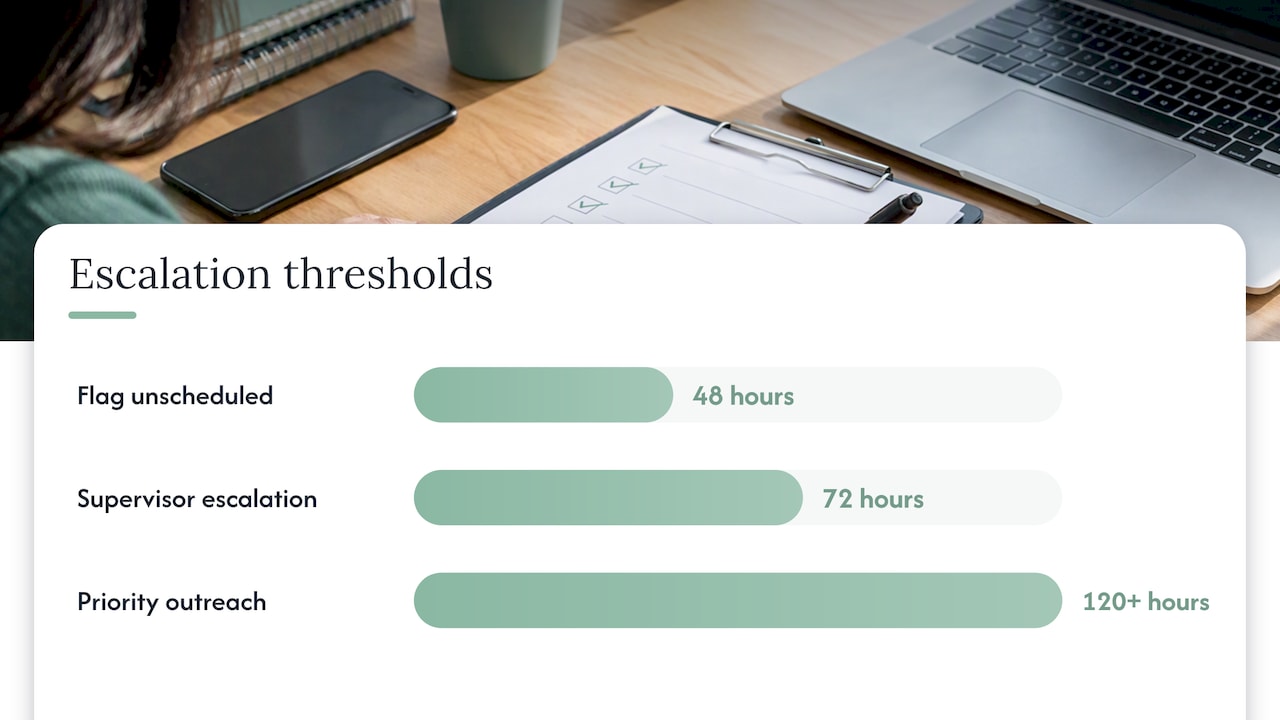
- Flag referrals that remain unscheduled after 48 hours, escalate them at 72 hours, and prioritize direct outreach for any still open after 120 hours.
- Pilot staff assisted scheduling in one or two high volume specialties, then measure documented appointment dates before expanding to more services.
- Automation can accelerate a broken workflow as easily as a sound one, so establish triage rules and required fields before adding technology.
Table of Contents
- Why Referral Backlogs Form: The Common Failure Points Teams Can Fix
- Closed-Loop Referrals and the Metrics That Show Whether Backlog Is Shrinking
- Operational Interventions That Deliver the Biggest Backlog Reduction
- Technology Interventions That Stop Leakage: What to Automate and Why
- 30/90/180-Day Quick Wins and an Implementation Checklist
- How Our Platform Lines Up With the 30/90/180 Checklist
- Realistic Expectations and Common Pitfalls in Referral Backlog Work
- Next Steps: See Where Smart Admissions Fits Your Referral Workflow
- FAQ
- Sources
Why Referral Backlogs Form: The Common Failure Points Teams Can Fix
Most referral backlogs are not caused by too many referrals. They are caused by a handful of repeatable breakdowns in the handoff between referring provider, specialist, and intake staff.
The Institute for Healthcare Improvement documents more than 100 million specialist referrals requested annually in ambulatory settings, with only about half completed in some analyses. Missing clinical data, unclear ownership of the handoff, and gaps in electronic health record interoperability all contribute to referrals that stall before anyone acts on them.
Separate research into referral completion backs this up from a different angle. An EMR-based analysis found documented loop-closure rates below half in many systems, driven largely by referrals that never get a scheduled appointment documented and by long specialist wait times that push patients to give up or go elsewhere.
Payer friction adds another layer. Prior authorization rules vary by plan, and when intake staff do not have a clear process for checking those rules upfront, referrals sit in a queue waiting for someone to sort out coverage. The CMS interoperability and prior authorization final rule was finalized specifically because this friction had become a widespread source of delay across the healthcare system.
Patients themselves contribute to the gap. Common reasons referrals go uncompleted include lack of time and patient belief that the problem has resolved on its own, according to the Annals of Family Medicine referral study. That is a fixable problem when staff, rather than patients, handle scheduling.
Four failure points show up again and again:
- Referrals arrive missing clinical documentation, forcing a round trip before anyone can act.
- No single person or system owns the referral after it leaves the sending provider.
- Patients are told to call a specialist themselves and never follow through.
- Prior authorization requirements are not checked until the appointment is already scheduled.
Closed-Loop Referrals and the Metrics That Show Whether Backlog Is Shrinking
A closed-loop referral is one where every step, from the initial request to the specialist’s note landing back in the primary chart, is documented and confirmed. The IHI framework breaks this into nine steps covering referral initiation, triage, scheduling, visit completion, and feedback to the referring provider.
For intake teams, the practical version of this model means recording five checkpoints for every referral:
- Referral received and logged with a timestamp.
- Appointment date documented in the chart or referral system.
- Visit completed by the patient.
- Specialist result or note returned.
- Result filed back into the primary care or facility record.
Referral completion rates are reportedly higher within three months when appointments are scheduled at the time of referral, according to the ASPN referral study, which is a meaningful gap compared to systems reporting documented loop-closure under 35%. The difference usually comes down to whether the appointment date gets captured at all, not whether the patient eventually goes.
Four metrics matter most for tracking progress:
- Referral completion rate: the share of referrals where the patient attends the specialist visit.
- Percent with documented appointment date: a leading indicator that predicts completion.
- Median time-to-appointment: how long patients wait between referral and visit.
- Open-referral aging: how many referrals sit unresolved past 7, 14, and 30 days.
Manual tracking tends to undercount these numbers because staff do not always log a missed callback or a canceled visit. Automated capture closes that gap by recording every status change as it happens.
Operational Interventions That Deliver the Biggest Backlog Reduction
Process changes, not new software, often produce the first wave of improvement. These five steps form the core of most successful backlog reduction efforts.
- Name a referral expert. AHRQ’s rapid-referral program guidance recommends designating one person, or one system, who understands plan-specific prior authorization rules and can resolve coverage questions without passing the referral back and forth.
- Set triage rules. Define upfront what gets accepted, rejected, or deferred, so staff are not making judgment calls on every single case.
- Schedule at the point of referral. Staff-assisted scheduling is one of the strongest predictors of completion in the ASPN data, outperforming referrals where the patient is asked to call the specialist themselves.
- Standardize minimum required fields. A short checklist of mandatory data, insurance ID, clinical summary, urgency flag, prevents the rework that happens when a referral bounces back for missing information.
- Negotiate referral agreements with high-volume specialists. Pre-arranged scheduling blocks shorten wait times for the specialties that generate the most backlog.
Set clear escalation points so nothing sits untouched: flag referrals at 48 hours if unscheduled, escalate to a supervisor at 72 hours, and treat anything open past 120 hours as a priority case requiring direct outreach.
Pro Tip: Pilot staff-assisted scheduling in your two highest-volume specialties first. It is easier to measure impact and build buy-in with a focused test than with a facility-wide rollout.
Technology Interventions That Stop Leakage: What to Automate and Why
Once the process rules are set, automation prevents them from breaking down under daily volume. Four categories of technology do most of the work.
Pre-validation workflows check every incoming referral against a required-fields checklist before it routes to a clinician or scheduler. This catches missing documents, absent insurance information, or incomplete clinical summaries at the door, instead of after a specialist’s office rejects the referral days later.
Automated scheduling and two-way reminders reduce the two biggest patient-side dropout causes: forgetting the appointment exists and assuming the problem went away on its own. Reminder sequences paired with easy rescheduling links keep more referrals on the calendar.
EMR-based tracking, built on FHIR and HL7 data standards, captures the appointment date, visit status, and specialist note automatically rather than relying on staff to update a spreadsheet. This is the mechanism that closes the gap between the 35% manual loop-closure rates reported in EMR-based studies and the completion rates possible when every status change is logged in real time.
Real-time eligibility and prior authorization pre-checks confirm coverage before the referral reaches a scheduling queue, preventing the delays and denials that the CMS interoperability rule was designed to address.
The categories that matter:
- Pre-validation against a required-fields checklist.
- Automated scheduling prompts and two-way patient reminders.
- EMR-integrated referral tracking with status capture.
- Real-time payer eligibility and prior authorization checks.
Each of these reduces manual touches per referral, which is the single biggest lever for shrinking a backlog that has built up over months.
30/90/180-Day Quick Wins and an Implementation Checklist
Backlog reduction works best as a phased rollout rather than a single large change. A 30/90/180-day plan gives teams enough time to measure each step before adding the next.
- Days 1 to 30: Assign a referral owner, pilot staff-assisted scheduling in one or two specialties, and start a daily referral aging report.
- Days 31 to 90: Roll out pre-validation checklists for incoming referrals, turn on automated patient reminders, and set formal SLAs with a shared dashboard.
- Days 91 to 180: Integrate eligibility and prior authorization checks, refine EMR-based tracking across all referral sources, and expand referral agreements with your highest-volume specialists.
Supporting tasks at each stage:
- Review the aging report weekly during the first 30 days to catch process gaps early.
- Share completion-rate and time-to-appointment metrics with staff monthly to keep the pilot visible.
- Treat the 180-day mark as a checkpoint for scaling, not a finish line.
Measure the same four metrics throughout: completion rate, documented appointment percentage, median time-to-appointment, and aging buckets. Consistent measurement is what separates a pilot that sticks from one that quietly reverts after a few weeks. For a closer look at tracking methods, see our guide on enhancing referral tracking for higher bed occupancy.
How Our Platform Lines Up With the 30/90/180 Checklist
Our platform is built around the same operational gaps the research above identifies. An automated intake workflow applies the pre-validation step directly: incoming referrals are checked against required fields and documentation before they reach a staff member, which prevents the missing-data rejections that stall referrals in the first place.
Real-time eligibility verification connects to insurance portals to confirm coverage and flag prior authorization requirements before a referral enters the scheduling queue, addressing the payer-side delays that AHRQ and CMS guidance both point to. EMR integration captures appointment dates and visit status automatically, closing the loop-tracking gap that manual systems often struggle with.
Before reaching out to any vendor, run through a short fit check:
- Confirm which EMR and insurance portals you need integrated.
- List the specialties generating the most backlog today.
- Decide whether you want a full rollout or a pilot in one or two specialties first.
- Identify who on your team will own the referral coordinator role.
That checklist applies whether you build the process manually or bring in software to run it. Either way, the fundamentals from the research above do not change.
Realistic Expectations and Common Pitfalls in Referral Backlog Work
Most teams overestimate what a big rollout will fix and underestimate what a small, well-measured pilot can prove in a month. Starting with one specialty and one metric, like percent of referrals with a documented appointment date, builds the confidence needed to expand.
The pitfalls are predictable: no one owns the referral after it is logged, no one is tracking a specific number, or a new tool gets layered on top of a workflow that was already broken. Automation speeds up a bad process just as reliably as it speeds up a good one.
Start small, measure one thing well, and let the data make the case for expanding.
— Harry
Next Steps: See Where Smart Admissions Fits Your Referral Workflow
If you recognize your facility in the failure points above—missing fields, unscheduled referrals, prior authorization delays—certain platforms are designed to close those gaps. Pre-validation, real-time eligibility checks, and EMR-integrated tracking reflect key steps in the 30/90/180 plan, and onboarding processes aim to be quick to allow teams to start pilots without long setup times.
Review our pricing page to compare the Monthly plan at $597 per month and the Annually plan at $6,447 per year, and see which fits your pilot scope.
- Check whether your current EMR and insurance portals are on our integration list.
- Decide which one or two specialties you want to pilot first.
- Ask about available guarantees before committing to a facility-wide rollout.
FAQ
What are some ways to reduce patient wait times?
Scheduling the specialist appointment at the time of referral, rather than asking the patient to call themselves, is one of the strongest ways to shorten wait times, according to the Annals of Family Medicine referral study. Referral agreements with high-volume specialists and automated eligibility checks also cut delays caused by scheduling back-and-forth and coverage disputes.
What are the five steps to a simple referral system?
A simple referral system logs the referral, confirms the appointment date, tracks visit completion, captures the specialist’s result, and files that result back into the patient’s chart, following the checkpoint structure in the IHI closed-loop model. Missing any one of these steps is usually where referrals get lost.
How long do referrals take to process?
Processing time varies widely by specialty and payer, but referrals scheduled at the time of referral tend to complete faster than those left for the patient to book, with referrals completing within three months more often in the ASPN referral study. Prior authorization requirements can add days to that timeline when coverage is not checked upfront.
How do I know if my referral has been rejected?
A referral is typically flagged as rejected when the specialist’s office or payer sends back a notice citing missing documentation, ineligible coverage, or an incomplete prior authorization request. Tracking systems that log referral status in real time make rejections visible immediately instead of surfacing them only after a patient calls asking why they have not been scheduled.
Sources
- Closing the Loop: A Guide to Safer Ambulatory Referrals in the EHR Era | Institute for Healthcare Improvement
- Strategy 6E: Rapid Referral Programs | AHRQ
- Specialty Referral Completion Among Primary Care Patients: Results From the ASPN Referral Study | Annals of Family Medicine
- CMS interoperability and prior authorization final rule (CMS-0057-F)