
Managing bed occupancy in skilled nursing facilities across North America often begins with a closer look at how patient referrals are tracked and processed. Admissions coordinators know that even one communication gap or administrative delay can seriously affect operational efficiency. By mapping each referral workflow step and applying data-driven strategies, you uncover hidden issues that limit patient intake and occupancy rates. This guide shares practical approaches for revealing inefficiencies and enhancing referral tracking to maximize available beds and streamline admissions.
Table of Contents
- Step 1: Assess Current Referral Tracking Workflows
- Step 2: Integrate AI-Powered Referral Management Tools
- Step 3: Automate Patient Eligibility Verification and Documentation
- Step 4: Monitor Referral Statuses With Real-Time Dashboards
- Step 5: Verify Improved Tracking With Actionable Performance Data
Quick Summary
| Key Point | Explanation |
|---|---|
| 1. Assess Current Workflows | Evaluate existing referral processes to identify inefficiencies that affect bed occupancy rates and resource allocation. |
| 2. Integrate AI Tools | Implement AI-powered referral management to automate and optimize workflows, significantly reducing processing times and errors. |
| 3. Automate Verification Processes | Use automated systems for patient eligibility and documentation to streamline workflows, mitigating manual data entry errors. |
| 4. Monitor with Real-Time Dashboards | Implement dashboards for instant visibility into referral statuses, enabling proactive management and quicker decisions. |
| 5. Analyze Performance Data | Track key performance indicators to identify trends and bottlenecks, guiding ongoing improvements in the admissions process. |
Step 1: Assess current referral tracking workflows
Improving bed occupancy begins with a comprehensive evaluation of your existing referral management processes. The goal is to identify inefficiencies and map out every stage of your current workflow with precision.
Start by gathering detailed documentation of your referral intake methods. This means collecting all current procedures used to receive and process patient referrals – whether through fax, email, phone, or electronic health record (EHR) systems. Understanding referral system dynamics reveals critical insights into potential bottlenecks.
Your assessment should include a systematic review of key workflow components:
- Patient referral entry methods
- Current communication channels between departments
- Time required for each referral processing stage
- Documentation and tracking mechanisms
- Authorization and scheduling procedures
To conduct a thorough evaluation, map out each referral step visually. Create a detailed flowchart that tracks the patient referral journey from initial contact through admission. Pay special attention to points where delays or communication gaps frequently occur.
Mapping your referral workflow helps reveal hidden inefficiencies that directly impact bed occupancy rates.
Focus on quantifying current performance metrics such as:
- Average time from referral receipt to initial review
- Number of referrals processed per day
- Referral acceptance versus rejection rates
- Total time between referral and patient admission
Comprehensive referral tracking assessment enables organizations to pinpoint exactly where improvements can streamline patient intake and maximize bed utilization.
Pro tip: Involve staff from multiple departments during your workflow assessment to gain comprehensive insights and ensure no critical details are overlooked.
Step 2: Integrate AI-powered referral management tools
Streamlining your referral tracking requires strategic implementation of advanced AI technologies that can dramatically transform your admissions process. The goal is to leverage machine learning capabilities to automate and optimize patient referral workflows.
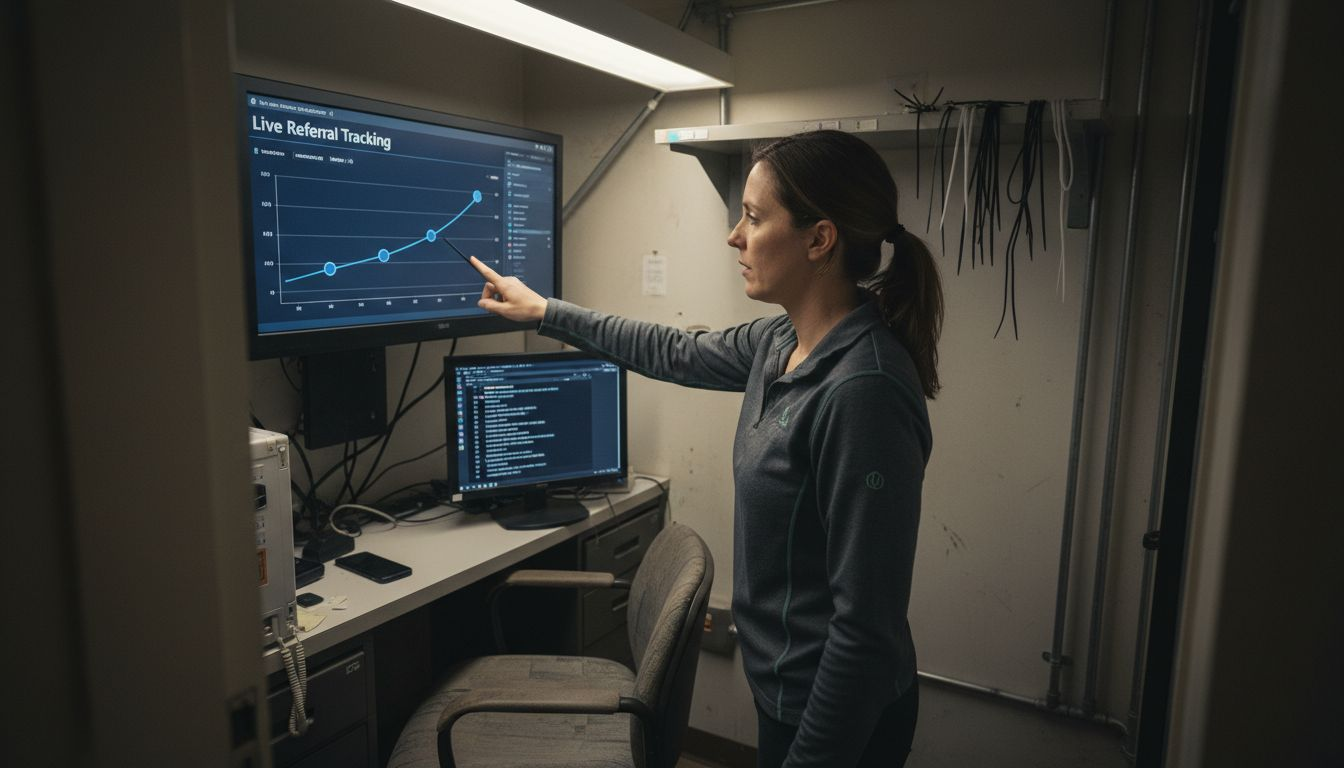
Artificial intelligence in medical referrals offers powerful solutions for categorizing and prioritizing patient intake more efficiently. By deploying intelligent software, your skilled nursing facility can significantly reduce manual processing time and improve overall referral management.
Consider the following steps for successful AI tool integration:
- Research compatible AI referral management platforms
- Evaluate integration capabilities with existing EHR systems
- Assess machine learning prioritization features
- Check data security and HIPAA compliance standards
- Verify vendor support and implementation training
AI-powered referral tools can reduce processing time by up to 85%, transforming your admissions workflow.
Key implementation strategies include:
- Conduct a comprehensive technology assessment
- Select tools with robust machine learning algorithms
- Plan a phased rollout approach
- Train staff on new technological capabilities
- Establish performance monitoring metrics
Ensure that your chosen AI solution provides:
Use this quick reference to compare manual and AI-enhanced referral tracking:
| Aspect | Manual Tracking | AI-Enhanced Tracking |
|---|---|---|
| Processing Time | Multiple hours per referral | Minutes with automation |
| Error Rates | High due to manual entry | Low, automated checks |
| Staff Workload | Heavy administrative burden | Greatly reduced workload |
| Real-Time Insights | Rarely available | Live status updates |
| Scaling Capability | Limited by staff availability | Easily scales with facility |
- Automated referral triage
- Real-time eligibility verification
- Predictive analytics for patient matching
- Streamlined documentation processing
- Intelligent communication routing
Pro tip: Choose an AI referral management tool that offers a comprehensive onboarding program and ongoing technical support to ensure smooth implementation and staff adaptation.
Step 3: Automate patient eligibility verification and documentation
Streamlining patient intake requires implementing robust automation technologies that can dramatically reduce administrative workload and accelerate admission processing. The objective is to create a seamless, efficient verification system that minimizes manual data entry and potential errors.
Real-time insurance verification can transform your skilled nursing facility’s administrative workflow by eliminating time-consuming manual processes. Advanced software solutions now enable instant eligibility checks and documentation validation.
Key components of an effective automation strategy include:
- Integrate comprehensive insurance verification platforms
- Implement automatic patient data extraction
- Connect directly with insurance provider networks
- Utilize artificial intelligence for document processing
- Establish real-time eligibility confirmation protocols
Automated verification systems can reduce administrative processing time by up to 70%, significantly improving operational efficiency.
Implementation steps for successful documentation automation:
- Select HIPAA-compliant verification software
- Configure system integration with existing EHR platforms
- Develop standardized documentation workflows
- Train staff on new automated processes
- Create backup manual review protocols
Ensure your automation solution provides:
- Instant insurance eligibility checks
- Automatic patient information validation
- Secure data transfer mechanisms
- Comprehensive compliance reporting
- Seamless EHR integration capabilities
Pro tip: Conduct periodic system audits and maintain a hybrid approach that combines automated processes with human oversight to ensure maximum accuracy and compliance.
Step 4: Monitor referral statuses with real-time dashboards
Tracking patient referral progress requires implementing sophisticated dashboard technologies that provide instant visibility into your facility’s admissions workflow. The goal is to create a centralized monitoring system that enables quick decision-making and proactive management.
Patient referral software tracking transforms traditional administrative processes by offering comprehensive real-time insights into referral statuses, bottlenecks, and potential opportunities. Modern dashboards provide granular visibility that was previously impossible with manual tracking methods.
Key features of effective real-time referral dashboards include:
- Customizable performance metrics
- Live referral status tracking
- Automated status update notifications
- Graphical representation of referral flow
- Predictive analytics for potential admissions
Real-time dashboards can reduce administrative follow-up time by up to 60%, dramatically improving operational efficiency.
Implementation steps for dashboard integration:
- Select cloud-based dashboard solution
- Configure custom performance indicators
- Integrate with existing EHR systems
- Establish user access permissions
- Train staff on dashboard navigation
Ensure your dashboard provides visibility into:
- Referral source performance
- Average processing times
- Conversion rates
- Pending authorization statuses
- Geographic referral distribution
Pro tip: Schedule weekly dashboard review meetings to ensure team-wide understanding of key performance metrics and identify continuous improvement opportunities.
Step 5: Verify improved tracking with actionable performance data
Validating the effectiveness of your new referral tracking system requires a strategic approach to measuring and analyzing key performance indicators. The goal is to transform raw data into meaningful insights that drive continuous improvement in your skilled nursing facility’s admissions process.
Business intelligence for referral tracking enables healthcare administrators to move beyond simple data collection and gain deep understanding of their referral workflows. By implementing comprehensive analytical strategies, you can uncover hidden opportunities for optimization.
Critical performance metrics to track include:
- Referral processing time
- Conversion rates
- Source effectiveness
- Patient wait times
- Referral completion percentages
Systematic performance tracking transforms data into a powerful tool for strategic decision-making.
Detailed performance verification steps:
- Establish baseline performance metrics
- Define clear key performance indicators (KPIs)
- Implement regular data collection protocols
- Conduct comparative analysis
- Develop improvement action plans
Essential analytical approaches:
- Compare current metrics to previous periods
- Benchmark against industry standards
- Identify potential bottlenecks
- Track long-term performance trends
- Correlate metrics with bed occupancy rates
Pro tip: Create a monthly performance dashboard that visualizes key metrics, allowing your team to quickly identify trends and make data-driven decisions.
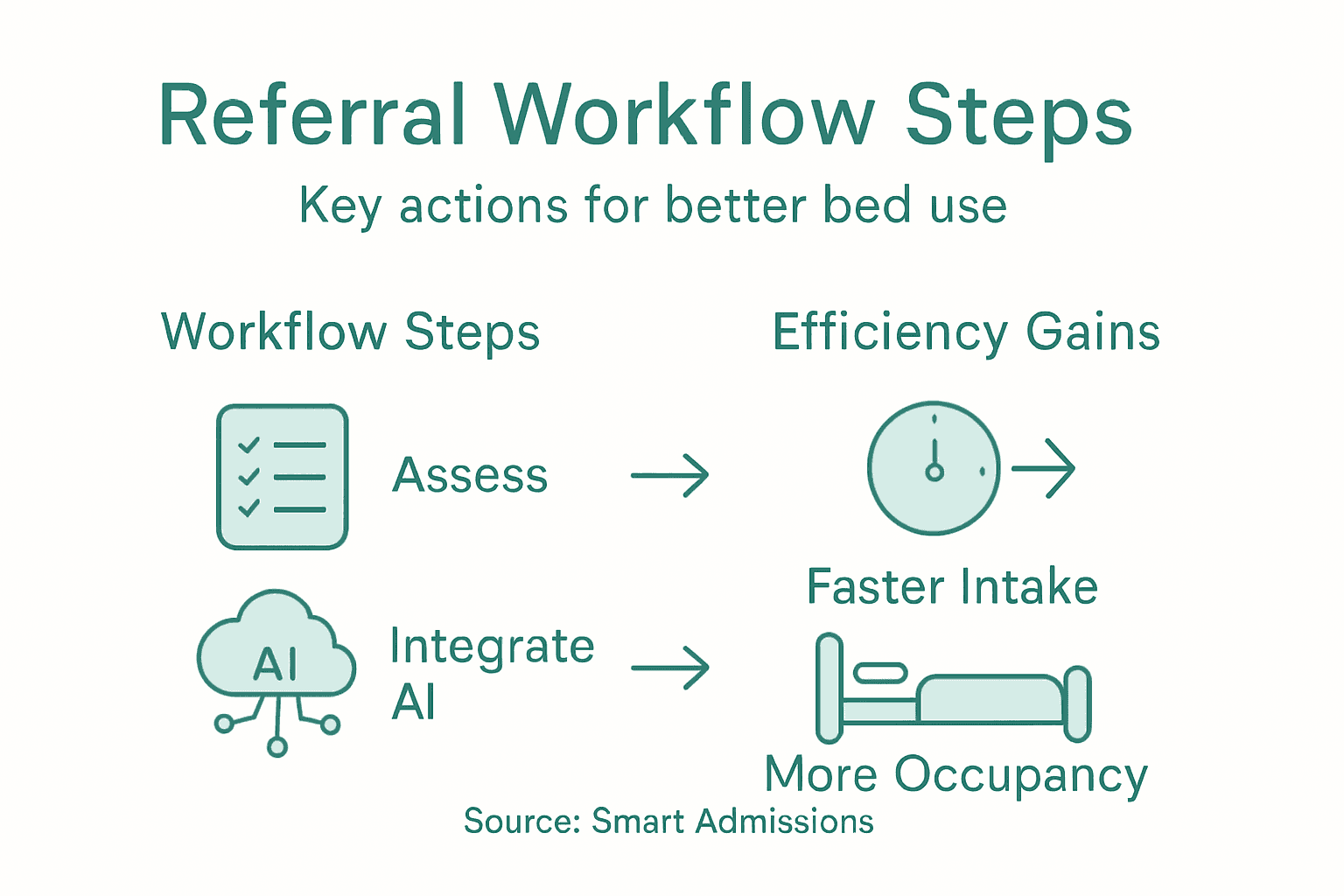
Here’s a summary of the business impacts of optimizing each referral workflow step:
| Workflow Step | Efficiency Gains | Impact on Bed Occupancy |
|---|---|---|
| Assessment and Mapping | Identifies process delays | Increases referral capacity |
| AI Tool Integration | Reduces manual processing | Faster patient intake |
| Eligibility & Documentation Automation | Speeds up verification | Minimizes admission delays |
| Real-time Dashboard Monitoring | Enables quick interventions | Improves admission management |
| Performance Data Analysis | Informs ongoing improvements | Sustains optimal bed usage |
Transform Your Referral Tracking to Maximize Bed Occupancy
The challenge of inefficient referral tracking can create costly delays, increase staff workload, and reduce bed utilization. This article highlights how thorough workflow assessment, AI-powered referral management, automated patient eligibility verification, and real-time dashboards are essential to overcoming these hurdles. If your skilled nursing facility is striving to improve referral processing times and boost bed occupancy rates, Smart Admissions offers a tailored solution that addresses exactly these needs.
Our AI-powered referral management assistant integrates seamlessly with your existing EMR and insurance portals to automate repetitive administrative tasks. This means faster referral review, instant eligibility checks, and actionable analytics that empower your team to make informed decisions without added stress or complexity. By simplifying intake processes and reducing manual work, Smart Admissions helps increase revenue, decrease burnout, and sustain optimal bed utilization.
Ready to transform your referral tracking and elevate your admissions workflow? Visit Smart Admissions now to discover how our platform can help you reduce delays and fill beds faster. Start streamlining your patient intake today and unlock the full potential of your healthcare facility.
Frequently Asked Questions
How can I assess my current referral tracking workflows?
Start by gathering all documentation related to your referral intake methods, including procedures for handling referrals through various channels. Create a flowchart to visualize each step of the referral process and identify any inefficiencies, aiming to complete this assessment within two weeks.
What are the benefits of integrating AI-powered referral management tools?
Integrating AI tools can reduce referral processing time by up to 85% and significantly lower error rates. Evaluate compatible platforms that integrate with your Electronic Health Records (EHR) system to enhance your workflows.
How does automating patient eligibility verification improve referrals?
Automating eligibility verification can cut administrative processing time by as much as 70%, allowing for faster admissions. Implement a robust software solution that connects directly with insurance providers for instant verification.
What key metrics should I monitor after enhancing my referral tracking?
Focus on metrics such as referral processing time, conversion rates, and patient wait times. Establish a system for regular data collection and analysis to track these metrics monthly to ensure continuous improvement.
How can I use real-time dashboards to enhance referral management?
Real-time dashboards provide instant visibility into referral statuses, helping you identify bottlenecks and make quick adjustments. Select a cloud-based dashboard solution and configure it to track customizable performance metrics, aiming for implementation in one month.
Recommended
- Why Your Competitors Are Filling Beds Faster (And How to Catch Up) – Smart Admissions
- How Instant Referral Responses Increase Your Admission Rate by 40% – Smart Admissions
- What Is Referral Management and Why It Matters
- Stop Wasting 45 Minutes on Each Referral: Try These 5 Post-Acute Care Automation Hacks – Smart Admissions