
Every day, admissions coordinators at skilled nursing facilities face the challenge of gathering and verifying patient details while racing against administrative pressures. This process is central to both regulatory compliance and patient satisfaction, yet it often creates unnecessary delays. By adopting digital intake templates, integrating electronic systems, and prioritizing systematic organization of clinical information, you can reduce paperwork, prevent data entry errors, and shorten admission timelines for the patients who need care most.
Table of Contents
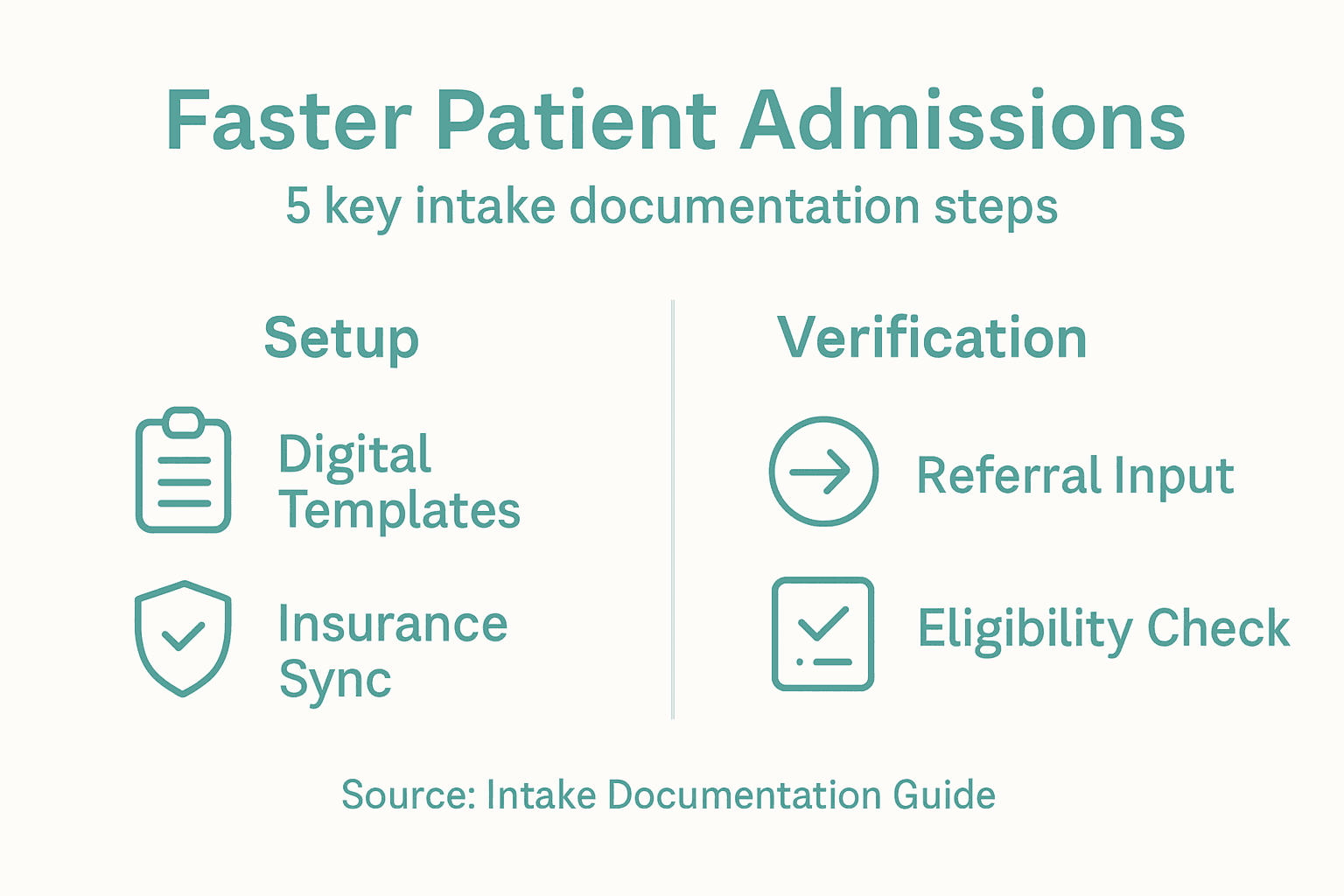
- Step 1: Set Up Digital Intake Templates
- Step 2: Integrate Insurance and EMR Systems
- Step 3: Collect and Digitize Referral Information
- Step 4: Verify Eligibility and Clinical Requirements
- Step 5: Review and Submit Intake Documentation
Quick Summary
| Main Insight | Detailed Explanation |
|---|---|
| 1. Create Digital Intake Templates | Efficient templates streamline patient data collection, reducing administrative burden and improving accuracy in admissions. |
| 2. Integrate EMR and Insurance Systems | Seamless integration minimizes manual errors and expedites patient eligibility checks, enhancing overall operational efficiency. |
| 3. Standardize Referral Information | Digitizing referral processes boosts accuracy and speeds up patient admissions through effective data collection methods. |
| 4. Verify Eligibility Accurately | Systematic checks ensure compliance with clinical requirements, preventing delays and ensuring appropriate patient admissions. |
| 5. Review Documentation Meticulously | A thorough review process mitigates risks of incomplete records, ensuring smooth patient entry and compliance with standards. |
Step 1: Set Up Digital Intake Templates
Creating efficient digital intake templates is essential for streamlining patient admissions in healthcare facilities. By developing structured digital forms, you can dramatically reduce administrative time and improve overall intake accuracy.
To set up your digital intake templates, follow these strategic steps:
- Review existing paper intake forms from your current workflow
- Identify all critical patient information fields
- Select a digital form creation platform compatible with your Electronic Health Record (EHR) system
- Ensure HIPAA-compliant intake documentation standards are met
When designing templates, focus on capturing comprehensive patient data efficiently. This means creating sections that logically progress through patient information gathering, such as:
- Personal demographic details
- Insurance and billing information
- Medical history questionnaire
- Current health status and presenting conditions
- Consent and authorization sections
Most successful digital templates mirror the cognitive process clinicians use when collecting patient information, systematically organizing clinical data to ensure nothing is overlooked.
Digital intake templates should feel like a natural conversation, guiding patients through information sharing while maintaining professional efficiency.
Pro tip: Test your digital intake template with a small group of patients and staff to identify and resolve any potential usability issues before full implementation.
Step 2: Integrate Insurance and EMR Systems
Streamlining your skilled nursing facility’s patient intake process requires seamless integration between Electronic Medical Record (EMR) systems and insurance verification platforms. By connecting these critical systems, you can dramatically reduce administrative overhead and accelerate patient admissions.
To successfully integrate insurance and EMR systems, consider these key strategies:
- Evaluate current EMR system’s integration capabilities
- Identify compatible insurance verification platforms
- Confirm HIPAA compliance for all integrated systems
- Select tools supporting standardized healthcare data exchange protocols
The integration process involves several technical and operational considerations:
- Confirm API compatibility between systems
- Establish secure data transfer mechanisms
- Create uniform patient identification protocols
- Develop real-time insurance eligibility verification workflows
- Implement automated billing and claims processing
Healthcare organizations worldwide are increasingly recognizing the importance of systematic EMR system implementation to improve operational efficiency.
Successful EMR and insurance system integration transforms administrative workflows from complex manual processes into streamlined, automated experiences.
Pro tip: Always conduct thorough testing and maintain a backup manual verification process during initial system integration to prevent potential patient admission disruptions.

Step 3: Collect and Digitize Referral Information
Transforming your patient referral process requires a strategic approach to collecting and digitizing critical intake information. By implementing systematic digital collection methods, your skilled nursing facility can dramatically improve referral accuracy and speed up patient admissions.
To effectively capture and digitize referral information, follow these comprehensive steps:
- Establish a standardized digital referral intake form
- Design fields that capture comprehensive patient details
- Implement automated data validation checks
- Enable referral data tracking mechanisms for performance analysis
The digitization process requires careful attention to several key components:
- Create digital templates matching current paper referral formats
- Integrate optical character recognition (OCR) for scanned documents
- Develop secure data transfer protocols
- Implement real-time referral status tracking
- Ensure complete HIPAA-compliant data management
Healthcare professionals recognize that systematic referral documentation is crucial for maintaining continuity of patient care.
Effective referral information digitization transforms complex manual processes into streamlined, data-driven workflows that enhance patient care and operational efficiency.
Pro tip: Regularly audit your digital referral collection process to identify and eliminate potential data capture gaps that could slow down patient admissions.
Step 4: Verify Eligibility and Clinical Requirements
Verifying patient eligibility and clinical requirements is a critical step in streamlining your skilled nursing facility’s admissions process. By implementing a systematic verification approach, you can ensure regulatory compliance while expediting patient intake and reducing administrative bottlenecks.
To effectively verify eligibility and clinical requirements, focus on these key strategies:
- Create comprehensive patient eligibility checklists
- Develop standardized documentation protocols
- Implement clinical eligibility verification guidelines
- Establish clear inclusion and exclusion criteria
The verification process involves multiple critical components:
- Review patient medical history thoroughly
- Confirm insurance coverage and benefits
- Validate clinical assessment documentation
- Cross-reference eligibility documentation practices
- Ensure complete HIPAA-compliant patient records
Precise eligibility verification transforms potential administrative challenges into smooth, efficient patient admission experiences.
Pro tip: Develop a digital checklist with automated validation alerts to catch potential eligibility gaps before they become time-consuming roadblocks.
Step 5: Review and Submit Intake Documentation
Comprehensive review and submission of intake documentation represent the critical final phase in your patient admissions workflow. By meticulously examining every detail, your skilled nursing facility can ensure accuracy, compliance, and streamlined patient entry.
To effectively review and submit intake documentation, implement these strategic approaches:
- Conduct thorough document cross-verification
- Ensure complete information capture
- Validate clinical intake assessment protocols
- Double-check all patient identification details
The documentation review process requires systematic attention to multiple components:
- Verify patient demographic information
- Check insurance and billing documentation
- Confirm clinical assessment completeness
- Validate consent and authorization forms
- Ensure adherence to documentation standards
Meticulous documentation review transforms potential administrative errors into a streamlined, efficient patient admission experience.
Pro tip: Create a final checklist with mandatory verification steps and implement a secondary review process to catch any potential documentation gaps before submission.
Here is a summary of core benefits gained from implementing digital intake and system integration in skilled nursing facilities:
| Key Area | Efficiency Impact | Risk Reduction Benefit |
|---|---|---|
| Digital Intake Templates | Cuts admin time by standardizing | Lowers errors in patient data entry |
| EMR & Insurance Integration | Accelerates eligibility checks | Minimizes manual entry mistakes |
| Digital Referral Collection | Speeds up referral processing | Tracks performance issues reliably |
| Eligibility Verification | Streamlines compliance checks | Prevents admission of ineligible |
| Meticulous Document Review | Ensures all records are complete | Flags incomplete documentation early |
Streamline Your Patient Intake with Smart Admissions
The “Intake Documentation Guide for Faster Patient Admissions” clearly shows how complex and time-consuming manual intake and verification processes can be. If you are facing challenges like reducing administrative delays, ensuring HIPAA-compliant documentation, or speeding up eligibility verification, you are not alone. Key pain points such as cumbersome digital intake templates, the need for seamless EMR and insurance integration, and accurate eligibility checks require a smarter approach. By automating these workflows, you can minimize errors, reduce staffing burnout, and get patients admitted faster without compromising compliance or data accuracy.
Smart Admissions offers a tailored solution that aligns perfectly with these goals. Our AI-powered platform integrates smoothly with your existing Electronic Medical Records and insurance portals to automate referral reviews, clinical assessments, and documentation management. With real-time eligibility verification and customizable features, it supports efficient intake workflows and helps your facility increase bed occupancy rates while lowering administrative costs. Discover how you can transform the patient admission experience today by visiting Smart Admissions.
Ready to reduce referral review times and enhance patient admissions?
Experience the benefits of automated intake documentation and eligibility verification system with Smart Admissions. Visit our platform and take the first step toward faster, more reliable patient admissions now. Learn more about how our solution complements key concepts like HIPAA-compliant intake documentation and systematic clinical eligibility verification to enhance your workflow.
Frequently Asked Questions
How can I create effective digital intake templates for faster patient admissions?
To create effective digital intake templates, start by reviewing your existing paper forms and identifying critical patient information fields. Then, select a compatible digital form creation platform and design templates that efficiently capture patient data—aiming to mirror the clinician’s process.
What are the key components for integrating insurance and EMR systems?
Integrating insurance and EMR systems requires confirming API compatibility, establishing secure data transfer protocols, and developing real-time eligibility verification workflows. Focus on selecting tools that support standardized healthcare data exchange to streamline patient admissions.
How should I digitize referral information effectively?
To effectively digitize referral information, establish a standardized digital referral intake form that captures comprehensive patient details. Implement automated data validation checks and enable referral tracking mechanisms to improve accuracy and efficiency in patient admissions.
What steps should I take to verify patient eligibility and clinical requirements?
To verify patient eligibility, create comprehensive eligibility checklists and develop standardized documentation protocols. Ensure you review the patient’s medical history and confirm insurance coverage to prevent administrative bottlenecks during admissions.
How can I ensure thorough review and submission of intake documentation?
To ensure a thorough review of intake documentation, conduct a cross-verification of all collected data and double-check patient identification details. Create a final checklist with mandatory verification steps to enhance accuracy and compliance before submission.