
Every admissions director in a skilled nursing facility knows how quickly manual paperwork and fragmented digital tools can slow down patient referrals. Customizable healthcare software addresses these daily frustrations by offering precise workflow integration and secure data management tailored for North American care settings. With features built around direct connectivity and regulatory adaptability, these systems provide unmatched flexibility and help reduce administrative chores while supporting faster decision-making.
Table of Contents
- Customizable Healthcare Software Defined Clearly
- Major Types And Core Functions Explained
- Integration With EMR And Insurance Platforms
- Key Benefits For Skilled Nursing Facilities
- Risks, Costs, And Common Pitfalls
Key Takeaways
| Point | Details |
|---|---|
| Customizable Software Advantages | Customizable healthcare software enhances operational efficiency and flexibility, allowing organizations to address unique challenges effectively. |
| Integration Importance | Robust integration capabilities with existing systems are crucial for seamless implementation, ensuring accurate data flow across platforms. |
| Key Benefits for Skilled Nursing Facilities | Implementation can streamline admissions, improve compliance tracking, and offer real-time insights, ultimately reducing costs and enhancing patient care. |
| Implementation Risks | Common challenges include regulatory compliance and user adoption resistance; addressing these proactively is vital for successful software deployment. |
Customizable Healthcare Software Defined Clearly
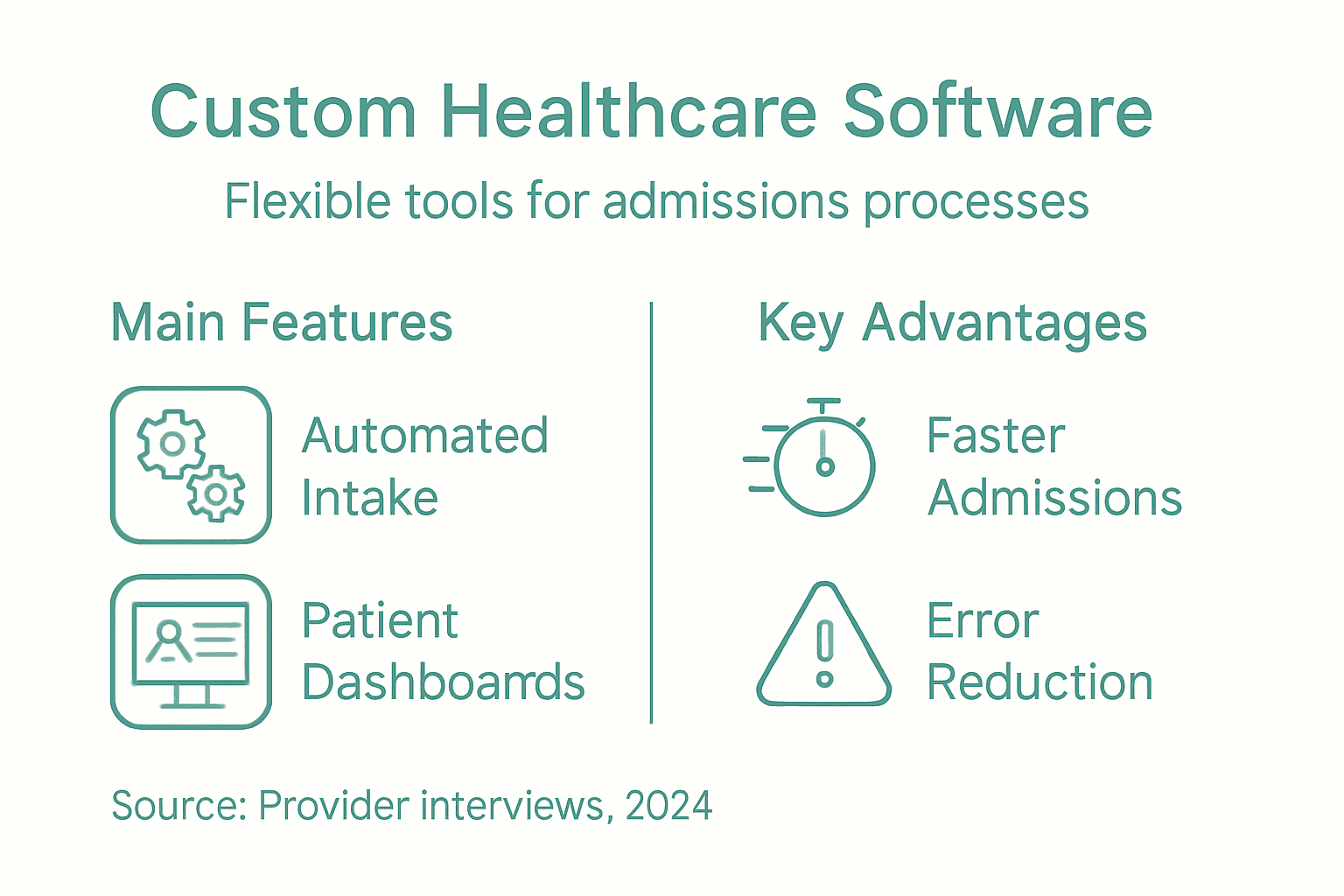
Customizable healthcare software represents a sophisticated technological solution designed to address the unique operational challenges faced by healthcare organizations. Unlike generic software platforms, these systems provide precision-engineered applications that adapt seamlessly to specific institutional workflows and requirements.
At its core, custom healthcare software development transforms technological capabilities by creating tailored applications that integrate directly with existing healthcare infrastructures. These solutions are meticulously crafted to solve specific operational pain points, ranging from electronic health record management to patient engagement platforms.
Key characteristics of customizable healthcare software include:
- Precise workflow integration with existing systems
- Enhanced data security protocols
- Adaptability to regulatory changes
- Scalable architectural design
- Industry-specific functionality
Healthcare organizations benefit from these solutions by gaining unprecedented flexibility and operational efficiency. Personalized software solutions enable stakeholders across the healthcare ecosystem—including patients, providers, and insurers—to access expanded digital capabilities that traditional one-size-fits-all platforms cannot deliver.
Technological Customization Strategies
Successful custom healthcare software development follows a strategic approach:
- Comprehensive needs assessment
- Collaborative requirements gathering
- Agile prototyping
- Iterative development cycles
- Rigorous testing and validation
Pro tip: When exploring customizable healthcare software, prioritize solutions that offer robust integration capabilities and demonstrate a clear understanding of your specific organizational workflows.
Major Types and Core Functions Explained
Healthcare software encompasses a diverse range of technological solutions designed to address the complex needs of medical organizations. Healthcare software categories span multiple critical functions that transform patient care and administrative processes, enabling healthcare providers to deliver more efficient and effective services.
The primary types of healthcare software include:
- Electronic Health Record (EHR) Systems: Digital platforms for comprehensive patient record management
- Telemedicine Software: Tools facilitating remote medical consultations
- Remote Patient Monitoring (RPM) Tools: Technology tracking patient vitals and health metrics
- Clinical Decision Support Systems (CDSS): Advanced diagnostic and treatment recommendation platforms
- Hospital Management Systems (HMS): Comprehensive solutions for administrative and clinical workflows
Healthcare software platforms serve distinct yet interconnected purposes across the medical ecosystem. Electronic Health Records, for instance, provide a centralized repository for patient information, enabling seamless data sharing between healthcare professionals and improving overall care coordination.
Here’s a quick comparison of major healthcare software types and their primary business impacts:
| Software Type | Main Function | Business Impact |
|---|---|---|
| EHR Systems | Manage patient records | Improves clinical coordination |
| Telemedicine | Remote consultations | Expands care access, saves costs |
| RPM Tools | Monitor patient vitals | Supports chronic care, reduces readmissions |
| CDSS | Aid diagnosis decisions | Enhances accuracy, decreases errors |
| HMS | Manage hospital operations | Boosts workflow efficiency, cuts overhead |
| RCM Software | Process billing & claims | Increases revenue, reduces mistakes |
Clinical Decision Support Systems represent another critical category, leveraging advanced algorithms and medical databases to assist healthcare providers in making more informed diagnostic and treatment decisions. These systems analyze patient data, medical history, and current research to generate evidence-based recommendations that enhance clinical accuracy and patient outcomes.
Revenue Cycle Management (RCM) software plays a crucial role in the financial aspects of healthcare delivery, managing billing processes, insurance claims, and financial reporting with unprecedented efficiency. By automating complex financial workflows, these systems reduce administrative burden and minimize errors in medical billing and reimbursement.
Pro tip: When selecting healthcare software, prioritize solutions that offer robust integration capabilities and demonstrate comprehensive support for your specific organizational workflows and specialties.
Integration with EMR and Insurance Platforms
Electronic Medical Record (EMR) integration represents a critical technological frontier for modern healthcare software solutions. Healthcare software APIs enable seamless data exchange between disparate medical systems, transforming how healthcare providers manage patient information and administrative processes.
The integration landscape encompasses several key technological components:
- Standardized API Protocols: Enabling secure, efficient data transmission
- EHR Connectivity: Linking patient records across multiple platforms
- Insurance Verification Systems: Real-time eligibility and coverage checks
- Compliance Management: Ensuring HIPAA and regulatory standards
- Interoperability Frameworks: Supporting cross-system communication
Healthcare organizations benefit from sophisticated integration strategies that minimize manual data entry and reduce potential errors. By implementing robust API-driven solutions, providers can create a more streamlined, efficient workflow that connects electronic health records, billing systems, and insurance platforms with unprecedented accuracy.

Modern integration technologies leverage advanced protocols like HL7 FHIR (Fast Healthcare Interoperability Resources) to facilitate comprehensive data exchange. These standards allow healthcare software to communicate complex patient information securely, supporting everything from demographic details to intricate clinical documentation and insurance claims processing.
Pro tip: When selecting healthcare software, prioritize solutions with comprehensive API integration capabilities that support multiple industry-standard protocols and ensure smooth data migration between existing systems.
Key Benefits for Skilled Nursing Facilities
Customizable healthcare software delivers transformative advantages for skilled nursing facilities, addressing critical operational challenges that impact patient care, administrative efficiency, and financial performance. Top-performing SNFs recognize that technological innovation can revolutionize their entire operational ecosystem.
Key benefits for skilled nursing facilities include:
- Streamlined Admissions Process: Reducing referral review times by up to 70%
- Automated Eligibility Verification: Minimizing manual insurance checks
- Real-Time Patient Data Management: Enabling faster, more informed decisions
- Comprehensive Compliance Tracking: Ensuring regulatory adherence
- Advanced Reporting and Analytics: Providing actionable organizational insights
The financial implications of implementing customized healthcare software are substantial. By automating repetitive administrative tasks, skilled nursing facilities can significantly reduce operational costs, decrease staff burnout, and allocate resources more strategically toward direct patient care. The software’s ability to integrate seamlessly with existing systems ensures minimal disruption during implementation.
Moreover, these technological solutions offer unprecedented visibility into organizational performance. Administrators gain access to granular insights about referral patterns, bed occupancy rates, and revenue optimization opportunities. Competitive bed-filling strategies become more accessible through data-driven decision-making tools that transform raw information into actionable intelligence.
Pro tip: Conduct a comprehensive workflow audit before software implementation to identify specific pain points and customize your solution for maximum organizational impact.
Risks, Costs, and Common Pitfalls
Healthcare software implementation involves complex challenges that skilled nursing facilities must carefully navigate to ensure successful technological adoption. Healthcare software development demands meticulous planning and strategic risk management to mitigate potential operational disruptions.
Key risks and potential challenges include:
- Regulatory Compliance Complexity: Navigating intricate healthcare regulations
- Data Migration Challenges: Ensuring seamless information transfer
- Integration Compatibility: Connecting with legacy systems
- User Adoption Resistance: Managing staff training and engagement
- Budget Overrun Potential: Managing unexpected implementation costs
Common implementation mistakes can significantly impact an organization’s technological transformation. Typical development costs range from $70,000 to $120,000, with implementation timelines spanning 6 to 18 months. Organizations must anticipate potential financial investments and allocate resources strategically to minimize unexpected expenditures.
This summary table shows common risks and mitigation strategies for healthcare software implementation:
| Risk Category | Typical Problem | Mitigation Strategy |
|---|---|---|
| Compliance | Regulatory complexity | Regular audits & expert review |
| Data Migration | Information loss | Pilot testing & backup protocols |
| Integration | Legacy system issues | Custom interfaces & phased approach |
| User Adoption | Staff resistance | Targeted training & change management |
| Budget | Cost overruns | Detailed planning & contingency funds |
Additionally, skilled nursing facilities must prioritize comprehensive staff training and change management strategies. Inadequate user preparation can lead to workflow disruptions, decreased productivity, and potential resistance to new technological systems. Successful implementation requires a holistic approach that addresses technological, financial, and human factors simultaneously.
Pro tip: Conduct a comprehensive risk assessment and create a detailed implementation roadmap that includes contingency planning, phased rollout strategies, and ongoing staff support mechanisms.
Transform Your Skilled Nursing Facility Admissions with Smart Admissions
The article highlights critical challenges in customizable healthcare software such as streamlining admissions processes, reducing referral review times, and ensuring seamless integration with EMR and insurance platforms. If your skilled nursing facility faces these exact pain points, especially in managing repetitive administrative tasks and improving bed occupancy, Smart Admissions offers an AI-powered referral management assistant tailored to your needs. This platform automates eligibility verification and clinical assessments while providing actionable analytics for optimized decision-making.
With Smart Admissions, you can expect to significantly decrease staffing burnout, accelerate patient intake workflows, and boost your financial outcomes without complex implementations or costly disruptions. The platform’s customizable features and responsive customer support make it ideal for healthcare administrators striving to keep pace with evolving industry demands and regulatory compliance.
Take the next step toward a streamlined admissions process by exploring more about custom healthcare software development and how Smart Admissions can transform your facility’s intake operations.
Discover how your facility can fill beds faster and reduce manual workload today by visiting Smart Admissions. Start optimizing your patient referral and admissions process now to gain a competitive advantage in the healthcare ecosystem.
Frequently Asked Questions
What is customizable healthcare software?
Customizable healthcare software refers to tailored applications designed to meet the specific operational challenges of healthcare organizations, unlike generic software that offers a one-size-fits-all solution.
How does customizable software streamline the admissions process in skilled nursing facilities?
Customizable software can greatly enhance the admissions process by automating various tasks, reducing referral review times, and providing real-time patient data management, which allows for quicker decision-making.
What are the key benefits of using customizable healthcare software in skilled nursing facilities?
Key benefits include streamlined admissions, automated eligibility verification, compliance tracking, real-time patient data management, and advanced reporting and analytics, all of which improve operational efficiency and patient care.
What are common challenges faced when implementing customizable healthcare software?
Common challenges include navigating regulatory compliance, managing data migration, ensuring integration with existing systems, addressing user adoption resistance, and potential budget overruns during implementation.