
Managing patient admissions in busy North American skilled nursing homes often means juggling endless paperwork and tedious manual tasks. This constant administrative strain leaves little time for proactive decision-making and can slow down intake and bed assignments. As more facilities search for better ways to improve these processes, AI technologies are emerging as essential tools, automating workflows and supporting staff to work smarter while elevating care standards.
Table of Contents
- Defining AI In Healthcare Administration
- Key AI Technologies Shaping Intake Workflows
- Core Benefits For Skilled Nursing Facilities
- Operational Impact: Reducing Errors And Burnout
- Financial Advantages And ROI For Facilities
Key Takeaways
| Point | Details |
|---|---|
| AI Enhances Efficiency | AI technologies significantly streamline administrative workflows, reducing manual effort and improving healthcare service delivery. |
| Strategic AI Implementation | A robust integration strategy that includes staff training and ethical considerations is essential for maximizing AI’s benefits. |
| Operational Impact on Staff | AI applications alleviate staff burnout by automating repetitive tasks and providing real-time decision support. |
| Financial Benefits | Implementing AI can lead to operational cost reductions and improved resource allocation, enhancing overall financial performance for healthcare facilities. |
Defining AI in Healthcare Administration
Artificial Intelligence (AI) in healthcare administration represents a transformative technological approach designed to enhance operational efficiency and decision-making processes across medical facilities. AI technologies leverage advanced computational methods to streamline complex administrative workflows, reducing manual effort and improving overall healthcare service delivery.
At its core, AI in healthcare administration encompasses several sophisticated technological capabilities:
- Machine learning algorithms that analyze patient data patterns
- Natural language processing for automated document interpretation
- Robotic process automation to handle repetitive administrative tasks
- Predictive analytics for strategic resource allocation
- Rule-based expert systems for standardized decision support
These technologies are fundamentally transforming how healthcare facilities manage intake, referrals, and patient documentation. AI applications in healthcare span multiple domains, including patient engagement, diagnostic support, and administrative task optimization.
The implementation of AI in healthcare administration requires careful consideration of several critical factors. Healthcare organizations must balance technological innovation with essential ethical considerations like patient privacy, algorithmic bias, and regulatory compliance. This involves developing robust governance frameworks that ensure AI systems are transparent, accountable, and aligned with existing healthcare regulations.
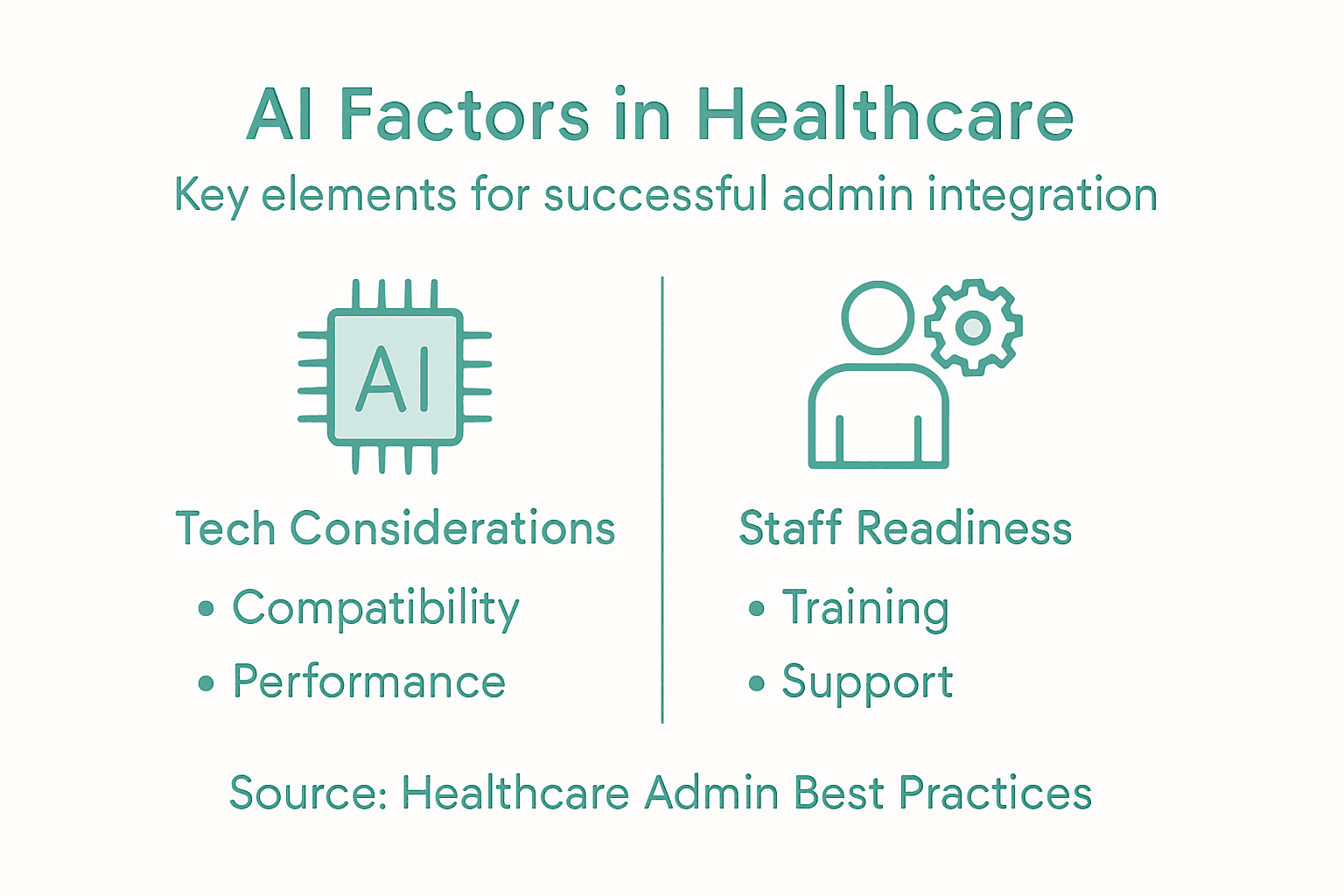
Pro tip: Develop a comprehensive AI integration strategy that prioritizes staff training, technological compatibility, and continuous performance monitoring to maximize administrative efficiency.
Key AI Technologies Shaping Intake Workflows
Healthcare intake workflows are experiencing a profound transformation through advanced AI technologies that automate and optimize complex administrative processes. Narrow AI systems are revolutionizing how medical facilities manage patient data, scheduling, and documentation with unprecedented efficiency and precision.
The key AI technologies driving this transformation include:
- Machine learning algorithms for predictive patient risk assessment
- Natural language processing to automate clinical documentation
- Deep learning models for intelligent data extraction
- Robotic process automation to streamline repetitive administrative tasks
- Predictive analytics for strategic resource allocation
These technologies operate through sophisticated computational approaches that analyze historical patient data, recognize patterns, and support real-time decision-making. By leveraging Limited Memory AI frameworks, healthcare administrators can now generate more accurate patient profiles, optimize intake procedures, and reduce manual processing time significantly.
Here’s a summary of how key AI technologies impact healthcare intake workflows:
| AI Technology | Primary Purpose | Impact on Intake Workflow |
|---|---|---|
| Machine Learning | Analyzes patient patterns | Improves patient profiling |
| Natural Language Processing | Automates data interpretation | Speeds up documentation |
| Deep Learning | Extracts info from large datasets | Increases data accuracy |
| Robotic Process Automation | Automates routine tasks | Reduces manual workload |
| Predictive Analytics | Forecasts resource needs | Optimizes staff allocation |
The integration of AI technologies in intake workflows requires a strategic approach that balances technological innovation with ethical considerations. Healthcare organizations must develop robust governance frameworks that ensure patient privacy, maintain algorithmic transparency, and align AI implementations with existing regulatory standards.
Pro tip: Implement a phased AI integration strategy that prioritizes staff training, continuous performance monitoring, and incremental technology adoption to maximize administrative efficiency and minimize operational disruption.
Core Benefits for Skilled Nursing Facilities
Artificial Intelligence (AI) is revolutionizing operational capabilities for skilled nursing facilities by offering transformative solutions that address critical administrative and clinical challenges. AI technologies improve personalized care management through sophisticated predictive analytics and intelligent automation strategies.
The core benefits for skilled nursing facilities encompass several key strategic advantages:
- Operational Efficiency by reducing administrative workload
- Predictive Patient Risk Assessment for proactive care planning
- Resource Optimization through intelligent allocation strategies
- Error Reduction in documentation and patient tracking
- Enhanced Decision Support for clinical and administrative teams
These AI-driven benefits translate into tangible improvements across multiple organizational dimensions. By leveraging advanced computational models, skilled nursing facilities can generate more accurate patient profiles, streamline intake processes, and make data-driven decisions that significantly enhance both operational performance and patient care quality.
Here’s how AI-driven administrative improvements benefit skilled nursing facilities:
| Benefit Area | Before AI Implementation | With AI Solutions |
|---|---|---|
| Administrative Workload | High manual effort | Streamlined, automated tasks |
| Patient Risk Assessment | Reactive, paper-based methods | Proactive, data-driven planning |
| Resource Allocation | Often inefficient | Optimized and strategic |
| Documentation Accuracy | Prone to human error | Enhanced with automation |
| Decision Support | Limited insights | Real-time, data-backed guidance |
The implementation of AI technologies requires a nuanced approach that balances technological innovation with ethical considerations. Skilled nursing facilities must develop comprehensive governance frameworks that prioritize patient privacy, maintain algorithmic transparency, and ensure seamless integration with existing clinical workflows.
Pro tip: Develop a phased AI adoption strategy that includes comprehensive staff training, continuous performance monitoring, and incremental technology implementation to maximize organizational readiness and minimize operational disruption.
Operational Impact: Reducing Errors and Burnout
Healthcare administrators face unprecedented challenges with staff burnout and administrative errors that compromise patient care and organizational efficiency. AI applications significantly reduce clinician burnout by systematically addressing the most time-consuming and mentally taxing aspects of healthcare management.
The key operational impacts of AI in reducing errors and burnout include:
- Automated Documentation that minimizes manual data entry
- Intelligent Workflow Optimization to streamline administrative tasks
- Cognitive Load Reduction through predictive task management
- Error Tracking and Prevention using advanced analytics
- Real-time Decision Support for complex administrative challenges
Healthcare facilities implementing AI technologies experience measurable improvements in staff well-being and operational performance. By automating repetitive tasks and providing intelligent insights, AI helps healthcare professionals focus on high-value patient interactions and critical decision-making processes, effectively mitigating the chronic stress associated with administrative overload.
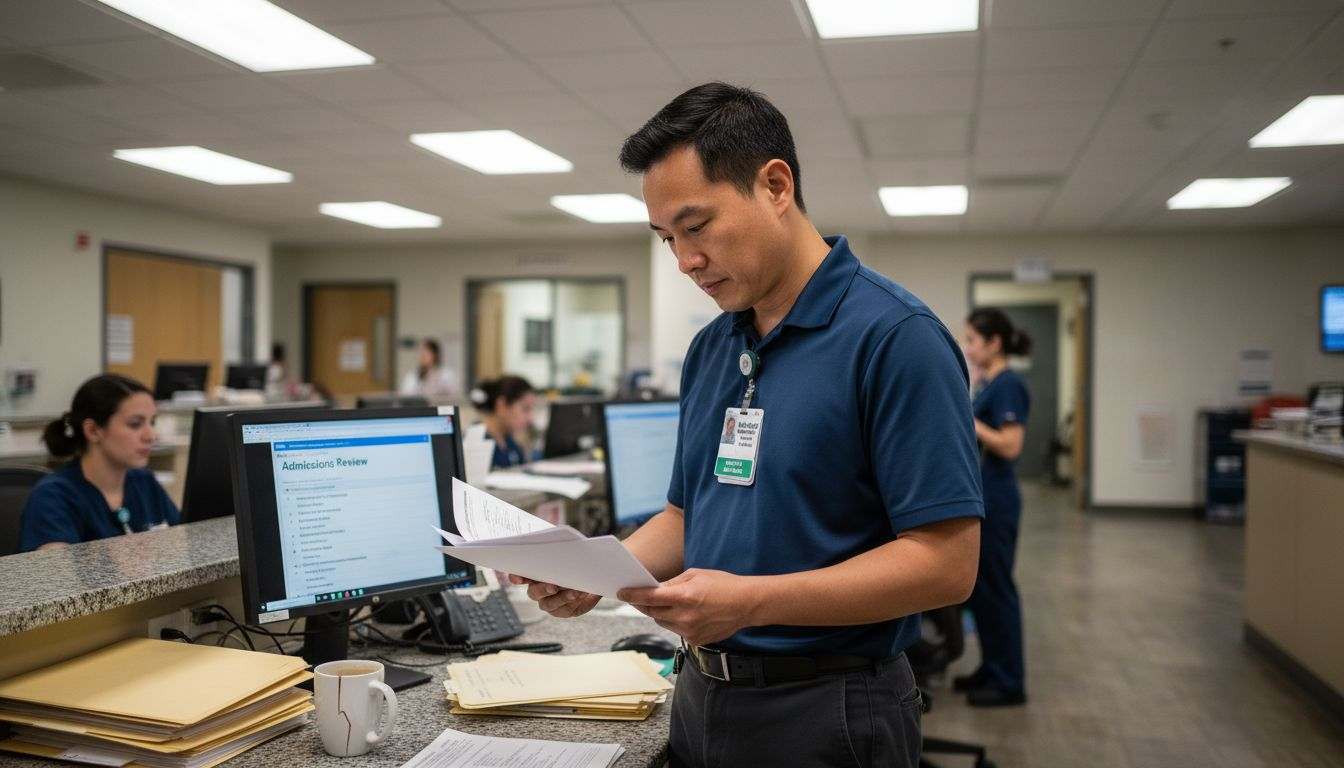
The strategic implementation of AI requires a comprehensive approach that balances technological innovation with human-centered design. Organizations must develop robust training programs, create clear governance frameworks, and maintain transparency to ensure successful AI integration that genuinely supports healthcare professionals.
Pro tip: Conduct periodic AI readiness assessments that evaluate your team’s technological comfort, identify specific pain points, and design incremental AI adoption strategies tailored to your facility’s unique operational needs.
Financial Advantages and ROI for Facilities
Artificial Intelligence represents a transformative financial opportunity for skilled nursing facilities seeking to optimize operational efficiency and reduce long-term costs. Decision-makers can leverage AI ROI calculators to evaluate precise financial impacts and strategic investment potential across administrative functions.
The key financial advantages of AI implementation include:
- Operational Cost Reduction by minimizing manual administrative tasks
- Increased Referral Conversion Rates through intelligent intake processing
- Reduced Billing and Documentation Errors that prevent revenue leakage
- Predictive Resource Allocation to optimize staffing and infrastructure investments
- Enhanced Reimbursement Accuracy by improving clinical documentation
Healthcare facilities implementing AI technologies can expect significant economic benefits beyond immediate cost savings. By streamlining intake processes, reducing administrative overhead, and improving overall operational efficiency, skilled nursing facilities can redirect resources toward patient care and strategic growth initiatives.
Comprehensive financial evaluations must consider both direct and indirect economic impacts. This requires a holistic approach that analyzes potential cost reductions, productivity gains, error prevention, and long-term strategic advantages associated with intelligent automation technologies.
Pro tip: Develop a comprehensive financial modeling framework that tracks both quantitative metrics and qualitative improvements when assessing AI technology investments to capture the full spectrum of potential returns.
Transform Healthcare Intake with Smart Admissions AI Solutions
The article highlights key challenges in healthcare administration such as lengthy patient referral reviews, manual documentation errors, and staff burnout. These pain points slow down intake workflows and impact operational efficiency. If you are seeking to streamline intake processes, improve patient eligibility verification, and accelerate bed occupancy, embracing AI-powered automation is essential. Concepts like predictive analytics, robotic process automation, and real-time decision support emphasize the value of intelligent systems in transforming administrative burdens into seamless workflows.
Smart Admissions is designed specifically for healthcare facilities like skilled nursing homes and rehabilitation centers to address exactly these challenges. Our platform automates repetitive administrative tasks through AI integration with Electronic Medical Records and insurance portals. This reduces referral review times and minimizes manual errors while providing actionable insights that empower better decision-making. By simplifying intake workflows, Smart Admissions helps reduce staffing burnout and increase revenue with improved bed fill rates.
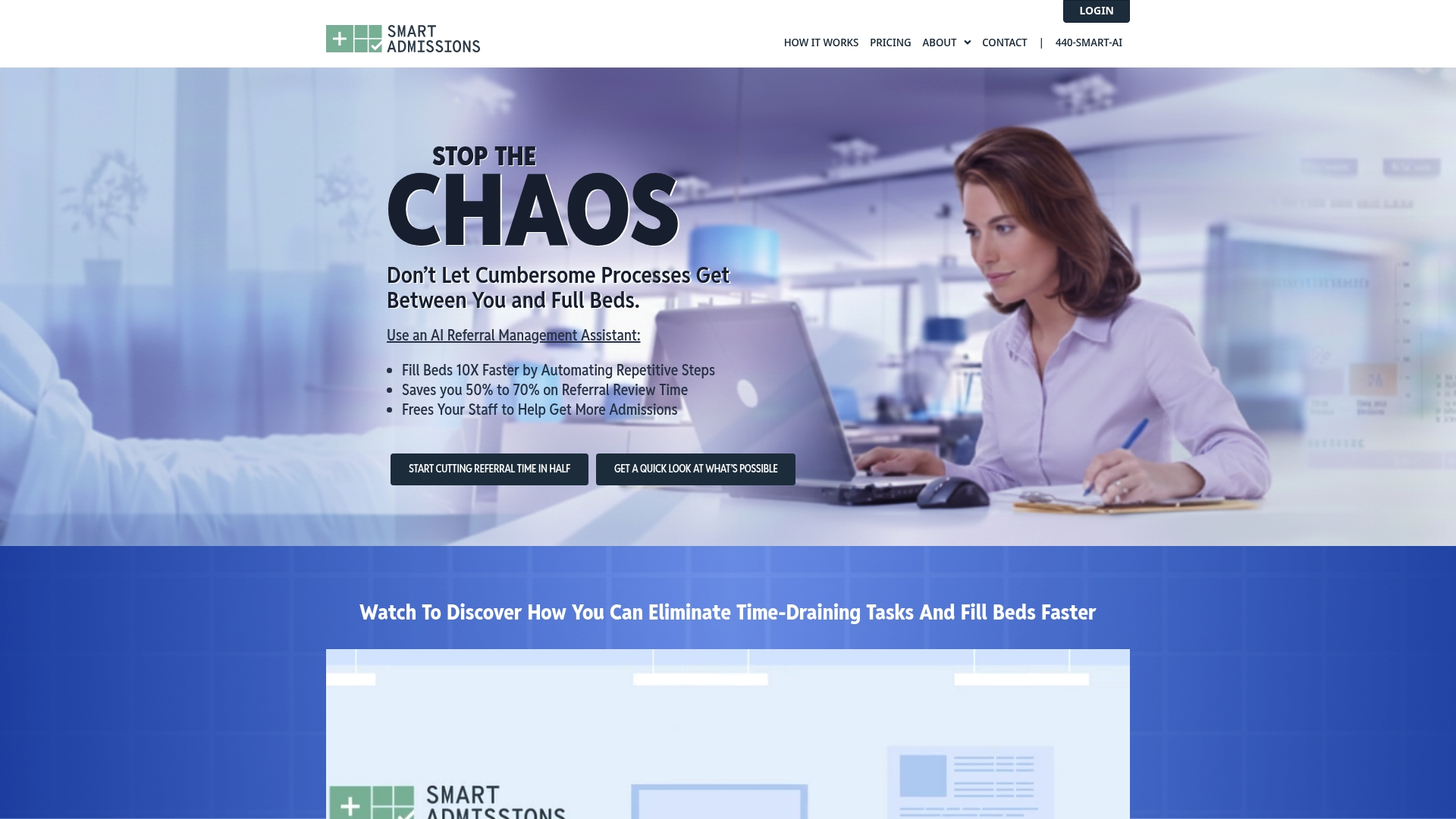
Explore how Smart Admissions can optimize your patient referral and admission workflows today. Visit Smart Admissions to discover more about our AI-powered referral management assistant and learn why healthcare administrators trust our easy onboarding and responsive customer support. Don’t let administrative complexity slow your facility down. Act now to unlock operational and financial benefits with Smart Admissions.
Frequently Asked Questions
What are the main benefits of using AI in healthcare administration?
AI enhances operational efficiency, improves patient risk assessment, optimizes resource allocation, reduces documentation errors, and provides enhanced decision support for both clinical and administrative teams.
How does AI streamline the intake process in healthcare?
AI technologies such as machine learning, natural language processing, and robotic process automation help automate and optimize complex administrative tasks, resulting in faster patient profiling and reduced manual workload.
What ethical considerations should healthcare facilities keep in mind when implementing AI?
Healthcare organizations must prioritize patient privacy, ensure algorithmic transparency, and maintain regulatory compliance while developing governance frameworks for AI systems to ensure ethical use.
How can skilled nursing facilities measure the ROI of AI technologies?
Facilities can use AI ROI calculators to assess financial impacts, including operational cost reductions, increased referral conversion rates, and enhanced accuracy in billing and documentation, which all contribute to long-term financial benefits.