
Managing patient referrals and admissions can feel overwhelming in healthcare facilities where every minute counts and paperwork piles up fast. From skilled nursing centers to hospital intake teams, finding efficient ways to connect the right patients with the right beds is a constant challenge. There’s real relief and better outcomes when clinical staff spend less time on repetitive forms and more time with patients.
This list will walk you through practical solutions and technologies that make admissions and referral processes smoother. You will discover smart tools like AI-powered platforms, real-time care coordination, and automated eligibility verification. Each item brings actionable ideas for cutting administrative headaches, improving communication, and speeding up placements.
Ready to see how modern approaches can transform patient intake, reduce errors, and make your admissions team more effective? These strategies offer proven results and direct steps to help you work smarter and support your patients better.
Table of Contents
- Smart Admissions: AI-Powered Integration for Skilled Nursing
- ReferralMD: Streamlining Automated Patient Intake
- PatientPing: Enhancing Real-Time Care Coordination
- CureMD: Simplifying Referral and Eligibility Verification
- MedMatch Network: Connecting Facilities with Fast Referrals
- TigerConnect: Supporting Secure Communication in Admissions
- Bridge Referral Platform: Customizable Workflows for Facilities
Quick Summary
| Takeaway | Explanation |
|---|---|
| 1. Implement AI in Admissions | AI-powered platforms reduce administrative tasks drastically, allowing staff to focus more on patient care. |
| 2. Optimize Patient Intake Process | Using automated intake systems can cut processing time significantly and improve patient documentation accuracy. |
| 3. Enhance Care Coordination | Real-time communication tools improve patient transitions and reduce hospital readmission rates through better information sharing. |
| 4. Focus on Eligibility Verification | Automating insurance checks minimizes claim denials, improving revenue cycle management and patient experience. |
| 5. Customize Workflow Solutions | Customizable referral platforms support unique operational needs, streamlining care coordination and enhancing patient satisfaction. |
1. Smart Admissions: AI-Powered Integration for Skilled Nursing
Skilled nursing facilities face unprecedented challenges in managing patient referrals and streamlining admissions processes. AI-powered admissions platforms are revolutionizing how healthcare administrators handle complex intake workflows.
The Smart Admissions AI integration represents a breakthrough in reducing administrative complexity and accelerating patient placement decisions. By leveraging advanced predictive analytics, these systems transform traditional referral management into a sophisticated, intelligent process.
Key features of AI-powered referral management include:
- Real-time clinical data integration
- Automated eligibility verification
- Intelligent patient matching algorithms
- Predictive financial assessment capabilities
- Seamless electronic medical record synchronization
Healthcare administrators can dramatically reduce staff burnout and streamline intake procedures by implementing AI-driven solutions. Intelligent automation allows teams to focus on patient care rather than administrative paperwork.
AI referral management reduces administrative tasks by up to 67% in skilled nursing facilities.
Implementing these systems requires strategic planning and careful vendor selection. Healthcare teams should evaluate platforms that offer robust integration, HIPAA compliance, and customizable workflows tailored to their specific operational needs.
Pro tip: Schedule comprehensive demos with multiple AI referral management vendors to understand unique platform capabilities and find the best fit for your facility.
2. ReferralMD: Streamlining Automated Patient Intake
Patient intake processes have long been a bottleneck in healthcare administration. Conversational AI solutions are transforming how medical facilities manage patient registration and documentation.
ReferralMD represents a cutting-edge approach to modernizing patient intake workflows. By leveraging intelligent automation technology healthcare providers can dramatically reduce administrative overhead and enhance the patient experience.
Key features of ReferralMD’s automated intake system include:
- Mobile-friendly form completion
- Automatic data routing to electronic health records
- Real-time consent collection
- Error reduction through intelligent form validation
- Seamless integration with existing healthcare systems
The platform enables patients to complete intake documentation directly from their mobile devices before arriving at the facility. Intelligent form technology minimizes manual data entry and reduces potential human error.
Automated patient intake can reduce administrative processing time by up to 55%.
Healthcare administrators can implement this system by evaluating their current intake processes identifying bottlenecks and selecting a solution that integrates smoothly with their existing electronic health record infrastructure.
Pro tip: Conduct a pilot test with a small patient group to validate the AI intake system’s effectiveness and gather user feedback before full deployment.
3. PatientPing: Enhancing Real-Time Care Coordination
Healthcare coordination has entered a new era of technological precision. Real-time care coordination networks are revolutionizing how providers communicate and manage patient transitions.
PatientPing represents a sophisticated cloud-based platform that connects thousands of healthcare providers through instantaneous communication channels. By delivering immediate admission discharge and transfer notifications the system dramatically improves care navigation and supports value-based healthcare initiatives.
Key advantages of PatientPing’s care coordination approach include:
- Instant provider notifications
- Comprehensive network connectivity
- Seamless data sharing across healthcare systems
- Reduced care transition gaps
- Enhanced patient tracking capabilities
Healthcare administrators can leverage real-time communication technologies to streamline patient handoffs reduce administrative complexity and improve overall care quality. The platform enables providers to make faster more informed decisions about patient placement and treatment.
Effective care coordination can reduce hospital readmission rates by up to 25%.
Implementing such systems requires strategic planning careful vendor selection and a commitment to technological integration across healthcare networks.
Pro tip: Conduct a comprehensive staff training program to ensure smooth adoption and maximize the potential of real-time care coordination technologies.
4. CureMD: Simplifying Referral and Eligibility Verification
Healthcare providers face constant challenges in managing patient insurance verification and referral processes. Advanced eligibility verification services are transforming administrative workflows for medical practices.
CureMD offers a comprehensive integrated platform designed to streamline complex healthcare administrative tasks. By leveraging AI-driven technologies the platform provides robust solutions for electronic health records practice management and revenue cycle optimization.
Key features of CureMD’s referral and eligibility verification system include:
- 24/7 automated insurance eligibility checks
- Detailed patient demographic analysis
- HIPAA compliant verification processes
- Multiple payer policy support
- Reduced claim denial rates
Healthcare administrators can utilize intelligent verification technologies to minimize administrative overhead improve patient collections and accelerate revenue cycles. The platform enables precise insurance validation before patient visits reducing unexpected financial complications.
Automated eligibility verification can decrease claim denials by up to 40%.
Successful implementation requires careful integration with existing electronic health record systems and comprehensive staff training to maximize platform capabilities.
Pro tip: Configure automated alerts for insurance verification status to proactively manage potential coverage gaps and streamline patient intake processes.
5. MedMatch Network: Connecting Facilities with Fast Referrals
Skilled nursing facilities require sophisticated communication platforms that enable rapid patient referrals and efficient care coordination. Referral management systems are transforming how healthcare providers connect and transfer patient information.
MedMatch Network represents an innovative solution designed to streamline communication between healthcare facilities. By creating a centralized digital platform the network enables instant referral transmission reducing administrative delays and improving patient placement efficiency.
Key features of MedMatch Network include:
- Instant referral transmission
- Comprehensive facility network connectivity
- Real-time patient information sharing
- Secure HIPAA compliant communication channels
- Automated tracking and status updates
Healthcare administrators can leverage digital referral coordination platforms to minimize communication gaps reduce administrative overhead and accelerate patient transfer processes. The network acts as a centralized hub connecting multiple healthcare providers seamlessly.
Digital referral networks can reduce patient transfer times by up to 60%.
Successful implementation requires strategic onboarding comprehensive staff training and commitment to technological integration across healthcare networks.
Pro tip: Designate a dedicated team member to manage and optimize your digital referral network integration to ensure smooth communication and maximum efficiency.
6. TigerConnect: Supporting Secure Communication in Admissions
Healthcare communication demands robust security and seamless connectivity. Secure clinical collaboration platforms are revolutionizing how healthcare teams exchange critical patient information.
TigerConnect offers a comprehensive HIPAA-compliant communication solution designed specifically for complex healthcare environments. By providing end-to-end encrypted messaging and advanced collaboration tools the platform enables rapid secure information exchange across medical teams and facilities.
Key features of TigerConnect’s communication platform include:
- Instant secure messaging capabilities
- Voice and video call integration
- Electronic health record alert synchronization
- Role-based communication routing
- Patient engagement tools
Healthcare administrators can leverage secure digital communication technologies to streamline admissions processes reduce communication delays and enhance interdepartmental collaboration. The platform supports complex workflows while maintaining stringent security protocols.
Secure messaging can reduce communication errors by up to 45% in healthcare settings.
Successful implementation requires comprehensive staff training strategic platform configuration and a commitment to maintaining robust communication standards.
Pro tip: Develop clear communication protocols and conduct regular training sessions to maximize the effectiveness of your secure messaging platform.
7. Bridge Referral Platform: Customizable Workflows for Facilities
Healthcare organizations require flexible technological solutions that adapt to their unique operational needs. Customizable referral management platforms are transforming how facilities manage patient information and streamline care coordination.
Bridge Referral Platform offers a comprehensive solution designed to address the complex challenges of modern healthcare communication. By providing adaptable workflows and robust integration capabilities the platform supports diverse organizational requirements across different healthcare settings.
Key features of Bridge Referral Platform include:
- Client-branded mobile applications
- Secure patient communication portals
- Accurate patient information sharing
- EHR and practice management system integration
- Out-of-network referral reduction tools
- Actionable performance analytics
Healthcare administrators can leverage flexible workflow management technologies to reduce referral leakage improve patient satisfaction and support value-based care initiatives. The platform enables precise tracking and seamless communication across organizational boundaries.
Customizable referral platforms can reduce administrative processing time by up to 55%.
Successful implementation requires careful assessment of organizational needs strategic technology selection and comprehensive staff training to maximize platform capabilities.
Pro tip: Conduct a thorough workflow analysis before platform implementation to ensure maximum customization and alignment with your facility’s specific operational requirements.
Below is a comprehensive table summarizing the key advancements, features, and benefits of various AI-powered systems designed to improve healthcare administrative processes as discussed in the article.
| Solution | Key Features | Benefits & Outcomes |
|---|---|---|
| Smart Admissions | – Real-time clinical data integration. – Predictive financial assessments. |
Streamlined intake workflows, reduced staff burnout. |
| ReferralMD | – Mobile-friendly form completion. – Automatic data routing to health records. |
Enhanced patient experience, reduced processing times. |
| PatientPing | – Real-time care coordination. – Instant discharge notifications. |
Improved care navigation, reduced hospital readmissions. |
| CureMD | – Automated insurance eligibility checks. – Multiple payer policy support. |
Minimized financial complications, reduced claim denials. |
| MedMatch Network | – Real-time patient information sharing. – Secure communications. |
Accelerated patient transfer processes, improved placement. |
| TigerConnect | – Secure messaging. – Role-based communication routing. |
Enhanced interdepartmental collaboration, reduced delays. |
| Bridge Referral Platform | – Customizable workflows. – Actionable analytics. |
Reduced referral leakage, supported value-based care. |
Streamline Your Referral Management with Smart Admissions
The article “7 Examples of Referral Management Systems for Efficiency” highlights common challenges healthcare facilities face like administrative overload, slow patient placement, and integration complexity. You need a solution that tackles referral review delays, reduces staff burnout, and improves bed occupancy with ease. Smart Admissions offers an AI-powered referral management assistant designed specifically for skilled nursing and post-acute care providers. It automates repetitive tasks, verifies patient eligibility in real time, and syncs smoothly with EMR and insurance portals to give you faster, smarter intake workflows.
Why Smart Admissions Stands Out:
- Real-time clinical assessments and eligibility verification
- Customizable workflows tailored to your facility
- Actionable analytics that empower better decision-making
Don’t let manual processes hold your admissions team back. Discover how to boost revenue and increase efficiency by exploring our Smart Admissions platform. Experience firsthand how intelligent automation transforms patient referral management.
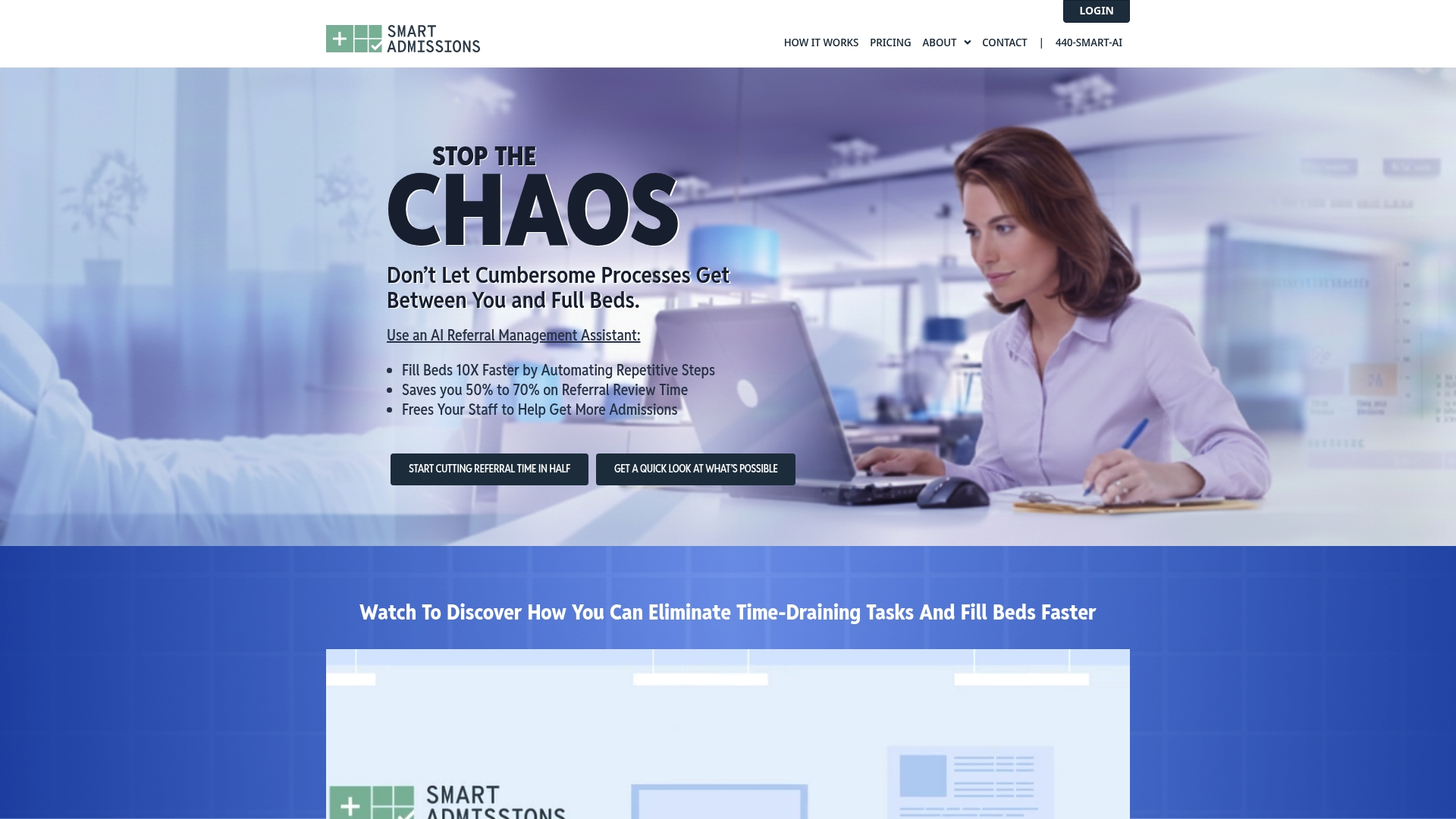
Ready to accelerate your patient intake process and reduce administrative burdens? Visit Smart Admissions now to schedule a demo and start streamlining your referral workflows today. Learn more about how our technology integrates seamlessly by checking out our AI-powered referral management assistant and see why healthcare administrators trust Smart Admissions for timely and accurate patient placements.
Frequently Asked Questions
What are referral management systems?
Referral management systems are tools designed to streamline the process of referring patients between healthcare providers. They facilitate quicker, more efficient communication and coordination, helping reduce administrative delays and improve patient care.
How can I implement a referral management system in my healthcare facility?
To implement a referral management system, first assess your current referral processes to identify bottlenecks. Next, select a system that integrates well with your existing workflows and conduct training sessions for staff to ensure a smooth transition.
What are the key benefits of using a referral management system?
Using a referral management system can enhance patient tracking, improve communication among healthcare providers, and significantly reduce administrative overhead. Facilities can see administrative processing times decrease by up to 55% after successful implementation.
How do I choose the right referral management system for my organization?
To choose the right referral management system, evaluate your organization’s specific needs, such as integration capabilities and customization options. Conduct demonstrations with multiple systems to understand their unique features and select one that best fits your operational requirements.
What features should I look for in a referral management system?
Key features to look for include automated eligibility verification, real-time data sharing, secure communication channels, and customizable workflows. Prioritize features that address your facility’s specific challenges and improve overall efficiency in patient referrals.
How do referral management systems help reduce administrative burden?
Referral management systems automate routine tasks such as eligibility checks and data entry, reducing the need for manual intervention. By implementing such systems, facilities can decrease administrative tasks by up to 67%, allowing staff to focus more on patient care.
Recommended
- What Is Referral Management and Why It Matters
- Role of Technology in Modern Referral Management
- Stop Wasting 45 Minutes on Each Referral: Try These 5 Post-Acute Care Automation Hacks – Smart Admissions
- What Is Referral Review – Impact on Patient Intake
- Best Franchise Management Software: 8 Competitive Solutions 2026
- 7-Schritte-Checkliste für KI-gestütztes Recruiting im Unternehmen