
Managing bed occupancy in a skilled nursing facility often feels like a constant balancing act, especially when referral information is scattered and outdated. Admissions coordinators across North America know the frustration of manual data processes slowing down patient placements and adding to administrative tasks. By building a centralized referral system design and focusing on high-quality, accurate data integration, you can streamline workflows, improve decision making, and achieve better patient flow without added stress.
Table of Contents
- Step 1: Set Up Referral Data Sources and Integrations
- Step 2: Organize and Clean Patient Referral Records
- Step 3: Apply Filters to Identify Actionable Insights
- Step 4: Review Key Metrics to Measure Bed Utilization
- Step 5: Validate Findings and Share Recommendations
Quick Summary
| Key Message | Explanation |
|---|---|
| 1. Integrate EHR Systems | Seamless EHR integration enables timely access to patient information and improves referral management efficiency. |
| 2. Standardize Referral Data | Standardization in data entry reduces errors and enhances the accuracy of patient information management. |
| 3. Utilize Data Filters | Applying data filters helps isolate performance indicators, allowing for better identification of referral bottlenecks. |
| 4. Monitor Bed Utilization | Tracking key bed utilization metrics reveals opportunities for operational improvement and boosts efficiency. |
| 5. Validate Findings Collaboratively | Using multiple data sources for validation ensures accuracy and helps in making informed recommendations for improvement. |
Step 1: Set Up Referral Data Sources and Integrations
Setting up robust referral data sources and integrations is crucial for optimizing bed occupancy in skilled nursing facilities. In this step, you’ll establish the technological infrastructure needed to streamline your referral management process and capture comprehensive patient information.
Begin by identifying and mapping all potential referral sources within your healthcare network. This typically includes hospitals, physician practices, rehabilitation centers, and community health organizations. Centralized referral system design requires strategic coordination and clear communication channels.
To effectively set up your referral data integrations, consider these key components:
- Electronic Health Record (EHR) compatibility
- Patient eligibility verification systems
- Insurance portal connections
- Secure data transfer protocols
- Real-time tracking mechanisms
Prioritize technology solutions that offer seamless integration and support comprehensive referral data metrics. These metrics should include demand tracking, quality control indicators, and system performance analytics.
Here’s a summary of technology integration choices and their benefits for referral management:
| Technology Solution | Description | Key Benefit |
|---|---|---|
| EHR System Integration | Connect patient health records | Enables timely information |
| Insurance Portal Connection | Direct link for coverage details | Reduces manual eligibility checks |
| Real-Time Tracking | Immediate referral status updates | Speeds up placement decisions |
| Secure Data Transfer | Encrypted exchange between systems | Improves privacy compliance |
Successful referral data integration reduces administrative burden and accelerates patient placement decisions.
Pro tip: Conduct a thorough audit of your existing referral sources and communication channels before implementing new technological solutions to ensure maximum compatibility and minimal disruption.
Step 2: Organize and Clean Patient Referral Records
Organizing and cleaning patient referral records is a critical step in optimizing bed occupancy and ensuring accurate patient information management. In this phase, you’ll develop a systematic approach to maintaining high-quality referral data that supports efficient patient placement and tracking.

Start by implementing comprehensive referral data collection procedures that capture essential patient information with precision and consistency. This involves creating standardized intake forms, establishing clear documentation protocols, and developing a centralized system for storing and managing referral records.
Key strategies for organizing and cleaning referral records include:
- Standardize data entry formats
- Remove duplicate or outdated patient records
- Validate patient contact and insurance information
- Implement regular data quality checks
- Create a systematic archiving process
Ensure your referral record management aligns with best practices for resource referral management, focusing on accuracy, completeness, and accessibility of patient information.
Effective referral record management reduces errors and accelerates patient placement processes.
Pro tip: Invest in a digital record management system that offers automated data cleaning and validation features to minimize manual data entry errors and improve overall efficiency.
Step 3: Apply Filters to Identify Actionable Insights
Applying strategic filters to your referral data is essential for uncovering meaningful insights that can dramatically improve bed occupancy and patient placement efficiency. This critical step transforms raw data into a powerful decision-making tool for your skilled nursing facility.
Utilize referral system data analysis techniques to systematically filter and evaluate your referral records. By implementing targeted filtering strategies, you can isolate key performance indicators and identify potential bottlenecks in your patient intake process.
Consider applying the following strategic filters to your referral data:
- Referral source performance
- Patient demographic segmentation
- Average referral processing time
- Insurance verification success rates
- Geographic referral distribution
- Conversion rates from referral to admission
Explore advanced referral platform functionalities that enable sophisticated data filtering and performance tracking. These tools can help you prioritize high-potential referrals and optimize your facility’s patient intake strategy.
Data-driven filtering transforms raw referral information into actionable strategic insights.
Pro tip: Create a standardized dashboard that automatically applies your most critical filters, saving time and providing instant visibility into your referral performance metrics.
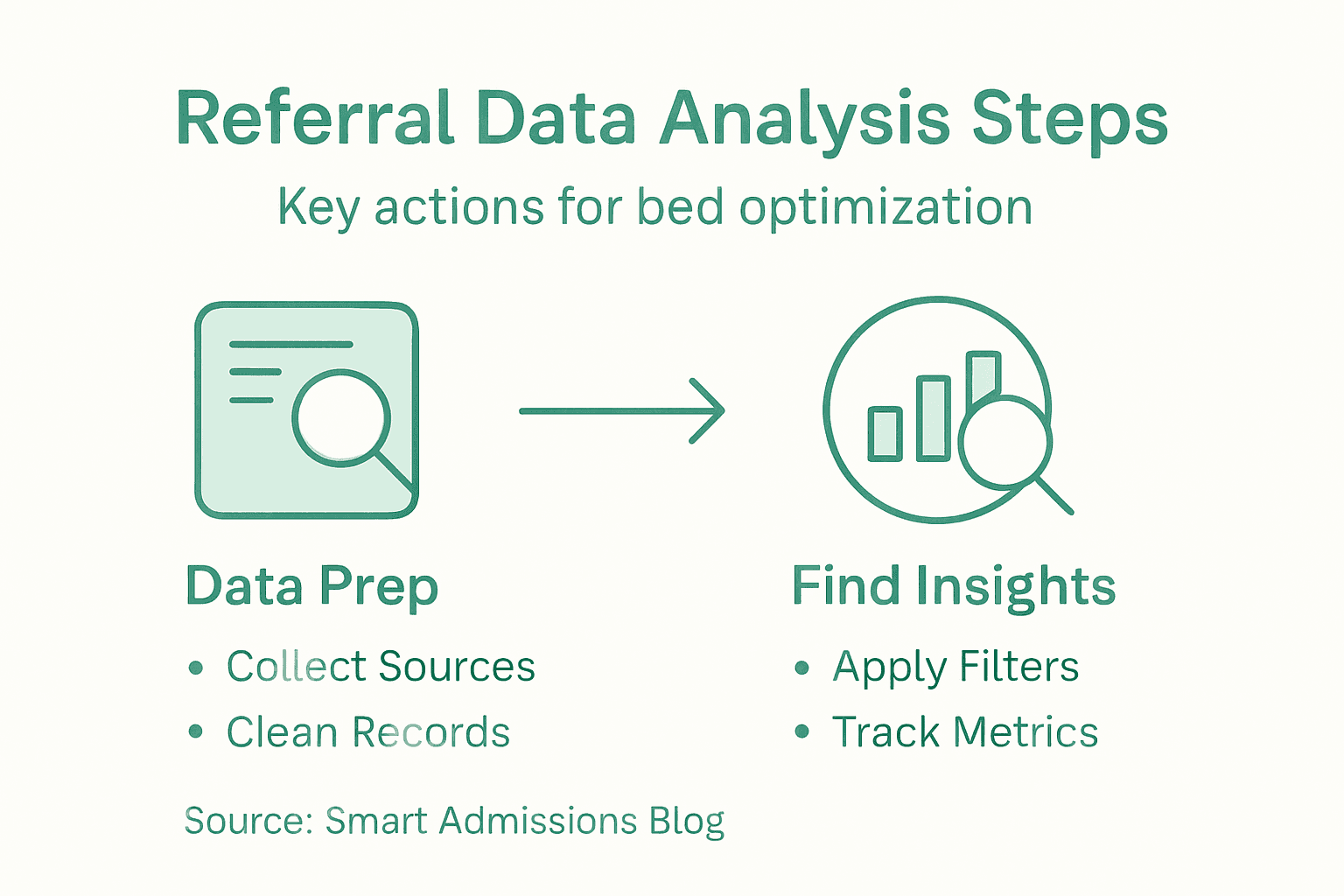
Step 4: Review Key Metrics to Measure Bed Utilization
Effectively measuring bed utilization is crucial for maximizing your skilled nursing facility’s operational efficiency and financial performance. This step will help you transform raw data into meaningful insights that drive strategic decision-making and optimize patient placement.
Dive deep into healthcare resource utilization metrics that provide a comprehensive view of your facility’s bed management performance. Understanding these critical indicators will enable you to identify opportunities for improvement and streamline your patient intake process.
Key bed utilization metrics to track include:
- Bed occupancy rate
- Average length of patient stay
- Patient turnover rate
- Wait time between referral and admission
- Readmission rates
- Revenue per available bed day
Utilize real-time data analysis techniques to monitor these metrics dynamically, allowing for rapid adjustments to your facility’s patient placement strategies.
This table highlights major bed utilization metrics and their impact on facility operations:
| Metric | What It Measures | Operational Impact |
|---|---|---|
| Bed Occupancy Rate | Percentage of beds in use | Reveals overall facility usage |
| Patient Turnover Rate | Frequency of admissions | Affects workflow and staffing |
| Readmission Rate | Repeat patient entries | Indicates quality of care issues |
| Revenue per Bed Day | Income generated daily | Assesses financial performance |
Precise measurement of bed utilization metrics transforms operational data into strategic insights.
Pro tip: Implement a monthly dashboard review that compares your current metrics against historical benchmarks and industry standards to continuously refine your bed management approach.
Step 5: Validate Findings and Share Recommendations
Validating your referral data findings and developing actionable recommendations is the crucial final stage of transforming insights into tangible operational improvements for your skilled nursing facility. This step ensures that your data analysis translates into meaningful strategic changes.
Implement rigorous data validation strategies to confirm the accuracy and reliability of your analysis. Cross-reference your findings through multiple data sources and conduct thorough stakeholder consultations to validate the insights generated from your referral data assessment.
Key components of effective findings validation include:
- Triangulate data from multiple sources
- Conduct peer reviews of analysis
- Compare results against industry benchmarks
- Verify statistical significance
- Identify potential bias or anomalies
- Validate conclusions with frontline staff
When sharing recommendations, focus on transparent communication strategies that make your insights actionable and compelling for decision-makers. Present findings in clear, concise formats that highlight potential operational improvements.
Validated insights transform raw data into strategic organizational knowledge.
Pro tip: Create a visual executive summary that translates complex data findings into easily digestible graphics and key recommendations, making it simple for leadership to understand and act upon.
Unlock Better Bed Occupancy with Smarter Referral Data Management
The challenge of managing referral data to improve bed occupancy is clear in your facility’s need to reduce manual burdens, speed up patient placement, and gain actionable insights. This article highlights key pain points such as organizing clean patient records, applying filters for data-driven decisions, and validating findings to optimize bed utilization. Smart Admissions is designed exactly for healthcare providers like skilled nursing homes who want to transform these complex processes into seamless workflows. Our AI-powered platform integrates directly with your Electronic Medical Records and insurance portals to automate eligibility verification, manage documentation, and deliver real-time analytics.
Experience how Smart Admissions can help you streamline referral data integration, minimize manual tasks, and increase your bed fill rates while reducing staffing burnout. Take control of your patient intake strategy with powerful insights that the article emphasizes as critical for operational success.
Elevate your referral management today with Smart Admissions, the platform built to optimize your facility’s admissions efficiency.
Ready to see improvement in how you handle referrals and bed occupancy?
Discover the difference automation and intelligent data management can make at your facility. Visit Smart Admissions now and start transforming your referral process. Learn more about how we connect with your existing systems and empower your team by exploring our landing page.
Don’t wait to turn insightful referral data analysis into faster, smarter patient placement.
Frequently Asked Questions
How can I set up referral data sources for better bed occupancy?
To set up referral data sources, start by mapping all potential referral sources in your healthcare network, such as hospitals and rehabilitation centers. Establish technological integrations that allow seamless data transfer and tracking, which can improve patient placement decisions within 30 days.
What are the key components to include in my referral data management system?
Key components include Electronic Health Record (EHR) compatibility, patient eligibility verification systems, and secure data transfer protocols. Focus on choosing solutions that streamline information flow and provide real-time tracking to enhance your operational efficiency.
How do I clean and organize patient referral records effectively?
To clean and organize patient referral records, implement standardized data entry formats and regularly validate patient information. Aim to eliminate duplicates and outdated records, which can significantly reduce administrative errors by up to 30%.
What metrics should I review to assess bed utilization?
Key metrics to review include bed occupancy rate, average length of stay, and wait times between referral and admission. Regularly monitoring these metrics can help identify trends, enabling timely adjustments that improve bed utilization rates by approximately 15%.
How can I validate my referral data findings?
Validate your referral data findings by cross-referencing multiple data sources and conducting peer reviews of your analysis. This ensures the reliability of your insights and allows you to confidently present changes that can enhance patient placement processes within your facility.
What strategies should I use to share recommendations based on my data analysis?
Share your recommendations by using clear and concise communication strategies that highlight actionable insights from your analysis. Create visual summaries that make it easier for decision-makers to grasp the information quickly, facilitating prompt implementation of your suggestions.
Recommended
- Why Your Competitors Are Filling Beds Faster (And How to Catch Up) – Smart Admissions
- What Is Referral Management and Why It Matters
- How Instant Referral Responses Increase Your Admission Rate by 40% – Smart Admissions
- How to Fill Nursing Home Beds 10X Faster: The AI Referral Management Revolution – Smart Admissions