
Managing admissions in skilled nursing homes can quickly turn into a maze of paperwork, phone calls, and regulatory hurdles. This reality makes efficient referral management and administrative task automation more urgent than ever for admissions coordinators seeking smoother workflows. Today’s advanced technologies, including AI-powered tools, promise to ease this burden and create smarter processes. Discover how innovative solutions can help you free up staff capacity, improve data accuracy, and increase admission speed for better patient outcomes.
Table of Contents
- Defining Healthcare Administration and Misconceptions
- Types of Administrative Tasks in Healthcare Facilities
- How Referral and Intake Process Automation Works
- Key Characteristics of AI-Powered Solutions
- Benefits for Patient Outcomes and Bed Fill Rates
- Risks, Compliance, and Common Pitfalls
Key Takeaways
| Point | Details |
|---|---|
| Role of Healthcare Administrators | Healthcare administrators manage critical operational tasks to ensure efficient healthcare delivery, bridging clinical expertise with strategic management. |
| Types of Administrative Tasks | Key administrative tasks include patient information management, billing, staffing, and regulatory compliance, which require comprehensive knowledge of healthcare systems. |
| Automation Benefits | Referral and intake process automation improves efficiency by reducing manual data entry and enhancing patient onboarding, ultimately transforming administrative workflows. |
| Compliance Risks | Navigating compliance risks is essential; organizations should implement robust training and internal controls to mitigate potential violations and protect patient interests. |
Defining Healthcare Administration and Misconceptions
Healthcare administration represents a sophisticated professional discipline focused on managing complex healthcare organizations and service delivery systems. Unlike clinical roles that directly provide patient care, healthcare administrators manage critical operational aspects that ensure smooth, efficient healthcare service delivery.
At its core, healthcare administration encompasses several essential functions:
- Strategic leadership and organizational management
- Financial planning and resource allocation
- Regulatory compliance and policy implementation
- Staff coordination and human resources development
- Quality assurance and performance optimization
- Technology integration and workflow enhancement
Many professionals misunderstand healthcare administration, often conflating it with direct clinical work. Hospital administrators actually coordinate multifaceted systems that support healthcare professionals in delivering exceptional patient care. Their role requires comprehensive knowledge spanning business management, healthcare regulations, technology, and organizational psychology.
Effective healthcare administrators serve as critical behind-the-scenes professionals who transform complex healthcare environments into responsive, efficient systems. They bridge clinical expertise with strategic management, ensuring healthcare organizations can adapt to evolving patient needs, technological advancements, and regulatory landscapes.
Pro tip: Develop a holistic understanding of healthcare systems by continuously learning about technological innovations, regulatory changes, and emerging management strategies.
Types of Administrative Tasks in Healthcare Facilities
Healthcare facilities require a complex array of administrative tasks that extend far beyond traditional paperwork. Administrative responsibilities encompass critical operational functions that ensure smooth, efficient healthcare delivery while maintaining regulatory compliance and organizational effectiveness.
The primary administrative tasks in healthcare facilities typically include:
- Patient information management
- Billing and claims processing
- Insurance verification and authorization
- Appointment scheduling and coordination
- Staff recruitment and human resources management
- Regulatory compliance tracking
- Financial planning and budgeting
- Quality assurance and performance monitoring
- Technology systems integration
- Risk management and strategic planning
Healthcare administrative tasks generate significant operational complexity, requiring professionals to navigate intricate regulatory landscapes while maintaining efficiency. These nonclinical duties are essential for healthcare organizations, demanding comprehensive knowledge of healthcare systems, technological platforms, and evolving industry standards.
Modern healthcare administrators must continuously adapt to technological innovations and regulatory changes. Their role involves transforming administrative processes from manual, time-consuming activities into streamlined, technology-enabled workflows that support both patient care and organizational objectives.
Pro tip: Develop cross-functional skills in technology, healthcare regulations, and management to become a more effective healthcare administrator.
How Referral and Intake Process Automation Works
Referral and intake process automation represents a transformative approach to healthcare administration, leveraging advanced technologies to streamline complex patient onboarding workflows. AI-driven workflow automation integrates intelligent data capture with sophisticated processing capabilities that dramatically reduce manual administrative burdens.
The key components of referral and intake process automation include:
- Intelligent data extraction from multiple sources
- Real-time patient eligibility verification
- Automated document routing and processing
- Dynamic clinical information assessment
- Seamless integration with existing hospital systems
- Compliance and regulatory standard enforcement
- Automated communication and notification systems
- Patient information validation and duplicate record prevention
- Performance analytics and workflow optimization
- Secure data management and privacy protection
Automation technologies transform traditional intake processes by eliminating manual data entry, reducing human error, and accelerating patient admission cycles. By implementing advanced algorithms and machine learning techniques, healthcare facilities can create more efficient, accurate, and responsive administrative systems that prioritize both operational excellence and patient experience.

Here’s a comparison of traditional manual intake versus AI-powered automation in healthcare facilities:
| Aspect | Manual Intake | AI-Powered Automation |
|---|---|---|
| Data Entry | Staff input, prone to errors | Automated extraction, reduces mistakes |
| Processing Speed | Slow, often delayed | Fast, real-time processing |
| Compliance | Risk of lapses | Built-in regulatory checks |
| Staff Workload | High administrative burden | Frees staff for clinical focus |
Modern referral automation platforms leverage artificial intelligence to analyze complex patient information, providing healthcare administrators with intelligent insights and streamlined decision-making tools. These systems continuously learn and adapt, ensuring increasingly sophisticated and precise patient intake processes that can handle growing healthcare complexity.
Pro tip: Implement incremental automation strategies, starting with the most repetitive and time-consuming administrative tasks to build organizational confidence and demonstrate immediate value.
Key Characteristics of AI-Powered Solutions
AI-powered solutions in healthcare represent a sophisticated technological approach designed to transform administrative and clinical processes. Specialized artificial intelligence architectures enable unprecedented levels of efficiency, accuracy, and intelligent decision-making across complex healthcare environments.
The fundamental characteristics of AI-powered healthcare solutions include:
- Narrow AI specialization for specific medical tasks
- Advanced machine learning algorithms
- High-precision predictive analytics capabilities
- Adaptive learning and continuous improvement
- Real-time data processing and analysis
- Seamless integration with existing healthcare systems
- Robust data privacy and security protocols
- Transparent and explainable decision-making frameworks
- Ethical implementation with human oversight
- Scalable and configurable solution designs
Healthcare AI solutions optimize resource allocation by automating complex administrative tasks and providing intelligent insights. These technologies go beyond simple automation, offering sophisticated analysis that supports clinical decision-making and enhances overall operational efficiency.
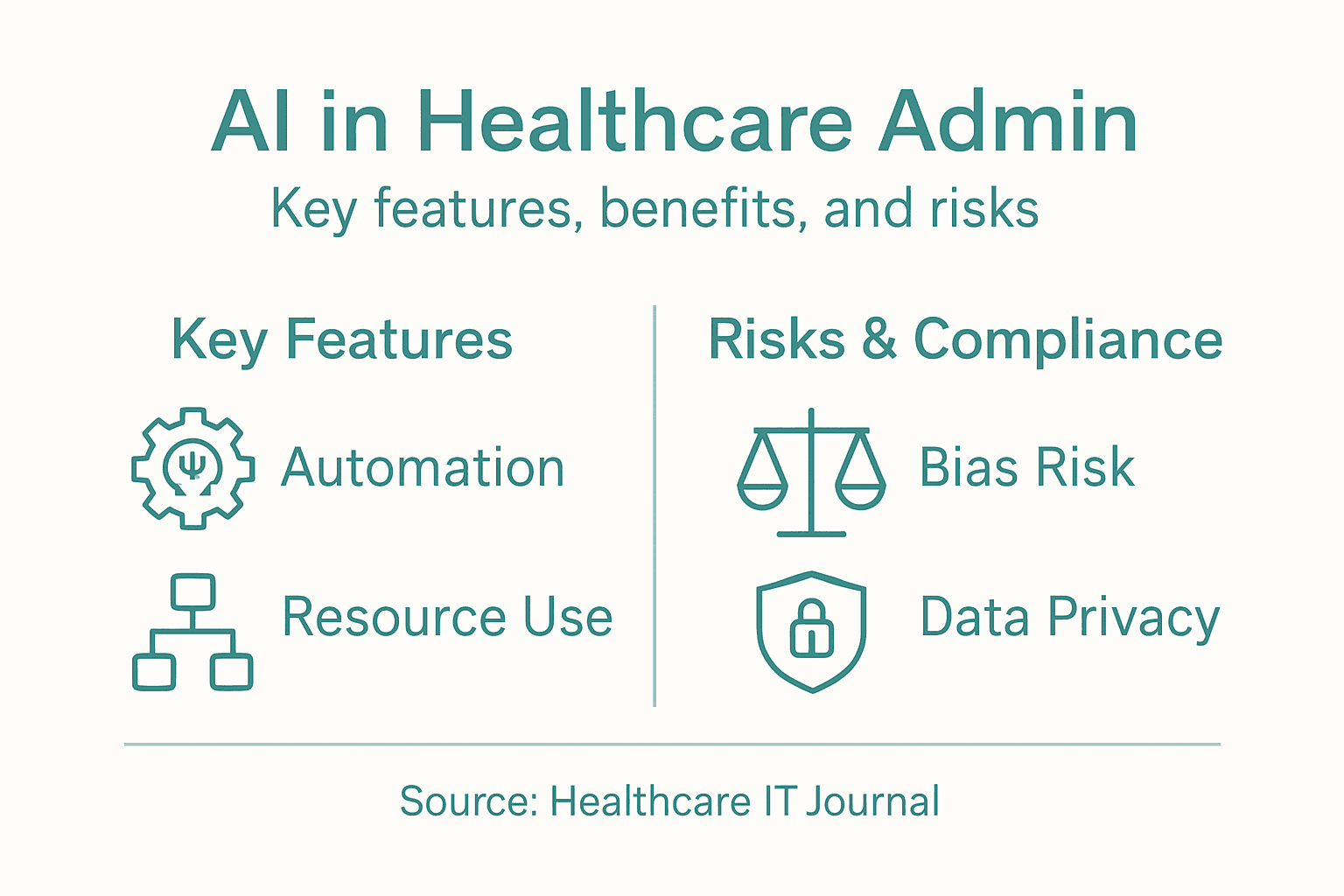
Modern AI solutions prioritize responsible implementation, emphasizing transparency, bias mitigation, and strict adherence to regulatory frameworks. By combining advanced technological capabilities with rigorous ethical standards, these systems are transforming healthcare administration into a more intelligent, responsive, and patient-centric domain.
Pro tip: Conduct thorough vendor assessments to ensure AI solutions align with your organization’s specific workflow requirements and compliance standards.
Benefits for Patient Outcomes and Bed Fill Rates
Healthcare administration plays a critical role in transforming patient care delivery and operational efficiency. Strategic management practices directly impact patient outcomes, creating more responsive and effective healthcare environments that optimize resource utilization and patient satisfaction.
Key benefits of streamlined healthcare administration include:
- Reduced patient wait times
- Lower hospital readmission rates
- Increased patient satisfaction scores
- More efficient bed management
- Enhanced resource allocation
- Improved staff coordination
- Better patient safety protocols
- Faster admission processing
- More accurate patient routing
- Higher operational transparency
Data-driven hospital management approaches enable continuous performance monitoring and systematic improvements in clinical service delivery. These strategies transform traditional administrative processes into intelligent, responsive systems that prioritize patient care while maintaining operational excellence.
By implementing advanced administrative technologies and strategic management frameworks, healthcare facilities can create more dynamic, patient-centric environments. These approaches not only improve bed fill rates but also support holistic patient care, ensuring that each interaction contributes to better overall health outcomes and system-wide efficiency.
Pro tip: Implement regular performance analytics and cross-departmental communication protocols to continuously optimize patient flow and bed management strategies.
Risks, Compliance, and Common Pitfalls
Healthcare administration involves navigating a complex landscape of regulatory requirements and potential risks that can significantly impact organizational effectiveness. Compliance risks encompass multiple critical domains that demand meticulous attention and proactive management strategies.
The primary compliance risks and potential pitfalls include:
- Patient privacy breaches
- HIPAA regulation violations
- Inaccurate medical billing
- Anti-Kickback statute infractions
- Drug diversion and fraud prevention
- Documentation inconsistencies
- Improper patient information handling
- Insurance claim processing errors
- Federal healthcare program regulation violations
- Inadequate staff training protocols
Healthcare compliance management requires systematic risk assessment and continuous organizational adaptation. Successful risk mitigation involves implementing robust internal controls, maintaining comprehensive staff training programs, and developing responsive compliance frameworks that can quickly address emerging regulatory challenges.
Below is a summary of core compliance risks in healthcare and recommended mitigation strategies:
| Compliance Risk | Impact on Organization | Mitigation Strategy |
|---|---|---|
| HIPAA violation | Legal penalties, loss of trust | Regular privacy training |
| Billing errors | Financial losses, audits | Continuous claim review |
| Drug diversion | Criminal liability, patient harm | Strict inventory monitoring |
| Staff undertraining | Increased mistakes, low quality | Mandatory ongoing education |
Effective risk management goes beyond mere regulatory adherence; it represents a strategic approach to protecting patient interests, organizational reputation, and financial stability. Healthcare administrators must cultivate a culture of compliance that integrates legal guidance, technological safeguards, and ongoing educational initiatives to minimize potential vulnerabilities.
Pro tip: Develop a quarterly compliance review process that includes comprehensive staff training, internal audits, and proactive risk identification strategies.
Transform Your Healthcare Administration Today
Healthcare professionals managing complex referral and intake processes face pressing challenges such as excessive manual tasks, delayed patient admissions, and inefficient bed utilization. The article highlights how automation of administrative workflows and AI-powered solutions can reduce errors, accelerate patient eligibility verification, and optimize resource allocation. If you want to overcome common obstacles like staffing burnout and slow referral reviews while improving patient outcomes and bed fill rates, it is time to explore intelligent tools designed specifically for your needs.
Smart Admissions offers a tailored SaaS platform that integrates seamlessly with your existing Electronic Medical Records and insurance portals to automate tedious tasks in the referral and admission process. By leveraging AI for real-time clinical assessments and document management, your facility can experience faster decisions, enhanced operational transparency, and greater financial performance. Discover how Smart Admissions supports skilled nursing homes, rehabilitation centers, and post-acute care providers by transforming complex intake workflows into streamlined, efficient operations.
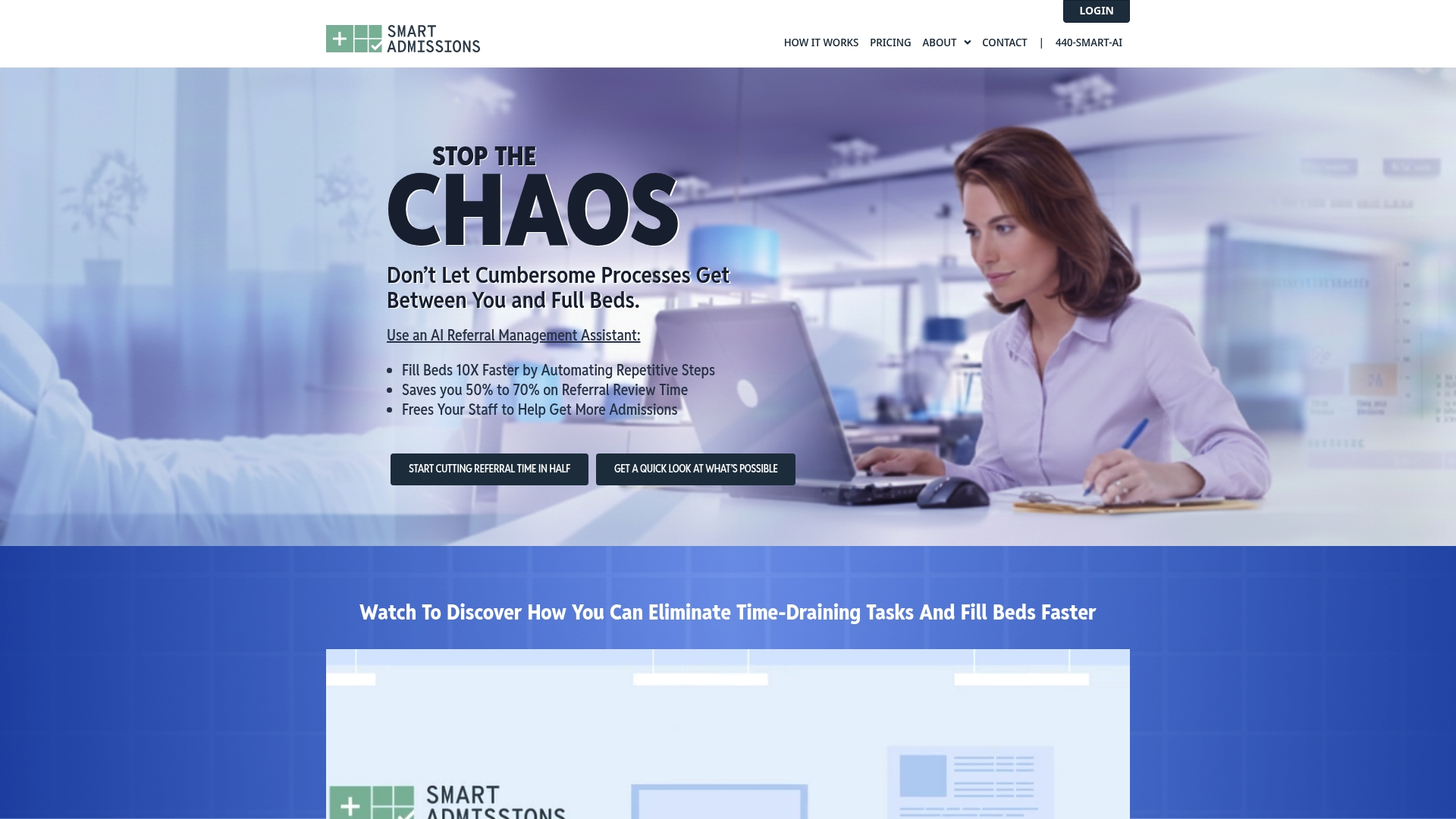
Ready to boost efficiency and elevate patient care? Visit Smart Admissions now to learn how our AI-powered referral management assistant can help your facility reduce referral review times and increase bed occupancy. Start simplifying your healthcare administration workflow today and experience the difference automation can make.
Frequently Asked Questions
What are the main functions of healthcare administration?
Healthcare administration encompasses strategic leadership, financial planning, regulatory compliance, staff coordination, quality assurance, and technology integration to ensure efficient healthcare service delivery.
How does referral and intake process automation improve healthcare administration?
Referral and intake process automation streamlines patient onboarding workflows by leveraging AI-driven technologies for data extraction, eligibility verification, and document processing, which significantly reduces manual burdens and improves accuracy.
What are the key benefits of streamlined healthcare administration for patient outcomes?
Streamlined healthcare administration can lead to reduced patient wait times, lower hospital readmission rates, increased patient satisfaction, and improved staff coordination, ultimately enhancing overall patient care.
What are common compliance risks in healthcare administration?
Common compliance risks include patient privacy breaches, billing inaccuracies, HIPAA violations, and improper handling of patient information, all of which can impact organizational effectiveness and require proactive risk management strategies.
Recommended
- The Busy Administrator’s Guide to Streamlining Referral Processes in Under an Hour – Smart Admissions
- Stop Wasting 45 Minutes on Each Referral: Try These 5 Post-Acute Care Automation Hacks – Smart Admissions
- Intake Documentation Guide for Faster Patient Admissions
- Intake Documentation Guide for Faster Patient Admissions
- Graceland Hospice Care | Compassionate End-of-Life Care