
Prior authorization automation replaces manual fax-and-phone approval requests with software that pulls patient data, checks payer rules, and submits requests electronically, often in seconds instead of days. The primary payoff is speed paired with less administrative drag: pilot programs have cut median approval time from over 71 minutes down to as little as 18 seconds for in-scope medications (https://surescripts.com/products/prior-authorization-automation). That kind of shift matters most to facilities racing against denial deadlines and empty beds.
Platforms like Smart Admissions apply this same logic to referral intake, verifying insurance eligibility and clinical readiness before a patient ever reaches your door. Compliance is not optional background noise here, either: CMS-0057-F sets a January 1, 2027 deadline for payers to support standardized data exchange, and any automation you adopt now should already be built toward it.
Three things to know before you evaluate a vendor:
- Automation shortens turnaround dramatically, but it works best as an assistive layer, not an unsupervised decision engine.
- Complex or ambiguous cases still need a human reviewer in the loop.
- Vendor readiness for CMS-0057-F’s FHIR-based data standards should be a non-negotiable line item in your procurement checklist.
Key Takeaways
Automating prior authorization and referral intake cuts approval time from hours to minutes while giving facilities the auditable decision trail CMS-0057-F will require by 2027.
| Point | Details |
|---|---|
| Speed is the headline benefit | Pilot programs have cut median approval time from over 71 minutes to about 18 seconds for eligible cases. |
| Human review stays essential | Complex or ambiguous cases should route to a reviewer, not an unsupervised automated denial. |
| CMS-0057-F sets the deadline | Payers must support CRD, DTR, and PAS FHIR APIs by January 1, 2027, so vendor readiness matters now. |
| Auditability separates real vendors from marketing | Require override logs, human-review workflows, and exportable audit reporting before signing. |
| Smart Admissions applies this to referrals | It verifies eligibility and clinical status in real time at referral intake, aiming for faster bed fill and less manual staff work. |
Table of Contents
- What Prior Authorization Automation Delivers Across Clinical and Financial Lines
- How Does Prior Authorization Automation Actually Work?
- What Does a Prior Authorization Automation Rollout Checklist Look Like?
- What Compliance and Audit Standards Should Vendors Meet?
- How Smart Admissions Applies This to Referral and Eligibility Workflows
- What the Data Actually Tells Us About This Technology
- A More Efficient Way to Handle Referrals and Eligibility Checks
- Sources
What Prior Authorization Automation Delivers Across Clinical and Financial Lines
The case for automating insurance authorization isn’t just about speed. It changes three interconnected outcomes at once: how staff spend their day, how patients experience care delays, and how much revenue a facility actually collects.
Operationally, automation removes the repetitive parts of the job first, the re-keying of demographic data, the manual fax confirmations, the hold-music phone calls to payer call centers, demonstrating how virtual medical assistants enhance healthcare efficiency. Staff hours that used to disappear into follow-up calls get redirected toward exception handling and patient-facing work.
Clinically, delay is the enemy. The AMA has documented that prior authorization backlogs contribute directly to abandoned treatment and worse outcomes when approvals stall. Automated systems that resolve routine cases in near real time close that gap for the majority of requests, even when a subset still requires clinical judgment.
Financially, three levers move together:
- Lower administrative cost per authorization, since fewer staff hours go into chasing paperwork.
- Fewer denials and appeals, because rules-engine checks catch missing documentation before submission rather than after rejection.
- Faster revenue capture, since claims tied to a resolved authorization move through billing without a backlog.
Statistic Callout: Some automation vendors report that 80 to 85% of routine prior authorizations can be resolved in near real time, depending on specialty and case complexity, leaving the remainder for clinical review.
The CAQH Index points to fragmented data exchange between providers and payers as the root cause of most delays, which is exactly the problem automation architecture is designed to solve.
How Does Prior Authorization Automation Actually Work?
Automation isn’t a single tool. It’s a data pipeline with three stages: extraction, standardized exchange, and decisioning.
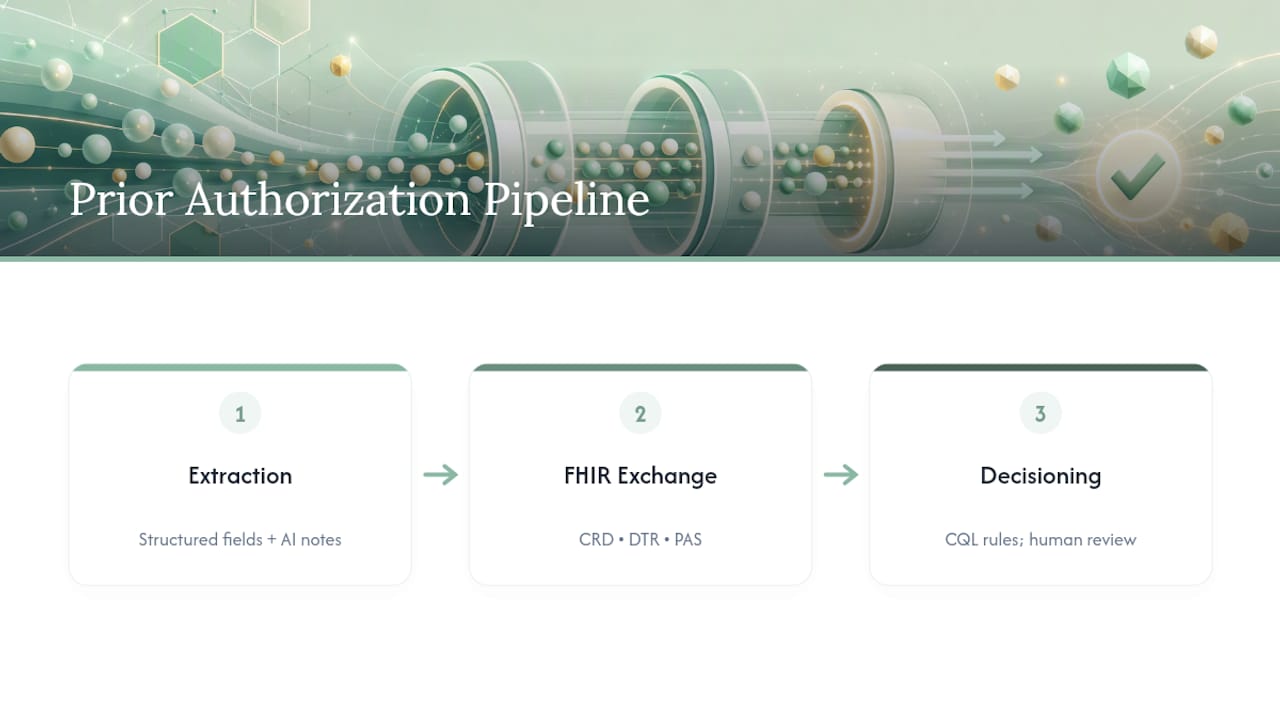
Extraction pulls structured fields (diagnosis codes, medication orders, procedure codes) directly from your EHR, and increasingly uses AI to read unstructured clinical notes for supporting evidence a payer’s rules engine requires. That second piece, unstructured extraction, is where a lot of legacy RPA tools fail. UiPath’s healthcare automation guidance notes that automation succeeds when it normalizes data across faxes, portals, and EHR systems before triggering a submission, not when it just automates a single isolated task.
Standardized exchange runs on FHIR-based APIs, specifically the three roles CMS-0057-F requires: Coverage Requirements Discovery (CRD), which tells a clinician what documentation a payer needs before treatment; Documentation Templates and Rules (DTR), which structures that documentation at the point of care; and Prior Authorization Support (PAS), which handles the actual electronic submission. Common EHR connectors, including Epic, Cerner, and athenahealth, are building toward these three roles specifically.
Decisioning is where transparency matters most. Rule engines built on Clinical Quality Language (CQL) let a reviewer trace exactly why a request was approved or flagged, a meaningfully different approach from a black-box AI model that can’t explain its own output. Cases that fail clean rule matching, or carry ambiguous clinical criteria, get routed to a human reviewer rather than an automatic denial.
For a closer look at how this plays out in daily workflows, see these healthcare workflow automation examples.
Pro Tip: Ask any vendor to show you a sample decision log before you sign anything. If they can’t produce a plain-language rationale for a specific approval or denial, their system probably can’t pass a CMS audit either.
What Does a Prior Authorization Automation Rollout Checklist Look Like?
A pilot succeeds or fails based on scoping decisions made before a single line of code touches your EHR. Follow these steps in order:
- Pick a narrow starting case set. High-volume, low-complexity procedures or medications with clear-cut clinical criteria make the best pilot candidates, since criteria extraction from EHR fields works most reliably here.
- Map the current workflow. Document every manual touchpoint from referral intake to payer response, so you know exactly what automation is replacing.
- Align stakeholders early. Admissions staff, clinical documentation specialists, and IT leads need shared expectations before go-live, not after.
- Confirm EHR and payer API readiness. Test connectivity and data mapping against real historical cases, not synthetic test data.
- Redefine staff roles. Someone owns exception handling. Someone owns override review. Write it down.
- Train on the exception path first. Most staff friction shows up when a case doesn’t fit the automated rule, not when it does.
- Set your KPIs before launch. Track turnaround time (TAT), first-pass approval rate, denial rate, and appeals volume from day one so you have a real baseline.
- Establish a governance cadence. Monthly review of KPI trends catches drift before it becomes a compliance problem.
Complete documentation at intake reduces exception volume more than any other single factor, which is why referral documentation best practices belong in the same conversation as your automation rollout plan.
What Compliance and Audit Standards Should Vendors Meet?
CMS-0057-F is not a distant deadline you can revisit later. Payers must support CRD, DTR, and PAS FHIR APIs by January 1, 2027, and any automation platform you adopt now should already be built against those same standards, not retrofitted later.
Auditability is the practical test of readiness. A compliant system captures the source of every clinical value used in a decision, the specific rule or policy clause applied, and a human-readable rationale a reviewer can defend in an audit. Ask vendors to demonstrate:
- Override logs showing when and why a human reviewer changed an automated recommendation.
- A documented human-review workflow for cases that fail clean rule matching.
- Exportable reporting formatted for CMS or payer audits, not just an internal dashboard.
Statistic Callout: Government analysis from MACPAC tracks growing use of AI in Medicaid prior authorization, a signal that regulatory scrutiny of these systems will only tighten from here.
Before signing a contract, run sample cases through the vendor’s system and review the resulting logs yourself. If the rationale reads like marketing copy instead of a decision trail, that’s a disqualifying answer.
How Smart Admissions Applies This to Referral and Eligibility Workflows
Smart Admissions was built around the same principle driving PA automation broadly: pull the right data automatically, verify it against payer requirements in real time, and get a bed filled faster. It integrates directly with existing EHR systems and insurance portals to run real-time eligibility verification and clinical status assessments the moment a referral arrives, instead of days later.
Facilities using this kind of connected intake workflow typically report faster referral turnaround, improved bed fill rates, and less staff time lost to manual eligibility checks. Onboarding is built for administrators without a dedicated IT team, and the platform’s analytics and reporting give directors a clear read on where referrals stall.
- Real-time eligibility and clinical assessment at the point of referral
- Documentation management that keeps a full audit trail of what was checked and when
- Customizable workflows that adapt to a facility’s own admissions criteria
Pro Tip: Start by measuring your current average referral-to-decision time before adopting any new tool. Without that baseline, you won’t know whether a platform is actually helping.
What the Data Actually Tells Us About This Technology
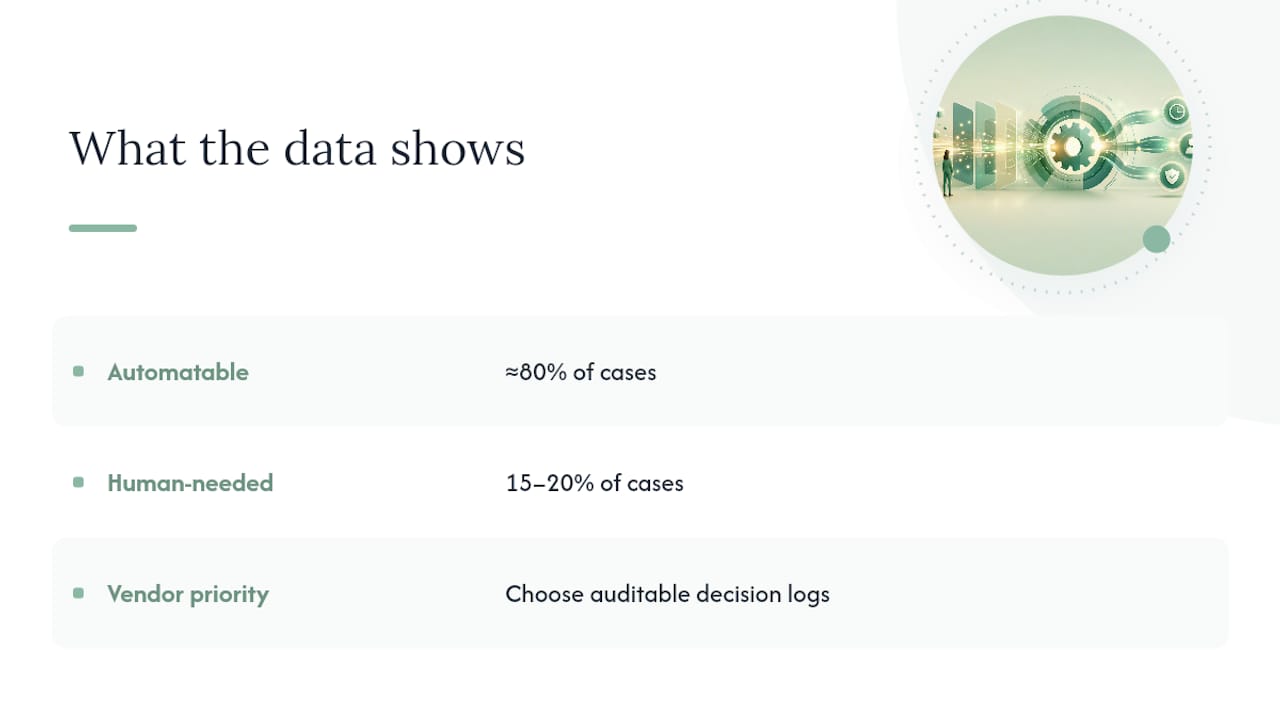
The conventional pitch for prior authorization automation oversells the “set it and forget it” promise. That framing is wrong, and it sets facilities up for disappointment when they discover that 15 to 20% of cases still need a human’s judgment. The real value isn’t full automation. It’s automating the boring, repeatable 80% so your staff has bandwidth for the cases that actually require clinical nuance.
The other place conventional advice falls short is treating CMS-0057-F as a 2027 problem. It isn’t. Payer systems don’t retrofit FHIR compliance overnight, and neither do the workflows built around them. Facilities that wait until late 2026 to evaluate vendor readiness will be scrambling.
If you take one thing from this article, prioritize auditability over flashy AI claims. A vendor that can show you a plain decision log beats one that promises “AI-powered everything” with no way to explain a single approval. That transparency is what keeps you compliant, and it’s what keeps your admissions team trusting the tool enough to actually use it.
A More Efficient Way to Handle Referrals and Eligibility Checks
Smart Admissions gives skilled nursing and post-acute facilities the same speed advantage PA automation delivers, applied to the referral intake process that fills your beds. Instead of manually checking eligibility, chasing clinical documentation, and re-entering data across systems, your team gets real-time verification the moment a referral arrives.
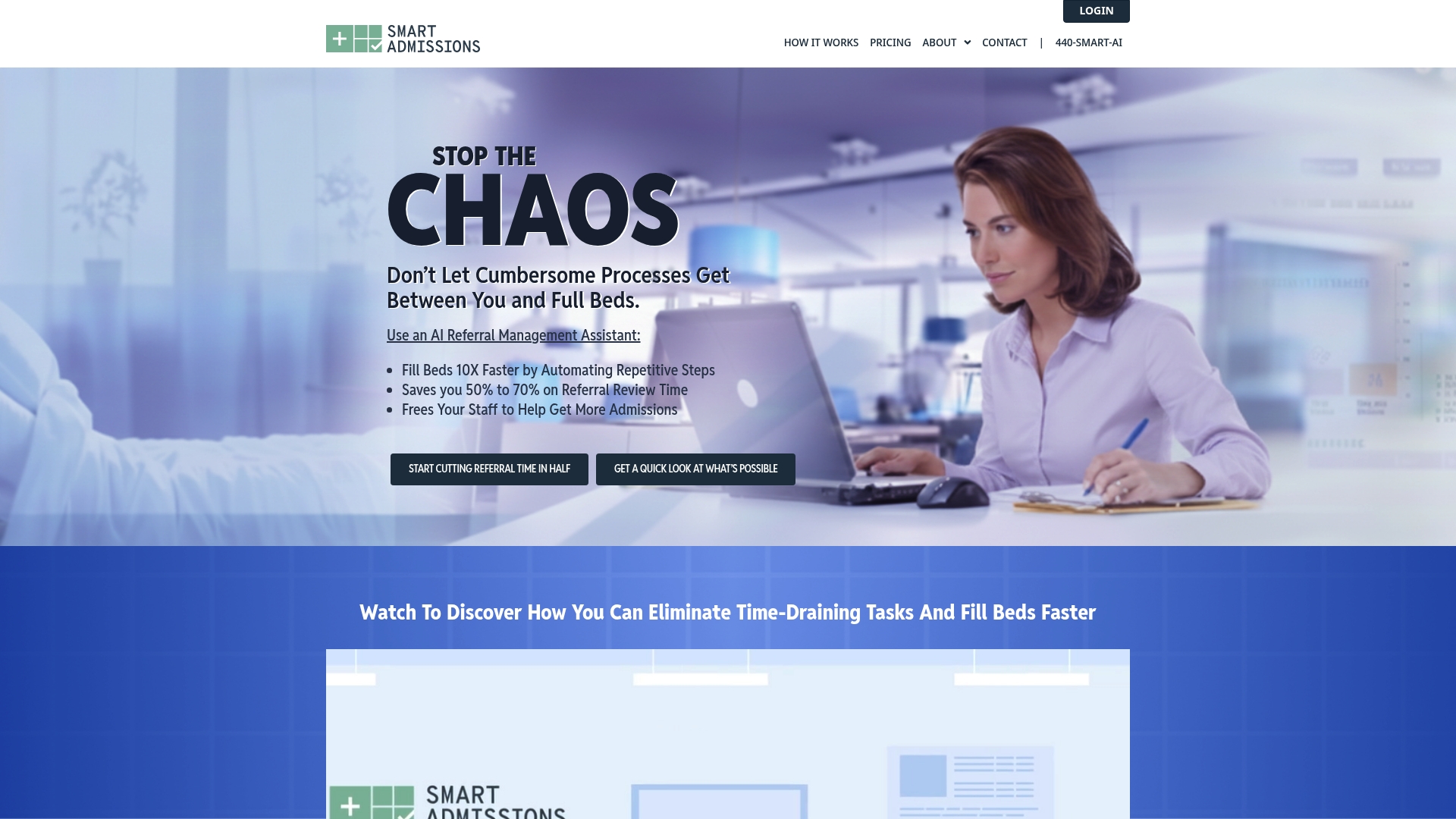
The platform connects directly to your existing EHR and insurance portals, so eligibility and clinical status checks happen automatically rather than through phone calls and portal logins. For a facility weighing manual intake against an automated approach, the comparison of admissions workflows makes the operational gap clear. Facilities also point to faster bed occupancy as a direct result of cutting review time, detailed in this breakdown of why automating admissions speeds bed fill.
If your admissions team is still losing hours to manual eligibility checks and referral paperwork, explore referral management systems built for efficiency and see how a Smart Admissions trial fits your facility’s referral volume.
Sources
- AI-Powered Prior Authorization | Healthcare | Availity
- CAQH Index Report
- AMA: Prior authorization resources