
Patient admissions can feel like a never-ending cycle of paperwork and follow-up, especially for directors at skilled nursing facilities across North America. The pressure to ensure accurate referrals while juggling compliance, insurance verification, and documentation can drain valuable time from staff. By adopting intelligent automation technologies such as AI-driven document processing and eFax-to-EHR integration, facilities can reduce manual workload, minimize error risks, and improve operational efficiency for both staff and patients.
Table of Contents
- Defining Automation In Healthcare Settings
- Automation Types In Skilled Nursing Admissions
- How Automation Streamlines Intake And Documentation
- Integrating Automation With EMR And Insurance Systems
- Legal, Privacy, And Compliance Challenges
- Financial Impact And Risks For Facilities
Key Takeaways
| Point | Details |
|---|---|
| Healthcare Automation Enhances Efficiency | Intelligent automation streamlines administrative and clinical processes, reducing manual tasks and improving patient care delivery. |
| Technological Integration is Key | Successful automation relies on robust integration of technologies like AI, RPA, and EMR systems to create efficient workflows. |
| Cost Management is Crucial | Facilities must conduct thorough cost-benefit analyses and phased implementations to maximize financial gains from automation. |
| Legal and Compliance Awareness is Essential | Navigating the legal landscape surrounding data privacy and algorithmic accountability is critical for the successful implementation of automation. |
Defining Automation in Healthcare Settings
Healthcare automation represents a strategic technological approach to streamline administrative and clinical processes using advanced digital technologies. Intelligent automation transforms traditional healthcare workflows by integrating artificial intelligence, machine learning, and data analysis to enhance operational efficiency and patient care delivery.
At its core, healthcare automation focuses on several critical domains:
- Reducing manual administrative tasks
- Improving patient data management
- Enhancing decision-making processes
- Minimizing human error
- Accelerating treatment and referral workflows
Intelligent automation leverages technologies that process complex medical data and provide comprehensive insights. AI systems improve diagnostic accuracy by analyzing large volumes of health information, enabling healthcare professionals to make more precise and timely decisions.
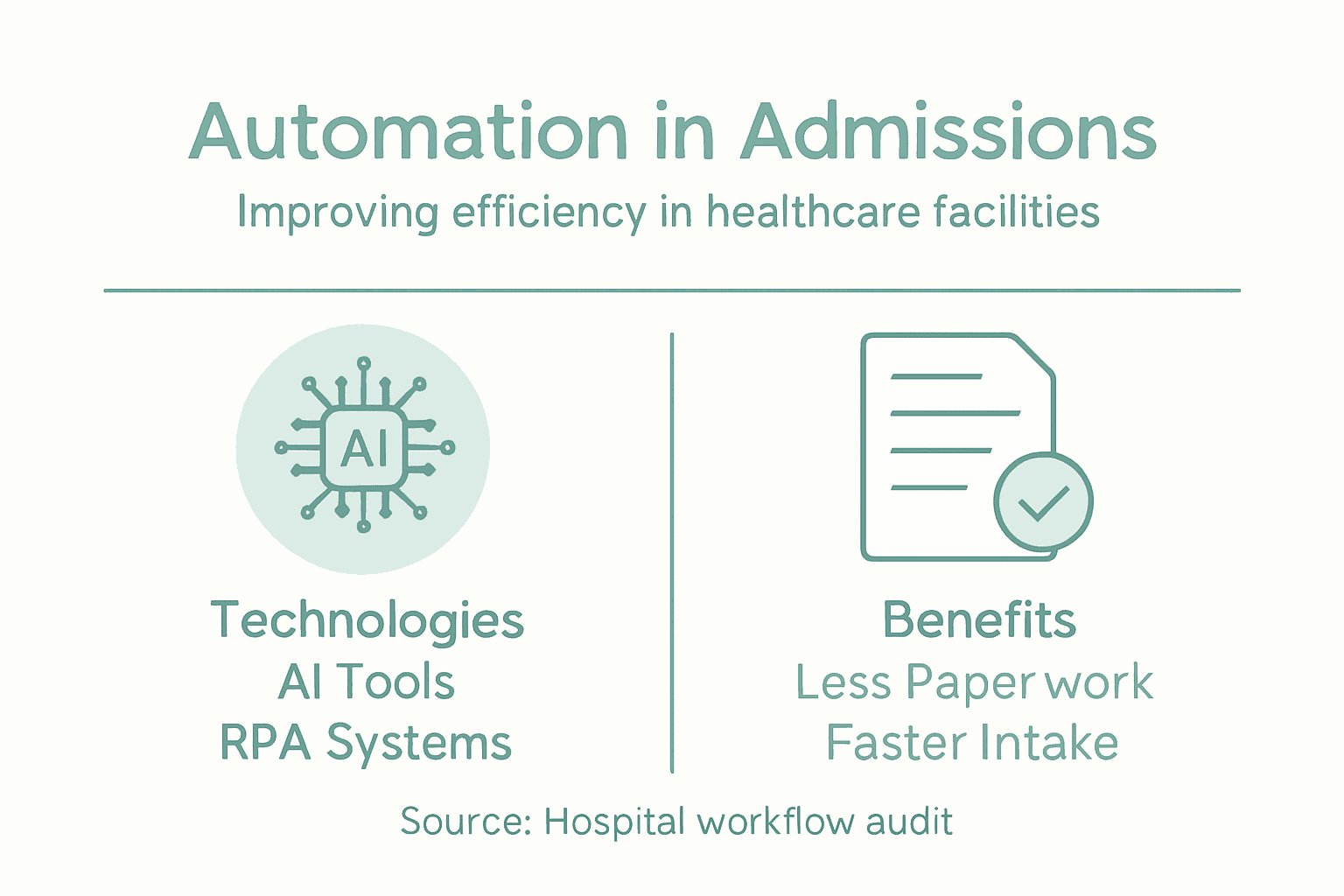
The pandemic dramatically accelerated automation adoption. Healthcare organizations globally implemented intelligent automation across multiple administrative functions, including patient journey management, appointment scheduling, data extraction, claims processing, and payment administration.
Key Automation Technologies Include:
- Artificial Intelligence (AI)
- Machine Learning algorithms
- Natural Language Processing
- Robotic Process Automation (RPA)
- Electronic Medical Record (EMR) systems
Healthcare automation is not about replacing human professionals but augmenting their capabilities. By handling routine tasks, these technologies free medical staff to focus on more complex, high-value patient interactions that require human empathy, critical thinking, and specialized expertise.
Here’s how key healthcare automation technologies impact common facility challenges:
| Technology | Main Challenge Addressed | Resulting Benefits |
|---|---|---|
| Artificial Intelligence | Slow diagnostics, high error rate | Faster and more accurate decisions |
| Robotic Process Automation | Tedious data entry tasks | Reduced manual labor, fewer errors |
| Predictive Analytics | Unplanned admissions spikes | Better resource allocation |
| Cloud-Based Storage | Document silos, lost paperwork | Centralized access, improved security |
Automation transforms healthcare from a reactive to a proactive model, enabling more personalized, efficient, and data-driven patient care.
Pro tip: Start small by identifying repetitive administrative tasks in your facility that could benefit from initial automation strategies.
Automation Types in Skilled Nursing Admissions
Skilled nursing facility (SNF) automation encompasses a range of sophisticated technological solutions designed to streamline complex administrative and clinical workflows. AI-driven tools transform patient intake processes by addressing critical operational challenges that traditionally consume significant time and resources.
The primary automation types in skilled nursing admissions include:
- Intelligent Document Processing
- Automated data extraction from medical records
- Rapid scanning and categorization of patient documents
- Electronic Health Record (EHR) Integration
- Seamless data transfer between systems
- Reduced manual data entry errors
- Insurance Verification Automation
- Real-time eligibility checks
- Instant coverage validation
AI mediated tools support nursing care organization by providing advanced monitoring, prediction systems, and automated communication channels. These technologies significantly reduce administrative workload while improving overall operational efficiency.
Key Automation Technologies for SNF Admissions:
- Robotic Process Automation (RPA)
- Natural Language Processing
- Machine Learning algorithms
- Predictive Analytics
- Automated Scheduling Systems
These sophisticated technologies are not intended to replace human professionals but to augment their capabilities. By handling routine tasks, automation allows nursing staff to focus more on direct patient care, complex decision-making, and personalized interactions that require human empathy and critical thinking.
Automation in skilled nursing admissions transforms operational inefficiencies into streamlined, data-driven processes that enhance patient care and organizational performance.
Pro tip: Conduct a comprehensive workflow audit to identify specific repetitive tasks most suitable for initial automation implementation.
How Automation Streamlines Intake and Documentation
Healthcare document processing represents a revolutionary approach to managing patient intake workflows, transforming traditionally complex administrative procedures. Automated document technologies replace slow manual admissions handling by introducing sophisticated digital solutions that capture, organize, and route information with minimal human intervention.
Key features of streamlined intake automation include:
- Optical Character Recognition (OCR)
- Instant digital conversion of paper documents
- Accurate text extraction from medical records
- Intelligent Document Classification
- Automatic sorting and categorization
- Rapid identification of critical patient information
- Digital Workflow Management
- Real-time document tracking
- Secure, centralized information storage
The automation process significantly reduces administrative bottlenecks by implementing technologies that:
- Eliminate manual data entry errors
- Accelerate patient information processing
- Ensure consistent regulatory compliance
- Create seamless interdepartmental communication
- Improve overall operational efficiency
Automation Technologies in Documentation:
- AI-powered data extraction
- Machine learning document classification
- Secure cloud-based storage systems
- Automated compliance verification
- Real-time document routing
These innovative technologies do not replace human expertise but enhance administrative capabilities. By automating repetitive tasks, healthcare professionals can redirect their focus toward more complex, patient-centered activities that require critical thinking and empathetic interaction.
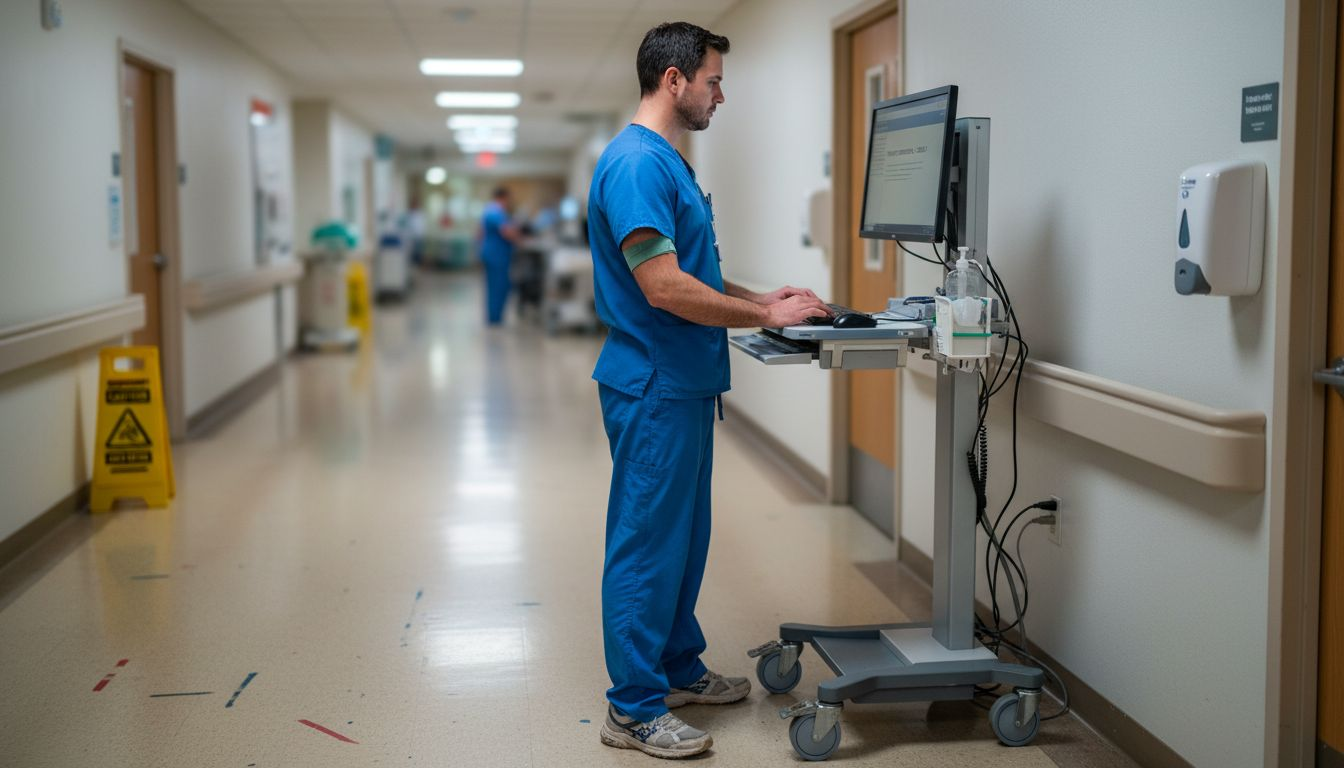
Below is a comparison of traditional and automated patient intake workflows:
| Step | Traditional Process | Automated Process |
|---|---|---|
| Data Collection | Manual form filling | Digital data capture via OCR |
| Document Classification | Hand sorting by staff | AI-based auto-categorization |
| Information Routing | Physical handoff | Real-time digital routing |
| Error Correction | Manual re-check by staff | Automated validation systems |
Automated intake processes transform administrative challenges into streamlined, efficient patient management systems that prioritize accuracy and speed.
Pro tip: Implement a phased automation strategy, starting with the most repetitive and time-consuming documentation tasks to minimize disruption and maximize adoption.
Integrating Automation with EMR and Insurance Systems
Electronic Medical Record (EMR) integration represents a critical technological advancement in healthcare administrative workflows. EMR integration streamlines operational connections by establishing sophisticated digital bridges between patient records, clinical data, billing, and insurance platforms.
Key integration strategies include:
- Standardized Communication Protocols
- HL7 interoperability standards
- FHIR (Fast Healthcare Interoperability Resources)
- Custom API development
- Real-Time Data Synchronization
- Instant record updates
- Cross-platform information sharing
- Automated Claims Processing
- Immediate insurance verification
- Reduced manual documentation
The integration ecosystem encompasses multiple critical technological components:
- Centralized patient information management
- Seamless interdepartmental communication
- Automated eligibility verification
- Predictive analytics for care management
- Comprehensive compliance tracking
Critical Integration Technologies:
- AI-powered data mapping
- Machine learning validation systems
- Secure cloud infrastructure
- Intelligent routing algorithms
- Automated compliance monitoring
These advanced integration technologies fundamentally transform healthcare administrative processes. By creating intelligent, interconnected systems, healthcare facilities can dramatically reduce administrative overhead, minimize human error, and create more responsive patient management workflows.
Effective EMR integration represents the technological backbone of modern, efficient healthcare delivery systems.
Pro tip: Begin integration efforts by conducting a comprehensive audit of existing systems and identifying specific interoperability challenges before implementing new technological solutions.
Legal, Privacy, and Compliance Challenges
Healthcare automation introduces complex legal and ethical considerations that require meticulous navigation. AI use in healthcare demands rigorous privacy protections to ensure patient data remains secure and regulatory standards are consistently met.
Key legal and compliance domains include:
- Regulatory Compliance
- HIPAA regulations
- GDPR data protection standards
- State-specific healthcare privacy laws
- Patient Data Protection
- Informed consent protocols
- Data anonymization techniques
- Secure information handling
- Algorithmic Accountability
- Bias detection mechanisms
- Transparent decision-making processes
- Human oversight requirements
Healthcare organizations must implement comprehensive governance frameworks that address multiple critical dimensions:
- Establishing clear data usage policies
- Creating transparent AI decision-making protocols
- Developing robust consent management systems
- Implementing continuous compliance monitoring
- Ensuring algorithmic fairness and non-discrimination
Critical Compliance Technologies:
- Privacy-by-design architectures
- Automated compliance verification tools
- Machine learning bias detection systems
- Secure data anonymization platforms
- Comprehensive audit trail mechanisms
The integration of automation technologies requires a proactive approach to ethical considerations. By prioritizing patient privacy, implementing stringent security measures, and maintaining transparent practices, healthcare facilities can leverage technological advancements while preserving fundamental patient rights.
Effective legal and privacy strategies transform technological challenges into opportunities for enhanced patient trust and organizational integrity.
Pro tip: Develop a cross-functional compliance team that includes legal, technical, and medical professionals to create comprehensive automation governance strategies.
Financial Impact and Risks for Facilities
Healthcare automation represents a significant financial investment with complex economic implications for skilled nursing facilities. Long-term economic impacts of AI could save billions by improving operational efficiency and patient care delivery.
Key financial considerations include:
- Implementation Costs
- Initial technology investments
- Staff training expenses
- System integration fees
- Potential Cost Savings
- Reduced administrative overhead
- Minimized manual processing errors
- Improved operational efficiency
- Revenue Enhancement Strategies
- Faster patient intake
- Improved bed occupancy rates
- Enhanced billing accuracy
Healthcare facilities must carefully evaluate financial risks and opportunities through:
- Comprehensive cost-benefit analysis
- Phased implementation approaches
- Continuous performance monitoring
- Adaptive technology investment strategies
- Regular return on investment assessments
Financial Risk Mitigation Strategies:
- Pilot program testing
- Incremental technology adoption
- Performance benchmarking
- Flexible technological scalability
- Continuous staff skill development
These sophisticated technologies are not merely technological upgrades but strategic financial investments. By carefully managing implementation and focusing on measurable outcomes, skilled nursing facilities can transform potential risks into sustainable competitive advantages.
Successful automation strategies balance technological innovation with prudent financial management and patient-centered care.
Pro tip: Develop a detailed financial model that tracks both direct technology costs and indirect operational efficiency gains before full-scale automation implementation.
Transform Admissions Efficiency with Smart Admissions Automation
The article highlights the critical challenges faced by healthcare facilities such as skilled nursing homes in automating complex admissions workflows. If you struggle with slow patient intake, manual documentation errors, and prolonged referral review times, these pain points directly impact your facility’s operational efficiency and bed occupancy rates. Concepts like intelligent automation, EMR integration, and AI-powered document processing are game changers in reducing administrative burdens and accelerating patient care decisions.
Smart Admissions is designed to tackle these exact issues by automating repetitive administrative tasks including referral management, real-time eligibility verification, and clinical documentation. Our AI-powered platform seamlessly integrates with your existing Electronic Medical Records and insurance systems to provide faster admissions processing. By simplifying intake workflows and improving data accuracy, you can reduce staff burnout while increasing revenue through improved bed fill rates.
Ready to optimize your healthcare admissions process with technology built for your facility’s unique needs?
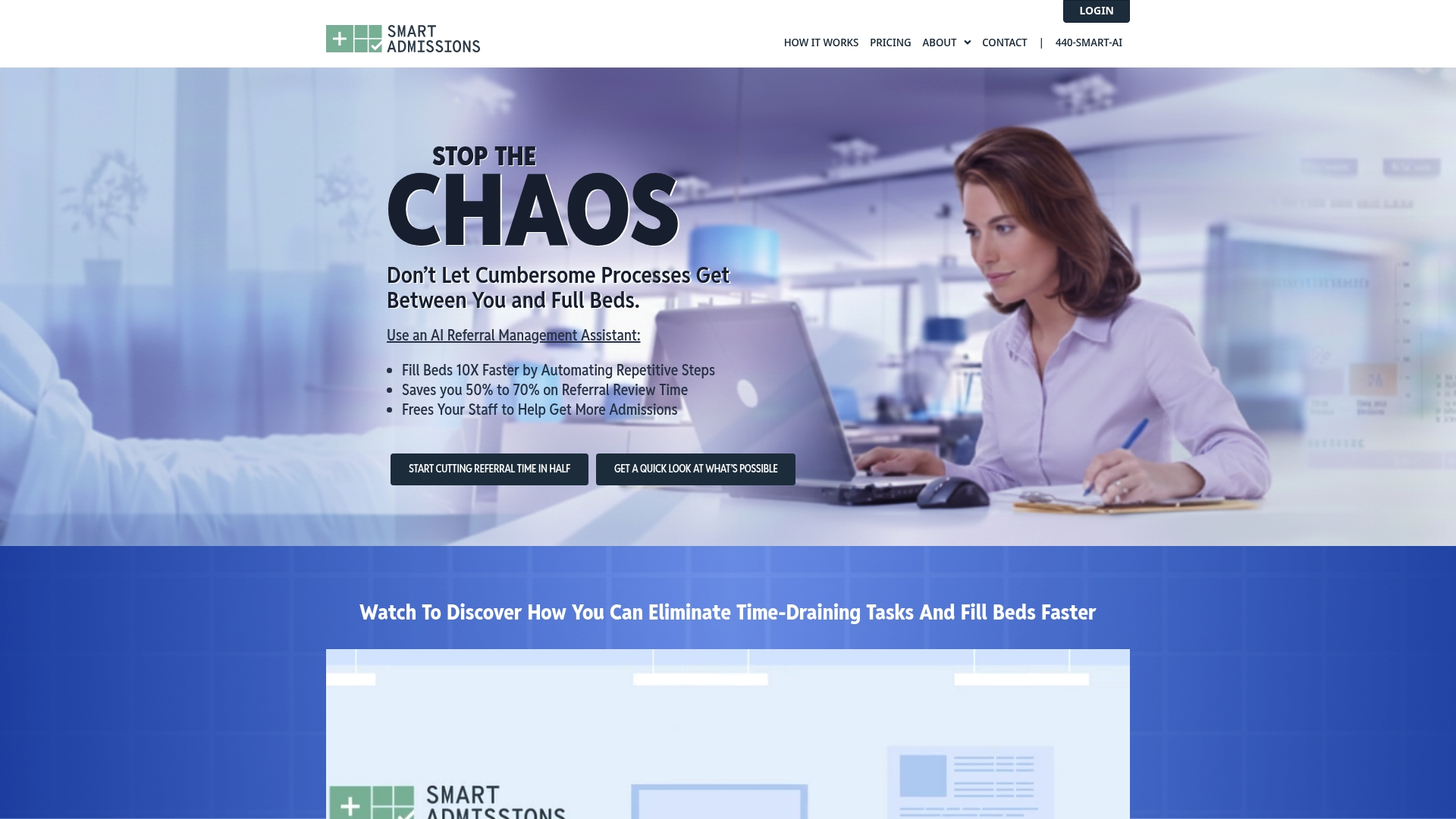
Discover how Smart Admissions transforms admissions efficiency today. Visit Smart Admissions to schedule a demo or learn more. Start streamlining your patient referral and admissions workflows now for faster, smarter care delivery.
Frequently Asked Questions
What is healthcare automation?
Healthcare automation refers to the use of advanced digital technologies to streamline administrative and clinical processes in healthcare settings, improving operational efficiency and patient care delivery.
How does automation improve admissions efficiency in skilled nursing facilities (SNF)?
Automation enhances admissions efficiency by reducing manual tasks, speeding up patient intake processes, and minimizing errors through technologies like intelligent document processing and EHR integration.
What technologies are commonly used in healthcare automation?
Key technologies include Artificial Intelligence (AI), Robotic Process Automation (RPA), Machine Learning, Natural Language Processing, and Electronic Health Record (EHR) systems.
What are the financial implications of implementing automation in healthcare facilities?
While there are initial implementation costs, automation can lead to significant cost savings by reducing administrative overhead, improving operational efficiency, and enhancing revenue through faster patient intake and improved billing accuracy.
Recommended
- Manual vs Automated Patient Intake: Which Is Better For Your Skilled Nursing Facility? – Smart Admissions
- Clinical Assessment Automation: What to Automate (and What to Keep Manual) – Smart Admissions
- The Complete Guide to Choosing Post-Acute Care Software in 2026 – Smart Admissions
- What Top-Performing SNFs Do Differently in Their Admissions Process – Smart Admissions