
Every healthcare admissions coordinator knows the frustration when referrals sit in limbo and patient transitions stall. Ensuring every potential patient makes it from referral to admission is not just about paperwork, it touches every part of patient care and workflow efficiency. By focusing on referral conversion, your skilled nursing facility can improve admissions, enhance collaboration between providers, and harness the power of AI-driven automation for faster, smoother patient intake experiences.
Table of Contents
- What Is Referral Conversion in Healthcare
- Types of Referral Conversion Metrics
- How Automation Improves Conversion Rates
- Essential Analytics and Tracking Strategies
- Common Barriers to Effective Referral Conversion
- Optimizing Admissions Workflows for Better Outcomes
Key Takeaways
| Point | Details |
|---|---|
| Referral Conversion Is Essential | Effective management of patient referrals ensures better care continuity, reducing waiting times and enhancing patient satisfaction. |
| Automation Enhances Workflow | Implementing automated systems can streamline communication, reduce administrative burden, and improve tracking of referrals. |
| Tracking Metrics Matter | Utilizing key performance metrics helps organizations identify bottlenecks and optimize referral processes for efficiency. |
| Addressing Barriers Increases Success | Overcoming communication gaps and standardizing procedures can significantly improve referral conversion rates. |
What Is Referral Conversion in Healthcare
Referral conversion represents a critical operational process in healthcare that transforms potential patient referrals into successful admissions and treatment pathways. At its core, this process involves strategically managing patient transitions between different care providers, ensuring seamless communication and efficient healthcare delivery.
In healthcare settings, referral conversion encompasses several key components:
- Timely communication between referring and receiving providers
- Accurate patient information exchange
- Streamlined administrative workflows
- Proactive patient engagement strategies
- Comprehensive tracking of referral status
Healthcare organizations utilize sophisticated referral management techniques to optimize patient transition processes, focusing on reducing administrative barriers and improving overall patient experience. The goal is not merely transferring patient information, but creating a holistic system that supports patient care continuity.
The strategic importance of referral conversion extends beyond administrative efficiency. It directly impacts patient outcomes, practice revenue, and healthcare system performance. By implementing robust referral management protocols, healthcare facilities can:
- Reduce patient waiting times
- Minimize referral leakage
- Enhance inter-provider communication
- Improve overall patient satisfaction
Technological innovations have significantly transformed referral conversion processes, enabling real-time tracking, automated communication, and data-driven insights that help healthcare providers make more informed decisions.
Pro tip: Implement a digital referral tracking system that provides real-time status updates and automates communication between providers to streamline your referral conversion process.
Types of Referral Conversion Metrics
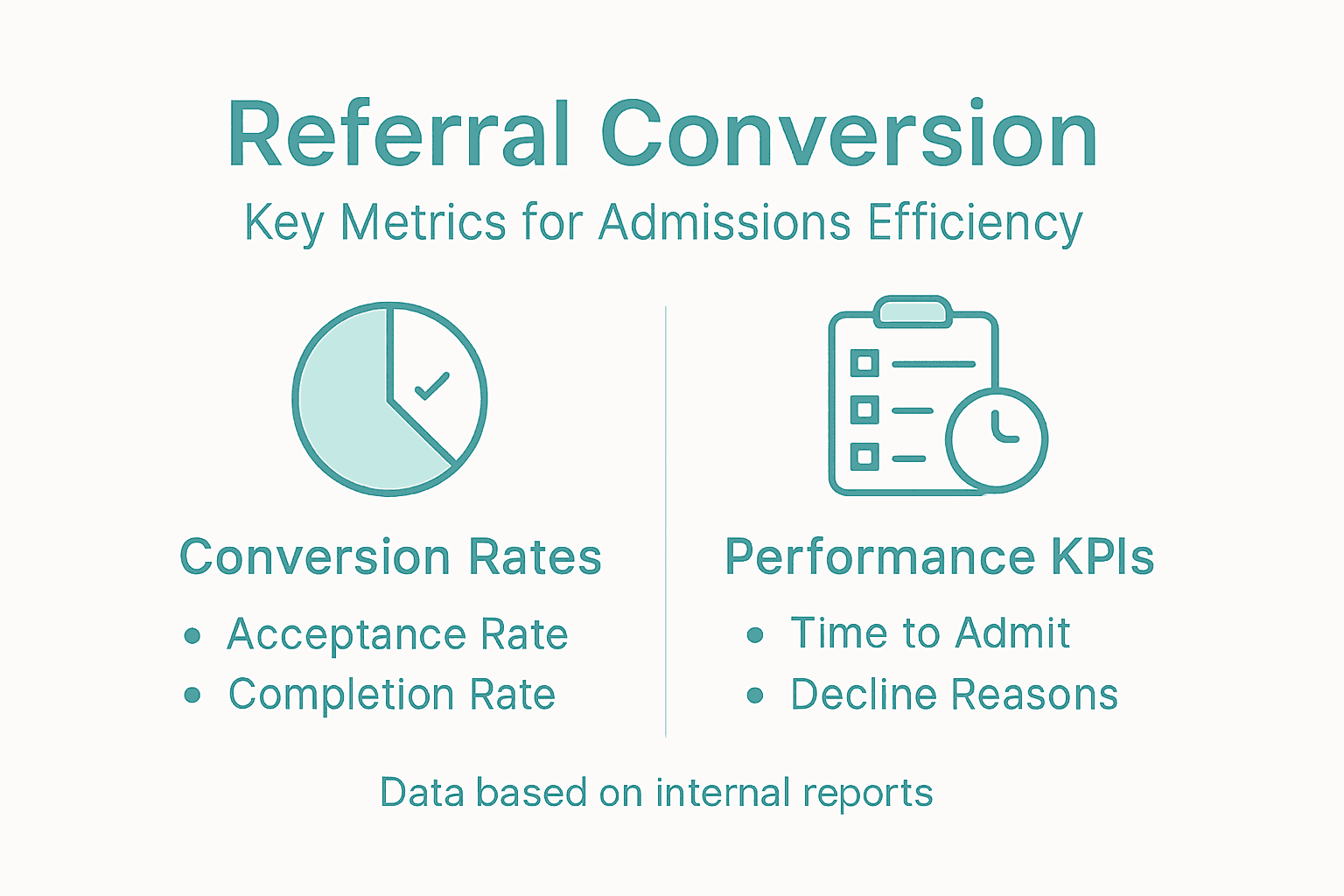
Healthcare organizations rely on sophisticated referral conversion metrics to measure and improve patient intake efficiency. Tracking key performance indicators enables providers to understand and optimize their referral processes, ensuring seamless patient transitions and maximizing healthcare service utilization.
The primary types of referral conversion metrics include:
- Referral Acceptance Rate: Percentage of received referrals that are approved
- Appointment Scheduling Rate: Proportion of accepted referrals that result in scheduled appointments
- Patient Show Rate: Number of patients who actually attend their scheduled appointments
- Overall Conversion Rate: Total percentage of referrals that transform into completed patient visits
- Time-to-Treatment Interval: Duration between referral initiation and first treatment
Healthcare administrators use these metrics to diagnose potential bottlenecks in their referral workflows. By analyzing variations in these indicators, organizations can identify systematic challenges and implement targeted interventions to improve patient access and care continuity.
Detailed metric analysis provides insights into multiple dimensions of referral performance:
- Provider-level performance evaluation
- Patient demographic impact
- Referral source effectiveness
- Interdepartmental communication efficiency
- Resource allocation optimization
Understanding these metrics requires a comprehensive approach that considers both quantitative data and qualitative factors affecting patient referral processes. Technological solutions can help automate metric tracking, providing real-time insights and enabling proactive management strategies.
Pro tip: Develop a standardized dashboard that tracks multiple referral conversion metrics simultaneously to gain holistic insights into your healthcare facility’s performance.
How Automation Improves Conversion Rates
Automation has revolutionized referral conversion processes by eliminating traditional inefficiencies and creating streamlined pathways for patient intake. Automated referral tracking systems provide healthcare organizations with powerful tools to transform their admissions workflows, reducing manual administrative burden and accelerating patient transitions.
The key benefits of automation in referral conversion include:
- Instant communication routing between providers
- Real-time status tracking for referrals
- Automated follow-up notifications
- Multichannel patient engagement strategies
- Reduced human error in data processing
- Faster verification of patient eligibility
Healthcare facilities implementing automated solutions experience significant improvements in their referral processes. These technological interventions create comprehensive systems that optimize communication, reduce processing times, and enhance overall patient experience by minimizing administrative friction.

Here’s a summary of how automation transforms referral conversion in healthcare:
| Automation Benefit | Business Impact | Patient Experience |
|---|---|---|
| Real-time tracking | Faster admissions, fewer delays | Reduced waiting times |
| Automated notifications | Lower staff workload, prompt follow-up | Better appointment reminders |
| Error reduction | Fewer lost referrals, improved data accuracy | More reliable care transitions |
| Data-driven insights | Informed management decisions | Improved care coordination |
Automation impacts referral conversion through multiple strategic mechanisms:
- Accelerating initial referral review times
- Enabling precision tracking of referral status
- Creating standardized communication protocols
- Supporting data-driven decision making
- Reducing manual administrative workload
Technological innovations are transforming referral management by introducing intelligent systems that can predict potential bottlenecks, recommend interventions, and continuously improve referral conversion strategies through advanced analytics and machine learning algorithms.
Pro tip: Implement an automated referral management system that provides real-time analytics and integrates seamlessly with existing electronic medical record platforms to maximize conversion efficiency.
Essential Analytics and Tracking Strategies
Healthcare organizations are increasingly recognizing the critical importance of robust referral tracking strategies to optimize patient intake processes. Closed-loop referral processes enable healthcare providers to monitor and improve each stage of patient referral, ensuring comprehensive visibility and accountability throughout the patient journey.
Key analytics and tracking components include:
- Comprehensive referral lifecycle monitoring
- Real-time performance dashboards
- Detailed patient contact tracking
- Systematic follow-up protocol documentation
- Quantitative and qualitative metric assessment
- Cross-provider communication tracking
Successful tracking strategies require a multifaceted approach that combines technological solutions with strategic communication protocols. Healthcare administrators must develop integrated systems that capture nuanced data points, enabling continuous process improvement and identifying potential bottlenecks in referral management.
Essential tracking mechanisms involve:
- Implementing electronic health record integration
- Creating standardized reporting frameworks
- Establishing clear performance benchmarks
- Developing multi-channel communication strategies
- Utilizing advanced data visualization tools
Technological innovations are transforming referral tracking by introducing sophisticated analytics platforms that provide unprecedented insights into referral dynamics, enabling healthcare providers to make data-driven decisions and optimize patient intake efficiency.
Pro tip: Design a comprehensive analytics dashboard that tracks referral metrics in real-time and generates actionable insights for continuous process improvement.
Common Barriers to Effective Referral Conversion
Healthcare organizations consistently struggle with multiple complex challenges that impede successful referral conversion processes. Communication barriers between providers represent the most significant obstacles preventing seamless patient transitions and efficient healthcare delivery.
The primary barriers to effective referral conversion include:
- Poor inter-provider communication
- Incomplete patient referral documentation
- Lack of standardized referral templates
- Technological infrastructure limitations
- Inconsistent follow-up protocols
- Limited patient engagement strategies
- Administrative processing inefficiencies
These obstacles create significant friction in healthcare referral workflows, resulting in delayed patient care and reduced overall system efficiency. Healthcare administrators must develop comprehensive strategies that address each potential breakdown point in the referral process.
Compare common barriers to referral conversion with strategies for overcoming them:
| Barrier | Negative Effect | Overcoming Strategy |
|---|---|---|
| Incomplete documentation | Delayed referral processing | Use standardized templates |
| Poor communication | Referral leakage, fragmented care | Implement secure messaging systems |
| Technological limitations | Manual errors, slow workflows | Integrate referral tracking platforms |
| Limited patient engagement | No-shows, missed appointments | Launch multi-channel outreach campaigns |
Specific challenges that compromise referral conversion effectiveness encompass:
- Insufficient information transfer between providers
- Complicated administrative procedures
- Fragmented electronic health record systems
- Extended processing and verification times
- Inadequate patient communication channels
Technological innovations are increasingly providing solutions to these systemic challenges, introducing intelligent referral management platforms that streamline communication, automate tracking, and enhance overall process transparency.
Pro tip: Implement a standardized referral communication protocol that ensures comprehensive information exchange and establishes clear expectations for all stakeholders involved in the patient referral process.
Optimizing Admissions Workflows for Better Outcomes
Healthcare organizations are increasingly recognizing the critical importance of streamlining admissions processes to improve patient care and operational efficiency. Structured workflow models enable systematic identification and implementation of process improvements that can dramatically enhance patient intake and referral conversion rates.
Key strategies for optimizing admissions workflows include:
- Implementing integrated technological solutions
- Standardizing referral documentation processes
- Developing clear communication protocols
- Creating real-time tracking dashboards
- Establishing multi-channel patient engagement strategies
- Reducing administrative processing times
- Enhancing inter-provider collaboration
Successful workflow optimization requires a comprehensive approach that addresses multiple dimensions of the patient intake process. Healthcare administrators must focus on breaking down traditional silos and creating seamless, patient-centered referral experiences that minimize friction and maximize efficiency.
Critical elements of an optimized admissions workflow involve:
- Automated patient eligibility verification
- Instant communication routing
- Predictive scheduling algorithms
- Comprehensive performance analytics
- Continuous process improvement mechanisms
Technological innovations are transforming admissions workflows by introducing intelligent platforms that can anticipate patient needs, automate repetitive tasks, and provide real-time insights into referral performance and potential bottlenecks.
Pro tip: Develop a cross-functional team dedicated to continuously reviewing and improving your admissions workflow, ensuring ongoing optimization and adaptation to changing healthcare landscapes.
Boost Your Referral Conversion with Smart Admissions
The article highlights common challenges like inefficient communication, slow referral review times, and administrative burdens that block seamless patient transitions and reduce referral conversion rates. If your healthcare facility struggles with these pain points, such as incomplete documentation or manual workflow bottlenecks, you need a solution designed to simplify and accelerate your patient intake process. Smart Admissions combines AI-powered referral management with seamless EMR and insurance portal integration to provide real-time eligibility verification, automate repetitive tasks, and enhance clinical documentation accuracy.
Key benefits include:
- Faster referral review and approval
- Automated follow-up and patient engagement
- Data-driven insights to optimize admissions
This targeted approach directly addresses metrics such as referral acceptance rate and time-to-treatment interval discussed in the article. To experience how automation and streamlined workflows can transform your referral conversion, visit Smart Admissions today.
Unlock the full potential of your referral management strategy now
Ready to reduce manual workload and improve patient outcomes? Explore the power of Smart Admissions at https://smartadmissions.ai and see how intelligent automation can elevate your healthcare facility’s admissions efficiency and revenue performance.
Learn more about our unique approach at Smart Admissions and take the first step toward optimizing your patient referral workflows.
Frequently Asked Questions
What is referral conversion in healthcare?
Referral conversion in healthcare refers to the process of transforming potential patient referrals into successful admissions and treatment pathways, focusing on efficient communication and seamless transitions between care providers.
What are the key components of referral conversion?
Key components of referral conversion include timely communication between providers, accurate patient information exchange, streamlined administrative workflows, proactive patient engagement, and comprehensive tracking of referral status.
How does automation improve referral conversion rates?
Automation enhances referral conversion rates by eliminating inefficiencies, enabling instant communication between providers, providing real-time tracking, and reducing manual errors in data processing, thereby accelerating patient transitions.
What metrics are important for measuring referral conversion success?
Important referral conversion metrics include referral acceptance rate, appointment scheduling rate, patient show rate, overall conversion rate, and time-to-treatment interval, which help organizations evaluate their referral processes and identify bottlenecks.
Recommended
- Stop Wasting 45 Minutes on Each Referral: Try These 5 Post-Acute Care Automation Hacks – Smart Admissions
- The Busy Administrator’s Guide to Streamlining Referral Processes in Under an Hour – Smart Admissions
- What Is Referral Management and Why It Matters
- How to Cut Referral Processing Time from 45 to 5 Minutes | AI Admissions Automation for Skilled Nursing Facilities
- 7 Types of Recruitment Strategies for Better Team Fit