
Endless paperwork and slow admissions can quickly overwhelm even the most dedicated admissions coordinator. As staffing shortages and rising patient volumes stretch resources, the need for efficient patient referral and intake processes grows more urgent. Intake automation in healthcare transforms time-consuming administrative tasks into efficient, technology-driven workflows, freeing up staff to focus on patient care and helping facilities achieve better bed occupancy with less stress.
Table of Contents
- Defining Intake Automation In Healthcare
- How Automated Intake Systems Work
- Types Of Intake Automation Solutions
- Benefits For Skilled Nursing And Rehab Centers
- Risks, Compliance, And Integration Challenges
Key Takeaways
| Point | Details |
|---|---|
| Intake Automation Enhances Efficiency | Automating patient intake processes reduces administrative burden and improves operational efficiency in healthcare facilities. |
| Advanced Technologies Are Key | AI, machine learning, and integrated systems are crucial for streamlining workflows and minimizing errors. |
| Patient Care Focus Shift | Intake automation allows healthcare staff to concentrate more on patient care rather than paperwork. |
| Regulatory Compliance is Essential | Organizations must prioritize data privacy and compliance with regulations like HIPAA and GDPR while implementing automation solutions. |
Defining Intake Automation in Healthcare
Intake automation represents a technological approach to streamline patient admission processes within healthcare facilities, reducing manual administrative tasks and improving operational efficiency. Automation in healthcare fundamentally transforms how medical institutions manage patient referrals, documentation, and initial assessments.
At its core, intake automation leverages advanced technologies to minimize human intervention in repetitive administrative workflows. This process encompasses several critical components:
- Automated patient data collection
- Real-time eligibility verification
- Digital documentation management
- Seamless information transfer between systems
- Intelligent routing of patient referrals
Healthcare organizations implementing intake automation experience significant advantages. These technologies enable staff to shift focus from mundane paperwork to delivering high-quality patient care. By reducing manual data entry and streamlining communication channels, facilities can dramatically decrease processing times and minimize potential human errors.
Here is a quick comparison of manual versus automated patient intake processes:
| Aspect | Manual Intake | Automated Intake |
|---|---|---|
| Data entry time | Several minutes | Few seconds |
| Error risk | High | Low due to validation |
| Staff workload | Extensive paperwork | Focus on patient care |
| Scalability | Limited by staff hours | Easily scalable |
Intake automation transforms administrative tasks from time-consuming manual processes into efficient, technology-driven workflows.
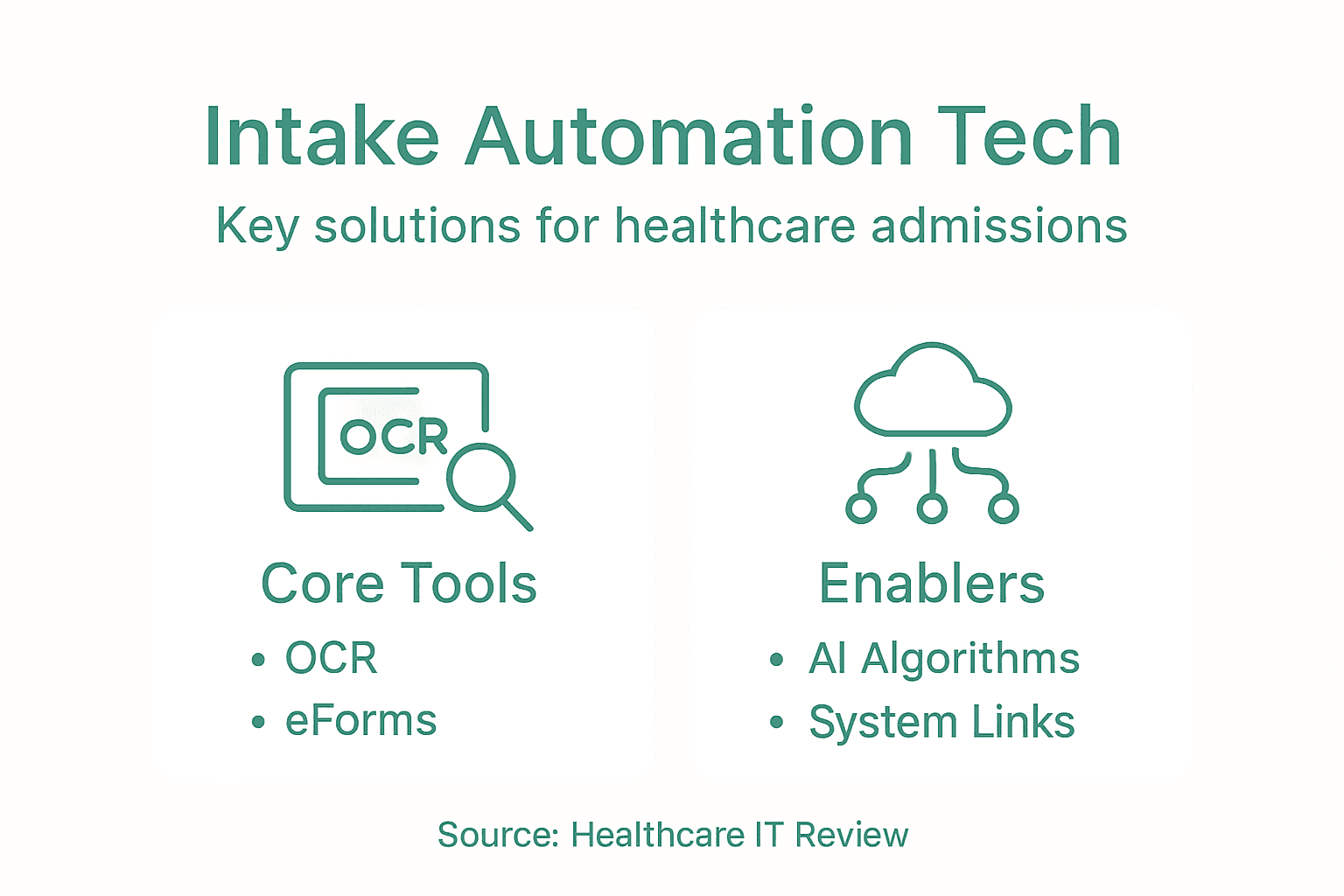
Key technological enablers of intake automation include artificial intelligence, machine learning algorithms, and integrated electronic health record (EHR) systems. These technologies work collaboratively to parse complex patient information, validate insurance details, and create standardized admission protocols.
Pro tip: Start by mapping your current intake workflow to identify specific areas where automation can provide the most immediate and impactful improvements.
How Automated Intake Systems Work
Automated intake systems fundamentally transform patient admission processes by leveraging cutting-edge technologies to streamline complex administrative workflows. Automated document processing enables healthcare facilities to capture, organize, and route patient information with unprecedented efficiency and accuracy.
The core mechanisms of these systems involve several sophisticated technological components:
- Optical Character Recognition (OCR) for document digitization
- Artificial Intelligence (AI) for intelligent data extraction
- Machine learning algorithms for intelligent routing
- Real-time document tracking and validation
- Automated alert systems for incomplete information
Key technological processes in automated intake systems include intelligent data capture and systematic information management. Advanced AI algorithms can instantly parse complex medical forms, extract critical patient details, and route documentation to appropriate departments without manual intervention. This dramatically reduces processing times and minimizes human error potential.
Automated intake systems transform manual, time-consuming administrative processes into seamless, technology-driven workflows that enhance operational efficiency.
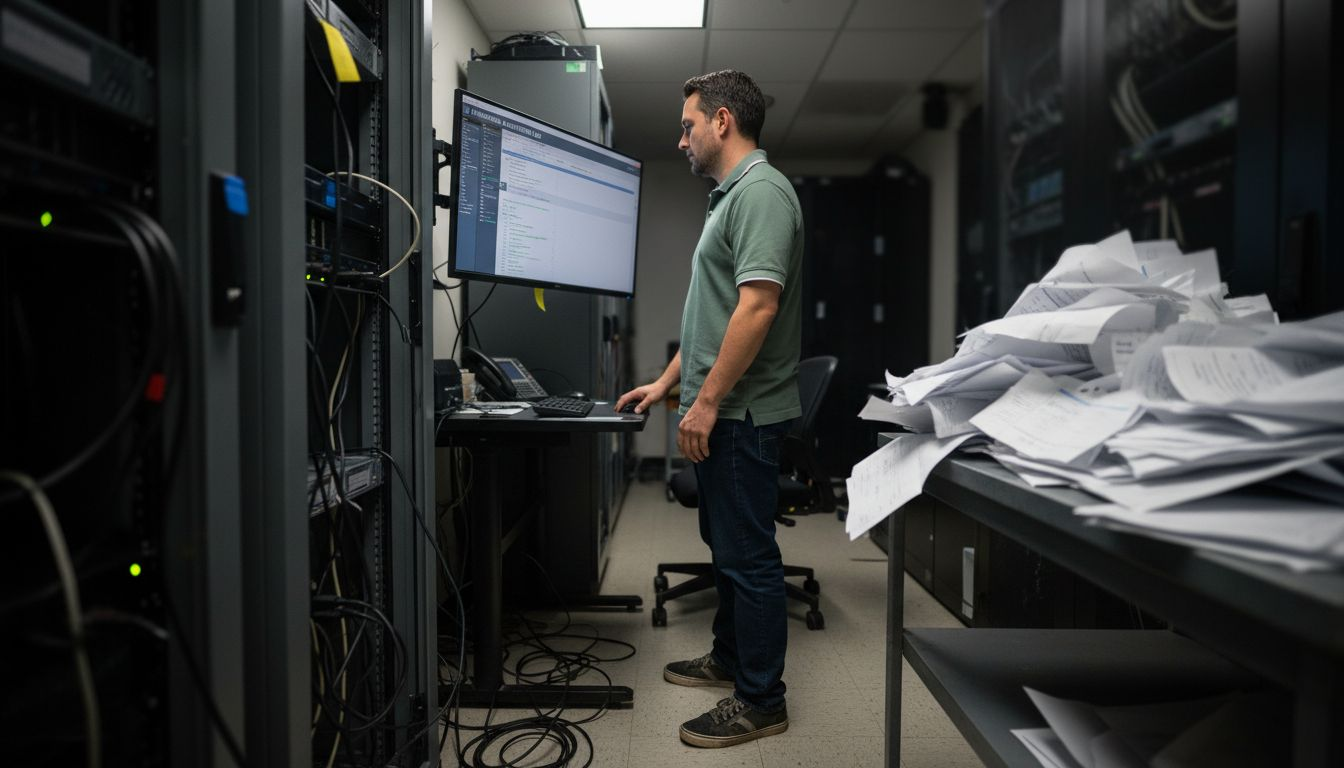
Workflow automation in healthcare admissions typically involves multiple interconnected stages. The system first digitizes incoming patient documents, uses AI to validate and categorize information, then automatically routes these documents through predefined workflows. Intelligent routing ensures that each piece of patient information reaches the correct staff member or department instantly.
Pro tip: Implement a phased approach to intake automation by first digitizing and automating your most repetitive and time-consuming administrative tasks.
Types of Intake Automation Solutions
Healthcare facilities can leverage multiple types of intake automation solutions designed to address specific administrative challenges and streamline patient admission processes. Patient intake workflows represent critical technological interventions that transform traditional manual processes into efficient, data-driven systems.
The primary categories of intake automation solutions include:
- Document Management Systems
- Automated form digitization
- Electronic document storage
- Secure information retrieval
- Patient Data Processing Solutions
- Real-time eligibility verification
- Intelligent data extraction
- Automated insurance validation
- Workflow Routing Technologies
- Intelligent referral management
- Automatic department assignment
- Prioritization of patient cases
Each automation solution focuses on reducing administrative burden and minimizing human error through sophisticated technological integrations. Advanced systems utilize artificial intelligence and machine learning algorithms to parse complex medical documentation, extract critical patient information, and route data seamlessly across different healthcare departments.
Intake automation solutions transform fragmented administrative processes into cohesive, intelligent workflows that enhance operational efficiency and patient care quality.
Technological integration plays a crucial role in these automation solutions. Modern platforms can connect with existing Electronic Health Record (EHR) systems, insurance portals, and internal communication networks to create a unified, streamlined patient intake ecosystem. This interconnectedness enables real-time data synchronization and immediate processing of patient information.
Pro tip: Evaluate your current intake processes and select automation solutions that offer the most seamless integration with your existing technological infrastructure.
Benefits for Skilled Nursing and Rehab Centers
Skilled nursing facilities (SNFs) and rehabilitation centers face unprecedented challenges in patient management and administrative efficiency. AI-powered automation in admissions provides transformative solutions that address critical operational bottlenecks and enhance overall healthcare delivery.
The key benefits of intake automation for SNFs include:
- Operational Efficiency
- Reduced administrative workload
- Faster patient onboarding
- Minimized documentation errors
- Financial Performance
- Increased bed occupancy rates
- Streamlined insurance verification
- Reduced revenue cycle delays
- Staff and Patient Experience
- Decreased staff burnout
- Enhanced care coordination
- Improved patient satisfaction
Automation technologies dramatically transform traditional admission processes by leveraging intelligent algorithms that can extract clinical data, verify insurance eligibility, and track compliance requirements with unprecedented accuracy. This technological intervention allows healthcare professionals to redirect their focus from repetitive administrative tasks to delivering high-quality patient care.
Intake automation represents a critical strategic investment that enables skilled nursing facilities to optimize resources, improve patient outcomes, and maintain competitive advantage in a rapidly evolving healthcare landscape.
Predictive analytics embedded within these automation solutions provide SNFs with actionable insights into patient needs, resource allocation, and potential bottlenecks. By anticipating challenges and streamlining workflows, these technologies help facilities maintain exceptional standards of care despite workforce shortages and increasing patient volumes.
Pro tip: Implement a pilot automation program in one department to demonstrate tangible benefits before full-scale organizational adoption.
Risks, Compliance, and Integration Challenges
Healthcare facilities implementing intake automation must navigate a complex landscape of technological, ethical, and regulatory challenges. Automation implementation challenges require strategic planning and comprehensive risk management to ensure successful digital transformation.
Key risks and compliance considerations include:
- Data Privacy Challenges
- HIPAA and GDPR compliance
- Patient information protection
- Secure data transmission protocols
- Technical Integration Risks
- Legacy system compatibility
- Interoperability limitations
- Potential system vulnerabilities
- Organizational Change Management
- Staff resistance to technological shifts
- Training and skill development
- Cultural adaptation requirements
Healthcare organizations must develop robust strategies to address potential technological and regulatory risks. This involves implementing comprehensive security protocols, conducting regular compliance audits, and creating transparent algorithmic frameworks that protect patient privacy and maintain data integrity.
This table summarizes key considerations for successful integration of intake automation:
| Consideration | Description | Impact on Implementation |
|---|---|---|
| Data Security | Protect patient information and privacy | Ensures regulatory compliance |
| System Compatibility | Integrate with existing platforms | Avoids costly system overhauls |
| Staff Training | Provide education and support | Reduces resistance to change |
Successful intake automation requires a balanced approach that prioritizes technological innovation while maintaining stringent ethical and regulatory standards.
Algorithmic transparency represents a critical consideration in healthcare automation deployment. Facilities must ensure that automated systems provide clear, explainable decision-making processes that can be independently verified and audited. This approach helps build trust among healthcare professionals, patients, and regulatory bodies.
Pro tip: Develop a comprehensive risk assessment framework that includes technical, ethical, and regulatory evaluations before implementing any intake automation solution.
Streamline Your Healthcare Admissions with Smart Admissions
The article highlights the challenges healthcare facilities face with manual patient intake workflows including extensive paperwork, high error risks, and slow referral processing. These pain points drain staff energy and delay bed occupancy. Smart Admissions is designed to tackle these issues head-on by automating repetitive tasks like referral review, eligibility verification, and documentation management. Our AI-powered platform integrates seamlessly with existing Electronic Medical Records and insurance portals to reduce administrative burdens and accelerate patient admissions.
Experience benefits such as:
- Faster patient onboarding and increased bed fill rates
- Reduced staff burnout with intelligent workflow automation
- Better decision-making powered by actionable analytics
Don’t let manual processes hold your facility back. Explore how Smart Admissions can transform your intake operations today.
Ready to revolutionize your intake process and boost operational efficiency? Visit Smart Admissions now to learn more and start a free demo. See how our AI-powered referral management assistant can help skilled nursing homes, rehab centers, and post-acute care providers save time and increase revenue. Take the first step toward a smarter admissions solution.
Frequently Asked Questions
What is intake automation in healthcare?
Intake automation in healthcare refers to the use of technology to streamline patient admission processes, reduce manual administrative tasks, and improve operational efficiency. It typically involves automated data collection, eligibility verification, and information transfer between systems.
How does automated intake improve patient care?
Automated intake allows healthcare staff to focus more on patient care by minimizing time spent on repetitive paperwork. This shift enables faster patient onboarding and reduces the risk of documentation errors, ultimately enhancing the quality of care provided.
What are the key components of automated intake systems?
Key components of automated intake systems include Optical Character Recognition (OCR) for digitizing documents, AI for data extraction and verification, real-time document tracking, and intelligent routing of patient information.
What challenges should healthcare organizations consider when implementing intake automation?
Healthcare organizations should be aware of data privacy challenges (like HIPAA compliance), technical integration risks with legacy systems, and the need for effective change management strategies to ensure staff acceptance and compliance.