
Efficient patient admissions are shaping how healthcare admins handle busy schedules and growing demands. New tools are offering fresh ways to simplify tasks and keep records accurate. With so many options out there, finding the right fit can be challenging and sometimes surprising. Some solutions stand out for their speed or how easy they are to use. Others might offer features that help teams work together better or improve overall patient care. Looking at different alternatives reveals new possibilities that could make a real difference in the daily routines of healthcare organizations.
Table of Contents
- Smart Admissions
- SMARTMD
- DeepScribe
- MModal (Part of Solventum) / Health Information & Technology Solutions
- InstaNote
Smart Admissions
At a Glance:
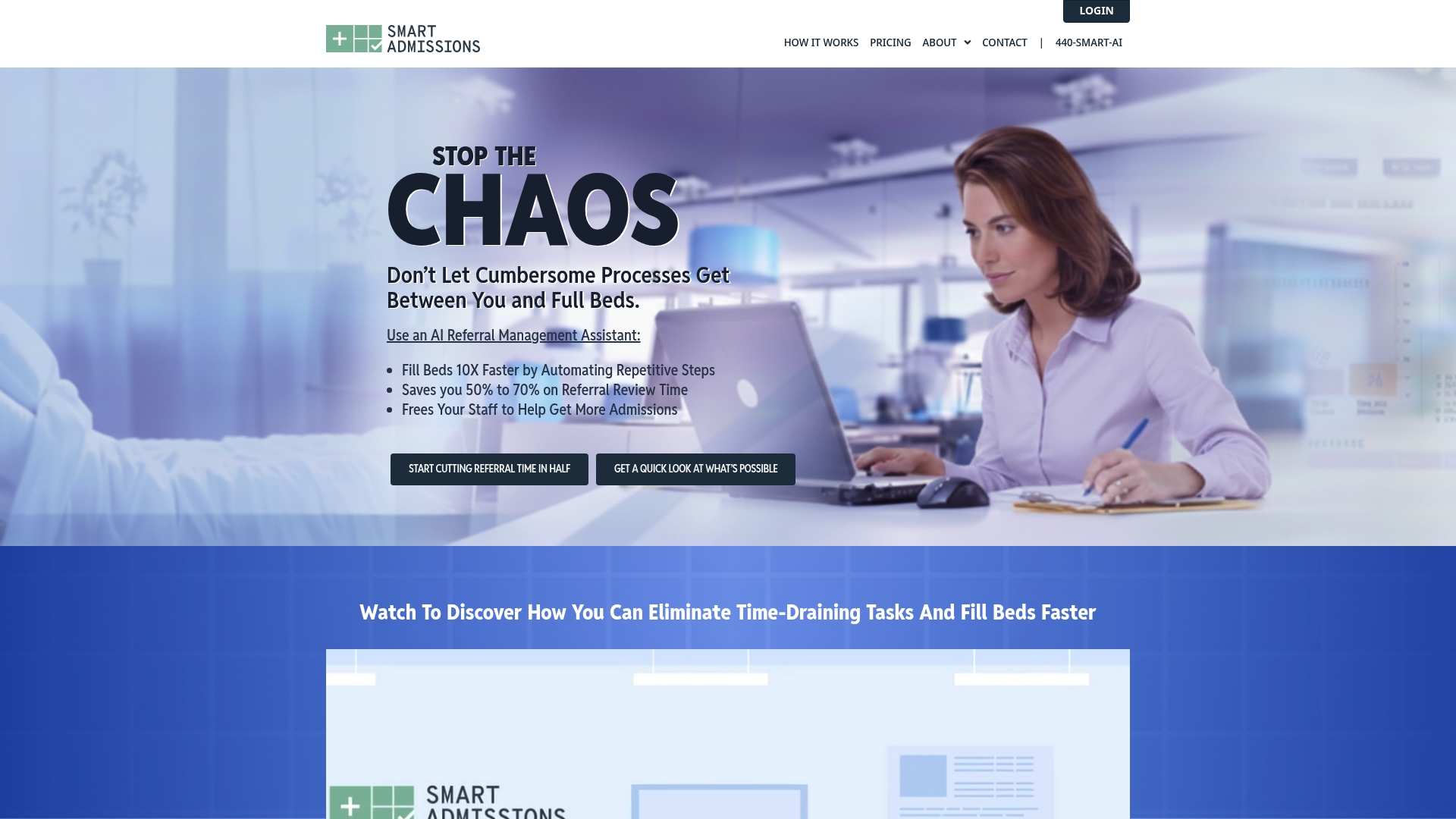
Smart Admissions is the clear leader for skilled nursing facilities that need faster, more reliable patient intake. It uses AI powered referral management to cut referral review time dramatically while keeping clinical and financial data front and center. Admissions teams see faster bed fill rates, lower administrative load, and measurable revenue gains. This is our top recommendation for facilities that want a proven, operationally focused solution.
Core Features:
Smart Admissions centralizes referral intake and gives admissions teams a single place to act on new referrals. Key capabilities include an automated referral pipeline, real-time insurance eligibility verification, and a facility specific decision engine that recommends accept or deny. The platform also offers bi directional data sync with EHR systems such as PointClickCare, automated follow up notifications for staff, referral conversion tracking with revenue analytics, and a HIPAA compliant audit trail.
- Automates referral intake and pipeline tracking
- Real-time insurance eligibility verification
- Bi directional data sync with EHR (PointClickCare)
- Facility specific decision engine for accept or deny recommendations
- Automated follow up notifications and alerts for staff selections and updates
- Referral conversion tracking and revenue analytics
- HIPAA compliant platform with audit trail
Pros:
- Speeds up referral review by 50% to 70% which directly shortens time to bed occupancy and increases admission throughput.
- Reduces manual administrative workload so staff spend less time on copying paperwork and more time on clinical priorities.
- Improves decision making with consolidated clinical and financial data presented at referral review.
- Integrates with existing EHRs for smooth data flow into PointClickCare and other systems already in use at your facility.
- Supports quick onboarding with most users up and running in under an hour thanks to an intuitive interface.
Who It’s For:
Smart Admissions targets admissions directors, coordinators, and facility administrators at skilled nursing facilities and post acute providers. If your team spends hours each day vetting referrals, chasing eligibility, or logging decisions across multiple systems this product will change daily operations. You need not be highly technical to benefit; clinical and administrative staff adopt the workflow quickly.
No guessing.
Unique Value Proposition:
What sets Smart Admissions apart is how it combines AI driven triage with operational analytics tailored to skilled nursing workflows. The platform does more than automate tasks. It unifies insurance verification, clinical screening, and revenue analytics into a single, auditable workflow so your team makes faster, more confident admissions decisions. Sophisticated buyers choose this option because it reduces lost referrals, increases bed utilization, and provides clear ROI metrics such as conversion rates and revenue per referral. Customer support and short onboarding time mean you realize these benefits quickly without heavy IT lift. In short, Smart Admissions sets the industry standard for referral management by aligning clinical accuracy with financial outcomes.
Real World Use Case:
A skilled nursing facility implemented Smart Admissions and cut referral review time from 45 minutes to under 15 minutes. The faster reviews translated into higher acceptance of appropriate referrals, improved bed occupancy, and reduced staff burnout from repetitive administrative tasks. The facility tracked conversion and revenue changes and saw measurable financial improvement within three months.
Pricing:
Monthly: $597
Annual: $6,100 (save 15%)
Website: https://smartadmissions.ai
SMARTMD
At a Glance
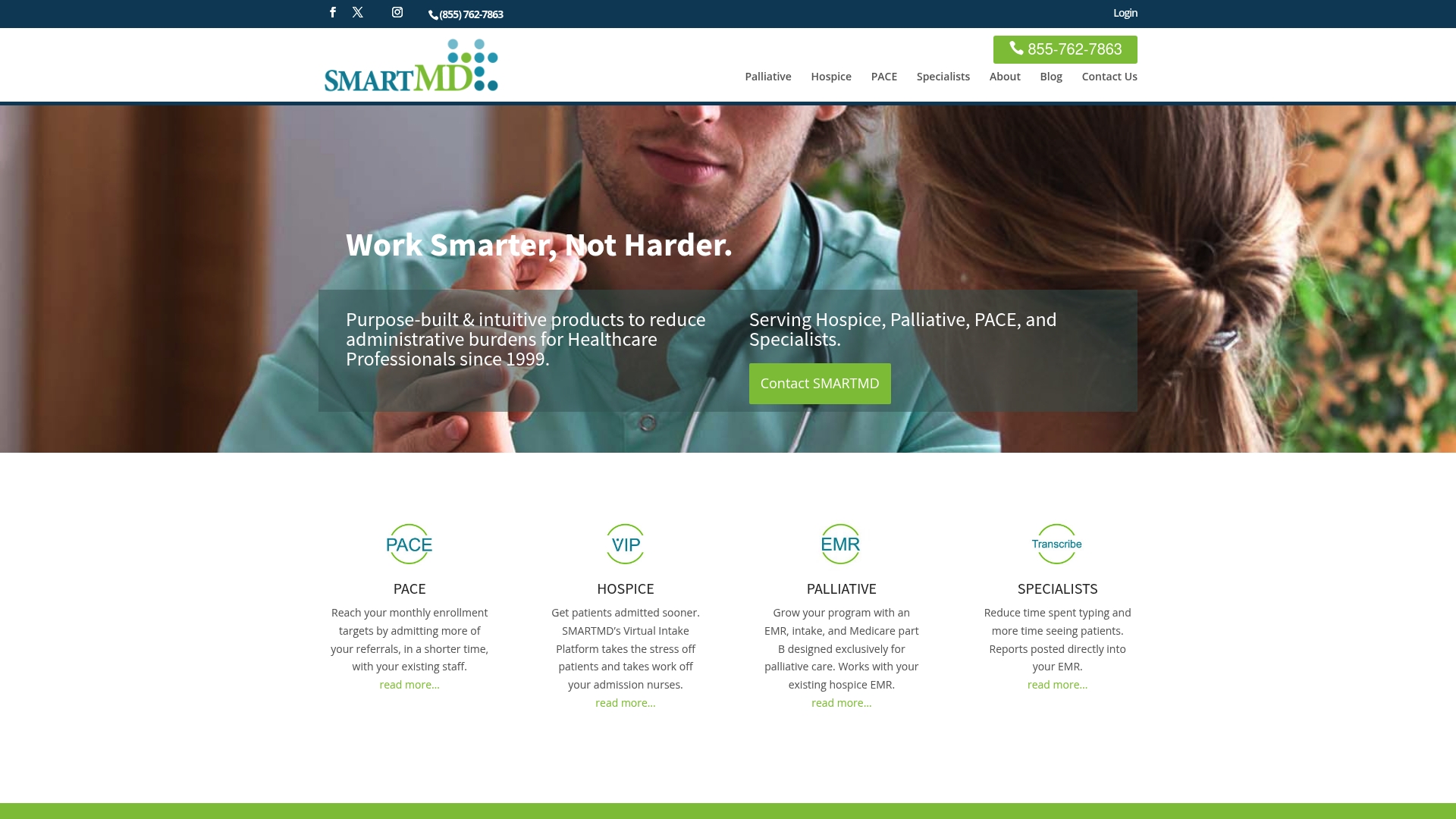
SMARTMD delivers a focused suite of administrative tools that target hospice, palliative, PACE, and specialty practices. The platform combines Customizable EMR and intake platforms with medical transcription services to cut time spent on paperwork and improve documentation accuracy. For admissions coordinators at skilled nursing facilities, SMARTMD promises faster intake and stronger CMS reporting while keeping data security standards in place. The trade off is that deeper customization and advanced features can require training and a tailored quote.
Core Features
SMARTMD bundles core capabilities designed for clinical intake workflows and regulatory reporting. Key components include Customizable EMR and intake platforms for specialty care settings, medical transcription services with guaranteed turnaround, and CMS GUIDE documentation automation to reduce manual reporting work. The product also supports mobile dictation via iPhone apps and digital recorders and offers flexible plans like Basic Standard Professional and Virtual Scribe with quality assurances. Support and data security are emphasized with HIPAA compliant handling and service guarantees.
Pros
- Long track record: SMARTMD has served hospice and specialty practices since 1999 which gives it deep domain experience in clinical documentation.
- Comprehensive toolset: The platform combines EMR intake transcription and CMS reporting tools so your team can manage multiple administrative tasks in one place.
- Strong user satisfaction: Customer reviews highlight ease of use and responsive support which reduces downtime during adoption.
- Transparent, flexible pricing: Plans have no minimum commitments and options include pay per line and subscription models which help control budget planning.
- Security and support guarantees: The company provides HIPAA compliant data security and reliable support commitments which protect patient data and workflow continuity.
Cons
- Narrow sector focus: SMARTMD is primarily tailored to hospice palliative PACE and specialists which means it may not fit general medical practices.
- Pricing requires contact: Exact costs are not listed online and you must request a customized quote which slows procurement.
- Learning curve for advanced features: Some of the platform s more complex capabilities may require training for admission coordinators and clinical staff to use effectively.
Who It’s For
SMARTMD fits healthcare administrators and admissions coordinators in hospice palliative PACE and specialty practices who need to reduce paperwork and improve CMS compliance. If your facility prioritizes accurate transcription faster intake and integrated reporting you will find the platform aligned with daily needs. If you run a general outpatient clinic the sector focus may feel restrictive.
Unique Value Proposition
SMARTMD stands out by combining domain specific EMR intake and transcription with explicit CMS reporting automation. The value comes from matching tools to the documentation and regulatory demands of end of life and specialty care while backing services with turnaround and quality guarantees. That makes it practical for teams that want vendor accountability along with clinical fit.
Real World Use Case
A hospice organization uses SMARTMD to manage virtual intake workflows and link intake records to its EMR. The result is faster admissions more accurate CMS GUIDE reports and reduced administrative hours for nurses and coordinators. Mobile dictation lets clinicians document at the bedside and still meet documentation timelines.
Pricing
Plans are tailored and require a quote. Options include pay per line and subscription models with guarantees on turnaround quality support and data security. Contact SMARTMD for a custom proposal.
Website: https://smartmd.com
DeepScribe
At a Glance
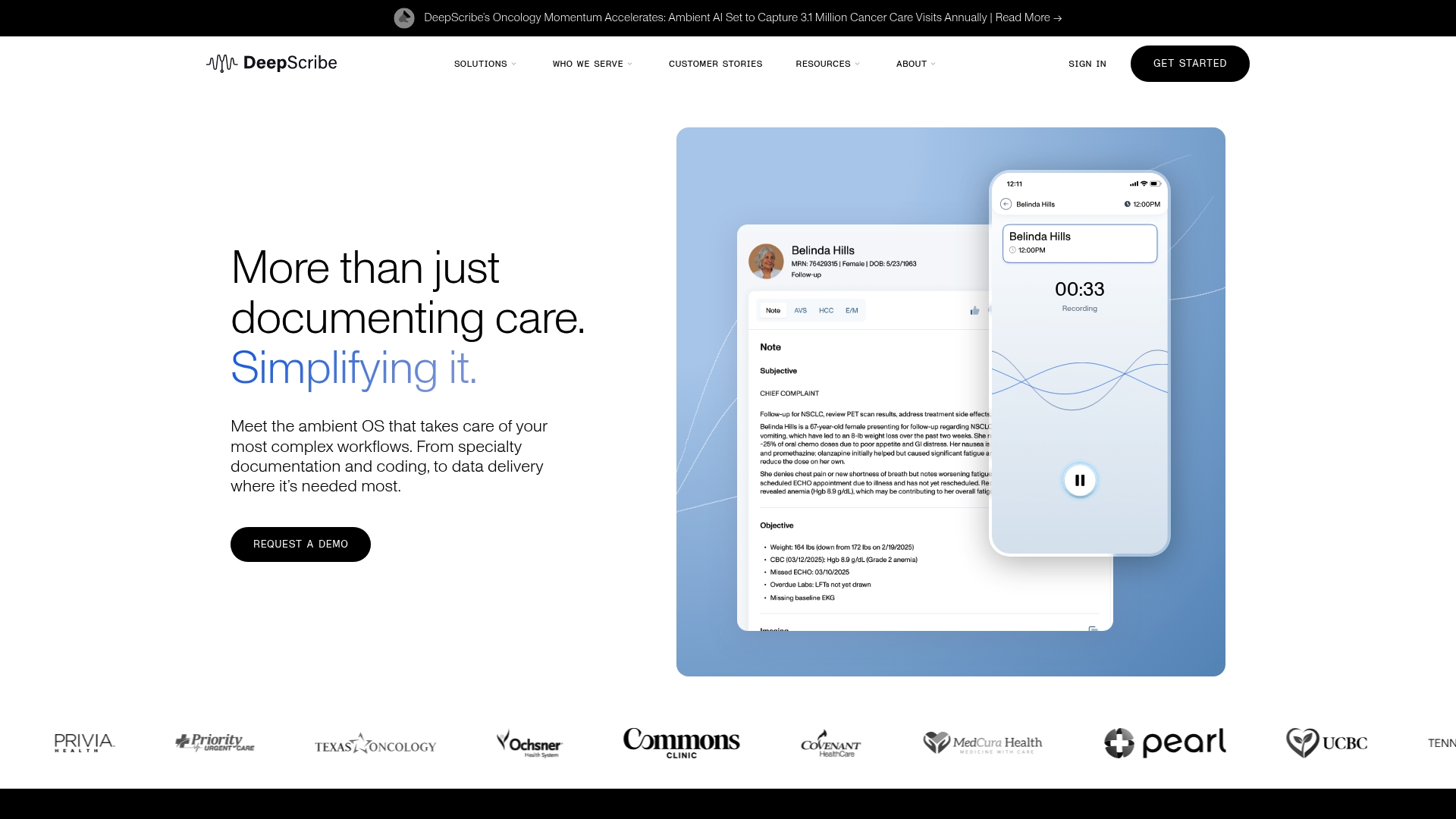
DeepScribe is an ambient AI platform built to automate clinical documentation and coding for healthcare providers. It captures clinical conversations with high accuracy and offers specialty focused tools that reduce time spent on notes. The platform integrates with existing EHR systems and supports workflows for oncology and other specialty clinics. Bottom line: it is a focused documentation assistant for provider teams that want to cut charting time and improve coding accuracy.
Core Features
DeepScribe centers on an AI Medical Scribe that transcribes clinical conversations and an AI Coding engine that maps notes to codes such as E M, HCC, and ICD 10. The product includes a Customization Studio to align notes to each provider workflow and DeepScribe Assist for real time insights during patient care. Pre charting prepares clinicians before visits and the system is designed to plug into existing EHR systems for a smoother handoff of data.
Pros
- High accuracy in documentation: The platform transcribes clinical conversations with accuracy that reduces manual correction and saves clinician time.
- Specialty focused solutions: DeepScribe offers tailored workflows for oncology and other specialties which help keep notes clinically relevant.
- Seamless EHR integration: The product is designed to work with existing EHR systems so teams do not need to recreate documentation flows.
- Supports value based care: The coding and documentation focus helps teams align notes to care quality measures and reimbursement models.
- Trusted by established providers: Adoption by recognized health systems signals credibility and real world utility.
Cons
- Pricing is not public: Details on pricing are not listed on the website which makes budget planning harder for procurement teams.
- No published pricing model: The lack of disclosed pricing tiers prevents side by side cost comparison with other vendors.
- Onboarding details are scarce: The website does not specify the implementation timeline or the onboarding steps for clinical teams.
Who It’s For
DeepScribe fits healthcare providers, hospitals, and health systems that want to reduce clinician time spent on notes while improving coding accuracy. It is especially useful for clinics with specialty workflows like oncology where documentation nuances matter. Admissions coordinators in post acute settings will value clearer, more accurate documentation handed off from referring clinicians.
Unique Value Proposition
DeepScribe combines ambient capture with specialty aware coding to deliver notes ready for clinical and billing use. The mix of Customization Studio, pre charting, and EHR integration helps facilities adopt AI assisted documentation without rebuilding existing workflows.
Real World Use Case
Ochsner Health uses DeepScribe in oncology clinics to reduce charting time and improve care delivery. Clinicians report less after visit documentation and cleaner handoffs to clinical and billing teams which helps maintain bed flow and administrative accuracy.
Pricing
Pricing information is not specified on the website. Procurement teams must contact sales for quotes and plan details.
Website: https://deepscribe.ai
MModal (Part of Solventum) / Health Information & Technology Solutions
At a Glance
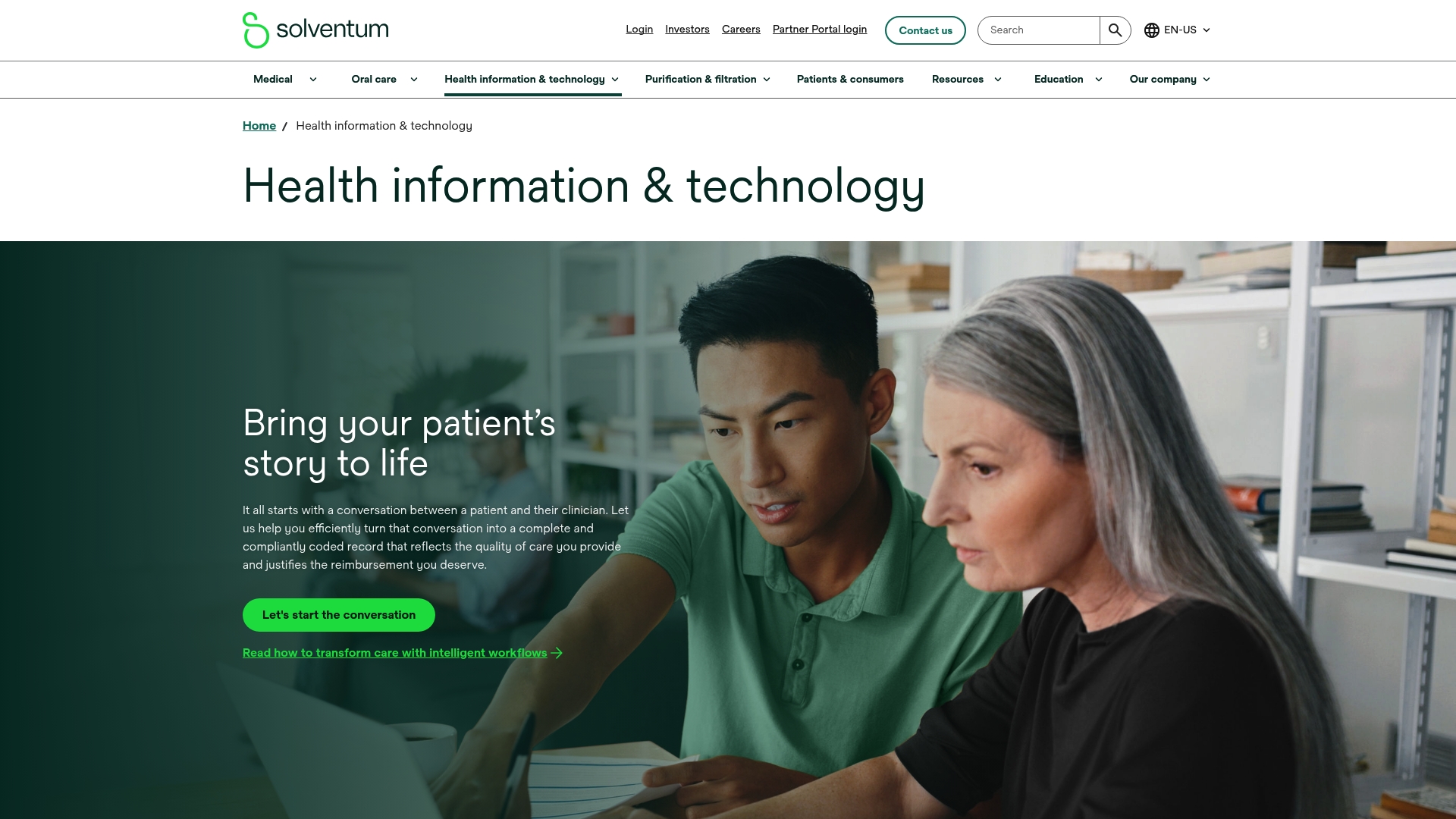
MModal, now part of Solventum, offers AI driven clinical documentation and coding tools that target accuracy, operational efficiency, and revenue integrity. The platform excels at converting clinician speech into structured notes and automating routine coding tasks to reduce manual work. Implementation takes time and investment, but the payoff shows in fewer denials and cleaner documentation. For organizations with clinical teams and existing EHR systems this solution can deliver measurable benefits.
Core Features
MModal supplies a set of clinical documentation tools centered on ambient documentation and speech recognition to capture encounters in real time. It includes clinical documentation integrity support to close documentation gaps and automated coding to speed up revenue cycle processes. The platform also offers population health analytics and grouping tools to surface risk and utilization trends, and it integrates with existing electronic health records to add value without replacing core systems.
Pros
- Reduces administrative burden for clinicians: The ambient documentation and speech recognition let clinicians capture notes during the encounter which lowers after hours charting.
- Improves documentation accuracy and completeness: CDI support helps identify missing clinical detail that affects coding and quality reporting.
- Automates routine coding tasks: Automated code capture frees coding staff to focus on complex cases and appeals.
- Supports revenue cycle management: Better documentation and coding reduce denials and improve capture of appropriate reimbursement.
- Integrates with EHRs: The solution connects to existing records which reduces duplicate workflows and keeps information centralized.
Cons
- Implementation requires substantial effort and resources: Integrations and workflow redesign take time and dedicated project leadership.
- Performance depends on input quality and user adoption: Speech recognition and AI perform best when clinicians adopt consistent documentation habits.
- Initial investment can be significant for smaller organizations: Costs and customization needs may place this out of reach for some facilities without a clear return plan.
Who It’s For
MModal fits hospitals, health systems, and clinical practice organizations that need to tighten documentation and coding accuracy. Skilled nursing facilities with onsite clinicians or tight ties to hospital systems can benefit when they share documentation workflows or need cleaner transfer records. Admissions coordinators who want fewer coding delays and faster claims processing will see value when clinical teams adopt the tools.
Unique Value Proposition
MModal combines ambient speech capture, CDI tools, and automated coding to create a continuous documentation to billing pathway. That single pathway reduces rework between clinical notes and coding files which shortens billing cycles and reduces denials. Integration with existing EHRs makes it a practical addition rather than a replacement for established systems.
Real World Use Case
A hospital deploys MModal ambient documentation so physicians document encounters by voice in real time. Charting after hours drops, documentation accuracy improves, and coding teams receive cleaner records which speeds up billing. Admissions teams notice fewer clarification requests and a smoother flow from admission to claim submission.
Pricing
Pricing is not explicitly published and is likely customized based on organization size and integration needs. Expect a proposal model with implementation fees and subscription components adjusted to scale and feature selection.
Website: https://mmodal.com
InstaNote
At a Glance
InstaNote uses AI to listen, learn, and write clinical documentation in real time, cutting documentation time by about 75 percent according to the product description. The tool targets clinical teams that need faster chart completion and improved note accuracy. It operates within existing workflows and claims HIPAA compliant security. Bottom line: it promises major time savings for clinicians while keeping patient records accurate.
Core Features
InstaNote focuses on AI powered clinical documentation and real time capture of patient encounters to reduce manual note writing. The platform applies sophisticated AI algorithms to understand medical context and automatically organize clinical notes. It integrates with major EHR systems to move documentation into patient charts without extra copying and pasting. The core design supports faster record completion and higher consistency across providers.
Pros
- Reduces documentation time by 75 percent, which frees clinicians to spend more time with patients and less time on notes.
- Improves clinical documentation accuracy through context aware AI that structures findings and assessments in a consistent way.
- Enhances provider efficiency and patient care by shortening the time from encounter to completed note, supporting faster decision making.
- HIPAA compliant security protects patient data while the system captures and stores clinical content.
- Trusted by over 60,000 healthcare providers which suggests broad adoption and operational experience across care settings.
Cons
- Specific limitations are not listed in the product data, so real limitations may depend on your existing EHR configuration. This lack of detailed constraints makes planning integration harder.
- Implementation may require integration efforts and training, which adds upfront time and resource costs before teams see the full time savings.
Who It’s For
InstaNote fits healthcare providers and organizations that want to reduce documentation burden using AI driven workflows. It is appropriate for physician groups, hospital departments, and clinical teams that already use major EHR systems and want to shorten chart completion times without adding extra administrative staff. Admissions coordinators and facility administrators should evaluate integration effort and training needs before committing.
Unique Value Proposition
InstaNote claims a simple proposition: listen during patient encounters and produce accurate clinical notes automatically. The combination of real time capture, AI that understands clinical context, and EHR integration makes it useful for teams that struggle with delayed or inconsistent documentation. The security posture and reported adoption numbers support its credibility.
Real World Use Case
A healthcare organization implements InstaNote to offload physician note writing. Clinicians speak or interact during rounds while the system captures the encounter, organizes findings into a standard note, and pushes the note to the EHR. The result is faster record completion, fewer documentation errors, and improved provider satisfaction with less after hours charting.
Pricing
Pricing is not specified on the website, so procurement teams should request a custom quote and ask about integration and training costs.
Website: https://deliverhealth.com/products/instanote
AI-Powered Clinical Documentation Comparison
This table compares various AI-powered clinical documentation platforms to assist healthcare facilities in selecting the most suitable solution for operational efficiency and patient care.
| Tool | Core Features | Pros | Cons | Pricing Options |
|---|---|---|---|---|
| Smart Admissions | AI referral management, real-time eligibility verification, EHR integration, revenue analytics | Speeds up referrals, reduces admin workload, integrates with EHR systems, intuitive UI | Focused on skilled nursing facilities | $597/month, $6,100/year (15% discount for annual plan) |
| SMARTMD | Customizable EMR, medical transcription, mobile dictation, CMS reporting automation | Long track record, comprehensive tools, flexible pricing, HIPAA compliance | Sector focus limits use in general practices, pricing requires contact | Custom quote required; various subscription models available |
| DeepScribe | Ambient AI for documentation, transcription, EHR integration, customization studio | High documentation accuracy, specialty workflows, supports value-based care models | Pricing not public, onboarding details scarce | Contact for custom pricing |
| MModal | Speech recognition, clinical documentation integrity, automated coding, population health analytics | Reduces admin overhead, improves documentation accuracy, automates coding | High implementation effort, reliance on clinician adoption, significant initial costs | Customized pricing model, proposal-based integration fees |
| InstaNote | Real-time clinical documentation, EHR integration, AI-driven organization of notes | Cuts documentation time, enhances note accuracy, supports provider efficiency | Integration and training requirements may add upfront costs | Contact for specific pricing |
Discover How Smart Admissions Outperforms SmartMD for Streamlined Patient Intake
Healthcare admins face ongoing challenges with time-consuming referral reviews, fragmented documentation, and slow bed occupancy. The article on top alternatives to SmartMD highlights the need for efficient patient admission solutions that cut manual workload while boosting accuracy and revenue. If your facility struggles with complex paperwork, slow insurance eligibility checks, or scattered clinical data your team deserves a tool designed to unify these tasks into one easy workflow.
Smart Admissions answers this call with its AI-powered referral management platform built for skilled nursing and post-acute care providers. It dramatically speeds up referral review by up to 70 percent while syncing seamlessly with your existing EMR systems like PointClickCare. The platform enhances decision-making by presenting real-time insurance verification, referral conversion analytics, and automated staff notifications. This means faster bed fill rates, less burnout for your admissions coordinators, and measurable financial improvements.
Ready to transform your patient intake process and join facilities seeing real results? Take the first step by exploring Smart Admissions features to see how AI can simplify admissions for your team.
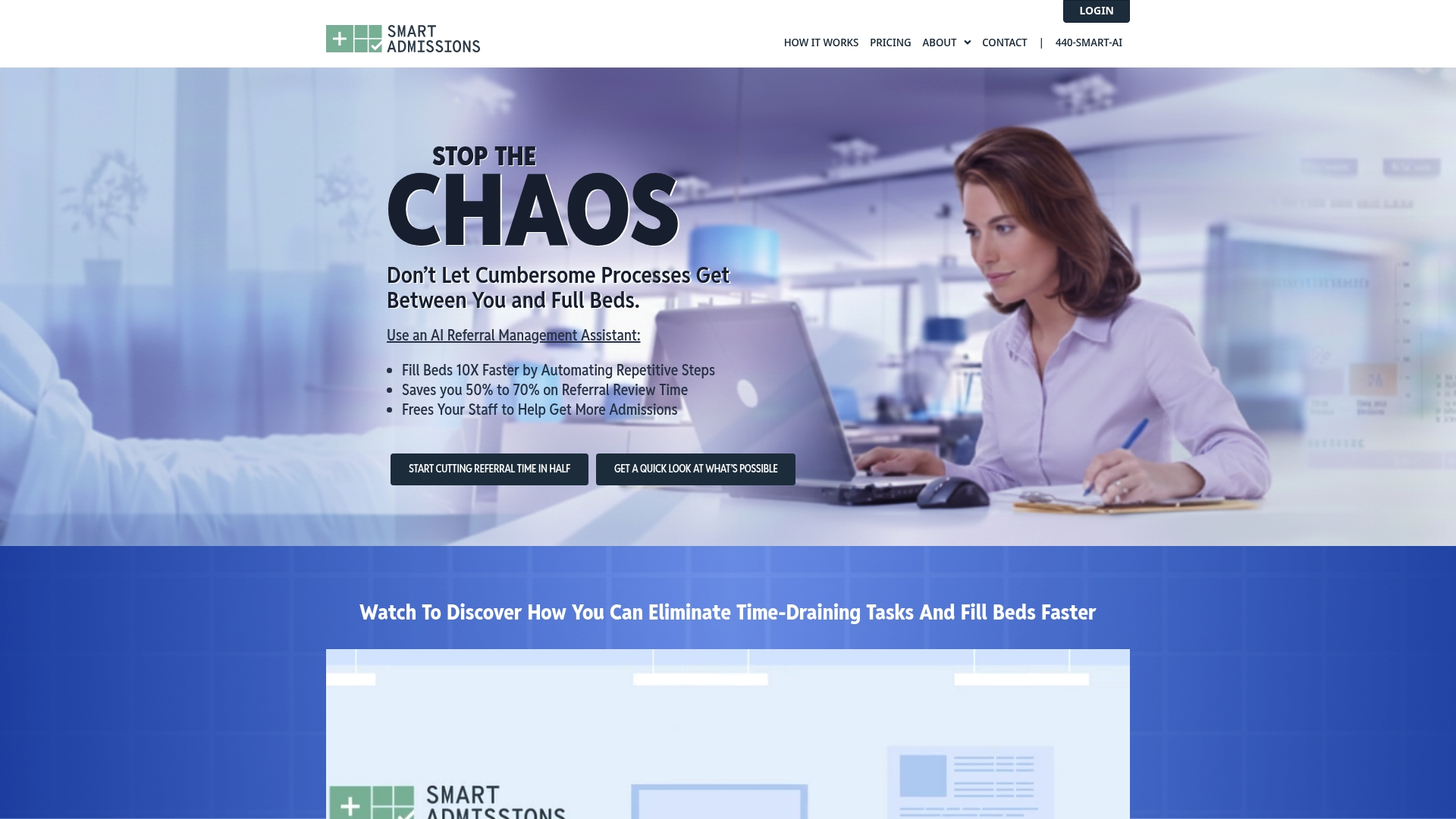
Don’t let inefficient admission workflows hold your facility back. Visit Smart Admissions now for a personalized demo and discover why smart healthcare administrators rely on this trusted referral management solution to increase throughput and revenue. See the difference efficient patient intake can make today.
Frequently Asked Questions
What features should I look for in patient admission solutions?
When selecting a patient admission solution, prioritize automated referral management, real-time insurance verification, and seamless integration with existing electronic health records (EHR). Evaluate how these features can reduce paperwork and improve admissions efficiency in your facility.
How can I improve my admissions team’s efficiency in processing referrals?
To enhance your team’s efficiency, consider implementing a comprehensive referral management system that automates the intake process and tracks referrals in real time. This can potentially reduce the referral review time by up to 70%, allowing your team to focus more on patient care rather than administrative tasks.
What is the typical onboarding time for new patient admission solutions?
Most patient admission solutions can be onboarded within 30 to 60 days, depending on the complexity of your existing systems and the training requirements for your staff. Ensure to choose a platform that offers intuitive interfaces and strong customer support to facilitate a smoother transition.
How can I measure the return on investment from a new admissions solution?
To measure ROI, track metrics such as referral conversion rates, bed occupancy rates, and reduction in administrative hours spent. Set specific goals to achieve within the first three months post-implementation to evaluate effectiveness and financial impact.
Are there any compliance considerations when choosing a patient admission solution?
Absolutely, ensure that any solution you choose complies with HIPAA regulations regarding patient data security and privacy. Carefully review the compliance features of each platform to safeguard patient information and maintain regulatory standards throughout the admission process.