
Automating repetitive tasks in healthcare admissions reduces referral processing time by up to 50%, transforming how skilled nursing homes and rehabilitation centers manage patient intake. This guide explains what administrative automation means for admissions teams, how it delivers measurable efficiency gains, and practical steps to implement solutions that reduce staff burnout while improving bed occupancy rates.
Table of Contents
- Understanding Administrative Automation In Healthcare Admissions
- How Administrative Automation Streamlines Referral Management
- Common Misconceptions About Administrative Automation
- Quantifiable Benefits: Efficiency, Staff Impact, And Revenue
- Comparison: Automated Vs. Manual Referral Management Processes
- Implementation Considerations And Best Practices
- Tailoring Automation Solutions To Facility Size And Resources
- Conclusion And Next Steps For Healthcare Administrators
- Discover Smart Administrative Automation Solutions
Key takeaways
| Point | Details |
|---|---|
| Speed gains | Automation cuts referral review times by up to 50% through AI-powered processing. |
| Staff relief | Manual workload decreases by approximately 40%, significantly reducing burnout risk. |
| Revenue impact | Bed fill rates improve between 15-25% with streamlined referral management. |
| Integration power | AI tools connect with EMR and insurance systems for real-time eligibility verification. |
| Strategic rollout | Phased implementation with comprehensive training ensures successful adoption. |
Understanding administrative automation in healthcare admissions
Administrative automation involves automating referral review, eligibility verification, and documentation in healthcare admissions workflows. For skilled nursing homes and rehabilitation centers, this technology transforms how teams handle patient intake by replacing manual, repetitive tasks with intelligent systems that process information faster and more accurately.
The scope of administrative automation covers several critical functions:
- Referral review and prioritization based on clinical criteria
- Real-time insurance eligibility verification
- Automated intake documentation and form completion
- Patient data validation across multiple systems
- Clinical assessment summaries extracted from medical records
These automated processes directly address bottlenecks that delay patient admissions and strain admissions staff. When referrals pile up and each review takes 30-45 minutes of manual work, facilities struggle to fill beds quickly and staff face overwhelming workloads.
Administrative automation specifically targets the intake workflow from initial referral receipt through final admission decision. It handles data-heavy tasks that consume staff time without requiring clinical judgment. This frees admissions coordinators to focus on patient communication, care coordination, and decision-making that truly benefits from human expertise.
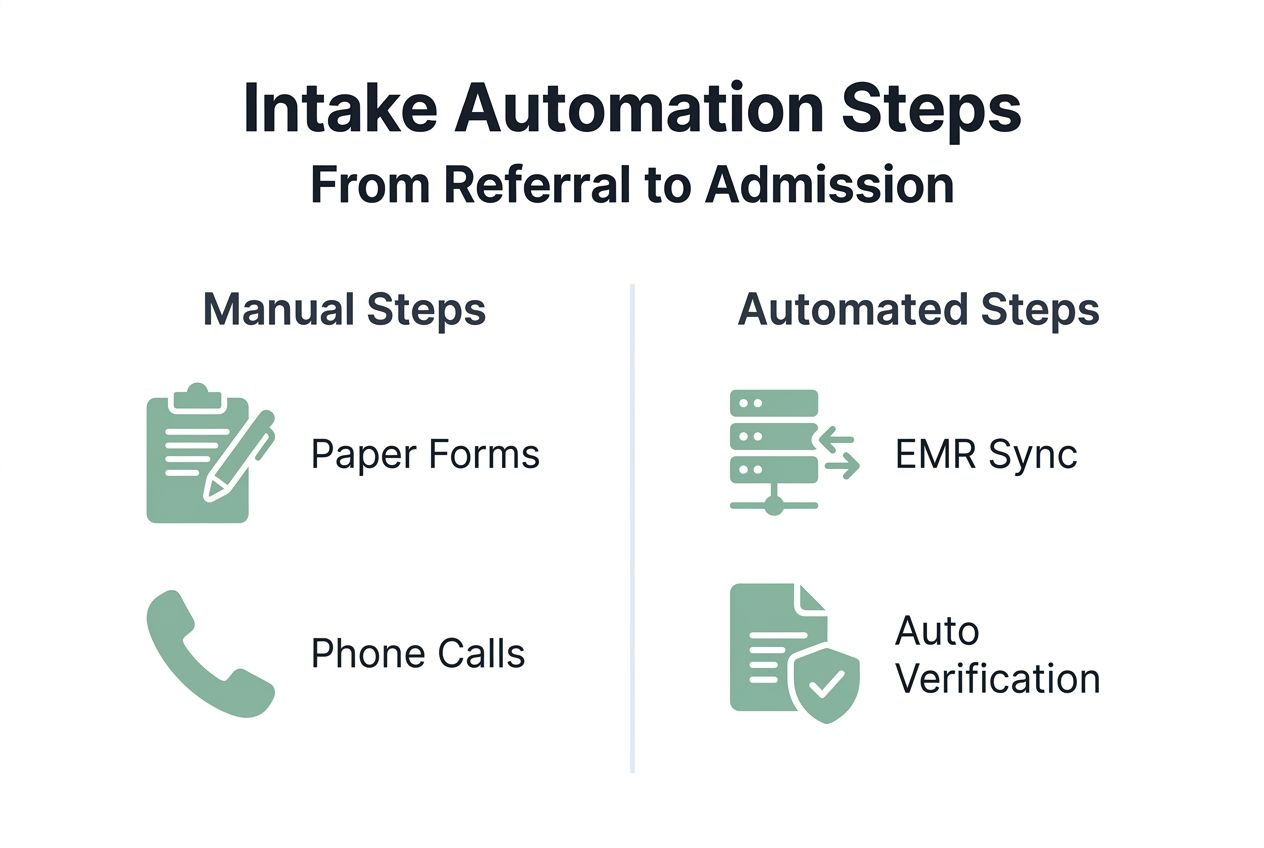
For facilities managing dozens of referrals daily, automation becomes essential infrastructure. It ensures consistent processing speed regardless of referral volume, maintains accuracy even during peak periods, and provides administrators with visibility into admission pipeline performance through automation in healthcare admissions efficiency metrics.
How administrative automation streamlines referral management
AI-powered platforms transform referral management by performing complex tasks in seconds rather than minutes. These systems analyze incoming referrals, extract relevant clinical information, and perform real-time eligibility checks by connecting directly with insurance portals and payer databases.
The automation workflow operates through several integrated mechanisms:
- AI extracts patient demographics, diagnoses, and clinical needs from referral documents
- Systems query insurance databases to verify coverage and authorization requirements
- Algorithms prioritize referrals based on bed availability, acuity levels, and facility capabilities
- Automated alerts notify staff of high-priority referrals requiring immediate attention
- Documentation systems pre-populate admission forms with verified patient data
Integration with Electronic Medical Records (EMR) and insurance portals eliminates manual data entry, the primary source of errors and delays. When a referral arrives, the system automatically pulls patient history from connected EMRs, verifies current insurance status, and populates intake forms without staff intervention.
This seamless data exchange dramatically reduces processing time. Manual referral review involves logging into multiple systems, copying information between platforms, and manually verifying eligibility. Automation handles these steps simultaneously, compressing a 45-minute process into 5 minutes.
The error reduction proves equally valuable. Human data entry introduces typos, transposition mistakes, and missed information that cause downstream complications. Automated systems maintain consistency, flag incomplete data, and ensure all required fields contain validated information before proceeding.
Pro Tip: Prioritize automation platforms that support direct integration with your existing EMR and the specific insurance portals you query most frequently to maximize efficiency gains and minimize manual workarounds.
Referral bottlenecks shrink when automation maintains consistent processing speed. Facilities using ai role patient intake tools report faster bed turnover and improved capacity utilization because admissions decisions happen quickly enough to capture referrals before they go elsewhere.
Common misconceptions about administrative automation
Healthcare administrators often hesitate to adopt automation due to persistent myths about technology replacing staff or complicating workflows. Understanding the reality behind these misconceptions removes barriers to implementation.
Myth: Automation eliminates admissions coordinator positions. Reality: Automation reduces manual workload, enabling focus on higher-value tasks like patient communication and care coordination. Staff roles evolve from data entry to strategic decision support. Facilities report redeploying staff time to relationship building with referral sources and improving patient experience rather than cutting positions.
Myth: Implementation requires extensive technical expertise and IT resources. Reality: Modern automation platforms prioritize user-friendly interfaces and vendor-managed integration. Most systems connect with EMRs through standard APIs requiring minimal IT involvement. Vendors provide implementation support, training, and ongoing technical assistance. Small facilities without dedicated IT staff successfully deploy automation using vendor resources.
Myth: Automated systems create more work by requiring constant monitoring and adjustment. Reality: Once configured, automation runs continuously without daily intervention. Systems handle routine tasks independently and only alert staff when exceptions require human judgment. The initial setup investment pays off through sustained efficiency gains. Staff report spending less time on system management compared to manual processes.
These fears stem from outdated perceptions of complex enterprise software. Modern healthcare automation resembles consumer applications with intuitive designs rather than clunky legacy systems. The learning curve proves manageable, and benefits materialize quickly once staff experience the reduced workload firsthand.
Addressing misconceptions openly during the evaluation phase helps build staff buy-in. Demonstrating how automation enhances rather than threatens their roles encourages adoption and reduces resistance to change.
Quantifiable benefits: Efficiency, staff impact, and revenue
Data from facilities implementing administrative automation reveals substantial improvements across operational, workforce, and financial metrics. These concrete outcomes build the business case for investment.
| Metric | Manual Process | Automated Process | Improvement |
|---|---|---|---|
| Referral review time | 30-45 minutes | 5-10 minutes | 50-80% reduction |
| Staff manual workload | 100% baseline | 60% of baseline | 40% decrease |
| Bed fill rate improvement | Baseline | 15-25% higher | Revenue increase |
| Data entry errors | 5-8% error rate | <1% error rate | 85% reduction |
Referral processing time drops by up to 50% when automation handles eligibility verification and data extraction. This speed improvement allows facilities to respond to referrals faster than competitors, increasing the likelihood of securing admissions. In competitive markets, response time often determines which facility receives the patient.
Staff workload reductions translate directly to decreased burnout. Admissions coordinators handling 20-30 referrals daily through manual processes face exhausting repetition. Automation cutting that workload by 40% provides breathing room for quality interactions with patients and referral sources. Facilities report improved job satisfaction and lower turnover among admissions staff after implementation.
Bed fill rates improve by 15-25% due to faster processing and better referral prioritization. Each additional occupied bed generates daily revenue, making occupancy improvements financially significant. A 100-bed facility increasing occupancy from 85% to 95% adds 10 daily revenue-generating beds.
“Administrative automation fundamentally changes how admission teams operate. We’ve seen facilities transform from reactive, overwhelmed departments to proactive revenue centers that consistently outperform occupancy targets while maintaining happier, more engaged staff.”
These quantified benefits demonstrate return on investment within months of implementation. The combination of efficiency gains, workforce improvements, and revenue growth creates compelling justification for why automate admissions 20 faster bed occupancy initiatives.
Comparison: Automated vs. manual referral management processes
Comparing traditional workflows with automated processes highlights the transformation automation delivers. The differences extend beyond speed to encompass accuracy, staff experience, and operational flexibility.
| Process Step | Manual Approach | Automated Approach |
|---|---|---|
| Referral receipt | Email/fax requiring manual filing | Automatic system ingestion and categorization |
| Data extraction | Manual reading and note-taking | AI extracts structured data in seconds |
| Eligibility check | Log into insurance portals individually | Real-time API queries across all payers |
| Clinical review | Staff reads entire medical history | AI summary highlights relevant conditions |
| Documentation | Manual form completion with typing | Auto-populated forms with validated data |
| Decision tracking | Spreadsheets or paper logs | Digital dashboard with real-time status |
Manual referral review takes twice as long and produces more errors than automated systems. Each manual step introduces delay and potential mistakes. Staff must context-switch between multiple systems, increasing cognitive load and fatigue.
Operational bottlenecks multiply in manual workflows:
- Referral backlogs accumulate during high-volume periods
- Staff absences create processing gaps with no backup coverage
- Evening and weekend referrals wait until next business day
- Complex cases requiring multiple verifications consume disproportionate time
- Tracking referral status requires manual follow-up and spreadsheet updates
Automation eliminates these bottlenecks through continuous operation. Systems process referrals 24/7 regardless of staff availability. High volumes trigger the same fast processing as normal periods. Complex verifications happen simultaneously rather than sequentially.
Pro Tip: Implement automation in phases, starting with eligibility verification to deliver quick wins and build staff confidence before expanding to full referral workflow automation.
The staffing impact proves particularly significant. Manual processes create burnout through repetitive work, constant interruptions, and pressure to process quickly despite tedious steps. Automation removes the repetition, allowing staff to work at sustainable paces on tasks requiring judgment and interpersonal skills.

Facilities transitioning from manual to automated processes report cultural shifts. Admissions departments evolve from administrative support functions to strategic operations driving facility performance.
Implementation considerations and best practices
Successful automation implementation requires strategic planning and attention to change management. Following proven practices increases adoption success and accelerates time to value.
Begin with workflow assessment:
- Map your current referral process from receipt through admission decision
- Identify specific bottlenecks causing delays or staff frustration
- Quantify time spent on each process step to establish baseline metrics
- Determine which tasks consume the most staff time without requiring clinical judgment
- Document integration points with existing EMR and insurance verification systems
This assessment reveals where automation delivers maximum impact. Focus implementation efforts on high-volume, time-consuming tasks that automation handles well.
Platform selection criteria include:
- Direct integration capabilities with your specific EMR system
- Support for your primary insurance payers and verification portals
- User interface simplicity appropriate for your staff’s technical comfort level
- Customization options to match your facility’s workflow preferences
- Vendor implementation support and training resources
- Ongoing technical support availability and response times
Request demonstrations using your actual referral documents to evaluate how platforms handle real-world scenarios. Generic demos may not reveal limitations with your specific data formats or integration requirements.
Phased implementation and comprehensive staff training reduce disruptions and improve adoption. Start with one high-impact function like eligibility verification rather than attempting full workflow automation immediately. This approach allows staff to build competence gradually and provides early success that builds confidence.
Training should emphasize how automation helps staff rather than monitoring their performance. Frame the technology as a tool that eliminates tedious work, not as surveillance. Include hands-on practice with realistic scenarios so staff gain comfort before processing live referrals.
Continuous monitoring optimizes automation value:
- Track processing time reductions and workload changes
- Measure accuracy improvements and error rate decreases
- Monitor bed fill rate changes and admission decision speed
- Gather staff feedback on usability and remaining pain points
- Calculate ROI using efficiency gains and occupancy improvements
These metrics demonstrate value to stakeholders and identify opportunities for further optimization. Regular review sessions with staff surface issues early and maintain engagement with the system.
Integration with existing step by step intake process for admissions workflows ensures automation complements rather than disrupts established practices. Customize the platform to match your terminology, approval hierarchies, and reporting requirements.
Tailoring automation solutions to facility size and resources
Automation platforms serve facilities across the size spectrum when properly matched to organizational capabilities and needs. Customization ensures appropriate complexity and resource requirements.
Small skilled nursing homes with limited IT infrastructure benefit from cloud-based platforms requiring minimal technical setup. These facilities prioritize ease of use and fast onboarding over extensive customization. Key features include:
- Intuitive interfaces requiring little training
- Vendor-managed integration with common EMR systems
- Pre-configured workflows based on industry best practices
- Responsive vendor support for technical questions
- Predictable subscription pricing without implementation fees
Small facilities should avoid over-featured platforms requiring dedicated IT staff to manage. Simplicity and reliability matter more than advanced customization options.
Large rehabilitation centers with complex referral volumes need platforms offering:
- Deep integration with multiple EMR systems across locations
- Customizable workflows matching specific departmental processes
- Advanced analytics and reporting for performance monitoring
- API access for connecting additional internal systems
- Dedicated implementation support and ongoing account management
These facilities can invest more in setup and customization to optimize automation for their specific operational models. The larger referral volumes justify more sophisticated platforms that handle complexity.
Phased adoption addresses staff resistance regardless of facility size. Introducing automation gradually rather than forcing immediate full adoption allows teams to adjust psychologically and operationally. Early adopters become internal champions who help train colleagues and troubleshoot issues.
Resource-based customization ensures ROI matches investment level. Small facilities spending less on simpler platforms still achieve meaningful efficiency gains. Large facilities investing more access proportionally greater capabilities. Both achieve positive returns when platforms match organizational scale.
Consider intake automation healthcare admissions solutions that offer tiered pricing and feature sets allowing you to start small and expand capabilities as needs grow.
Conclusion and next steps for healthcare administrators
Administrative automation delivers measurable improvements in referral processing speed, staff workload, and bed occupancy rates for skilled nursing homes and rehabilitation centers. Facilities reducing referral review times by 50% and cutting manual workload by 40% gain competitive advantages in patient acquisition while supporting healthier, more engaged admission teams.
Successful implementation requires strategic planning beyond technology selection. Assess your workflows to identify bottlenecks, choose platforms matching your technical capabilities, and implement in phases with comprehensive staff training. This approach builds buy-in and accelerates value realization.
The healthcare landscape increasingly demands operational efficiency to maintain financial viability. Facilities adopting automation position themselves to meet rising referral volumes without proportionally expanding staff. The resulting cost efficiency and revenue improvements create sustainable competitive advantages.
Now is the time to evaluate your facility’s readiness for administrative automation. Begin by mapping your current referral workflow, quantifying time spent on manual tasks, and researching platforms that integrate with your existing systems. The facilities thriving in 2026 are those that embraced automation to transform admissions from administrative burden to strategic revenue driver.
Discover smart administrative automation solutions
Smart Admissions provides tailored automation platforms specifically designed for skilled nursing homes and rehabilitation centers seeking to streamline referral management and accelerate admissions. Our AI-powered system integrates seamlessly with your existing EMR and insurance portals to deliver real-time eligibility verification, automated documentation, and intelligent referral prioritization.
Explore examples of referral management systems that facilities use to achieve faster processing times and improved bed fill rates. Discover why automate admissions 20 faster bed occupancy through proven automation strategies. Learn how to integrate emr with referrals to eliminate manual data entry and reduce errors. Smart Admissions combines powerful automation with intuitive design and responsive support to help your facility thrive.
FAQ
What is administrative automation in healthcare admissions?
Administrative automation uses technology to handle repetitive tasks like referral review, eligibility verification, and intake documentation without manual staff intervention. These systems employ AI to extract data from referrals, query insurance databases, and populate admission forms automatically. The goal is improving speed and accuracy while freeing staff for patient-focused activities requiring human judgment.
How does automation improve referral management in skilled nursing homes?
Automated referral systems perform real-time eligibility checks by connecting directly with insurance payer portals and EMR databases. This eliminates manual data entry and verification steps that consume staff time and introduce errors. AI algorithms prioritize referrals based on clinical criteria and bed availability, ensuring high-value admissions receive immediate attention. The result is faster processing and better decision-making.
Will automation replace admissions staff?
Automation augments rather than replaces admissions coordinators by handling repetitive tasks like data entry and eligibility verification. Staff roles evolve toward higher-value work including patient communication, care coordination, and relationship management with referral sources. Facilities report redeploying saved time to activities that improve patient experience and strengthen referral networks rather than reducing headcount.
What are best practices for implementing automation solutions?
Start by assessing your current workflow to identify bottlenecks and high-impact automation opportunities. Select platforms that integrate with your existing EMR and insurance systems while matching your staff’s technical capabilities. Implement in phases beginning with one function like eligibility verification to build confidence before expanding. Provide comprehensive training emphasizing how automation helps staff, and monitor performance metrics to demonstrate ROI and identify optimization opportunities.