
Prioritize incoming referrals by clinical urgency first, then payer and eligibility status, then documentation completeness, then bed and service match, and finally time since referral. Every referral should get a response within 1 to 4 hours depending on its tier, and that rule only holds if we pair it with automation and a small set of KPIs we track every week.
TL;DR:
- Referrals scoring 12 to 15 are considered high priority (Tier 1) and should be responded to within 1 hour, with immediate action required.
- Parallelize eligibility checks, clinical reviews, and documentation collection to reduce overall referral-to-bed time based on automated workflows.
- Integrate real-time data sharing and automation, such as electronic capture and eligibility verification, to eliminate delays caused by poor interoperability.
- Consistently track key performance indicators like time-to-first-contact and denial rates by payer to identify bottlenecks and improve throughput.
- Building strong hospital partnerships with standard discharge templates and designated contacts can significantly decrease incomplete referrals and documentation delays.
Table of Contents
- Priority Criteria Shortlist for Triaging Referrals
- Step-by-Step Workflow From Referral Receipt to Bed Assignment
- Technology and Data Integrations That Remove the Biggest Delays
- Measuring KPIs and Reporting Impact to Leadership
- Locking In Faster Referrals Through Hospital Partnerships
- Why Urgency-Based Triage Also Demands an Equity Check
- How Smart Admissions Supports This Playbook
- FAQ
- Sources
Priority Criteria Shortlist for Triaging Referrals
A fast, repeatable scoring method keeps triage from depending on whoever happens to answer the phone. We recommend a green, amber, red score for each of five criteria, scored in under a minute per referral.
- Clinical urgency: Does the diagnosis, acuity, and care plan match what our facility can safely support right now.
- Payer and eligibility: Is coverage type confirmed, and are authorization requirements already identified.
- Documentation completeness: Are the discharge summary, medication list, and orders present or missing key fields.
- Bed and service match: Do we have the right bed type, isolation capacity, or specialty unit open.
- Operational constraints: Does current staffing or census allow safe admission on the requested date.
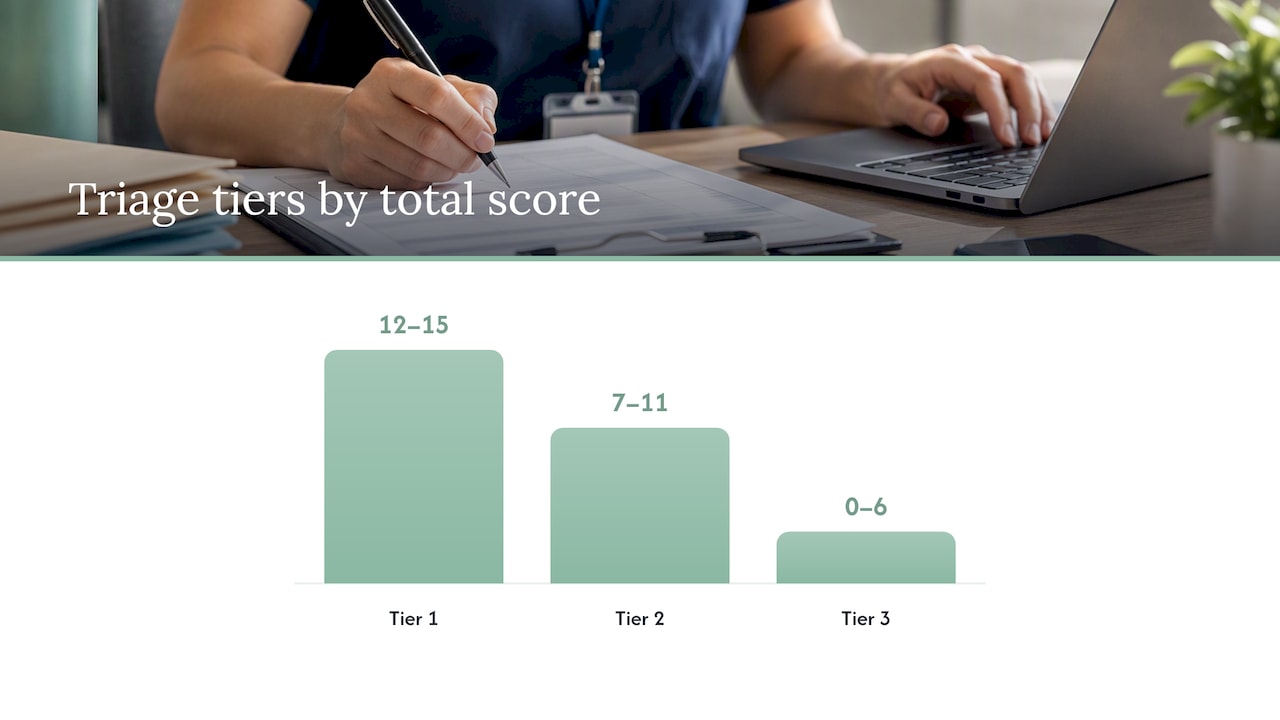
Each criterion gets a 0 to 3 score (red equals 0, green equals 3). A referral scoring 12 to 15 becomes Tier 1, 7 to 11 becomes Tier 2, and anything below 7 becomes Tier 3, each with its own contact SLA. This rubric, paired with a referral prioritization process built around scoring, keeps the queue moving on urgency rather than on who called first.
Pro Tip: Keep the rubric on one printed page at the intake desk so every reviewer scores referrals the same way, even during a surge.
Step-by-Step Workflow From Referral Receipt to Bed Assignment
A score only works if the surrounding process enforces it. Here is the sequence we recommend building into daily intake operations.
- Capture and timestamp every referral the moment it arrives, whether by portal, fax, or secure email, so response-time tracking starts immediately.
- Run front-line triage using the shortlist above, routing clinical questions to a nurse reviewer and administrative gaps to the intake coordinator.
- Parallelize the three slow steps: eligibility verification, clinical chart review, and documentation collection should run at the same time, not in sequence. A JMIR pilot on acute-to-postacute data exchange found that parallelizing administrative and clinical checks shortens total referral-to-admit time more than optimizing any single step alone.
- Place a conditional bed hold once Tier 1 or Tier 2 criteria are met, with a clear expiration time communicated back to the hospital.
- Escalate missing items through a single point of contact rather than a chain of calls, using a short template: what is missing, why it matters, and the deadline to receive it.
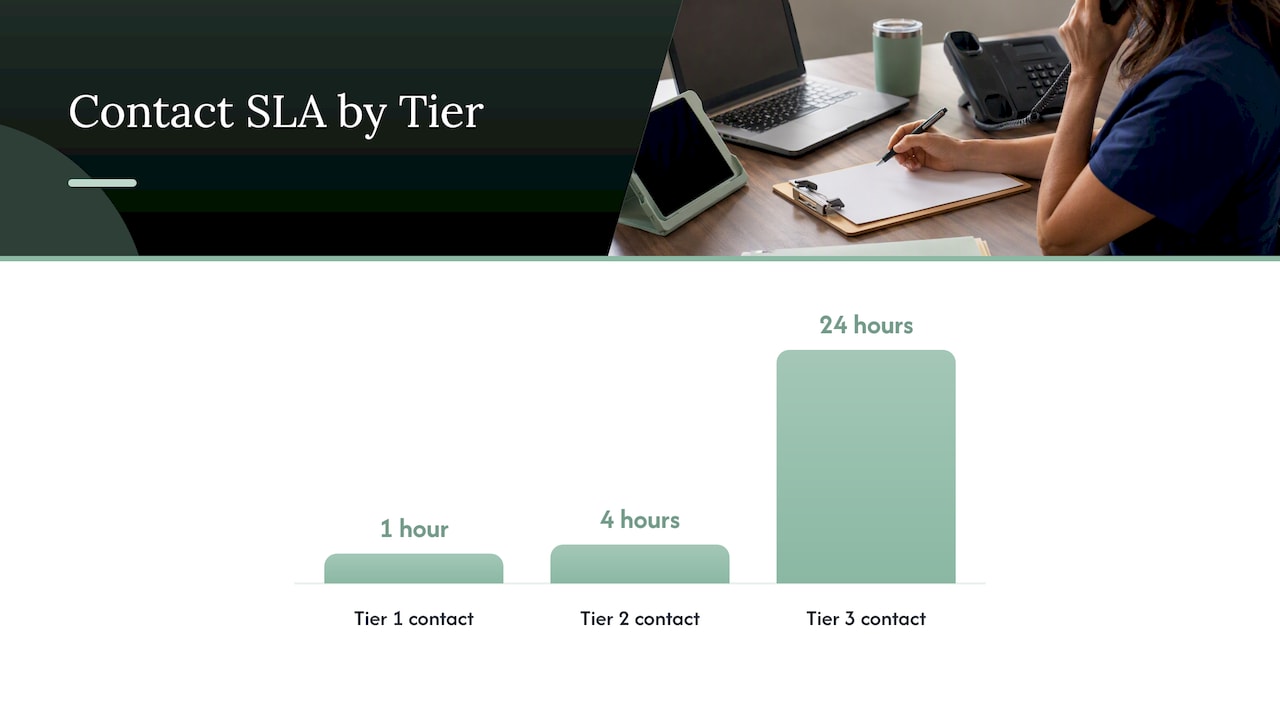
Sample SLA matrix for contact after intake:
- Tier 1: contact within 1 hour.
- Tier 2: contact within 4 hours.
- Tier 3: contact within 24 hours.
Pro Tip: Log every status change, not just the final decision. Time-to-first-contact is the single detail that most affects whether a referral converts into an admission.
An admissions decision-making guide can help standardize how clinical and payer judgment calls get made across shifts.
Technology and Data Integrations That Remove the Biggest Delays
Most delay in the admissions queue traces back to interoperability, not clinical judgment. Hospital EHRs and SNF systems frequently do not speak the same language, and MDS-relevant fields often arrive as scanned PDFs instead of discrete data. A JAMA Network Open analysis of hospital to SNF communication found that gaps in shared information commonly include missing social and behavioral history, and that on-site hospital clinicians are associated with more complete, timely, and usable handoffs.
We recommend prioritizing automation in this order:
- Electronic referral capture first, so nothing arrives only by fax.
- Real-time eligibility checks second, since payer confirmation is the most common bottleneck.
- Documentation completeness scanning third, flagging missing fields before a reviewer opens the chart.
Automated electronic exchange between acute and long-term postacute systems can replace manual re-entry, a design-science pilot on acute to LTPAC information exchange found, improving data completeness and reducing admission delay.
Integration endpoints worth building toward include EMR single sign-on, insurer portal connections, secure messaging, and health information exchange or direct messaging standards. Smart Admissions maps to each of these needs through EMR integration, real-time eligibility verification, and automated documentation checks, which is worth exploring through our examples of referral management systems.
Measuring KPIs and Reporting Impact to Leadership
A short KPI set, measured consistently, tells us whether the queue is actually getting faster; understanding Medicare referrals and free local help for seniors also plays a crucial role in managing payer and eligibility effectively.
- Time-to-first-contact: minutes or hours from referral receipt to the first outreach.
- Referral acceptance rate: share of referrals that convert to admission.
- Time-to-bed: hours from acceptance to physical bed assignment.
- Denial rate by payer type: tracked separately, since payer type materially affects acceptance.
A multicenter study of 627 skilled nursing facilities found that payer type and primary diagnosis significantly affect referral acceptance, with private insurance and musculoskeletal diagnoses seeing higher acceptance than Medicaid or mental illness-related referrals. Tracking denial rate by payer surfaces that pattern before it becomes a compliance concern. Review these metrics weekly, not monthly, and use trend lines, not single days, to justify new tooling or staffing.
Locking In Faster Referrals Through Hospital Partnerships
Internal process fixes only go so far when the referral itself arrives incomplete. Building a standard discharge summary template and sharing it with hospital discharge planners reduces the back-and-forth that eats up Tier 2 and Tier 3 timelines.
- Share a standard template with hospital partners so discharge summaries arrive with the fields we actually need.
- Offer anonymized performance data, such as average length of stay and readmission rates, to become a preferred receiving facility.
- Name one hospital point of contact on each side and route missing-item requests through secure messaging instead of phone tag.
- Pilot the change with one hospital partner for a month before rolling it out across every referral source.
Pro Tip: A single named contact on each side resolves missing documentation far faster than a shared inbox ever will.
Why Urgency-Based Triage Also Demands an Equity Check
Shifting from first-come-first-served to urgency-based queueing speeds up admissions, but it can quietly reinforce the payer and diagnosis bias documented in SNF referral data. We recommend running a one-month pilot with the rubric above, then reviewing acceptance rates by payer type before scaling it further.
— Harry
How Smart Admissions Supports This Playbook
We built Smart Admissions to run the exact workflow above: automated referral capture, real-time eligibility verification, and documentation completeness checks that flag gaps before a reviewer opens the chart, all connected to the EMR and insurance portals already in use. For teams ready to put this rubric into daily practice, we suggest three steps:
- Request a demo to see the triage scoring run against a live referral.
- Baseline one KPI, such as time-to-first-contact, before changing any process.
- Start a 30-day pilot using our Monthly or Annually pricing plans.
FAQ
What is admissions queue prioritization in skilled nursing?
Admissions queue prioritization means ranking incoming patient referrals by clinical urgency, payer and eligibility status, documentation completeness, and bed match, rather than processing them strictly in the order they arrive. This lets facilities respond fastest to the referrals most likely to convert and most urgently need placement.
How fast should we contact a new referral?
Response time should match the referral’s priority tier: Tier 1 referrals warrant contact within 1 hour, Tier 2 within 4 hours, and Tier 3 within 24 hours. Time-to-first-contact is one of the most consistent predictors of whether a referral converts to an admission.
Does payer type really affect admission decisions?
Yes. A multicenter study of 627 skilled nursing facilities found that private insurance and musculoskeletal diagnoses had higher referral acceptance rates, while Medicaid patients and mental illness-related diagnoses faced higher denial rates. Monitoring acceptance and denial rates by payer helps catch this pattern before it shapes the queue unintentionally.
What does Smart Admissions cost?
Smart Admissions offers subscription plans with pricing details available on our pricing page. Pricing covers the referral capture, eligibility verification, and documentation automation described throughout this playbook.
How do MDS and PDPM rules affect admissions triage?
CMS’s PDPM and MDS updates affect case-mix classification and assessment submission deadlines, which means documentation completeness checks during intake need to capture MDS-relevant fields accurately. Getting this right at admission avoids billing and quality-reporting problems later.
Sources
- Factors associated with skilled nursing facility admission decisions
- Information sharing practices between US hospitals and skilled nursing facilities to support care transitions
- Design, development, and evaluation of an automated solution for electronic information exchange between acute and long-term postacute care facilities
- Medicare Program; Prospective Payment System and Consolidated Billing for Skilled Nursing Facilities; Updates to the Quality Reporting Program for Federal Fiscal Year (FY) 2027