
Coordinating patient referrals between hospitals, clinics, and specialists often leads to manual data entry and delays when systems are not connected or automated. Many patient referral management software options hide their pricing, lack third-party user feedback, or require complex integrations that smaller teams cannot quickly support. This comparison covers key features, integration depth, and transparency of four admit.ai alternatives for patient referral management so you can select a system that fits your workflow and resource needs.
Table of Contents
MDreferralPRO
At a Glance
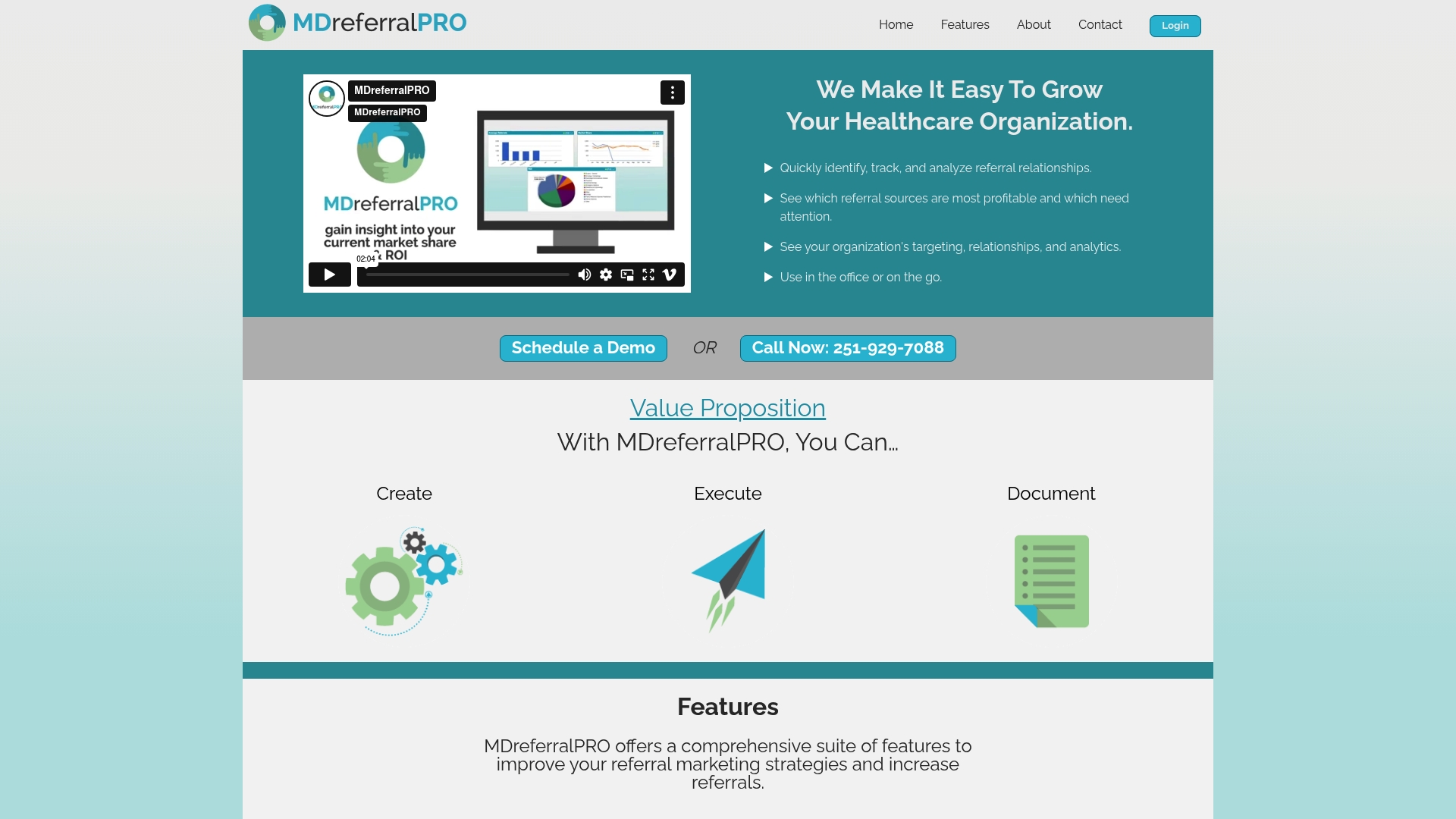
Geo-targeting plus a business intelligence dashboard for referral source tracking are central to MDreferralPRO’s pitch. The vendor emphasizes mobile-friendly visit and notes capture alongside analytics designed to map where referrals originate and how they trend over time.
Core Features
MDreferralPRO focuses on referral discovery and measurement through a compact feature set.
- Geo-Targeting for mapping referral sources and planning outreach within specific catchment areas.
- Advanced Analytics that visualize referral trends and highlight high-yield sources.
- Visit and notes capture to store encounter details and referral context.
- Physician & Facility Directory for contact and affiliation data.
- Business Intelligence Dashboard (Analytics) and Referral Source Tracking to centralize referral metrics.
Key Differentiator
The vendor positions geo-targeting and visual analytics as the primary differentiator. That combination is aimed at helping marketing teams and physician liaisons choose outreach targets based on mapped referral density and trend visualizations rather than intuition alone.
Pros
- Simplifies referral workflows by centralizing physician and facility data, reducing time spent hunting for contact details.
- Visualized visit trends make it faster to spot rising or falling referral streams without manual spreadsheets.
- Mobile-capable interface supports outreach on the go, which helps physician liaisons while they are in the field.
- The analytics dashboard collects referral source metrics in one place, which aids monthly reporting and strategy meetings.
- Supports targeted outreach planning through geographic filters so teams can prioritize neighborhoods, clinics, or physician groups.
Cons
- No third-party reviews are available to corroborate the vendor claims, which leaves usability and ROI unverified.
- Public information about users, case studies, or independent performance metrics is limited.
- The vendor’s site shows link errors in some spots, indicating potential content or technical maintenance issues.
When It May Not Fit
If you need independently validated customer references or peer-reviewed performance data, MDreferralPRO’s limited public footprint will be a concern. Also avoid this if your team requires an extensively documented integration profile with EMR vendors, since integrations are not listed publicly.
Who It’s For
Healthcare administrators, hospital marketing teams, and physician liaisons focused on growing referral volume through targeted outreach will find this product aligned with their goals. It suits teams that prioritize geographic targeting and visual trend reporting over deep ecosystem integrations.
Real World Use Case
As the vendor describes, a hospital marketing team can map referral sources, monitor referral trends on the dashboard, and plan targeted outreach to physicians in a selected radius. The example emphasizes converting mapped opportunities into higher referral volume through focused visits.
Pricing
The vendor does not publish pricing; marketing materials present the offering as informational first. Prospective buyers should contact MDreferralPRO directly for licensing or service cost details and to confirm whether live demos or pilot access are available.
Website: https://mdreferralpro.com
ReferralPoint
At a Glance
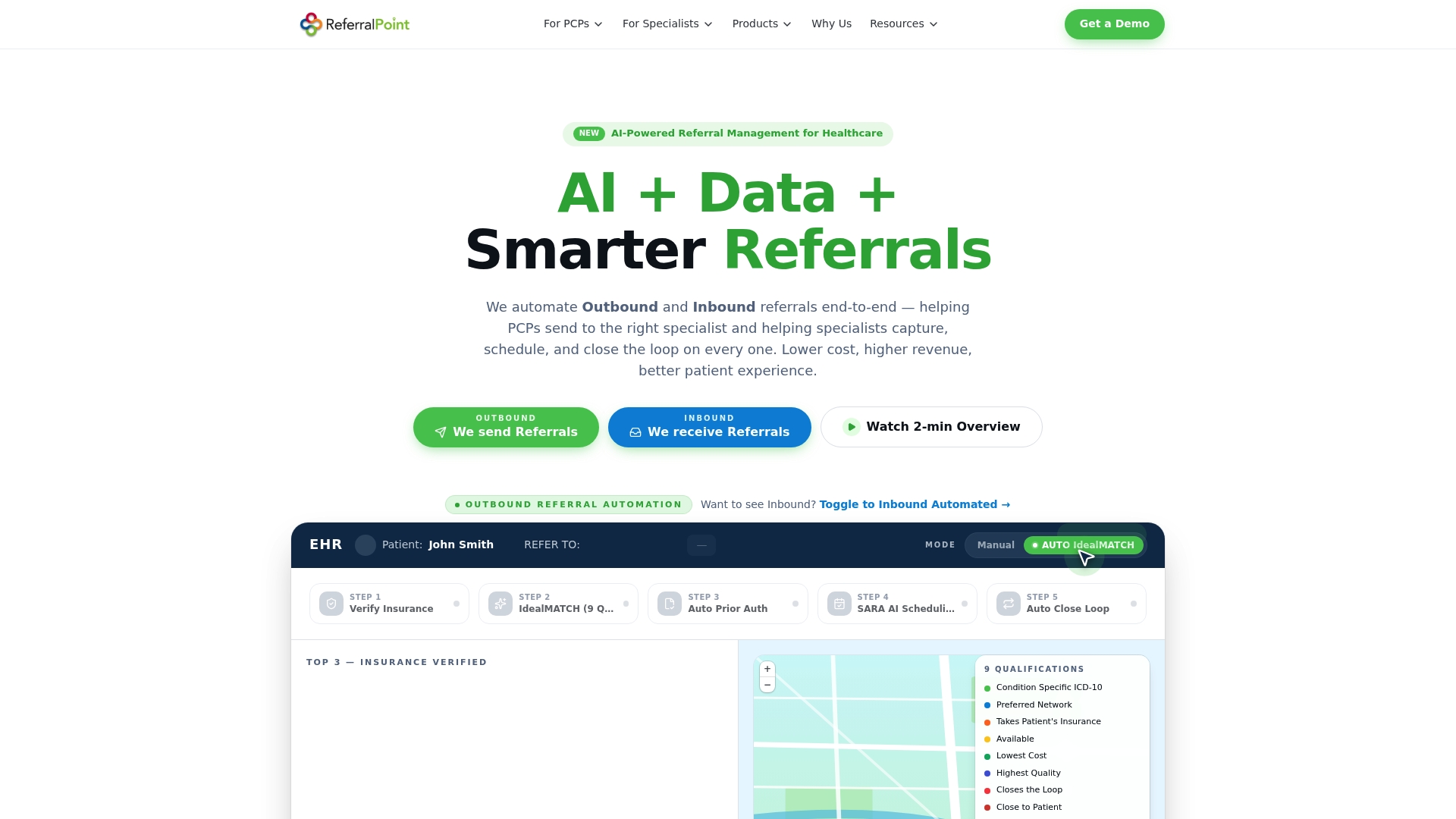
Claims-driven provider scoring that matches and routes referrals directly into EHRs, closing the loop from referral to appointment and back into the chart. The vendor advertises closed-loop tracking, Auto PriorAUTH™, and scheduling automation as core differentiators for provider networks.
Core Features
- IdealMATCH™ claims to use claims data for provider scoring and referral matching across networks.
- Automated routing, scheduling, and follow-up with an Auto ReferralCOORDINATOR component to reduce manual handoffs.
- Auto PriorAUTH™ for automatic prior authorization submissions to shorten approval cycles.
- Closed-loop referral tracking integrated with EHRs and reporting via Auto 360° VISIBILITY™ for real-time KPIs.
- Network management map, provider scoring, patient outreach with SARA AI, and optional referral staff outsourcing.
Key Differentiator
ReferralPoint positions itself as a claims-driven, AI-enabled engine that automates end-to-end referral workflows while writing outcomes back into the originating EHR. That closed-loop approach is the product’s primary distinction compared with referral tools that only track outside the chart.
Pros
-
Automates both inbound and outbound referral paths so referral coordinators spend fewer hours on clerical work and more on exceptions. This is the core operational win vendors highlight.
-
Integrates with major EHR vendors which reduces duplicate entry and keeps referral status visible inside the clinical record. The integrations list below shows the specific vendors supported.
-
Claims-based provider scoring helps align referrals to in-network clinicians and performance measures, which supports value-based care initiatives.
-
Built-in analytics and centralized network management let you monitor leakage, referral volumes, and scheduling bottlenecks from a single dashboard.
-
Vendor states HIPAA compliance and audit controls as part of its security posture, which is important for handling protected health information.
Cons
-
No independent third-party reviews were found in the product data, so outside user feedback is limited.
-
Implementation can be complex for organizations with non-standard or legacy EHRs and may require significant IT and vendor coordination.
-
Pricing details are not published, suggesting you will need a demo and custom quote before procurement decisions.
When It May Not Fit
If your system relies on a custom or very old EHR that lacks modern integration hooks, ReferralPoint’s implementation work could be costly and slow. Also, if you need transparent list pricing for budget approvals, the need to request custom pricing will add time to procurement.
Notable Integrations
- athenahealth
- eClinicalWorks
- NextGen Healthcare
- Veradigm
- Epic
- Cerner
- Meditech
- Greenway
Who It’s For
Medical groups, health systems, community health centers, and payers that want to reduce referral leakage, connect referral status into the chart, and use claims data to improve network referrals. Best for organizations prepared to invest in integration and change management.
Real World Use Case
The vendor reports a regional health system that automated routing and auto-scheduling with ReferralPoint and saw a 45% reduction in referral costs while increasing in-network referral rates. That vendor-reported outcome illustrates the potential ROI when automation and EHR integration are fully implemented.
Pricing
Not publicly available. ReferralPoint requests direct engagement for demos and custom quotes, so expect pricing to vary by network size, integration scope, and optional services such as referral staff outsourcing.
Website: https://referralpoint.com
AdmitIQ
At a Glance
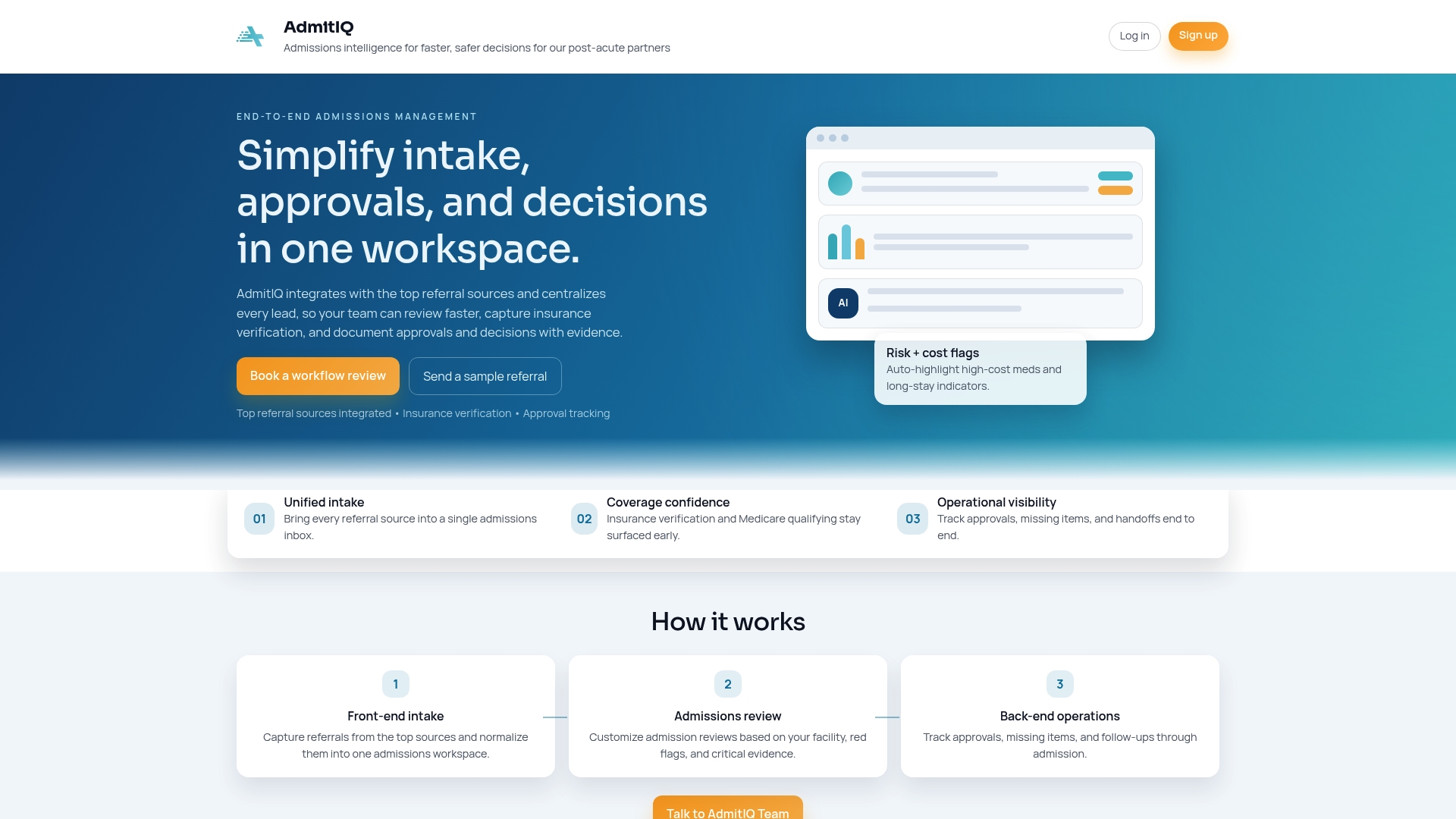
AdmitIQ centralizes referrals from multiple sources and applies automated insurance and risk flags inside the admissions workflow. The platform couples intake consolidation with end-to-end approval tracking so teams see referral status, eligibility checks, and documentation readiness in one place.
Core Features
Unified referral intake collects submissions from portals, fax, HL7 feeds, and batch uploads into a single queue. Insurance verification surfaces Medicare stays and eligibility status during intake. The system uses AI-driven risk flags to call out high-cost medications or clinical risk.
Customizable admission reviews let clinical staff set approval gates and required documents. Compliance-ready documentation tracking preserves an audit trail from intake to final decision, reducing manual file chasing across systems.
Key Differentiator
What separates AdmitIQ is its focus on taking many referral inputs and converting them into a single, auditable admissions path with built-in financial and clinical flags. That focus narrows the tool to admission operations rather than general care management, which may complement rather than replace platforms like Smartadmissions.
Pros
- Integration breadth reduces manual rekeying. The integration list below supports common feeds and tools used by post-acute providers.
- Automation for insurance checks and Medicare stay surfacing speeds eligibility assessment and reduces back-and-forth with payers.
- Audit-ready documentation keeps approval decisions and required attachments tied to each referral so compliance reviews become simpler to run.
- Workflow controls from intake through final decision give admissions coordinators a single place to track status and outstanding tasks.
- Operational visibility improves handoffs between clinical and administrative teams, cutting down on lost or duplicated referrals.
Cons
- There is a lack of clear third-party user reviews, making it hard to verify real-world satisfaction and deployment experience.
- The vendor does not list pricing publicly, which may slow procurement cycles for facilities that need budget comparables upfront.
- Integration complexity depends heavily on existing infrastructure; facilities with older EMRs or limited IT resources may need vendor support and longer implementation timelines.
When It May Not Fit
If you need transparent, self-serve pricing to compare options quickly, AdmitIQ may frustrate procurement teams. If your facility has minimal IT support and uses niche or heavily customized EMR instances, the integration work could demand more internal effort than smaller suites require.
Notable Integrations
- Epic and PCC / PointClickCare for primary EHR connectivity.
- HL7 / ADT feeds, CarePort, and SFTP for batch and event-driven referral transfers.
- eFax / Direct Fax, secure email, and a Custom API option for bespoke integrations.
Who It’s For
Admissions coordinators, clinical reviewers, and administrators at hospitals, skilled nursing facilities, and rehabilitation centers handling medium to high referral volumes. Best suited to teams that need stricter compliance tracking and consolidated intake from many sources.
Real World Use Case
A skilled nursing facility routes referrals from hospital discharge planners, fax, and a placement portal into AdmitIQ. Insurance verification flags a pending Medicare stay and a high-cost medication. Staff complete required reviews and attach audit documentation, shortening decision time and reducing phone follow-ups.
Pricing
The vendor does not publish list pricing. The platform is likely offered on a custom enterprise model with implementation fees and per-deployment variables based on integrations and scale.
Website: https://admitiq.io
Comparative Analysis of Referral Management Solutions
Referral management software is essential for healthcare facilities to optimize patient referral workflows, measure referral success rates, and ensure compliance with industry standards. This analysis contrasts four noteworthy solutions to illuminate their relative strengths and weaknesses for organizations seeking effective patient referral workflows.
Flexibility in Workflow Integration
-
Smartadmissions.ai distinguishes itself with its highly tailored workflow integration options, ensuring compatibility with diverse operational structures. This capability elevates its usability for facilities with unique procedural demands, making it suitable for adaptable deployment.
-
ReferralPoint, while offering extensive automation and integration with major EHR systems, may lead to higher implementation complexity when structured around legacy systems, contrasting with Smart.admissions.ai’s smoother adaptability.
Focus on Geographical and Analytical Targeting
-
MDreferralPRO offers advanced analytics and geo-targeting features that are particularly advantageous for localized outreach and referral planning. This niche makes it an appealing choice for hospitals focusing efforts in specific geographic markets.
-
However, its lack of user verification and a limited public footprint lessen its confirmation credibility, raising the need for potential buyers to perform additional due diligence.
Reporting and Compliance Features
-
AdmitIQ’s strengths lie in its concentrated support for compliance tracking through audit-ready documentation and financial risk evaluations. These elements are crucial for admissions-focused institutions requiring strict oversight.
-
Its limits in pricing transparency and procurement flexibility suggest better alignment with organizations equipped for enterprise-scale customizations.
Best Fit Recommendations
- Facilities prioritizing customization in referral workflows benefit from Smartadmissions.ai, proven versatile for complex operational scenarios.
- Organizations aiming for specialized geographic targeting benefit from MDreferralPRO’s geo-analytics strengths for optimizing regional outreach.
- Health systems committed to value-based patient matching integrate effectively with ReferralPoint due to its claims-driven provider scoring and routing capabilities.
- Admissions-oriented facilities that demand refined compliance mechanisms should consider AdmitIQ for its specialized feature set.
Our Selection: Smartadmissions.ai
Smartadmissions.ai emerges as a solution with high adaptability to various health systems’ needs. Nonetheless, healthcare entities with geographic referral targeting as their centerpiece or those operating historically through niche legacy systems should explore specialized tools like MDreferralPRO or ReferralPoint to meet those focused requirements. Ultimately, Smartadmissions.ai excels for broader integrations and customizable process scopes.
Patient Referral Management Software Comparison
Choosing the right patient referral management software involves identifying which platform aligns with your facility’s workflow, integration requirements, and feature priorities.
| Platform | Primary Use Case | Key Differentiator | Best For | Notable Limitation | Pricing |
|---|---|---|---|---|---|
| Smartadmissions | Streamlined referral processing | High configuration adaptability for diverse healthcare networks | Healthcare systems needing tailored solutions | Limited public visibility of user reviews | Not disclosed |
| MDreferralPRO | Geo-targeted outreach optimization | Visual analytics paired with geographic density mapping | Healthcare teams planning region-specific growth | Lack of independent performance validation | Not disclosed |
| ReferralPoint | End-to-end referral workflow automation | Claims-driven AI matching integrated with EHR systems | Hospitals focused on network coordination | Complex implementation for legacy systems | Not disclosed |
| AdmitIQ | Referral intake centralization | Multi-source integration with compliance tracking | Admissions teams in skilled nursing facilities | Missing publicly accessible user feedback | Not disclosed |
Discover a Superior Admit.ai Alternative with Smartadmissions
Managing patient referrals and admissions can feel overwhelming when juggling multiple sources, verifying eligibility, and tracking documentation. This article highlighted admit.ai alternatives each tackling common pain points like integration gaps, manual workflows, and referral status visibility. Smartadmissions addresses these challenges by automating administrative tasks, speeding up review times, and connecting seamlessly with your existing EMR and insurance portals.
!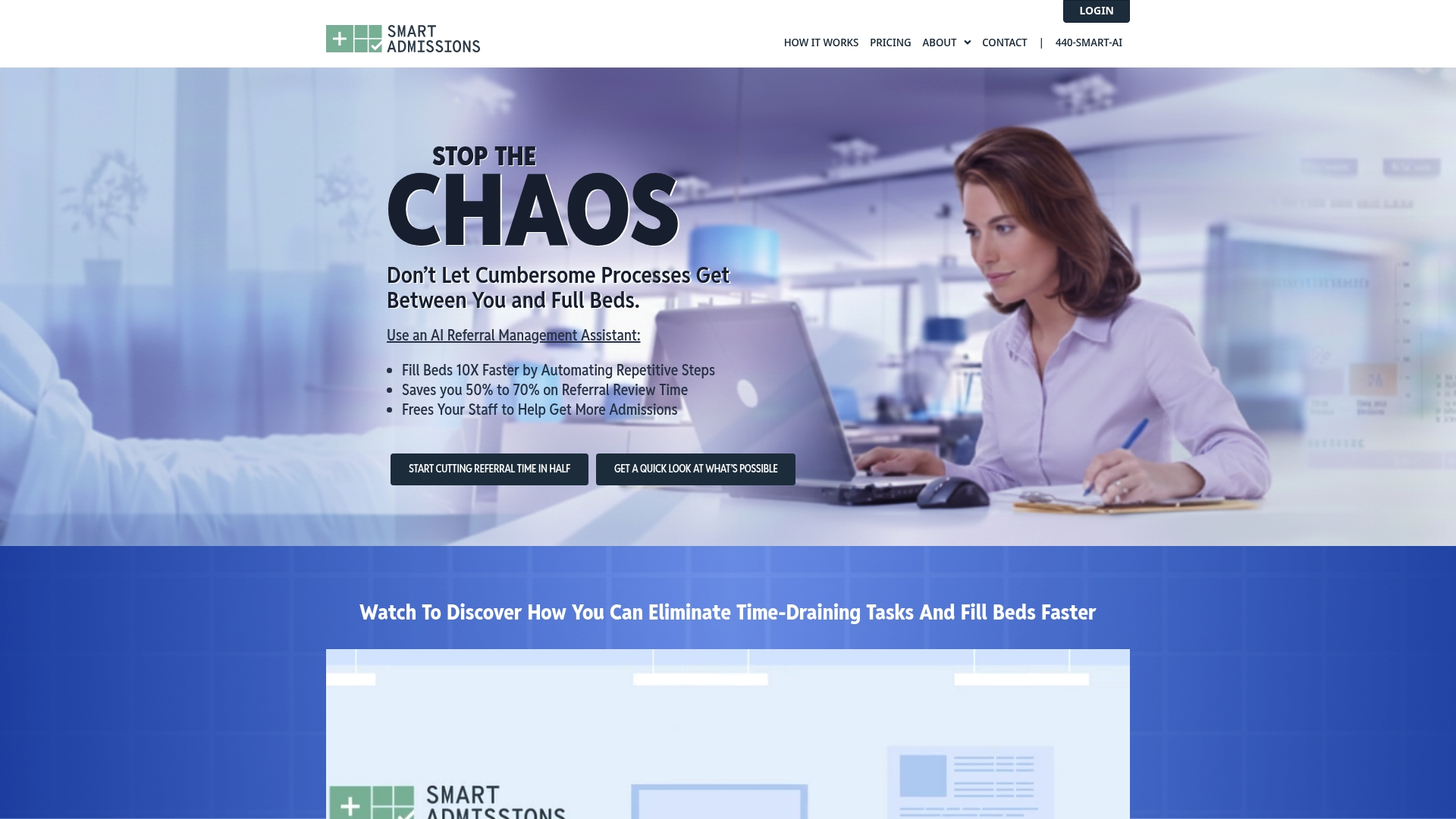
Experience a platform designed just for skilled nursing homes and rehabilitation centers that reduces staffing burnout and improves bed fill rates. Visit Smartadmissions to see how you can gain real-time insurance verification, streamline clinical assessments, and keep documentation audit-ready. Take control of your admissions process and load patient referrals faster today.
Frequently Asked Questions
What features of Smartadmissions make it a strong alternative to Admit.ai?
Smartadmissions provides a unified referral intake system that consolidates submissions from various sources into a single queue. This capability is essential for managing medium to high referral volumes efficiently, as highlighted by its focus on enhancing admissions operations. Consider Smartadmissions if you need a streamlined process for tracking referral status and maintaining compliance documentation.
How does Smartadmissions compare with MDreferralPRO for tracking referral sources?
MDreferralPRO offers geo-targeting and visual analytics to help teams map referral sources and trends efficiently. While it excels in geographical outreach, Smartadmissions is tailored more toward automating admission workflows and insurance verification. Choose Smartadmissions if your primary need is focused on the admissions process rather than geographic analysis.
Does Smartadmissions support automated insurance verification?
Yes, Smartadmissions automates insurance checks, surfacing Medicarerelated eligibility statuses during the intake process. This feature significantly speeds up the eligibility assessment and minimizes back-and-forth with payers, making it easier for teams to stay compliant. Expect this functionality to help reduce delays in the admissions workflow.
What makes AdmitIQ a viable alternative for those seeking patient referral management software?
AdmitIQ excels in centralizing multiple referral sources and applies automated risk flags within the admissions workflow. While Smartadmissions focuses more on consolidation and compliance tracking, AdmitIQ may be better suited for organizations prioritizing risk management and financial oversight. Consider these aspects when evaluating which platform to use.
Can Smartadmissions help with tracking referral documents?
Smartadmissions maintains an audit-ready documentation system to track approval decisions and required attachments linked to each referral. This aspect helps in simplifying compliance reviews and maintaining a clear operational flow. Use this feature to ensure thorough documentation throughout the admissions process.