
TL;DR:
- Occupancy optimization involves using data, scheduling, and technology to maximize bed utilization without compromising patient care. It emphasizes standardized measurement and throughput metrics like bed turnover and ED boarding time to identify bottlenecks and improve efficiency. Implementing dynamic thresholds, AI platforms, and accurate data practices enables healthcare facilities to fill beds efficiently and extend occupancy management beyond clinical spaces.
Occupancy optimization is defined as the operational process of maximizing bed utilization in healthcare facilities through data-driven decision rules, admission scheduling, and throughput management, without compromising patient care or safety. For skilled nursing homes, rehabilitation centers, and post-acute care providers, this is not an abstract concept. Every unfilled bed represents lost revenue, and every bottleneck in your admissions workflow compounds that loss. The NHS bed occupancy standards, AI-driven scheduling platforms, and prescriptive forecasting models like SEIRD have transformed how facility managers approach bed utilization. Understanding these tools gives your team a measurable edge in both operational efficiency and financial performance.

What is occupancy optimization in healthcare?
Occupancy optimization in healthcare is the systematic use of data, scheduling policies, and technology to match patient admissions to available bed capacity in real time. The industry term most commonly paired with this concept is bed management, which encompasses the full cycle from referral intake to discharge planning. Both terms describe the same operational goal: keeping beds filled with the right patients at the right time while maintaining care quality.
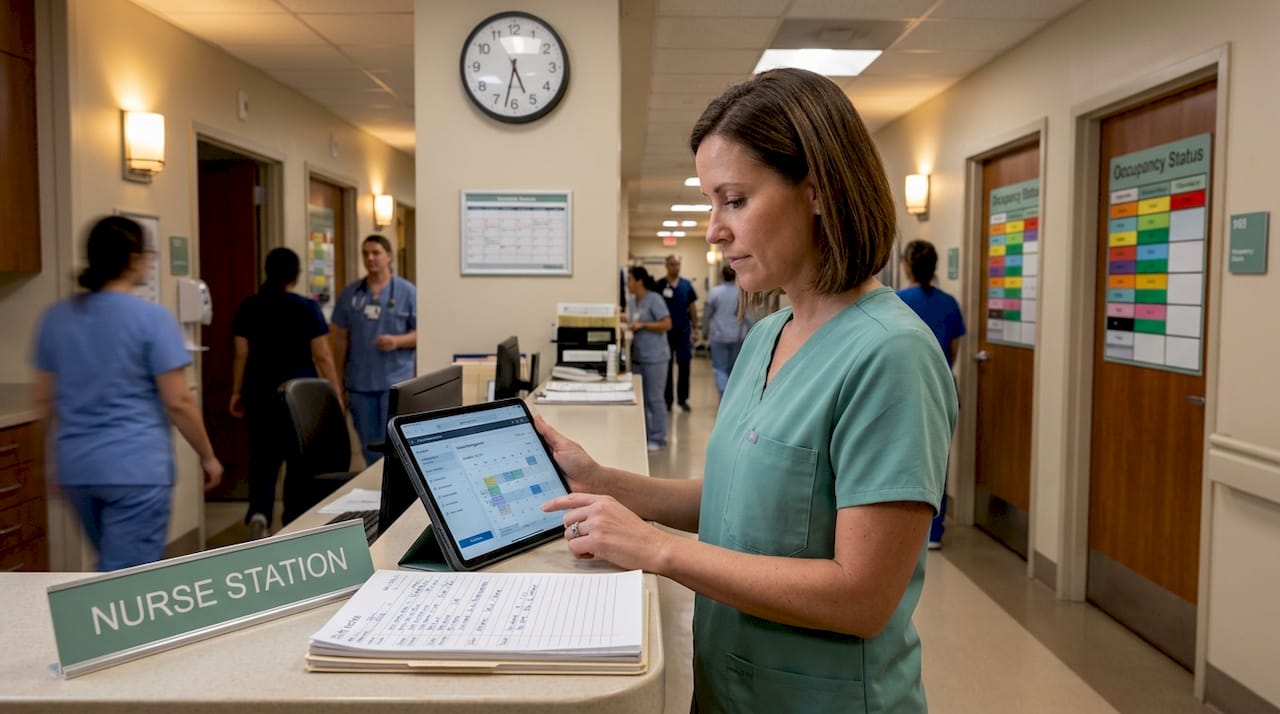
NHS bed occupancy standards define the foundational measurement framework used across healthcare systems. Available bed days and occupied bed days, collected by consultant main specialty, form the baseline for any occupancy rate improvement program. Without this standardized data layer, your facility cannot reliably compare performance across units or over time.
The benefits of occupancy optimization extend beyond revenue. Facilities that manage bed utilization effectively reduce emergency patient rejections, lower administrative burden on admissions staff, and improve discharge planning accuracy. These outcomes compound: a facility that fills beds faster also turns them over faster, which creates capacity for the next admission cycle.
How is occupancy optimization measured and tracked in healthcare?
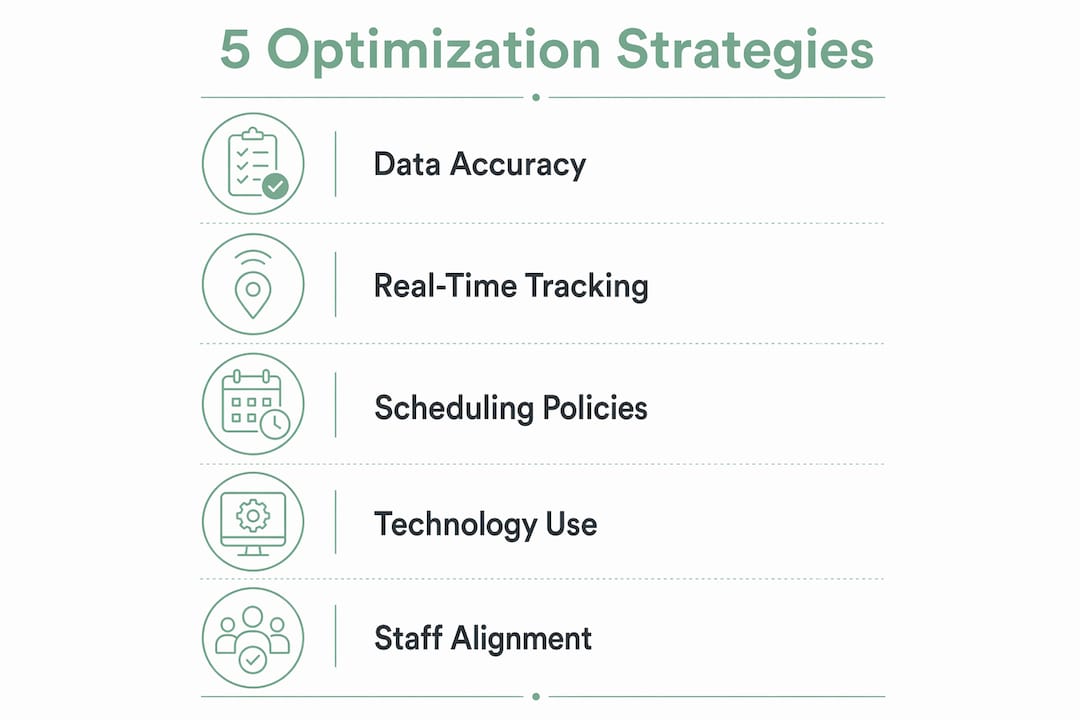
Effective bed utilization starts with disciplined, standardized measurement to enable reliable comparison and optimization across units and time periods. Two primary metrics anchor every occupancy management program.
| Metric | Definition | Why It Matters |
|---|---|---|
| Available bed days | Total beds available multiplied by days in the period | Sets the capacity ceiling for occupancy calculations |
| Occupied bed days | Beds occupied by patients during the period | Measures actual utilization against available capacity |
| Bed turnover rate | Admissions per available bed in a period | Indicates throughput efficiency, not just fill rate |
| ED boarding time | Hours a patient waits in the ED for an inpatient bed | Signals downstream bottlenecks in bed assignment |
Tracking occupancy rate alone gives you an incomplete picture. Throughput metrics such as ED boarding time and bed turnover are more meaningful success measures than occupancy rate alone. A facility running at 95% occupancy with a 6-hour average ED boarding time has a throughput problem, not a capacity problem.
Your measurement program should also capture these process-level indicators:
- Admission-to-bed time: Minutes from admission decision to physical bed assignment
- Discharge-to-clean time: Minutes from patient discharge to bed ready for next admission
- Referral response time: Hours from referral receipt to acceptance or rejection decision
- Bed request fulfillment rate: Percentage of bed requests met within target timeframes
Standardized, timely data collection is non-negotiable. If your EHR system updates bed status on a 4-hour lag, your occupancy dashboard is describing history, not reality. This distinction matters enormously when your admissions team is making real-time decisions about accepting referrals.
What strategies and technologies optimize occupancy?
Occupancy optimization strategies range from threshold-based scheduling policies to fully integrated AI platforms. The most effective programs combine both, using technology to execute policies that human teams design and calibrate.
-
Set bed occupancy thresholds for elective scheduling. Threshold-based scheduling reduces refused emergencies and improves timely elective access when thresholds are tuned to expected emergency flow. A threshold of 85% for elective admissions, for example, preserves buffer capacity for unplanned emergency admissions without leaving beds idle.
-
Integrate demand forecasting with prescriptive scheduling. Optimization models that couple SEIRD epidemic forecasting with prescriptive bed allocation under capacity constraints can reduce healthcare costs by over 50%, primarily by lowering patient rejection rates. This approach moves your facility from reactive bed assignment to proactive capacity planning.
-
Deploy AI-driven bed management platforms. AI-driven platforms integrate EHR data, operation schedules, housekeeping, and staffing to optimize admissions forecasting and bed assignments. These systems reduce ED boarding times and improve bed turnover rates by giving your admissions team real-time visibility into bed status across every unit.
-
Align staffing and transport with occupancy forecasts. Forecast alignment enables staffing, transport, and cleaning teams to proactively prepare for patient surges, avoiding bottlenecks before they form. If your census forecast predicts a surge on Thursday afternoon, your housekeeping and transport teams should know by Wednesday evening.
-
Automate referral intake and eligibility verification. Faster referral decisions directly accelerate bed fill rates. Platforms that automate insurance verification and clinical documentation review compress the time between referral receipt and bed assignment, which is one of the highest-leverage points in your admissions workflow.
Pro Tip: Run a 90-day pilot with a single unit before deploying occupancy thresholds facility-wide. Calibrate your elective scheduling threshold against actual emergency admission patterns from that unit, then expand with evidence-backed settings rather than industry averages.
What operational challenges affect occupancy optimization efforts?
The most common reason occupancy optimization programs underperform is not a technology failure. It is a data accuracy problem that erodes trust in the system before it can deliver results.
Data latency and mismatch between physical bed states and administrative records cause 2 to 4 hour delays in bed assignment. Beds marked available before cleaning completes, or discharge recorded before the patient physically exits, create a false picture of capacity. Your admissions team stops trusting the dashboard and reverts to phone calls, which eliminates the efficiency gains the system was designed to create.
Several other pitfalls consistently undermine occupancy management programs:
- Optimizing occupancy rate in isolation. Facilities that chase high occupancy without tracking throughput metrics create staffing and safety risks. A unit at 98% occupancy with no discharge pipeline is a bottleneck, not a success story.
- Static threshold settings. Occupancy thresholds set once and never revisited fail to account for seasonal demand shifts, staffing changes, or service line expansions.
- Misaligned forecasting and scheduling. When your census forecast and your elective scheduling calendar operate independently, surge bottlenecks are predictable and preventable but still occur.
- Incomplete EHR integration. Bed management tools that pull data from only one system miss the full picture of patient flow across units.
“Throughput, including metrics such as ED boarding time and bed turnover, is a more meaningful success measure than occupancy rate alone.” — AI-Driven Bed Management: Real-Time ML Guide
Addressing these challenges requires both technical fixes and cultural alignment. Your admissions team, nursing staff, housekeeping, and IT department all need to operate from the same real-time data source. That coordination is harder than any software implementation.
How do facility managers apply occupancy optimization beyond clinical beds?
Occupancy intelligence applies to every physical space your facility operates, not just patient beds. Facility managers who extend occupancy data to non-clinical spaces capture cost savings that most administrators overlook entirely.
Linking occupancy-based operational triggers to cleaning and HVAC schedules cuts facility operational costs by 20 to 30%. The mechanism is straightforward: systems activate before occupancy and deactivate shortly after occupants leave, eliminating waste from conditioning or cleaning spaces that are not in use.
| Space type | Occupancy trigger | Operational action |
|---|---|---|
| Patient rooms | Discharge confirmed | Housekeeping dispatch, HVAC reset |
| Common areas | Sensor-detected vacancy | HVAC setback, lighting reduction |
| Therapy rooms | Schedule-based occupancy | Pre-condition 30 minutes before session |
| Administrative offices | Badge or sensor data | HVAC and lighting automation |
The sensor infrastructure that supports this kind of what is space utilization analysis typically includes passive infrared sensors, badge readers, scheduling system integrations, and in newer facilities, computer vision systems. Each data source feeds a central occupancy analytics platform that triggers operational actions automatically.
Strategic space consolidation is the longer-term benefit. When your occupancy data shows that two therapy wings average 40% utilization during the same hours, you have the evidence to consolidate services, reduce cleaning costs, and redeploy staff. That decision requires months of reliable occupancy data, which is why building your measurement program early pays dividends well beyond the first year.
Pro Tip: Start your non-clinical occupancy program with a single high-cost space, such as your largest therapy suite or your main conference wing. Measure baseline HVAC and cleaning costs for 60 days, then activate occupancy-triggered controls and measure again. The before-and-after comparison builds the internal case for facility-wide rollout.
Key takeaways
Occupancy optimization requires accurate real-time data, aligned forecasting, and throughput metrics to deliver meaningful improvements in bed utilization and operational efficiency.
| Point | Details |
|---|---|
| Define before you measure | Use NHS-standard available and occupied bed day metrics as your baseline before adding technology. |
| Track throughput, not just fill rate | ED boarding time and bed turnover reveal bottlenecks that occupancy rate alone will hide. |
| Calibrate thresholds dynamically | Run discrete-event simulations to set elective scheduling thresholds matched to your emergency flow patterns. |
| Fix data accuracy first | EHR-to-physical bed status mismatches cause 2 to 4 hour delays that destroy team trust in any optimization system. |
| Extend occupancy intelligence facility-wide | Occupancy-triggered HVAC and cleaning controls reduce non-clinical operational costs by 20 to 30%. |
Why data trust is the real foundation of occupancy optimization
After working with healthcare administrators across skilled nursing and post-acute care settings, the pattern I see most often is this: facilities invest in bed management technology, see initial gains, and then watch adoption stall within six months. The culprit is almost always data trust, not the technology itself.
When your admissions coordinator pulls up the bed board and sees three beds marked available that she knows are still being cleaned, she stops using the board. She picks up the phone. That one workaround unravels the entire system because now your occupancy data reflects what the EHR says, not what is actually happening on the floor.
The facilities that sustain occupancy rate improvement over time are the ones that treat data accuracy as a clinical priority, not an IT problem. They assign ownership of bed status updates to specific roles, build audit routines into daily huddles, and hold units accountable for EHR accuracy the same way they hold them accountable for care quality metrics.
I also want to push back on the instinct to maximize occupancy as the primary goal. The referral strategies that fill beds fastest are not always the ones that fill them best. A bed filled with a patient whose acuity exceeds your staffing capacity creates downstream risk. Occupancy optimization done well means matching the right patient to the right bed at the right time, which requires throughput data, staffing data, and clinical assessment data working together.
Run your simulations. Calibrate your thresholds. But build your data foundation first, because every optimization model is only as good as the inputs it receives.
— Harry
How Smartadmissions helps you optimize bed occupancy
Smartadmissions is built specifically for skilled nursing homes, rehabilitation centers, and post-acute care providers who need faster, more accurate admissions decisions to keep beds filled.
The platform automates referral intake, insurance eligibility verification, and clinical documentation review, compressing the time between referral receipt and bed assignment. Facilities using Smartadmissions report faster bed occupancy and reduced manual workload for admissions staff. If your team is still managing referrals through phone calls and faxes, the gap between your current bed fill rate and your potential is larger than you think. Explore proven bed occupancy strategies and see how automation directly supports your occupancy optimization goals. You can also learn more about automating your admissions process for faster results.
FAQ
What is occupancy optimization in simple terms?
Occupancy optimization is the process of maximizing how effectively a healthcare facility uses its available beds by matching patient admissions to capacity in real time. It combines data tracking, scheduling policies, and technology to reduce empty beds and minimize patient rejections.
What is a good bed occupancy rate for a skilled nursing facility?
Most skilled nursing facilities target a bed occupancy rate between 85% and 92%. Rates above 95% without adequate throughput management create bottlenecks and increase the risk of care quality issues.
How does AI improve occupancy management?
AI-driven bed management platforms integrate EHR data, housekeeping schedules, and staffing systems to forecast demand and automate bed assignments. These platforms reduce ED boarding times and improve bed turnover rates by giving admissions teams real-time capacity visibility.
What is the difference between occupancy rate and throughput?
Occupancy rate measures the percentage of beds filled at a given time, while throughput measures how efficiently patients move through the facility, including metrics like ED boarding time and bed turnover rate. Throughput is a more meaningful operational success measure than occupancy rate alone.
How do you start an occupancy optimization program?
Begin by establishing standardized measurement using available bed days and occupied bed days by specialty, then layer in throughput metrics like admission-to-bed time and discharge-to-clean time. Once your data foundation is reliable, introduce scheduling thresholds and technology tools calibrated to your facility’s actual patient flow patterns.