
Let's be honest, DD214 verification can feel like navigating a maze blindfolded. You've got a veteran waiting for admission, a family anxious for answers, and a stack of paperwork that all needs to be right the first time. One missed detail, and you're looking at compliance headaches, delayed admissions, or worse, rejected reimbursements.
But here's the good news: it doesn't have to be this complicated. Whether you're doing things manually or you've embraced automation, having a solid DD214 verification checklist is your best friend. Let's break down exactly what you need to check, why it matters, and how modern Veterans SNF software can handle the heavy lifting for you.
Why DD214 Verification Matters for Your Facility
Before we dive into the checklist, let's talk about why this matters so much. The DD214 (Certificate of Release or Discharge from Active Duty) is the golden ticket for veterans seeking benefits and care at state veterans homes and SNFs. It proves military service, discharge status, and eligibility for VA benefits.
Get it wrong, and you could admit someone who doesn't qualify, leading to claim denials and revenue loss. Or you could delay admission for a veteran who absolutely does qualify, simply because something got overlooked.
Neither scenario is great for your facility's reputation or bottom line.
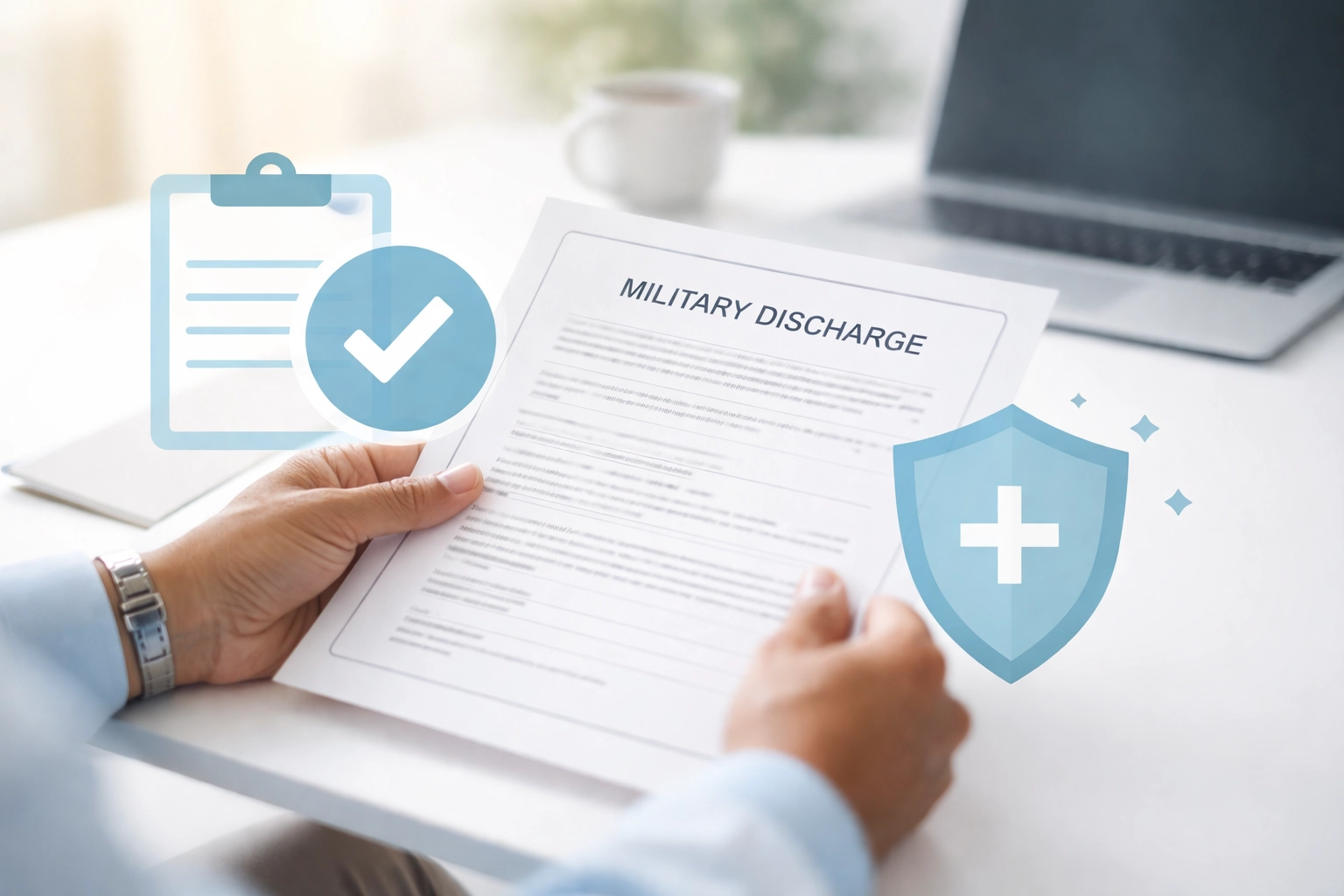
The Complete DD214 Verification Checklist
Alright, here's what your team should be checking every single time. Print this out, laminate it, tape it to the wall: whatever works for you.
1. Document Authenticity
First things first: is this DD214 legit?
- Original or certified copy: You need either an original DD214 or a certified copy from the National Personnel Records Center (NPRC). Photocopies from the veteran's personal files can work, but certified copies are always preferred.
- Check for alterations: Look for any signs of tampering, whiteout, or inconsistent fonts. These are red flags.
- Verify the form version: DD214s have changed over time. Make sure you're looking at a valid version of the form.
2. Character of Service Verification
This is arguably the most critical check. Not all discharges are created equal.
- Honorable Discharge: Full eligibility for VA benefits and state veterans home admission.
- General Under Honorable Conditions: Usually eligible, but may have some restrictions depending on the specific benefit.
- Other Than Honorable (OTH): May or may not qualify: requires additional review.
- Bad Conduct or Dishonorable: Generally not eligible for VA benefits.
Look for this information in Block 24 (Character of Service) on the DD214. If the character isn't clear or there are questions, you may need to dig deeper.
3. Service Dates and Length
Verify the veteran actually served the required time:
- Entry date: When did they begin active duty?
- Separation date: When were they discharged?
- Total active service: Does it meet the minimum requirements for the benefits they're claiming?
This information appears in Blocks 12a, 12b, and 12c. For most VA benefits, there's a minimum service requirement: typically 24 continuous months or the full period for which they were called to active duty.
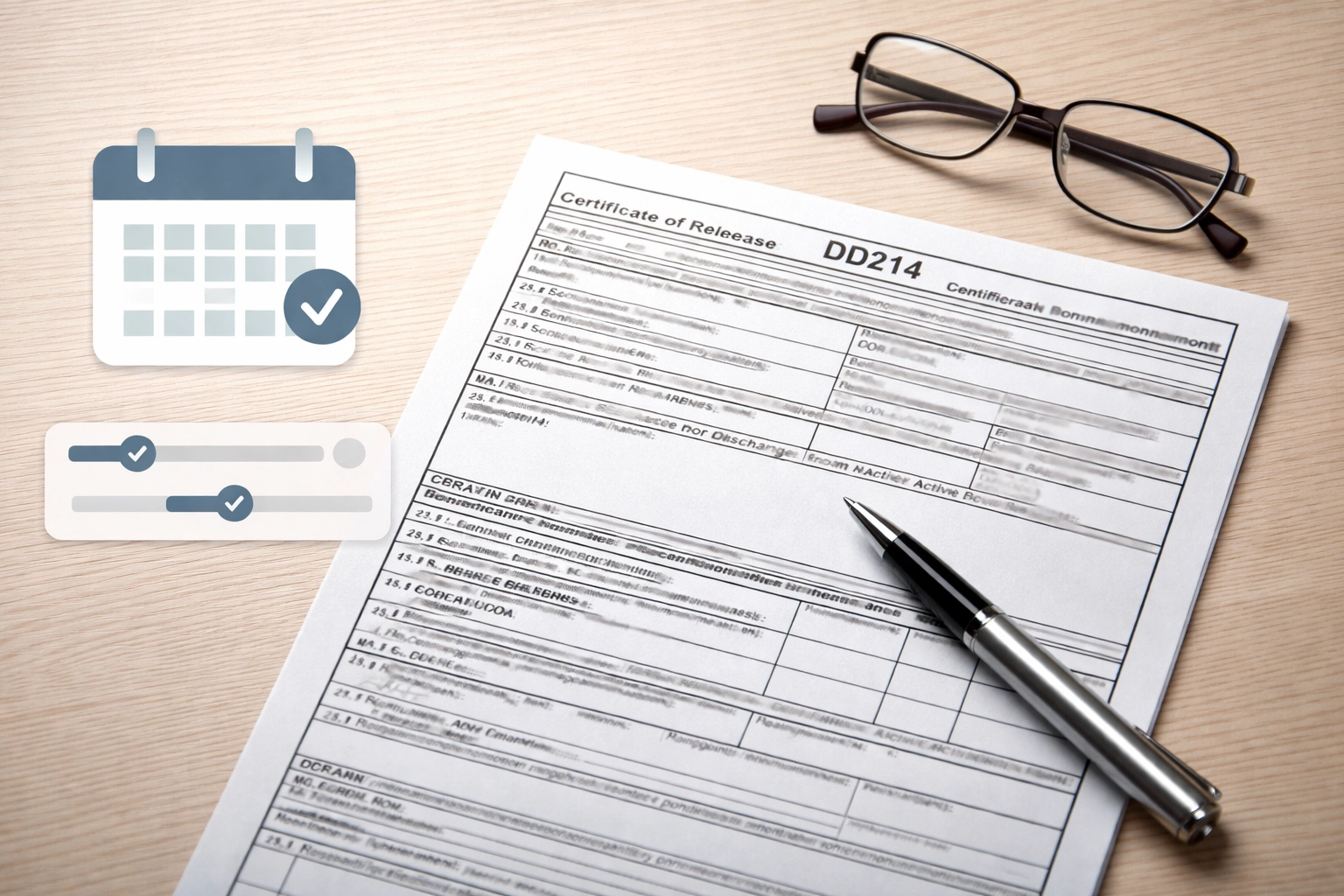
4. Service Branch and Duty Information
While this may seem like basic info, it's essential for complete records:
- Branch of service: Army, Navy, Air Force, Marines, Coast Guard, or Space Force
- Last duty assignment: Where were they stationed?
- Rank at discharge: What was their pay grade?
- Military Occupational Specialty (MOS): What was their job?
These details help verify the veteran's identity and can be useful if there are ever questions about the authenticity of the document.
5. Separation Information
The reason for separation matters:
- Separation authority: The regulation under which they were discharged
- Separation code: A code indicating the reason for separation
- Reentry code: Whether they could reenlist (can indicate issues with their service)
- Narrative reason for separation: Plain-language explanation
Be especially attentive to the separation code. Some codes indicate issues that could affect eligibility.
6. Service-Connected Disability Documentation
If the veteran is claiming service-connected disabilities, you'll need more than just the DD214:
- VA disability rating letter: Shows the percentage of disability (0-100%)
- 70-100% rating: Veterans with these ratings may be exempt from certain financial documentation requirements
- Specific conditions: Knowing what conditions are service-connected helps your clinical team prepare
This documentation comes from the VA, not the DD214 itself, but it's part of the complete verification picture.
7. Cross-Reference Personal Information
Double-check that the DD214 matches other documentation:
- Full legal name: Does it match their ID and other admission paperwork?
- Social Security Number: Consistent across all documents?
- Date of birth: Another identity verification point
Discrepancies here could indicate identity issues or simply that the veteran's name has changed (marriage, legal name change, etc.).
The DD215: When the DD214 Needs Correction
Here's something many facilities overlook: the DD215. This is an official correction document issued when errors are found on a DD214.
If you spot inconsistencies or the veteran mentions their DD214 has errors, ask about a DD215. This addendum corrects inaccuracies and should be kept with the original DD214 in the veteran's file.
Common corrections include:
- Spelling of names
- Award and decoration errors
- Incorrect dates
- Missing service information
Manual Verification vs. Automated Verification
Now, here's where things get interesting. You can absolutely run through this checklist manually. Your admissions team grabs the DD214, goes line by line, cross-references against requirements, and documents everything.
It works. But it takes time: often 30-45 minutes per admission. And humans make mistakes, especially when they're juggling multiple admissions or dealing with DD214 format variations that make manual verification nearly impossible.
That's where Veterans SNF software with automated DD214 verification comes in.
What Automation Checks Instantly
Modern AI-powered systems can verify:
- Document authenticity through pattern recognition
- Character of service against eligibility requirements
- Service dates and length calculations
- Cross-referencing personal information across documents
- Flagging potential issues for human review
What takes your team 30+ minutes takes the software seconds. And it catches things human eyes might miss after the tenth DD214 of the day.
The Compliance Advantage
Automated DD214 verification doesn't just save time: it creates an audit trail. Every check is documented, timestamped, and stored. When state surveyors or VA auditors come knocking, you've got bulletproof records showing exactly what was verified and when.
Compare that to handwritten notes or a checklist with checkmarks. Which would you rather defend in an audit?
Common DD214 Verification Mistakes to Avoid
Before we wrap up, let's talk about what NOT to do. These 7 DD214 verification mistakes cost veterans SNF facilities thousands every year:
- Accepting unclear photocopies: If you can't read it clearly, you can't verify it properly
- Skipping character of service verification: Assuming "discharged" means "honorably discharged"
- Not checking for DD215 corrections: Missing important updates to the record
- Inconsistent verification processes: Different staff checking different things
- Poor documentation of the verification process: No audit trail
- Ignoring red flags: Pushing through questionable documents to fill beds faster
- Manual-only processes in high-volume situations: Recipe for errors
Ready to Streamline Your DD214 Verification?
Look, we get it. You got into healthcare to help people, not to become a document verification expert. But compliance matters, and getting DD214 verification right protects your facility, your staff, and most importantly: the veterans you serve.
Whether you stick with manual processes (armed with this checklist) or embrace automation, the goal is the same: accurate, compliant, efficient verification every single time.
Want to see how automation can transform your DD214 verification process? Visit us at the NASVH Conference Booth #6 or check out our detailed guide on how veterans SNF facilities can verify DD214 eligibility in seconds, not minutes.
Your veterans deserve fast, accurate admissions. Your team deserves tools that make their jobs easier. And your facility deserves the peace of mind that comes with bulletproof compliance.