
Referral delays cost nursing homes thousands in lost revenue daily. Manual intake processes force admissions teams to spend hours on paperwork instead of patient care, creating bottlenecks that leave beds empty and referrals unanswered. Automation changes this reality by cutting referral response times from 45 minutes to 10 minutes, transforming how facilities capture and process patient admissions. This article explores proven automation strategies that nursing homes use to accelerate intake, reduce administrative burden, and fill beds faster in 2026.
Table of Contents
- Challenges In Nursing Home Intake And Referral Processes
- How Automation Transforms Intake And Referral Workflows
- Practical Implementation And Integration Tips For Nursing Homes
- Measuring Success And Ongoing Optimization With Automation
- Explore Automation Solutions Tailored For Nursing Homes
- Frequently Asked Questions
Key takeaways
| Point | Details |
|---|---|
| Speed gains | Automation reduces referral processing times by up to 70% through intelligent routing and real-time data exchange. |
| Error reduction | AI-powered documentation decreases manual data entry mistakes by 15-20%, improving record accuracy and compliance. |
| Revenue impact | Faster intake workflows directly increase census rates and occupancy, generating measurable revenue improvements. |
| Integration essential | Seamless EMR connectivity using FHIR and HL7 standards prevents data silos and maintains workflow continuity. |
| Phased adoption | Successful implementation requires stakeholder engagement, pilot testing, and continuous optimization based on metrics. |
Challenges in nursing home intake and referral processes
Manual referral workflows create cascading problems for nursing homes. Admissions staff spend valuable hours reviewing faxed referrals, manually entering patient data across multiple systems, and chasing down missing insurance information. These repetitive tasks consume time that could support direct patient care while introducing human errors that delay decisions.
The administrative burden extends beyond simple inefficiency. When your team spends 45 minutes processing each referral manually, response delays compound throughout the day. Referring hospitals and case managers lose patience, sending patients to competitors who respond faster. Your facility misses revenue opportunities while staff experience burnout from constant paperwork.
Data silos worsen these challenges significantly. Patient information sits trapped in separate systems for clinical records, insurance verification, and bed management. Staff must toggle between platforms, manually copying data and reconciling discrepancies. This fragmentation slows decision-making and increases the risk of errors that could affect patient safety or compliance.
“The transition from manual to automated referral processing transformed our intake speed. We went from struggling to respond within hours to confirming bed availability in minutes, which directly improved our census rates.”
Delays in referral management directly impact your bottom line. Empty beds represent lost revenue every single day. When competitors respond to referrals faster, they capture patients you could have admitted. The financial consequences extend beyond immediate admissions, affecting long-term relationships with referral sources who prioritize facilities that demonstrate responsiveness.
Some administrators worry automation might depersonalize patient care. This concern deserves attention, but evidence shows thoughtfully implemented technology actually frees staff to focus on human interactions rather than paperwork. The key lies in balancing automation with human oversight to maintain care quality while gaining efficiency.
Common pain points include:
- Missed referrals due to communication gaps between systems
- Incomplete patient information requiring multiple follow-up calls
- Insurance verification delays that postpone admission decisions
- Lack of real-time visibility into referral pipeline status
- Manual coordination across clinical, financial, and operational teams
How automation transforms intake and referral workflows
AI-powered referral management tools decrease processing time by 25% while reducing missed referrals by 20%. These technologies handle routine tasks automatically, allowing your admissions team to focus on complex cases requiring human judgment. The transformation begins with intelligent referral routing that instantly directs incoming requests to appropriate staff based on bed availability, clinical specialties, and insurance acceptance.
Automation tackles documentation challenges head-on. Instead of manually typing patient demographics, insurance details, and clinical information into your system, AI extracts this data from referral documents automatically. Automated documentation reduces data entry errors by 15-20%, improving record accuracy while saving hours of staff time daily. Your team reviews and confirms information rather than creating it from scratch.
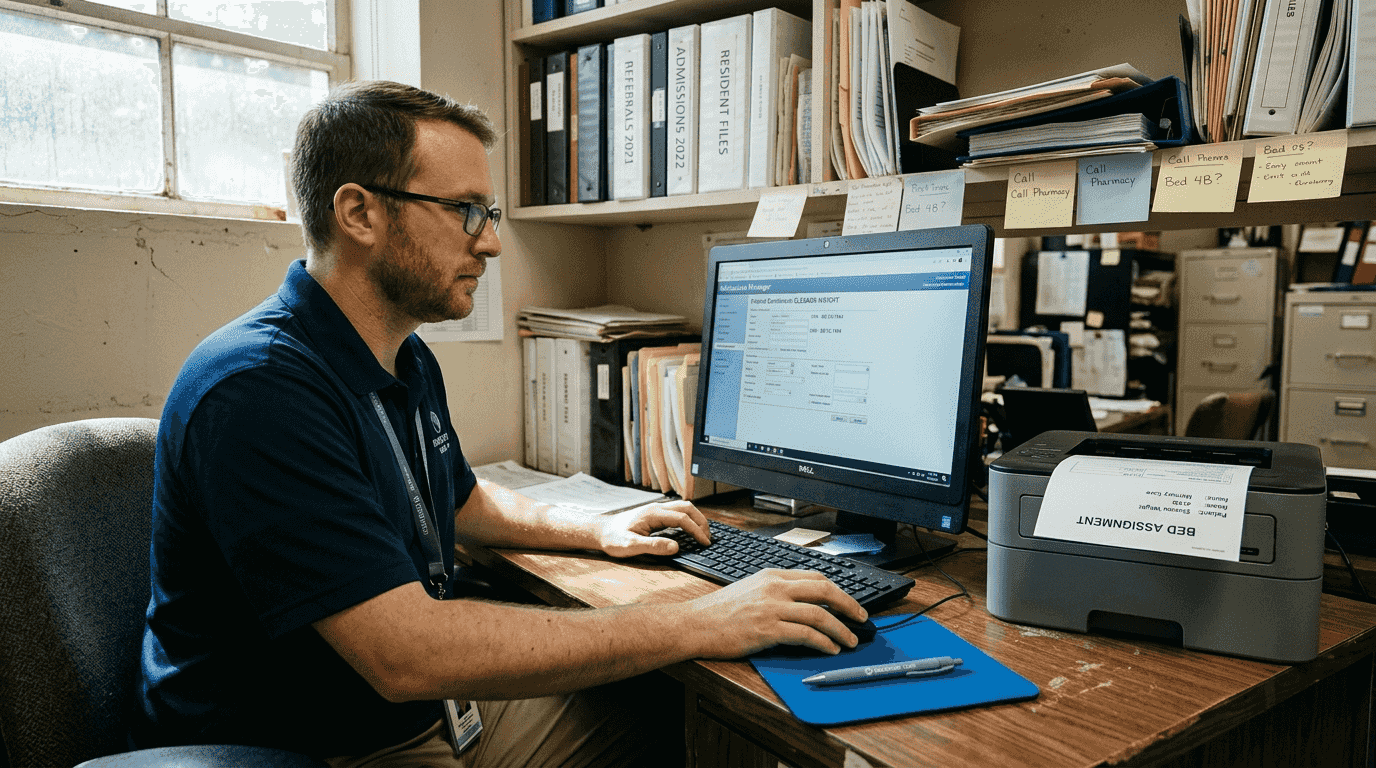
Real-time analytics provide visibility that manual processes cannot match. Dashboards show exactly where each referral stands in your pipeline, which staff members are handling specific cases, and how long each step takes. You spot bottlenecks immediately and adjust workflows before delays accumulate. This transparency helps you identify training opportunities and optimize resource allocation.
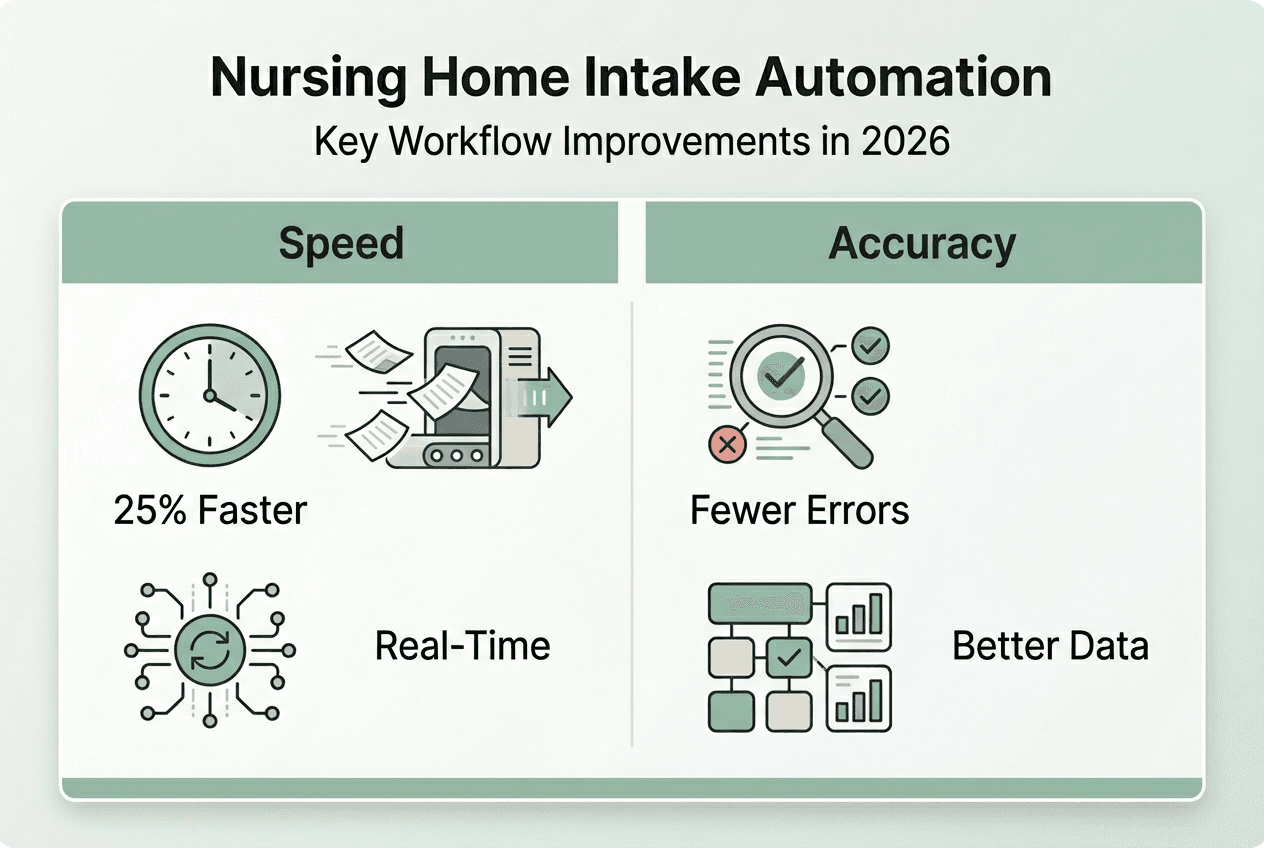
Unified workflows connect every intake step seamlessly. When insurance verification completes, the system automatically notifies clinical staff to begin medical necessity review. Once approved, bed management receives instant alerts to reserve appropriate accommodations. This orchestration eliminates the manual handoffs that create delays and communication gaps in traditional processes.
| Automation Feature | Primary Benefit | Impact on Workflow |
|---|---|---|
| Intelligent routing | Faster response times | Referrals reach appropriate staff instantly based on specialty and availability |
| Auto data extraction | Reduced errors | Patient information populates accurately without manual typing |
| Real-time verification | Quick decisions | Insurance eligibility confirmed within minutes instead of hours |
| Workflow orchestration | Seamless handoffs | Tasks trigger automatically as previous steps complete |
| Predictive analytics | Proactive planning | System forecasts bed needs and staffing requirements |
Different AI features address varied operational needs. Natural language processing reads clinical notes to extract relevant patient conditions and care requirements. Machine learning algorithms flag potential insurance denials before admission, preventing revenue losses. Automated alerts notify staff when referrals require urgent attention or when deadlines approach.
Pro Tip: Start by automating your highest-volume, most repetitive tasks first. Insurance verification and data entry typically offer the quickest wins, building staff confidence in automation before tackling more complex workflows.
Integration capabilities determine automation success. Your AI tools must connect with existing EMR systems, insurance portals, and communication platforms to deliver value. Standalone solutions that create new data silos defeat the purpose of automation. Look for platforms offering pre-built integrations with major healthcare systems and open APIs for custom connections.
The benefits of AI in healthcare administration extend beyond speed and accuracy. Automation provides consistency that manual processes struggle to achieve. Every referral follows the same systematic review process, ensuring compliance with admission criteria and payer requirements. This standardization reduces variation and supports quality improvement initiatives.
Practical implementation and integration tips for nursing homes
Successful automation starts with honest assessment of your current state. Audit your existing infrastructure, documenting every system involved in intake and referrals. Map your complete workflow from initial referral receipt through final admission, identifying manual touchpoints and integration gaps. This baseline understanding reveals where automation delivers maximum impact and highlights technical requirements for implementation.
Selecting the right AI tools requires matching capabilities to your specific needs. A 50-bed facility has different requirements than a 200-bed campus with multiple care levels. Evaluate vendors based on their experience with nursing homes similar to yours, asking for references you can contact. Prioritize platforms offering robust EMR integration, as seamless data exchange using standards like FHIR and HL7 proves crucial for avoiding new data silos.
Phased implementation reduces risk and builds organizational confidence. Rather than automating everything simultaneously, focus on one high-impact area first. Insurance verification often provides quick wins with measurable time savings. Once your team masters this automation, expand to documentation extraction, then workflow orchestration. This gradual approach allows staff to adapt while demonstrating value that justifies continued investment.
Pilot programs serve as proving grounds before full deployment. Select a small group of admissions staff to test new automation tools with real referrals. Gather their feedback on usability, accuracy, and workflow fit. Use pilot results to refine configurations and identify training needs before rolling out facility-wide. This testing phase prevents costly mistakes and ensures the technology actually solves problems rather than creating new ones.
- Conduct infrastructure readiness assessment covering network capacity, system compatibility, and security requirements
- Define clear success metrics aligned with organizational goals like response time reduction or census improvement
- Engage stakeholders across admissions, clinical, IT, and finance departments early in planning
- Select vendors offering comprehensive training, responsive support, and proven healthcare expertise
- Run focused pilot with defined timeline, success criteria, and feedback collection process
- Develop training program addressing both technical skills and workflow changes
- Plan gradual rollout with adequate support resources during transition period
- Establish ongoing monitoring and optimization processes to maximize value
Common pitfalls derail automation initiatives when overlooked. Insufficient staff training leaves teams unable to leverage new capabilities effectively. Choosing tools that do not integrate properly with your EMR creates frustrating workarounds that negate efficiency gains. Skipping the pilot phase and implementing facility-wide immediately amplifies any configuration issues or workflow mismatches.
Pro Tip: Designate automation champions within your admissions team who receive advanced training and serve as peer resources. Their enthusiasm and expertise help colleagues adapt more quickly than relying solely on vendor support or IT staff.
Data migration deserves careful planning when implementing new systems. Work with vendors to map how existing patient information, referral history, and workflow data transfer into automated platforms. Test migration with sample data before committing your entire database. Verify that historical information remains accessible and accurate after transition.
Staff engagement makes or breaks automation success. Involve admissions team members in vendor selection and pilot testing, soliciting their input on workflow design. Address concerns about job security directly, emphasizing how automation eliminates tedious tasks rather than positions. Celebrate early wins publicly, recognizing staff who adapt quickly and help colleagues learn.
The implementation approach for AI referral management must balance technical requirements with human factors. Technology alone cannot transform workflows without organizational readiness and cultural acceptance. Budget adequate time for change management alongside technical deployment.
Interoperability testing prevents integration surprises. Before going live, verify that automated systems exchange data correctly with your EMR, insurance portals, and any other connected platforms. Test edge cases like incomplete referrals, insurance denials, and system timeouts to ensure graceful error handling. Confirm that audit trails capture all automated actions for compliance purposes.
Explore healthcare workflow automation for admissions examples from similar facilities to learn from their experiences. Understanding what worked elsewhere helps you avoid common mistakes while adapting best practices to your unique environment.
Measuring success and ongoing optimization with automation
Tracking the right metrics reveals automation’s true impact on your operations. Start with referral response time, measuring how quickly your team acknowledges and processes incoming requests. Compare baseline performance before automation against post-implementation results. Facilities achieve 10-15% intake efficiency improvements using real-time analytics to identify and address workflow bottlenecks systematically.
Data accuracy metrics demonstrate automation’s quality benefits. Monitor error rates in patient demographics, insurance information, and clinical documentation. Calculate time spent on corrections and rework before and after implementation. Reduced errors translate directly to staff time savings and fewer claim denials, impacting both operational efficiency and revenue.
Staff satisfaction deserves measurement alongside operational metrics. Survey your admissions team regularly about workload, job satisfaction, and perceived value of automation tools. Happy staff provide better service to referral sources and patients while experiencing lower burnout. Track turnover rates in admissions roles as automation should reduce the frustration that drives experienced staff to leave.
Real-time dashboards transform how you manage intake workflows. Instead of discovering problems during weekly meetings, you spot issues as they develop. When referral volume spikes unexpectedly, dashboards alert you to adjust staffing. If certain insurance verifications consistently take longer, you investigate and optimize those specific processes.
| Metric Category | Key Indicators | Target Improvement |
|---|---|---|
| Speed | Average referral response time, time to admission decision | 50-70% reduction |
| Quality | Data entry error rate, insurance verification accuracy | 15-20% improvement |
| Revenue | Days to fill beds, census rate, referral conversion percentage | 10-15% increase |
| Staff impact | Hours spent on manual tasks, employee satisfaction scores | 30-40% time savings |
| Compliance | Audit findings, documentation completeness | 25-30% better scores |
Continuous improvement requires systematic analysis of automation performance. Schedule monthly reviews of key metrics with stakeholders from admissions, clinical, and finance teams. Identify trends and outliers requiring attention. When specific workflows underperform, dig into root causes rather than assuming the technology failed. Often, simple configuration adjustments or additional training resolve issues.
Benchmarking against industry standards provides context for your results. While your facility may improve significantly compared to its own baseline, understanding how you compare to similar nursing homes reveals additional opportunity. Industry associations and vendor networks often share anonymized performance data for comparison purposes.
The 70% faster referral response achieved with CareFlo AI demonstrates what leading facilities accomplish through automation. These dramatic improvements did not happen overnight but resulted from committed optimization over time.
Patient outcomes connect to intake efficiency in meaningful ways. Faster admissions mean patients receive needed care sooner, potentially improving health results. Track metrics like readmission rates and length of stay to understand whether automation’s speed benefits translate to clinical value. Better intake data quality supports care planning and reduces complications from incomplete information.
Optimization opportunities emerge from data patterns. If certain referral sources consistently send incomplete information, reach out to educate them about your requirements. When specific insurance carriers cause verification delays, investigate whether additional API integrations could accelerate the process. Use insights to drive targeted improvements rather than broad, unfocused changes.
Key performance indicators to monitor:
- Referral acknowledgment time from receipt to initial response
- Insurance verification completion time and accuracy rate
- Clinical review duration for medical necessity determination
- Bed assignment speed once admission approved
- Overall time from referral to patient arrival
- Referral source satisfaction and repeat referral rates
Learn how facilities fill nursing home beds 10 times faster through comprehensive automation strategies that address every intake workflow component. These success stories provide blueprints you can adapt to your situation.
Explore automation solutions tailored for nursing homes
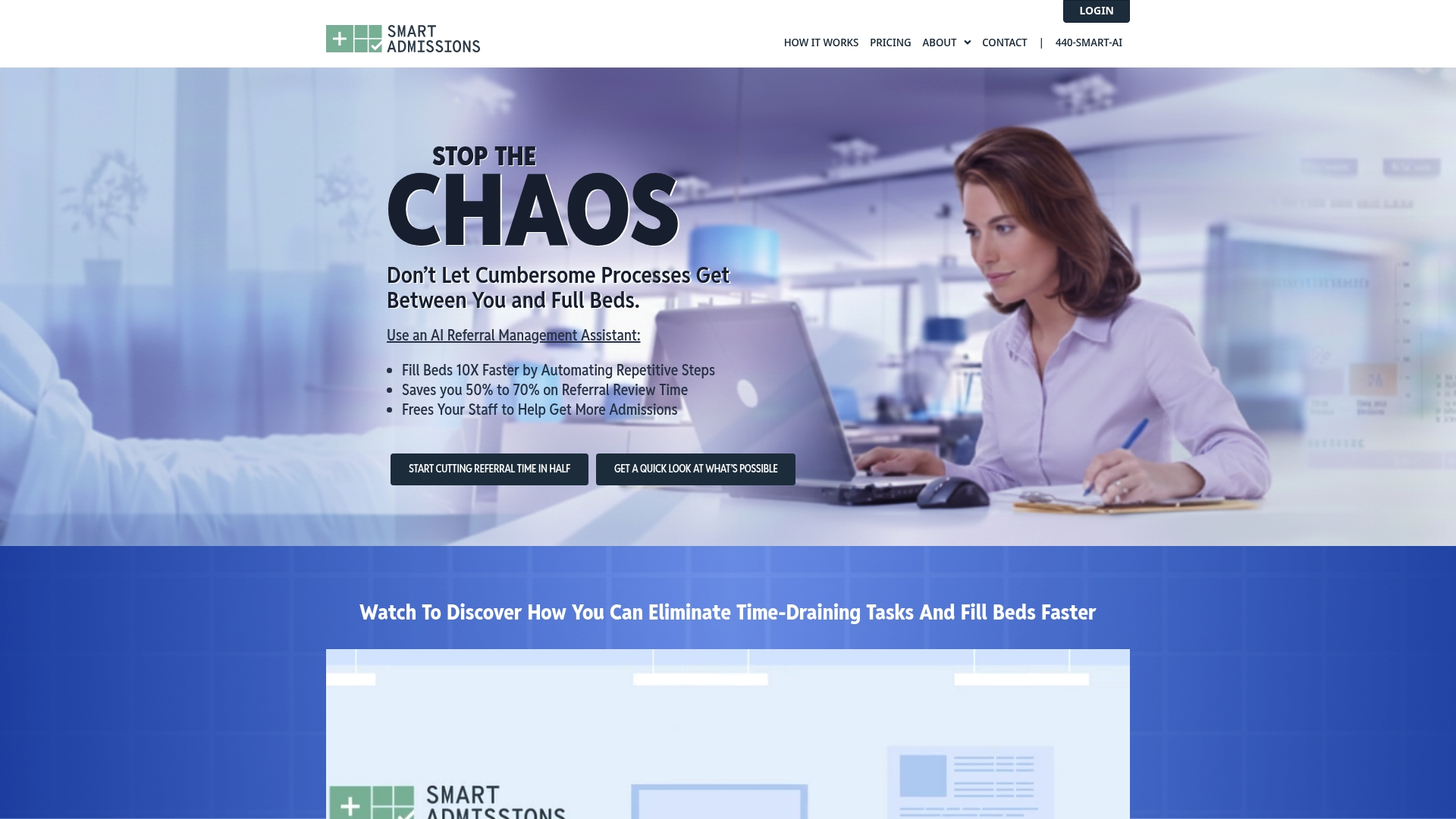
Implementing the strategies discussed requires tools designed specifically for nursing home intake and referral challenges. Smart Admissions offers AI-powered referral management that integrates seamlessly with your existing EMR and insurance systems, automating verification, documentation, and workflow orchestration. The platform reduces referral processing time dramatically while improving data accuracy and staff satisfaction.
Explore detailed examples of referral management systems to understand how different automation approaches address specific operational needs. Learn why automating admissions delivers 20% faster bed occupancy through systematic workflow improvements and real-time coordination. Discover comprehensive resources on automation in healthcare admissions that guide you from initial assessment through successful implementation and ongoing optimization.
Frequently asked questions
What are the main areas where automation helps nursing homes?
Automation streamlines referral processing, insurance verification, clinical documentation, and bed management coordination. It supports admissions teams by handling repetitive data entry, routing tasks to appropriate staff, and providing real-time visibility into pipeline status. These improvements reduce administrative burden significantly, allowing staff to focus on patient care quality and relationship building with referral sources.
How can nursing homes integrate automation with existing EHR systems?
Successful integration relies on interoperability standards like FHIR and HL7 that enable secure data exchange between systems. Choose automation platforms specifically designed for healthcare with pre-built EMR connectors and open APIs for custom integrations. Conduct thorough infrastructure assessment before implementation to identify technical requirements and potential compatibility issues. Proper integration prevents data silos while maintaining workflow continuity across all systems.
What steps should nursing homes take to implement automation successfully?
Start with comprehensive pre-implementation assessment covering IT infrastructure, current workflows, and staff readiness. Engage stakeholders from admissions, clinical, IT, and finance departments early in planning to ensure buy-in and address concerns. Select automation tools aligned with your specific needs and facility size, then conduct focused pilot programs with defined success metrics. Provide thorough staff training and support during rollout, measuring impact continuously to optimize performance and demonstrate value.
How quickly can nursing homes see results from automation?
Many facilities notice immediate improvements in referral response times and data accuracy within weeks of implementation. Comprehensive benefits typically emerge over three to six months as staff adapt to new workflows and optimization efforts refine configurations. The timeline depends on implementation scope, staff training effectiveness, and how well automation integrates with existing systems. Phased rollouts often deliver quicker initial wins compared to facility-wide deployments.
Does automation reduce the need for admissions staff?
Automation eliminates tedious manual tasks rather than positions, allowing existing staff to handle higher referral volumes more effectively. Most facilities maintain current staffing levels while significantly increasing intake capacity and improving job satisfaction. Staff shift focus from data entry and paperwork to relationship building, complex case management, and strategic activities that require human judgment. This reallocation improves both operational outcomes and employee engagement.