
You get a referral for a veteran resident. The paperwork looks good at first glance. Your team admits the patient, provides care for weeks: maybe months: and then the billing nightmare begins. The VA denies the claim. Turns out, the individual didn't actually meet veteran eligibility requirements.
This scenario plays out more often than most SNF administrators want to admit. And every time it happens, it chips away at your census stability, your revenue, and your team's morale.
The good news? These problems are almost entirely preventable. You just need to catch them before they hit your census: not after.
What "Non-Veteran" Eligibility Actually Means
Let's clear up some confusion right away. When we talk about "non-veteran" eligibility issues, we're not necessarily talking about people who never served. We're talking about referrals where the individual doesn't meet the specific criteria for VA healthcare benefits.
This can include:
- Individuals with less-than-honorable discharges that disqualify them from VA benefits
- Service members who didn't meet minimum active duty requirements (typically 24 continuous months or the full period for which they were called)
- Guard or Reserve members who were never activated for federal service
- Dependents or survivors mistakenly identified as veterans themselves
- Individuals with fraudulent or altered documentation
The tricky part? Many of these situations aren't obvious from a quick glance at a DD214. Character of discharge codes, service dates, and branch-specific variations can all hide eligibility problems in plain sight. As we've covered in our deep dive on why DD214 format variations make manual verification nearly impossible, the sheer number of document versions and formats creates a perfect storm for human error.
The Real Cost of Missing These Red Flags
When an ineligible referral slips through your admission screening process, the financial impact goes far beyond a single denied claim.

Consider the full picture:
Direct costs:
- Uncompensated care for days, weeks, or months of services
- Staff time spent on appeals and resubmissions
- Potential repayment demands if billing errors are discovered in audits
Indirect costs:
- A bed occupied by a patient who should have been screened out: meaning you potentially turned away an eligible, paying resident
- Administrative burden on your billing team
- Strained relationships with referral sources who may question your intake competence
One mid-sized veterans SNF we spoke with estimated that a single missed eligibility issue cost them roughly $47,000 in uncompensated care before the problem was identified. Multiply that by even two or three cases per year, and you're looking at a significant budget hole.
5 Common Eligibility Issues Your Team Should Catch
Let's get specific. Here are the most common "non-veteran" eligibility problems that slip past manual admission screening:
1. Discharge Character Issues
Not all discharges are created equal. A "General Discharge Under Honorable Conditions" may or may not qualify someone for VA healthcare, depending on the circumstances. A "Bad Conduct Discharge" or "Dishonorable Discharge" typically disqualifies the individual entirely.
The problem? Discharge codes on DD214s are often abbreviated or use outdated terminology. Staff unfamiliar with the seven decades of DD214 format changes can easily misread these codes.
2. Insufficient Active Duty Time
Veterans generally need 24 continuous months of active duty service (or the full period they were called to serve) to qualify for VA healthcare. But calculating this from a DD214 isn't always straightforward: especially when dealing with multiple service periods or breaks in service.
3. Reserve/Guard Status Confusion
National Guard and Reserve members don't automatically qualify for VA benefits. They must have been activated for federal service under Title 10 orders. State activation (Title 32) doesn't count.
This distinction trips up even experienced admissions staff who assume any military service equals veteran eligibility.
4. Dependent Misidentification
Sometimes referrals come through with a spouse's or parent's DD214 attached, either intentionally or through administrative mix-ups. If your team isn't carefully matching the document to the actual patient, you could admit someone based on another person's service record entirely.
5. Document Authenticity Problems
Altered or fraudulent DD214s do exist. While not extremely common, they represent a serious referral risk. Faded documents, photocopies of photocopies, and hand-modified forms can all slip past manual review: especially when staff are under pressure to process referrals quickly.
How AI Verification Catches What Humans Miss
Here's where technology changes the game. AI verification tools can process DD214s and other eligibility documents in seconds, flagging potential issues that would take a trained human reviewer much longer to spot.
Modern AI systems can:
- Recognize multiple DD214 formats across seven decades of variations
- Extract and validate discharge codes against current VA eligibility rules
- Calculate service time automatically from entry and separation dates
- Cross-reference patient information to ensure documents match the referral
- Flag anomalies that suggest document alteration or authenticity concerns
The result? Your team gets a clear eligibility assessment before you make an admission decision: not after the patient is already in a bed.
This approach aligns with what we've outlined in our guide on how veterans SNF facilities can verify DD214 eligibility in seconds. Speed matters, but accuracy matters more.
Building Early Screening Into Your Workflow
Catching eligibility issues early requires more than just better technology. It requires rethinking where verification happens in your admission process.
Traditional workflow:
- Receive referral
- Quick manual review of documents
- Make admission decision
- Complete detailed verification after admission
- Discover eligibility problems during billing
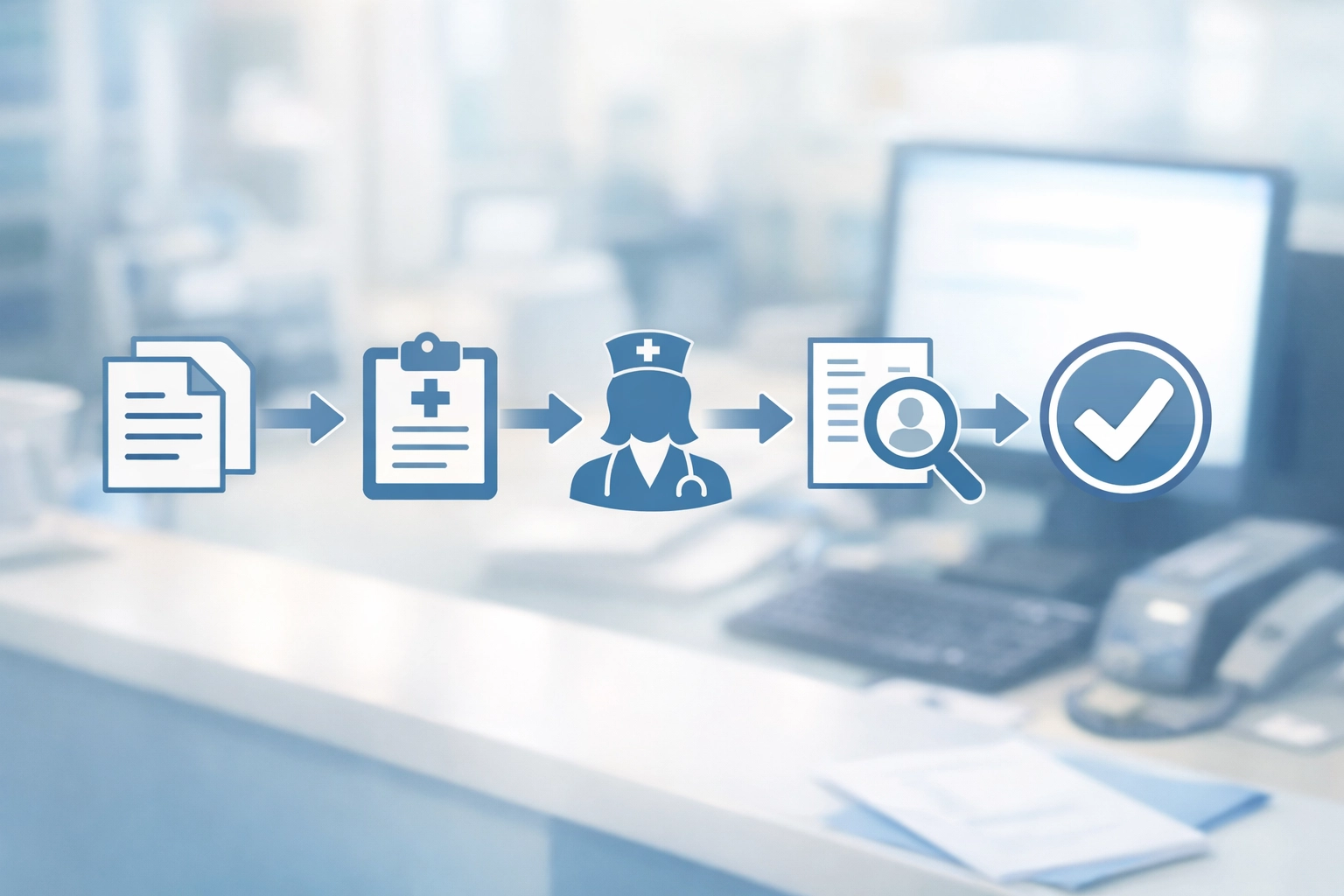
Optimized workflow:
- Receive referral
- Automated AI verification of all documents
- Eligibility flags surfaced immediately
- Make informed admission decision
- Billing proceeds smoothly
The key difference? Verification happens before the admission decision, not after. This protects your census from referral risk while actually speeding up your overall intake process.
As we've explored in our comparison of manual vs. automated patient intake, automation doesn't replace your admissions team: it gives them better information faster.
What to Do When You Spot a Problem
Finding an eligibility issue doesn't always mean rejecting the referral outright. Here's a practical framework:
If the issue is correctable:
Some problems can be resolved with additional documentation. For example, if a DD214 is illegible, you might request a fresh copy from the National Personnel Records Center or ask the referral source for a clearer version.
If the issue is ambiguous:
Borderline cases: like unusual discharge circumstances: may require VA verification before admission. Building in time for this step protects you from making assumptions.
If the issue is clear-cut:
When someone definitively doesn't meet eligibility requirements, document your findings and communicate clearly with the referral source. This protects your facility and helps set appropriate expectations.
In all cases, having a documented, consistent screening process protects your facility if questions arise later.
Protecting Your Census Starts at Intake
Every bed in your facility represents both a care opportunity and a financial commitment. When eligibility issues slip through, you're essentially gambling with both.
The facilities that maintain healthy, stable census numbers aren't just good at filling beds: they're good at filling beds with the right patients. That means catching problems at intake, not in billing.
AI verification gives your team the power to spot "non-veteran" eligibility issues in seconds rather than discovering them weeks or months later. It's not about adding more steps to your process. It's about making the steps you already have actually work.
Ready to see how AI verification can protect your census from eligibility surprises? Visit us at NASVH Booth #6 or book a demo to see Smart Admissions in action.