
There's a particular kind of dread that settles over a skilled nursing facility when word comes down that VA auditors are on their way. Suddenly, everyone's scrambling through filing cabinets, chasing down missing documents, and hoping that every veteran admission from the past few years was handled by the book.
Here's the uncomfortable truth: for most SNFs serving veterans, the DD214 verification process is the weakest link in the compliance chain. And auditors know it.
If your facility relies on manual verification processes, you're not just risking audit failures: you're gambling with reimbursement clawbacks, compliance penalties, and your facility's reputation. Let's break down why this happens and what you can do about it before that audit notice lands on your desk.
The Rising Stakes of VA Compliance
VA audits aren't slowing down. With increased federal scrutiny on healthcare spending and a growing veteran population requiring long-term care, auditors are looking more closely than ever at how facilities verify military eligibility for benefits.
The core question auditors want answered is simple: Can you prove that every veteran you admitted and billed for was actually eligible for VA benefits at the time of admission?
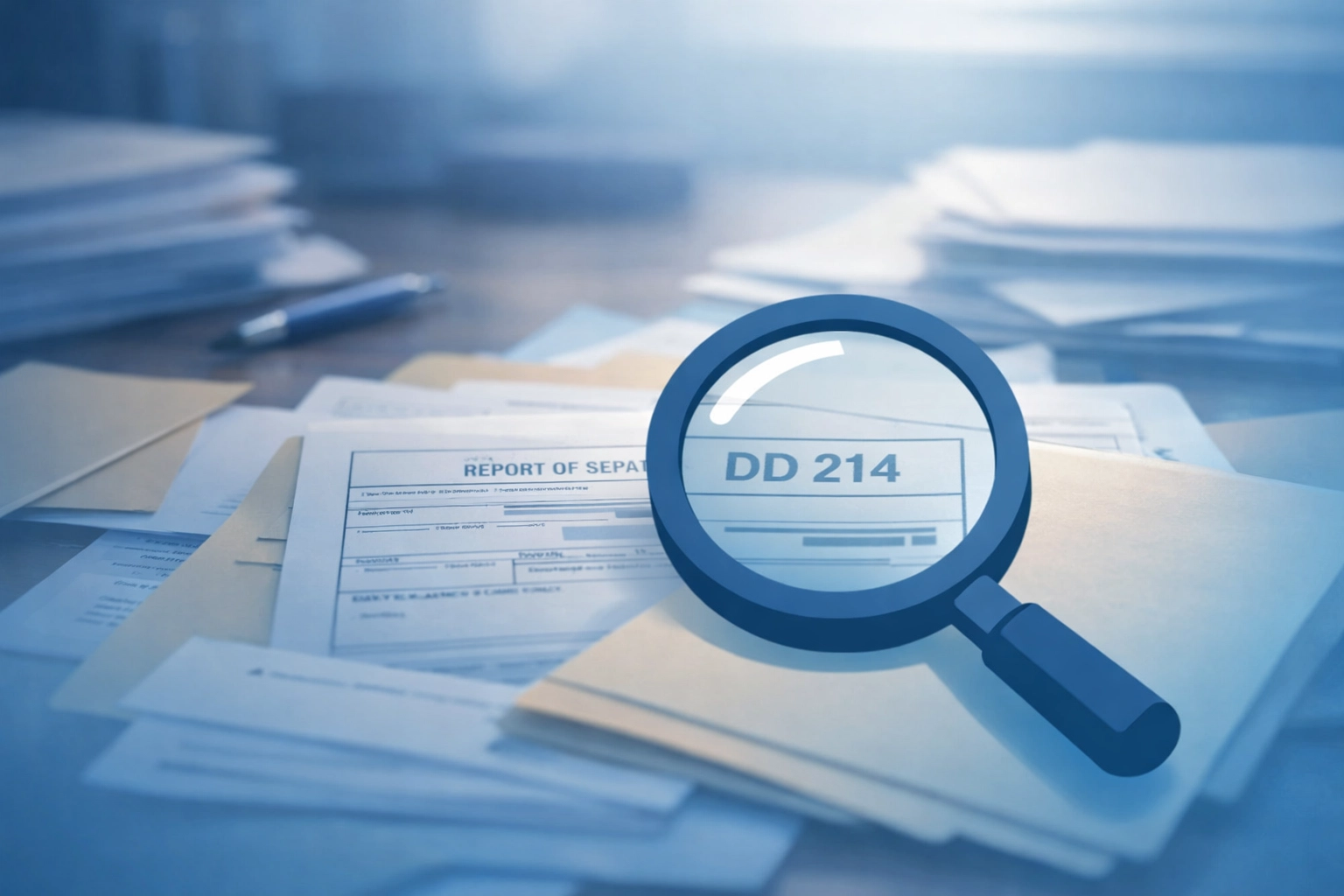
That proof starts and ends with the DD214: the Certificate of Release or Discharge from Active Duty. It's the foundational document that establishes a veteran's service history, discharge status, and eligibility for benefits. Get the verification wrong, and everything downstream becomes a compliance problem.
Why Manual DD214 Verification Falls Apart Under Audit Pressure
Manual verification processes might feel "good enough" during day-to-day operations. Staff members review documents, check boxes, and file papers away. But when auditors start pulling records, the cracks quickly show.
The Documentation Gap Problem
Manual processes rarely create comprehensive audit trails. When a staff member eyeballs a DD214 and determines eligibility, what actually gets recorded? Usually, it's a note in a file or a checkmark on a form. That's not going to satisfy an auditor who wants to see:
- When the verification was performed
- Who performed it
- What specific criteria were checked
- How the document's authenticity was confirmed
- Where the original document is stored
Without this level of detail, you're essentially asking auditors to trust that your team got it right. Spoiler alert: they won't.
The Format Variation Nightmare
Here's where things get really messy. The DD214 isn't a single standardized form: it's evolved through dozens of variations since 1950. Different eras, different branches, different discharge types all mean different formats, layouts, and data fields.
Your admissions staff might be experts at reading modern DD214s, but what about a Korean War-era discharge document? Or a faded Vietnam-era form where half the text is illegible? As we've covered in our deep dive on why DD214 format variations make manual verification nearly impossible, the sheer variety of these documents creates endless opportunities for human error.
And human error is exactly what auditors are trained to find.
The Speed vs. Accuracy Tradeoff
Admissions teams are under constant pressure to fill beds quickly. When a veteran referral comes in, there's often a race to verify eligibility and secure the admission before another facility does.
In that rush, corners get cut. Staff might accept a document that looks "close enough" or skip secondary verification steps. The admission goes through, the bed gets filled, and everyone moves on: until an auditor pulls that file two years later and asks why the discharge characterization wasn't properly verified.
What Auditors Are Actually Looking For
Understanding the auditor's mindset helps clarify why manual processes fail. VA auditors aren't just checking that you have DD214s on file. They're evaluating your entire verification system.
Consistency of Process
Auditors want to see that every admission follows the same verification protocol. Manual processes are inherently inconsistent: different staff members interpret documents differently, apply different standards, and document their work differently. This inconsistency is a red flag that invites deeper scrutiny.
Verification Timestamp Integrity
When was the eligibility determination made? Manual processes often can't answer this question definitively. A note scribbled on a form doesn't prove when it was written. Digital timestamps from automated systems, on the other hand, create immutable records that auditors can trust.
Error Correction Documentation
Mistakes happen. What matters is how they're caught and corrected. Manual processes often bury errors: staff might simply update a file without documenting what was wrong or how it was fixed. Automated systems log every change, creating a complete correction history that demonstrates good-faith compliance efforts.
Building an Audit-Proof Verification Process
The solution isn't to hire more staff or create more paperwork. It's to implement automated verification systems that generate comprehensive audit trails by design.
Automated Document Capture and OCR
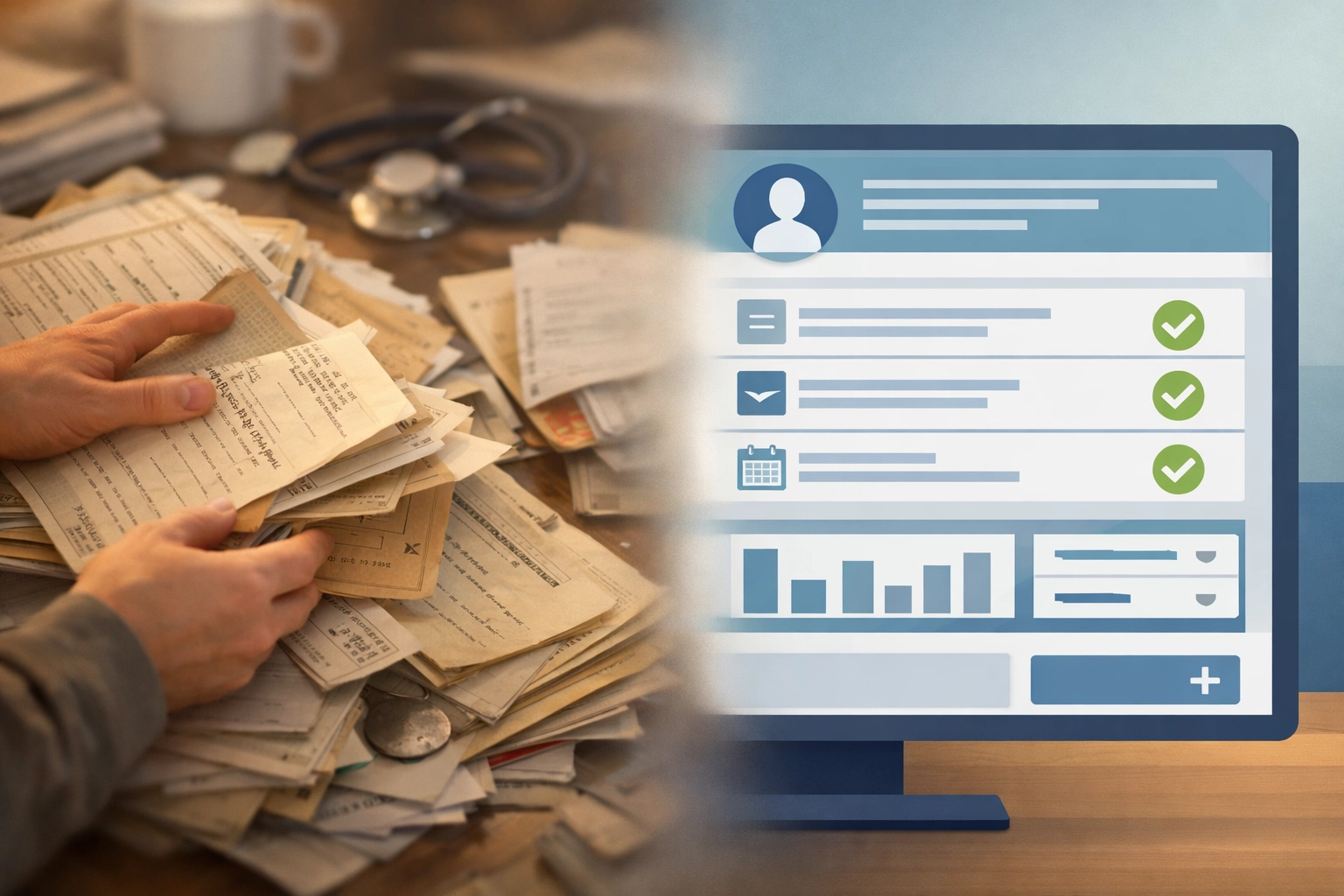
Modern AI-powered systems can read DD214s regardless of format, age, or condition. Advanced OCR (Optical Character Recognition) technology extracts data from even faded or damaged documents that would stump human reviewers. This eliminates the format variation problem and ensures consistent data capture across all admissions.
For facilities struggling with document quality issues, understanding how to verify DD214 eligibility in seconds can be a game-changer for both speed and accuracy.
Real-Time Eligibility Determination
Automated systems don't just capture data: they analyze it against current VA eligibility criteria instantly. This means every admission gets the same rigorous verification, regardless of how busy the admissions team is or how experienced the staff member handling the case might be.
Comprehensive Audit Trail Generation
Every action in an automated system gets logged: document uploads, data extractions, eligibility determinations, staff reviews, and any corrections or updates. This creates the kind of detailed, timestamped audit trail that satisfies even the most thorough VA auditor.

The Real Cost of Getting It Wrong
Let's talk numbers. When a VA audit uncovers verification failures, the consequences cascade quickly:
- Reimbursement clawbacks for improperly verified admissions can reach into the hundreds of thousands of dollars
- Civil monetary penalties for compliance failures add additional financial pain
- Increased audit frequency means more disruption and more opportunities for additional findings
- Reputation damage affects referral relationships and future veteran admissions
Compare that to the cost of implementing automated verification, and the math becomes pretty clear. Prevention is dramatically cheaper than remediation.
Many facilities don't realize how much common DD214 verification mistakes are actually costing them until an audit forces a full accounting.
Making the Transition Before It's Too Late
The best time to fix your DD214 verification process was before your last audit. The second-best time is right now.
Transitioning from manual to automated verification doesn't have to be disruptive. Modern systems integrate with existing EHR platforms and can be implemented alongside current workflows, allowing staff to adapt gradually while immediately improving documentation quality.
The key is to start before auditors force your hand. Facilities that proactively strengthen their compliance processes demonstrate good faith to regulators and position themselves as preferred partners for VA referral sources.
Take Control of Your Compliance Future
Your DD214 verification process is either an asset or a liability. There's no middle ground when auditors come knocking.
If you're heading to the NASVH conference, stop by Booth #6 to see how Smart Admissions transforms DD214 verification from a compliance risk into a competitive advantage. We'll show you exactly how automated verification creates the audit-proof documentation your facility needs.
Can't make it to the conference? Book a demo to see our platform in action and learn how facilities like yours are eliminating verification headaches while building bulletproof audit trails.
Your next VA audit is coming. The only question is whether you'll be ready for it.