
When patient referrals feel like a maze of paperwork and phone calls, keeping every bed filled without burdening your team becomes a real challenge. As demand for seamless transitions grows, effective referral management shapes how skilled nursing facilities connect with hospitals, providers, and patients. Discover how structured referral communication can help your team track every patient, reduce bottlenecks, and make each admission smoother and more efficient.
Table of Contents
- Defining Referral Management In Skilled Nursing
- Key Types Of Referral Workflows Explained
- How Modern Referral Systems Operate
- Benefits Of Automated And AI-Powered Solutions
- Risks, Compliance, And Common Pitfalls
Key Takeaways
| Point | Details |
|---|---|
| Referral management is crucial for skilled nursing | It establishes structured communication among healthcare providers, ensuring effective patient information transfer and care transition. |
| Technology enhances referral workflows | Automated systems and electronic networks streamline patient transitions, reduce errors, and improve operational efficiency. |
| Addressing compliance risks is essential | Facilities must implement strategies to protect data privacy, ensure complete documentation, and prevent communication gaps. |
| Standardized protocols improve outcomes | Developing templates and comprehensive workflows minimizes administrative burdens and accelerates response times in patient care. |
Defining Referral Management in Skilled Nursing
Referral management in skilled nursing represents a critical operational process that connects healthcare providers, facilities, and patients through structured communication and coordination. At its core, referral management involves systematically transferring patient information, tracking care transitions, and ensuring seamless admission pathways for individuals requiring specialized healthcare services.
Within skilled nursing facilities, referral management encompasses several key components that drive operational efficiency and patient care quality. Referral processes integrate clinical workflows by leveraging electronic medical records (EMRs) and engaging multiple stakeholders throughout the patient journey.
Key aspects of referral management in skilled nursing include:
- Patient Information Transfer: Comprehensive sharing of medical history, current conditions, and care requirements
- Communication Coordination: Maintaining active dialogue between referring and receiving healthcare providers
- Transition Tracking: Monitoring patient progression through admission and care stages
- Metrics Analysis: Evaluating referral performance and identifying potential improvement opportunities
Strategic referral management transforms traditional administrative processes into dynamic, patient-centered systems. Referral coordination involves vertical, horizontal, and diagonal transfer mechanisms that optimize patient transitions across different healthcare environments.
These sophisticated referral pathways help skilled nursing facilities address complex patient needs while maintaining operational efficiency. By implementing robust referral management strategies, healthcare providers can reduce administrative burdens, minimize communication gaps, and ultimately enhance patient care outcomes.
Pro tip: Develop standardized referral documentation templates to streamline information exchange and reduce potential communication errors.
Key Types of Referral Workflows Explained
Referral workflows in skilled nursing facilities represent complex communication systems designed to efficiently transfer patient information and coordinate care across multiple healthcare environments. Multiple referral workflow types exist based on how patient transfers are initiated and processed, each with unique characteristics and strategic implications for healthcare providers.
Skilled nursing facilities typically encounter several distinct referral workflow models that streamline patient transitions and optimize administrative processes:
- Direct Clinician Referrals: Initiated directly by healthcare professionals with comprehensive patient medical documentation
- Patient Self-Referrals: Patients independently seeking admission or service transfer
- Internal Registry Referrals: Systematic transfers using centralized patient tracking mechanisms
- Electronic Referral Networks: Digitally-enabled referral processes leveraging technological platforms
Electronic referral workflows have transformed traditional communication methods by enabling standardized information exchange through advanced technological protocols. These sophisticated systems support comprehensive tracking, consent management, and seamless coordination among healthcare stakeholders.
Understanding these workflow variations allows skilled nursing facilities to design more responsive, patient-centered admission processes. By implementing flexible referral strategies, healthcare providers can reduce administrative friction, accelerate patient transitions, and ultimately improve overall care delivery efficiency.
Here’s a comparison of referral workflow types and their best-use scenarios in skilled nursing:
| Workflow Type | Key Advantages | Ideal Use Case |
|---|---|---|
| Direct Clinician Referral | Fast information transfer | High-acuity patient admissions |
| Patient Self-Referral | Empowers patient choice | New service access requests |
| Internal Registry | Streamlined resource allocation | Routine, planned patient moves |
| Electronic Referral Network | Automated, real-time coordination | Complex transitions across sites |
Pro tip: Develop a comprehensive referral workflow mapping that identifies potential communication bottlenecks and standardizes transfer protocols across different referral types.
How Modern Referral Systems Operate
Modern referral systems have evolved into sophisticated technological platforms designed to streamline patient care transitions and enhance communication across healthcare networks. Referral systems emphasize comprehensive tracking that monitors patient journeys from initial referral through complete care resolution, ensuring no critical information falls through administrative gaps.
The core operational components of contemporary referral management systems include multiple critical functions:
- Real-Time Status Tracking: Monitoring referral progress continuously
- Automated Communication Channels: Enabling instant updates between providers
- Comprehensive Documentation Management: Capturing and organizing patient information
- Performance Analytics: Measuring referral efficiency and identifying improvement opportunities
Technological integration plays a pivotal role in modern referral systems. Structured referral network protocols now incorporate advanced directory services, stakeholder engagement mechanisms, and continuous quality assessment tools that transform traditional referral processes.
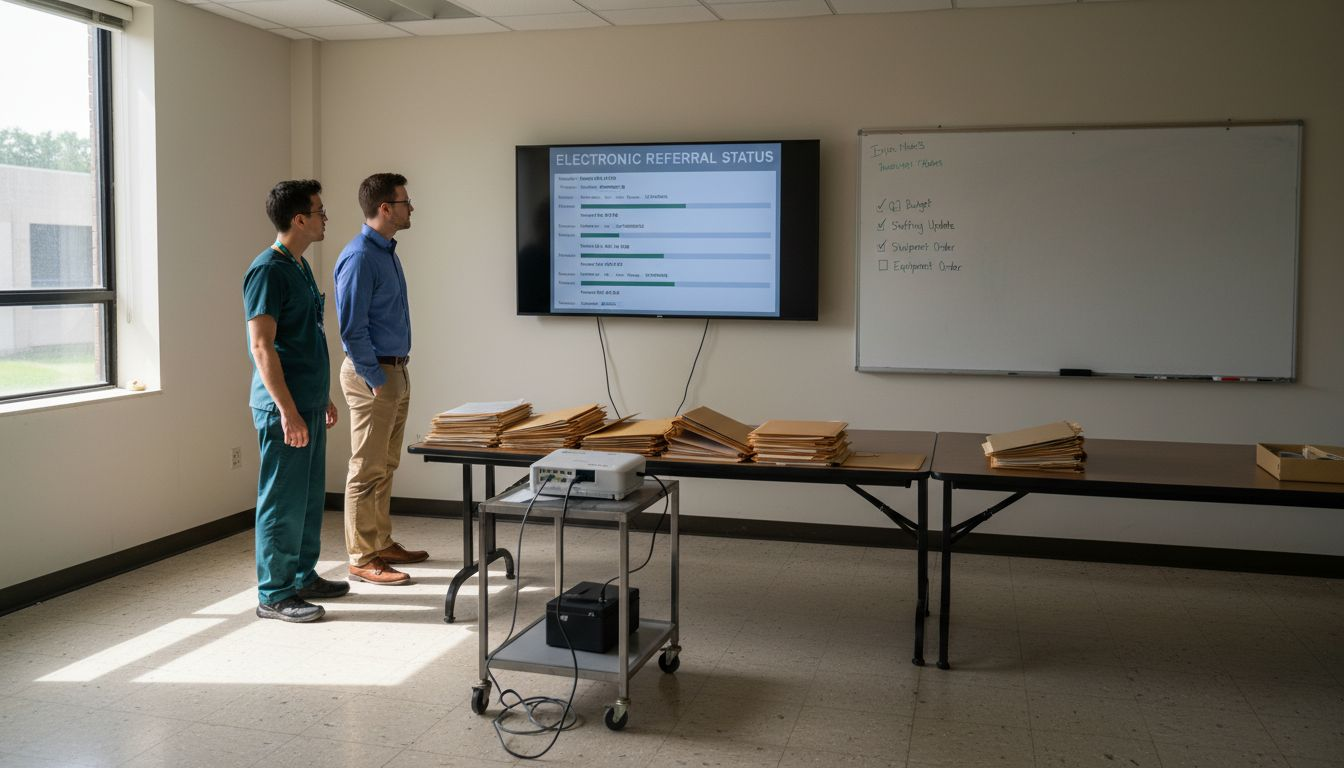
These sophisticated systems represent more than mere administrative tools. They are dynamic platforms that reduce communication barriers, minimize patient transfer friction, and create seamless pathways for healthcare delivery. By leveraging digital technologies, skilled nursing facilities can dramatically improve patient outcomes and operational efficiency.
Pro tip: Implement a standardized digital referral tracking system that provides real-time visibility and automated follow-up notifications to all involved healthcare providers.
Benefits of Automated and AI-Powered Solutions
Automated and AI-powered solutions represent a transformative approach to referral management in skilled nursing facilities, dramatically reshaping traditional administrative processes. Automated referral systems enhance operational efficiency by integrating seamlessly with existing electronic medical record (EMR) workflows and reducing manual intervention.
The key advantages of these advanced technological solutions include:
- Accelerated Referral Processing: Reducing time from initial referral to patient admission
- Error Reduction: Minimizing manual data entry mistakes
- Real-Time Tracking: Providing instant visibility into referral status
- Predictive Analytics: Identifying potential bottlenecks and optimization opportunities
- Comprehensive Documentation: Ensuring complete and accurate patient information transfer
Intelligent analytics play a crucial role in transforming referral management. Referral metrics tracking enables precise workflow optimization by providing deep insights into referral patterns, communication effectiveness, and operational performance.
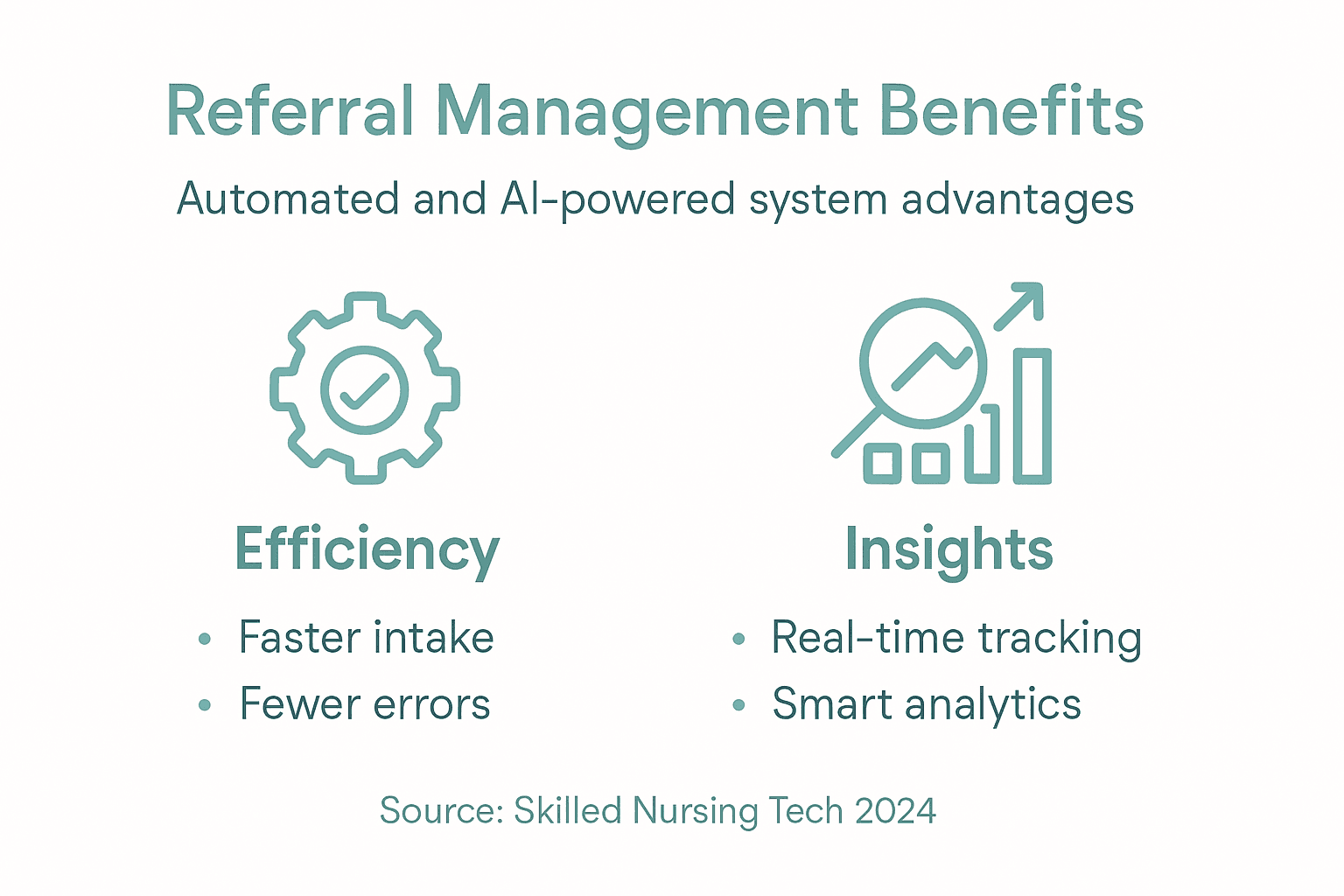
These sophisticated solutions go beyond simple automation. They create intelligent ecosystems that adapt to complex healthcare environments, enabling skilled nursing facilities to make data-driven decisions, improve patient transitions, and ultimately enhance overall care delivery efficiency.
Pro tip: Implement a comprehensive AI-powered referral management system that offers both real-time tracking and predictive analytics to continuously improve your facility’s admission processes.
Risks, Compliance, and Common Pitfalls
Referral management in skilled nursing facilities involves navigating complex regulatory landscapes and potential operational risks that can compromise patient care and organizational efficiency. Communication failures pose significant compliance challenges that demand proactive strategies and robust monitoring mechanisms to prevent systemic breakdowns.
The most critical risks and compliance considerations include:
- Data Privacy Vulnerabilities: Protecting sensitive patient information
- Incomplete Documentation: Risking continuity of care and legal exposure
- Communication Gaps: Potential delays in patient transfer and treatment
- Regulatory Non-Compliance: Failure to meet healthcare information standards
- Technological Integration Challenges: Ensuring seamless system interoperability
Referral system risks extend beyond administrative challenges. Referral tracking requires comprehensive safety protocols that address potential communication breakdowns, protect patient data integrity, and maintain rigorous documentation standards across multiple healthcare platforms.
Successful risk mitigation demands a holistic approach that combines technological solutions, staff training, and continuous process improvement. By implementing standardized protocols and leveraging advanced tracking technologies, skilled nursing facilities can significantly reduce operational risks and enhance overall patient care quality.
Below is a summary of major risks in referral management and tactics skilled nursing facilities can use for mitigation:
| Risk Type | Potential Impact | Recommended Mitigation |
|---|---|---|
| Data Privacy Breach | Regulatory fines, trust loss | Implement strong data encryption |
| Documentation Errors | Patient care disruption | Adopt standardized templates |
| Communication Gaps | Delayed transfers | Use automated alerts and tracking |
| Integration Problems | Workflow slowdowns | Conduct regular IT audits |
Pro tip: Develop a comprehensive risk assessment framework that includes quarterly audits of referral processes, communication protocols, and technological integrations to proactively identify and address potential compliance vulnerabilities.
Transform Your Skilled Nursing Referral Management with Smart Admissions
Referral management challenges like communication gaps, lengthy admission times, and administrative overload can hurt your facility’s census and efficiency. The article highlights key pain points such as incomplete documentation, delayed patient transitions, and lack of real-time referral tracking — all critical barriers to boosting bed occupancy and improving workflow. Smart Admissions directly addresses these issues by automating referral workflows, integrating seamlessly with your existing EMR systems, and providing AI-powered tools for real-time eligibility verification and clinical assessments.
By streamlining patient information transfer and accelerating referral reviews, Smart Admissions empowers your admissions team to fill beds faster, reduce manual errors, and decrease staffing burnout. Our platform transforms complex referral pathways into efficient, transparent processes with actionable analytics that drive smarter decisions and better patient outcomes.
Ready to take control of your referral management and increase your facility’s census? Discover how Smart Admissions can help today.
Explore the power of automated referral workflows with Smart Admissions. Start optimizing your intake efficiency and patient flow now by visiting https://smartadmissions.ai and learn how our AI-powered assistant can revolutionize your admissions process.
Frequently Asked Questions
What is referral management in skilled nursing?
Referral management in skilled nursing is the process of coordinating and transferring patient information between healthcare providers and facilities to ensure smooth care transitions and improve patient outcomes.
How do automated systems improve referral management efficiency?
Automated systems enhance referral management by streamlining communication, reducing manual errors, allowing real-time tracking, and providing predictive analytics to identify potential bottlenecks in the referral process.
What are the key risks associated with referral management?
Key risks include data privacy vulnerabilities, incomplete documentation, communication gaps, regulatory non-compliance, and challenges with technological integration, which can all affect patient care and operational efficiency.
What types of referral workflows are commonly used in skilled nursing facilities?
Common referral workflows include direct clinician referrals, patient self-referrals, internal registry referrals, and electronic referral networks, each designed to optimize the process of transferring patients between healthcare providers.
Recommended
- How to Analyze Referral Data for Better Bed Occupancy
- How to Enhance Referral Tracking for Higher Bed Occupancy
- How to Enhance Referral Tracking for Higher Bed Occupancy
- Referral Conversion: Driving Admissions Efficiency
- If Your Staff Is Still Sorting Packages, You Have a Multifamily Operations Problem – Postal Solutions