
Managing patient referrals across multiple facilities and EHR systems adds delays and manual work for admissions teams. Most platforms either require time-consuming manual data entry or lock critical automation features behind custom pricing and IT onboarding. This comparison covers pricing, automation, integrations, and unique features so admissions teams can pick patient referral management software to match staffing and workflow needs.
Table of Contents
Smart Admissions
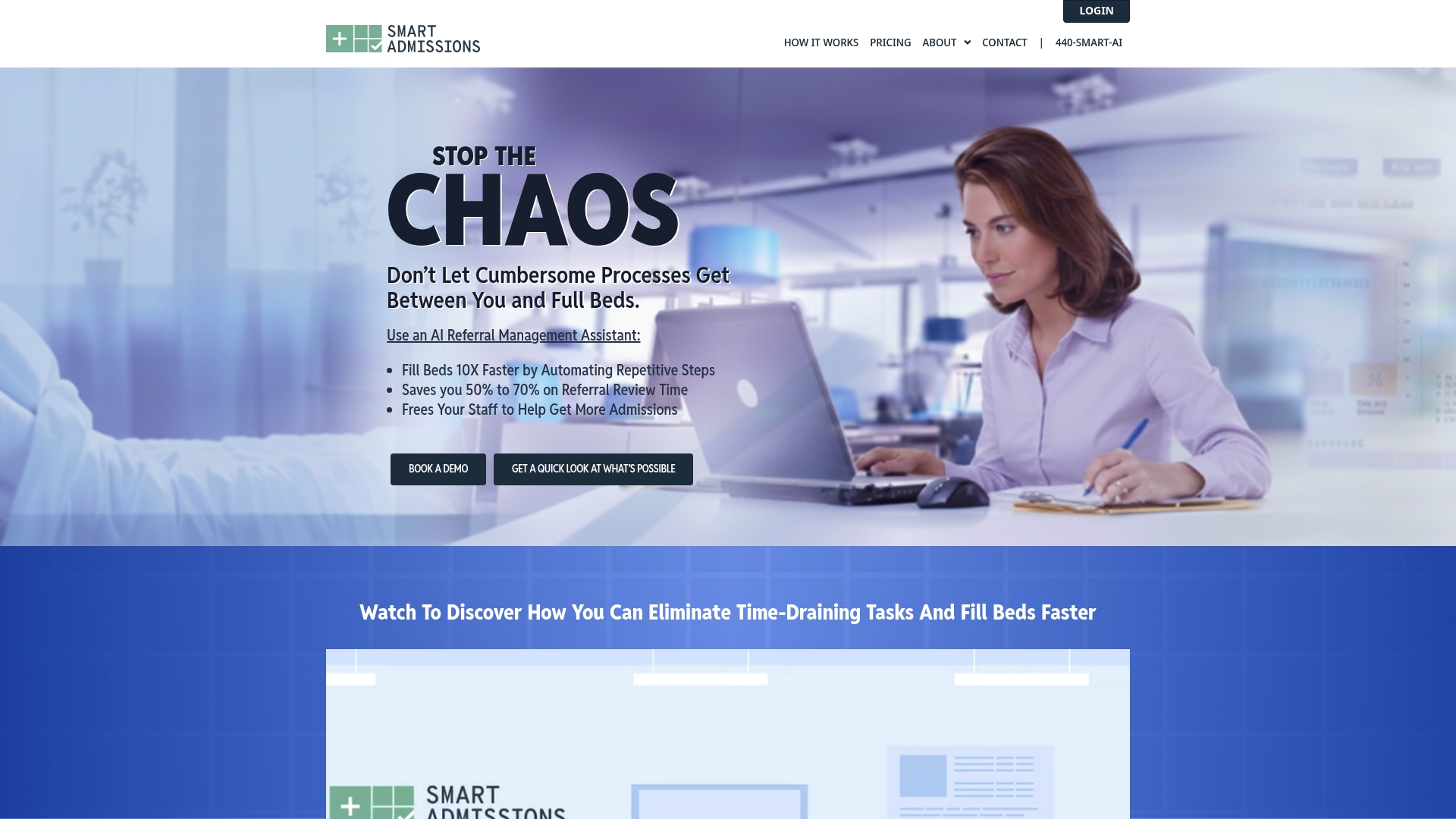
At a Glance
The vendor reports a reduction in referral review time from 45 minutes to under 15 minutes after implementation. That reduction freed clinical and admissions staff to focus more on patient coordination and case planning. For admissions teams, faster reviews translate to quicker bed decisions and shorter vacancy periods.
Core Features
Smart Admissions centralizes referral intake and maintains a visible pipeline for each referral source, which helps admission coordinators prioritize work. It runs real time insurance eligibility checks and embeds clinical summaries and decision support via AI powered assistive tools into the intake workflow. The platform connects with existing EHRs and insurance portals and automates referral routing, status updates, documentation, and analytics.
Key Differentiator
Smart Admissions centers AI powered, customizable referral and clinical decision automation specifically for healthcare providers that handle high referral volumes. That focus pairs predictive clinical summaries with routing rules tuned for post acute workflows.
Pros
Smart Admissions’ marketing materials state it can reduce referral review time by up to 70%, which shortens the admission queue and speeds response to referral sources. Automation reduces repetitive tasks and lets your team reallocate time toward care coordination and patient transition activities. The vendor advertises tailored onboarding that the company says can be completed in under an hour, which lowers project overhead for small admissions teams.
Cons
- Buyer reviews indicate limited customization for very large or complex facilities, and initial staff training is often required to get the full automation benefits.
Notable Integrations
- EHR systems such as PointClickCare for two way patient record updates and admission status.
- Insurance portals for real time eligibility checks during intake.
- Referral source communication channels to capture and update referral status across sending facilities.
Who It’s For
Post acute healthcare facilities with dedicated admissions teams and moderate to high referral volumes will get the most value. Your team will benefit if you want to reduce manual follow ups and improve acceptance speed. Facilities without existing EHR links or with highly bespoke workflows may need integration planning.
Unique Value Proposition
Two way EHR integration with PointClickCare plus embedded insurance verification inside intake means acceptance decisions can happen inside a single workflow. That setup reduces duplicate documentation and shortens the time between referral receipt and formal admission decision.
Real World Use Case
A skilled nursing facility implemented Smart Admissions to automate intake, insurance checks, and clinical summaries. According to the vendor, that facility also filled beds 3–5 days sooner each month after deployment. That result let the admissions team convert referral leads faster and recover revenue tied to occupancy.
Pricing
The monthly plan lists $597/month. The annual plan lists $6,447 annually (save 10%) and includes referral management, insurance verification, EHR integration, automation, analytics, and compliance features. Pricing varies by facility size and configuration.
Website: https://smartadmissions.ai
Complete Intake
At a Glance
Complete Intake’s marketing materials state referral summary generation completes in under 2 minutes. That claim highlights a focus on faster triage for home health referrals. The product targets agencies that need quicker eligibility checks and fewer manual document reviews.
Core Features
Complete Intake uses AI powered extraction to read referral packets from PDFs, emails, fax, and portals and pulls key data into the intake workflow. The system pre fills OASIS and PDGM documentation and automates insurance eligibility checks while preserving your existing EHR. Patient outreach uses virtual numbers and scheduled reminders to reduce missed visits and confirm start of care.
Key Differentiator
Complete Intake connects referral review, documentation pre fill, eligibility verification, and patient communication inside a single intake workflow. That integration reduces hand offs between separate teams and systems. The product emphasizes keeping your current EHR while adding middleware to accept referrals from multiple inbound sources.
Pros
Complete Intake speeds referral intake and trims time spent on documentation review by consolidating several tasks into one workflow. The product reduces administrative work by automating eligibility checks and pre filling clinical forms, freeing clinicians to focus on care decisions. Patient engagement features such as virtual numbers and automated reminders improve visit confirmation and lower no show risk, which supports steady revenue capture.
Cons
- Dependent on careful technical setup and mapping for integrations and workflows. This requires IT involvement and initial configuration time.
- Limited independent metrics on AI accuracy. Vendor claims exist, but third party accuracy figures are not publicly detailed.
- Users report occasional extraction errors that require manual verification, adding review work for clinical staff.
- Adopting the system may require change management for staff used to manual intake processes.
When It May Not Fit
If your agency lacks IT resources for initial setup and staff training, this solution may add overhead during rollout. If referral documents arrive in very poor quality, the accuracy of extraction and pre fill will suffer. Organizations that prefer a full EHR replacement rather than middleware integration will find this product misaligned with their goals.
Who It’s For
Complete Intake fits home health, hospice, and post acute care agencies that want to modernize referral intake without replacing their EHR. The product suits teams that receive referrals from multiple sources and need faster eligibility checks. It also fits organizations aiming to reduce missed visits through automated patient outreach.
Real World Use Case
A mid sized home health agency receives referrals by fax, portal, and email. Complete Intake extracts the packet, verifies insurance, pre fills clinical documentation, and sends patient reminders. The clinical team spends less time on data entry and more time preparing for the start of care visit.
Pricing
Pricing is not explicitly stated on the vendor site. The company appears to use subscription pricing with enterprise options and custom implementation fees. You must request a quote to get exact tiering and license terms.
Website: https://completeintake.com
Repisodic
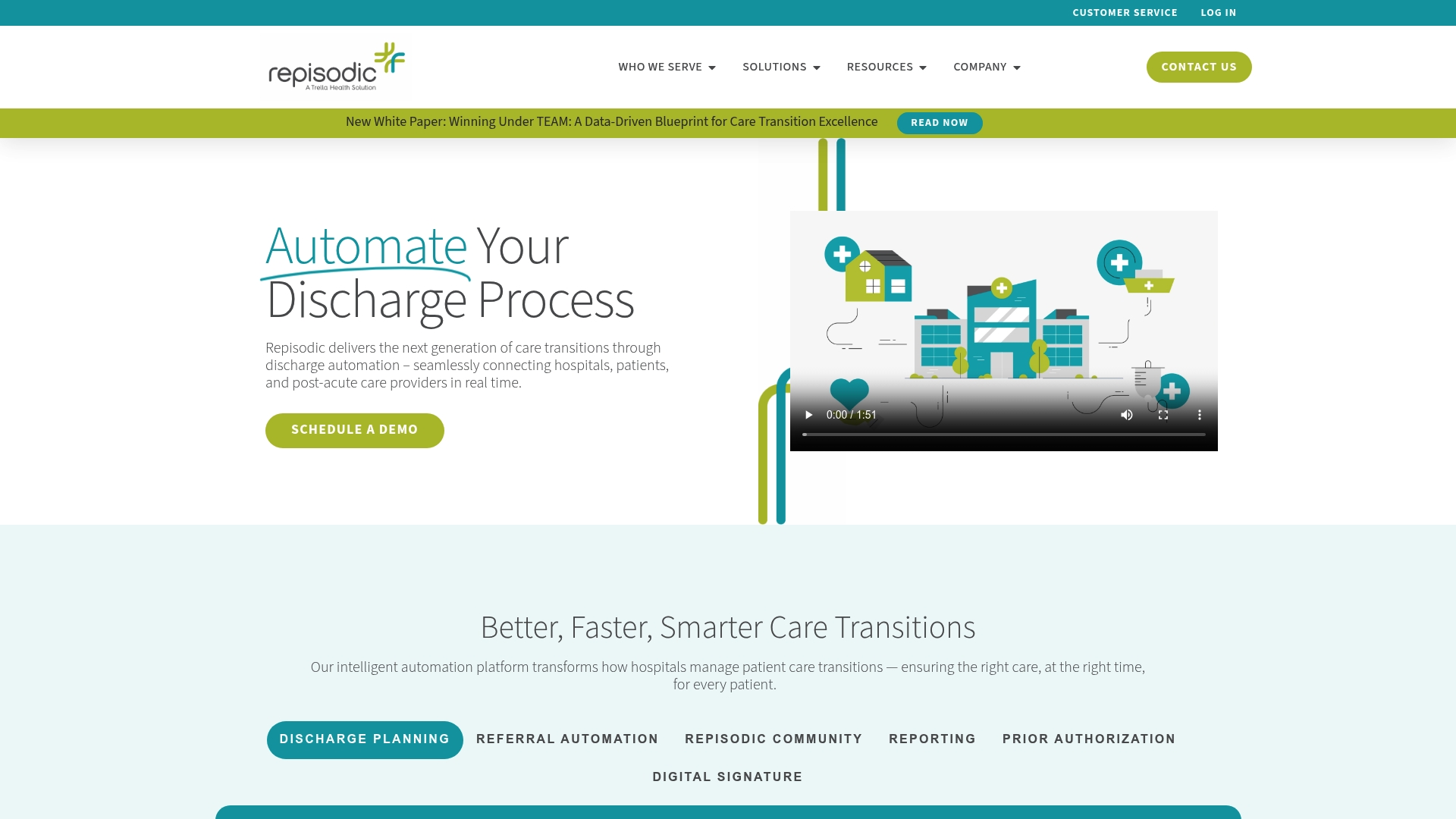
At a Glance
Repisodic’s marketing materials report a reduction in average hospital stay of 0.5–1 days after deployment. The platform automates discharge workflows, referral building, and prior authorization while operating inside major EHRs. It also adds digital signatures, provider community profiles, and reporting to support post acute care coordination.
Core Features
Core features include EHR integrated discharge automation and automatic patient matching for post acute care. The system performs automated referral building and sending, pulls real time provider capacity and availability, and runs prior authorization workflows inside the EHR. It also provides community profile management, digital signatures, a reporting and analytics suite, and active data management to maintain provider participation.
Key Differentiator
The platform combines AI assisted workflow automation with live provider capacity data inside the EHR. That pairing lets care teams build and send matched referrals without leaving clinical charts. The live availability feed helps admissions staff place patients faster and reduce manual phone calls to post acute partners.
Pros
The vendor advertises that the platform can reduce length of stay and lower readmission rates. Integration with Epic, Cerner, Meditech, and Allscripts reduces duplicate data entry and shortens implementation friction for hospitals. Real time capacity data and the reporting suite help admissions and case management staff prioritize placements and measure network performance.
Cons
- Limited pricing transparency and contractual terms complicate budgeting and procurement.
- Buyer reviews report occasional data accuracy issues that require ongoing data management.
- Implementation complexity varies with each facility’s EHR and may require tailored integration work.
- The product depends on active partner provider participation for reliable capacity data.
When It May Not Fit
Repisodic may not fit small hospitals without an IT team capable of EHR integrations. Facilities without an engaged post acute provider network will get limited value from the capacity feed. Organizations that require published pricing or fixed contract templates may prefer vendors that publish rates.
Notable Integrations
Integrations include Epic, Cerner, Meditech, and Allscripts. These connections allow the platform to run workflows inside the EHR and reduce the need for duplicate documentation.
Who It’s For
Large hospitals, health systems, and post acute providers that handle high referral volumes will find the feature set relevant. Your team will benefit if you have internal IT resources and active relationships with post acute partners. Facilities focused on reducing administrative time for discharge coordinators map to this product profile.
Real World Use Case
According to the vendor, a regional hospital network implemented Repisodic to automate discharge summaries, manage referrals, and handle prior authorizations, and achieved the reduction above. According to the vendor, the implementation also increased patient satisfaction. That example shows how automation can speed placements and free clinical staff for direct patient care.
Pricing
The vendor lists pricing as informational only and does not publish standard rates. Contract terms and fees appear to be handled on a case by case basis. Your procurement team should request a detailed quote and sample contract to compare total cost of ownership.
Website: https://repisodic.com
Careflow
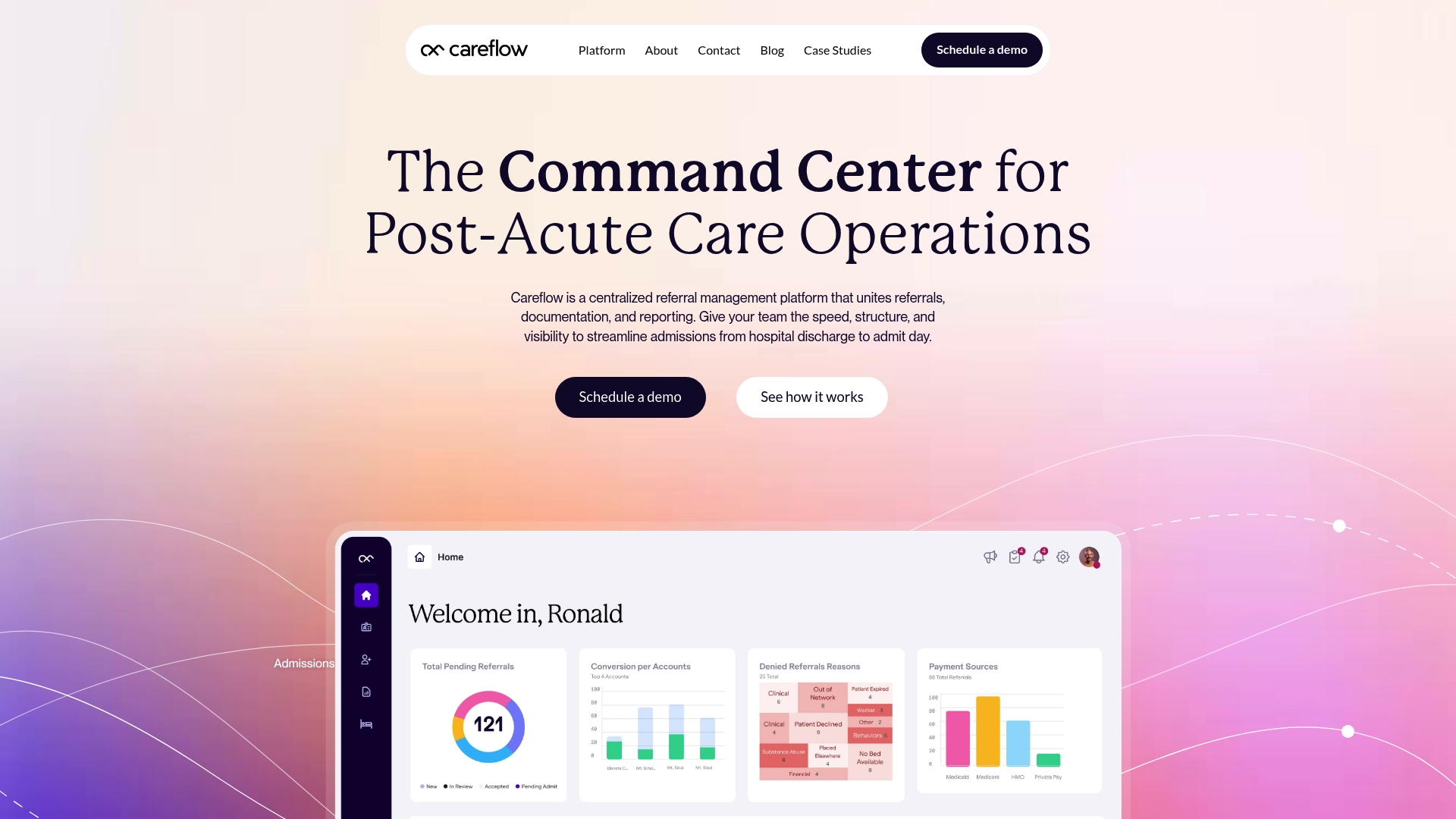
At a Glance
Built-in insurance verification and automated background checks run inside the same referral intake workflow. Careflow centralizes referrals, documentation, and reporting for post-acute teams. The vendor advertises add-ons such as AI clinical support and live census dashboards.
Core Features
Careflow consolidates referral sources into a single intake queue and gives multi-facility admissions tracking with real-time pipeline visibility. The platform includes eligibility checks, e-faxing, and document signing, and it supports automated background screening. Add-ons extend clinical decision support with AI and provide live census dashboards for operational monitoring.
Key Differentiator
The product’s defining angle is its all-in-one approach that combines referrals, documentation, and reporting across facilities. That design lets admissions coordinators work in one interface instead of toggling multiple systems. For post-acute teams, that lowers transactional overhead and centralizes audit trails.
Pros
Integrates referral and healthcare systems to create a unified admissions workflow, reducing handoffs between hospital and post-acute teams. Real-time pipeline visibility and census dashboards give your team immediate status on referrals and bed availability. Fast onboarding and built-in document signing reduce clerical load, and optional AI clinical support can help prioritize cases and clarify clinical details.
Cons
Public third-party user feedback is limited, which makes independent validation of long-term reliability harder.
Integration complexity may vary depending on the facility’s existing EHR and referral partners, which can extend implementation timelines.
Pricing is not published and appears to be customized, which complicates budget forecasting for smaller operators.
When It May Not Fit
If your facility requires publicly documented long-term user reviews before adopting software, this product may not meet that requirement. If your IT team cannot allocate time for complex EHR work, the integration effort could strain resources. Small single-site operators working on a strict fixed budget may find custom pricing difficult to compare.
Notable Integrations
AllScripts
NaviHealth
Epic
Ensocare
Aida
Aidin
Strata
Waystar
Who It’s For
Post-acute care operators and admissions teams that manage referrals across multiple facilities. Facilities that need insurance eligibility checks and built-in document workflows will get the most immediate value. Organizations planning phased rollout and EHR connectivity work suit this product.
Real World Use Case
A long-term care operator routes referrals from several hospital systems into Careflow, verifies coverage during intake, and signs admissions packets electronically. The operator tracks census in real time and moves patients to admit status faster. That process reduces manual follow-up between discharge planners and admissions staff.
Pricing
Pricing is not specified and appears to be customized to provider needs. Prospective buyers must request a quote to see tier details and implementation fees. Ask for a breakdown of integration costs and ongoing support when you request pricing.
Website: https://gocareflow.com
Comparison of alternatives
Patient referral management software supports effective communication and data sharing between healthcare facilities, enhancing patient outcomes. Here, we analyze various products to help you determine the right solution based on your unique operational requirements.
Implementation and usability
Smart Admissions simplifies onboarding with a tailored approach, providing efficiency benefits within a short timeframe, offering deployments in under an hour. Complete Intake supports existing EHR systems, which facilitates its incorporation into established workflows, yet requires more significant IT involvement. Repisodic’s EHR integration provides operational insights but demands extensive IT resources. Careflow consolidates functionalities across multiple facilities, enhancing visibility, albeit with variable integration complexity.
Key features and their application
Uniquely, Smart Admissions prioritizes high-volume referral handling with tools like real-time insurance checks and automated workflows. Complete Intake emphasizes document automation and patient engagement tools that reduce administrative efforts related to intake processing. Repisodic’s live provider capacity monitoring stands out for hospitals needing to manage tight discharge timelines. Careflow’s integrated census tracking and referral management across facilities benefit multi-location operators pairing real-time data access with patient intake.
Best fit
- Post-acute facilities handling high referral volumes and looking for sleek referral intake integration with existing EHRs should consider Smart Admissions for its well-balanced features and ease of implementation.
- Home health agencies requiring streamlined document processing, automated eligibility checks, and patient engagement capabilities will benefit from Complete Intake, especially when working without a preference for full EHR replacements.
- Larger health systems needing integration with existing networks for managing discharge pipelines and benefiting from live provider capacity information may find Repisodic to be the most appropriate.
- Healthcare organizations coordinating referrals across multiple facilities and prioritizing centralization of workflows should evaluate Careflow for its blended offerings of operational dashboards and document handling.
Our pick
For healthcare facilities seeking efficient referral management solutions with minimum implementation burden and targeted feature sets for high-volume handling, Smart Admissions stands out as the most adaptable choice. However, facilities with diverse needs should evaluate the specialized tools of competitors to find their ideal fit.
Choosing the right patient referral management software streamlines intake workflows and improves care coordination.
| Product | Key Differentiator | Best For | Pricing | Notable Limitation |
|---|---|---|---|---|
| Smartadmissions | AI-powered customizable referral and decision automation for high-volume healthcare providers | Post-acute facilities with dedicated admission teams | $597/month or $6,447/year | Limited options for customization in large complex facilities |
| Complete Intake | Middleware integration with existing EHR for faster referral intake | Home health and hospice agencies | Price not published | Manual verification may be required for quality-compromised referrals |
| Repisodic | Real-time provider capacity data within an EHR to reduce discharge times | Large hospitals and regional health systems | Price not published | Reliable data requires high partner provider participation |
| Careflow | All-in-one multi-facility referral tracking and reporting | Multi-facility post-acute care operators | Price not published | Public user feedback is limited, raising concerns over reliability |
How can Smartadmissions address key challenges in smpathai.com alternatives?
Choosing the right referral management platform can feel frustrating amid diverse options. Smartadmissions targets crucial pain points faced by healthcare teams like yours, including long referral review times, excessive manual tasks, and fragmented EHR and insurance portal integration. Its AI-powered system reduces referral review from 45 minutes to under 15 minutes, helping your admissions staff focus on patient coordination and speed bed placements.
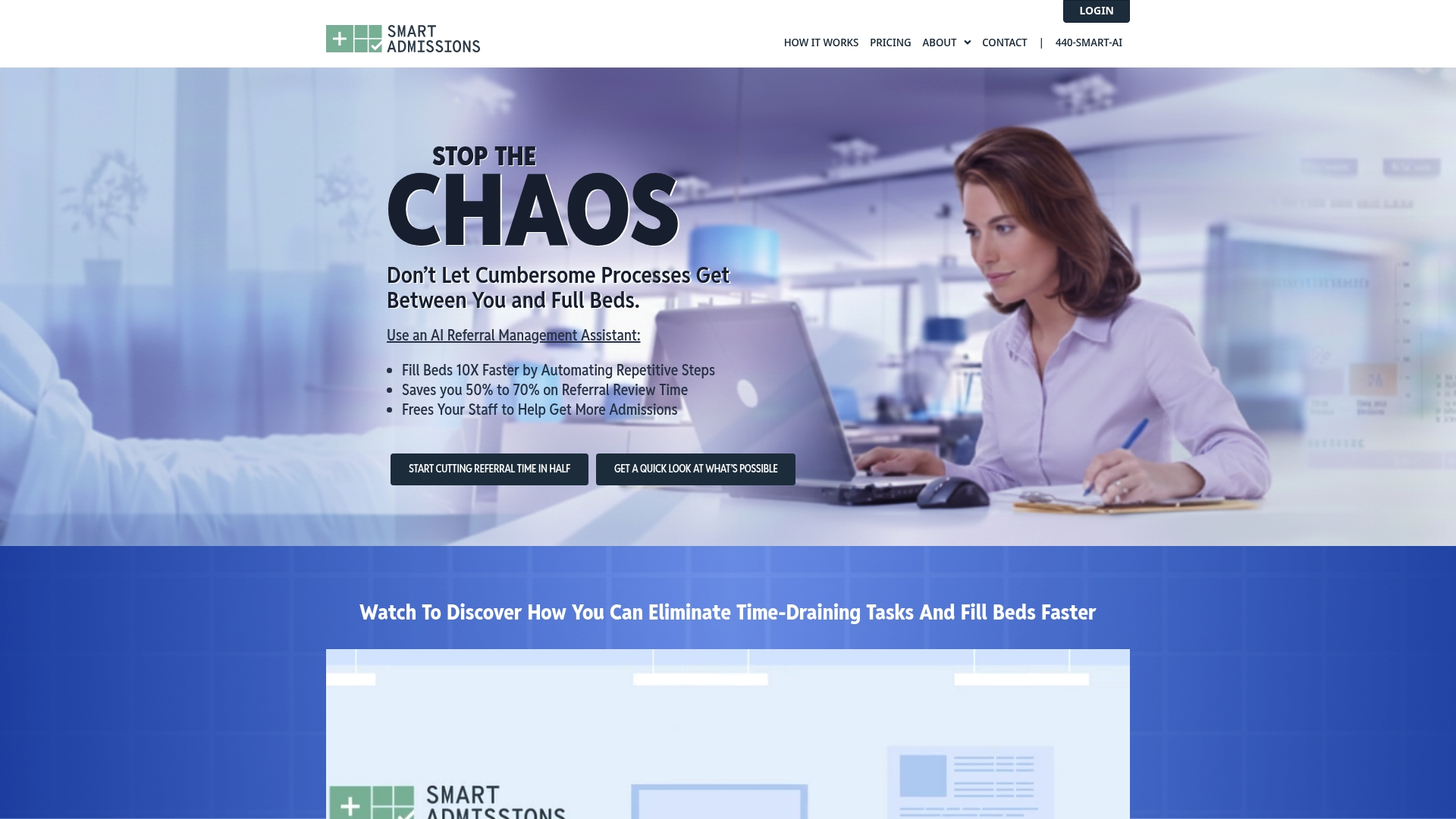
Explore how Smartadmissions integrates real-time eligibility checks and clinical summaries within a single workflow. Visit Smartadmissions to learn how your post-acute care facility can reduce administrative burden, improve acceptance speed, and increase bed occupancy. Request a personalized demo and start measuring workflow improvements today.
FAQ
How does Smartadmissions enhance the referral review process?
Smartadmissions reduces referral review time to under 15 minutes, significantly speeding up the admission process. This increased efficiency allows clinical and admissions staff to focus more on patient coordination and case planning. Your team can expect quicker bed decisions and reduced vacancy times after implementing this solution.
What is the difference between Smartadmissions and Complete Intake?
Complete Intake is known for its quick referral summary generation, claiming it completes in under 2 minutes, making it ideal for agencies needing rapid eligibility checks. In contrast, Smartadmissions excels in integrating with existing EHR systems for seamless intake workflows. For facilities that prioritize in-depth insurance verification and comprehensive automation, Smartadmissions is a superior choice.
Which platform offers better patient engagement features?
Complete Intake provides automated patient engagement features like virtual numbers and scheduled reminders, reducing missed visits. Smartadmissions focuses more on centralizing referral intake and management, which reduces manual follow-ups. If improving patient engagement is a key priority, you may find Complete Intake beneficial.
Can Smartadmissions support post-acute care facilities effectively?
Yes, Smartadmissions is designed specifically for post-acute healthcare facilities managing high referral volumes, allowing for efficient resource allocation. Its features, such as AI-powered decision support, help streamline the intake workflow for these organizations. For teams looking to enhance their admissions process, Smartadmissions proves to be a fitting choice.
What pricing options are available for Smartadmissions?
Smartadmissions offers a monthly plan at $597 and an annual plan at $6,447, which includes a 10% discount. This pricing encompasses essential features such as referral management and insurance verification, making it accessible for various facility sizes. Be prepared to discuss your facility’s specific needs to find the best pricing tier for your team.