
High-quality admissions data is accurate, complete, timely, and consistent across every referral touching your building, and the first move toward it is simple: require a standardized pre-admission intake bundle paired with an automated eligibility check before anyone commits a bed. A platform like Smart Admissions exists precisely because manual bundling and phone-tag verification are where most errors start. Get that one workflow right and nearly everything downstream, from MDS accuracy to claim denials, gets easier.
TL;DR:
- Standardizing the pre-admission intake bundle and verifying eligibility within 48 to 72 hours reduce claim denials and prevent missing critical documentation before bed commitment.
- Most data quality issues stem from delayed discharge summaries, mismatched identifiers, and unstructured clinical notes that do not include required fields for reimbursement.
- Implementing structured document import and clear role assignments can help catch missing information early and improve clinical and administrative workflows.
- Adopting real-time eligibility verification and duplicate detection APIs provide the quickest ROI compared to complex full EHR integrations.
- Weekly KPI monitoring of referral-to-bed-commit time, claim denial rates, and referral completeness supports continuous improvement and demonstrates measurable gains.
Table of Contents
- Why Data Quality in Admissions Is Under Pressure Right Now
- What Are the Most Common Data Quality Issues in Admissions?
- A 7-Step Checklist to Improve Admissions Data Quality
- How Do You Measure Admissions Data Quality?
- Which Technology Investments Actually Improve Data Quality?
- What Admissions Leaders Get Wrong About Data Quality
- How Smart Admissions Supports Better Intake Data
- Sources
- FAQ
Why Data Quality in Admissions Is Under Pressure Right Now
Screening and admission processes vary widely across skilled nursing facilities, and much of that variance traces back to how hospitals hand off information. A qualitative study of three SNFs found that discharge paperwork routinely arrived late or incomplete, with one facility reporting it received appropriate records only about 10% of the time. That is not a rounding error. That is a coin flip on whether your clinical team gets what it needs before a patient walks through the door.
Three forces are driving this. Hospitals are discharging faster, which shrinks the window for complete documentation. Referral relationships often run on trust and speed rather than verified data, and SNFs report growing difficulty obtaining accurate information as lengths of stay compress. And PDPM ties reimbursement directly to clinical detail captured at admission, raising the stakes on every missing field.
The downstream consequences show up fast:
- Delayed or incomplete medication reconciliation, which raises clinical risk in the first 48 hours.
- Slower bed-occupancy speed because staff chase missing records instead of processing referrals.
- Higher claim denial rates tied directly to incomplete intake documentation.
- Rework that pulls nurses and admissions coordinators away from patient-facing work.
What Are the Most Common Data Quality Issues in Admissions?
Most admissions breakdowns fall into a handful of repeatable patterns. Knowing them by name makes them easier to catch before they become a denied claim or a medication error.
- Missing or delayed discharge summaries and medication lists. This is the single most common gap and the one most likely to cause clinical harm.
- Mismatched patient identifiers and duplicate records. A name spelled two ways or a wrong date of birth creates two charts for one patient.
- Incomplete payer or authorization details. Prior-authorization gaps surface days later as denials, not at intake when they could still be fixed.
- Unstructured clinical notes that bury required MDS/PDPM fields. A narrative note might contain the right information, but if it is not in a structured field, it does not count for reimbursement purposes.
- Critical data arriving after the bed is already committed. Once a room is held, there is little leverage left to demand missing documentation.
Pro Tip: Flag any referral missing a medication list or payer authorization as “incomplete” in your intake system before it reaches clinical review. A hard stop at that stage costs minutes; catching the same gap after admission costs hours and sometimes a denied claim.
A 7-Step Checklist to Improve Admissions Data Quality
Improving data quality in admissions is not a single fix. It is a sequence, and the order matters because each step reduces the noise the next step has to deal with.
- Verify eligibility early. Run real-time checks within the 48–72 hour window rather than waiting until arrival, since manual verification and Medicare Advantage prior authorizations are frequent delay points when handled by phone.
- Reconcile medications from two sources. Cross-check the hospital record against the pharmacy or family-reported list, and capture PDPM-relevant clinical details at the same time.
- Secure structured document import. Push for HL7 or CCDA feeds instead of faxed PDFs wherever your referral partners support it.
- Assign clear roles. Name who signs off on clinical appropriateness, who owns eligibility, and who has final authority on bed holds.
- Track weekly KPIs with an escalation path. A missing critical field should trigger a defined next step, not a shrug.
- Reassess on day 1 and day 14. Repeat assessments routinely catch items missed at intake and improve care-plan accuracy.
| Step | Primary owner | What it prevents |
|---|---|---|
| Standardized intake bundle | Referral coordinator | Missing fields discovered post-admission |
| Real-time eligibility check | Admissions director | Claim denials, coverage surprises |
| Two-source medication reconciliation | Clinical/nursing lead | Medication errors in first 48 hours |
| Structured document import | IT/admissions liaison | Manual re-entry and transcription errors |
| Defined roles and sign-off | Facility administrator | Confusion during time-pressured decisions |
| Weekly KPI review | Admissions director | Slow drift back to old habits |
| Day-1/day-14 reassessment | Clinical team | Care-plan gaps and lost MDS revenue |
How Do You Measure Admissions Data Quality?
You cannot manage what you do not measure, and admissions data quality has five metrics worth watching every week.
Referral-to-bed-commit time tells you how long it takes from first contact to a firm bed decision; a strong target is under 60 minutes. Arrival-to-complete-admission time measures paperwork and clinical processing once the patient is physically present, and facilities using standardized digital intake report cutting this from 1 to 3 hours down to 30 to 45 minutes. Claim denial rate attributable to intake errors should stay under 5%. And the percentage of referrals arriving with a full clinical bundle rounds out the set.
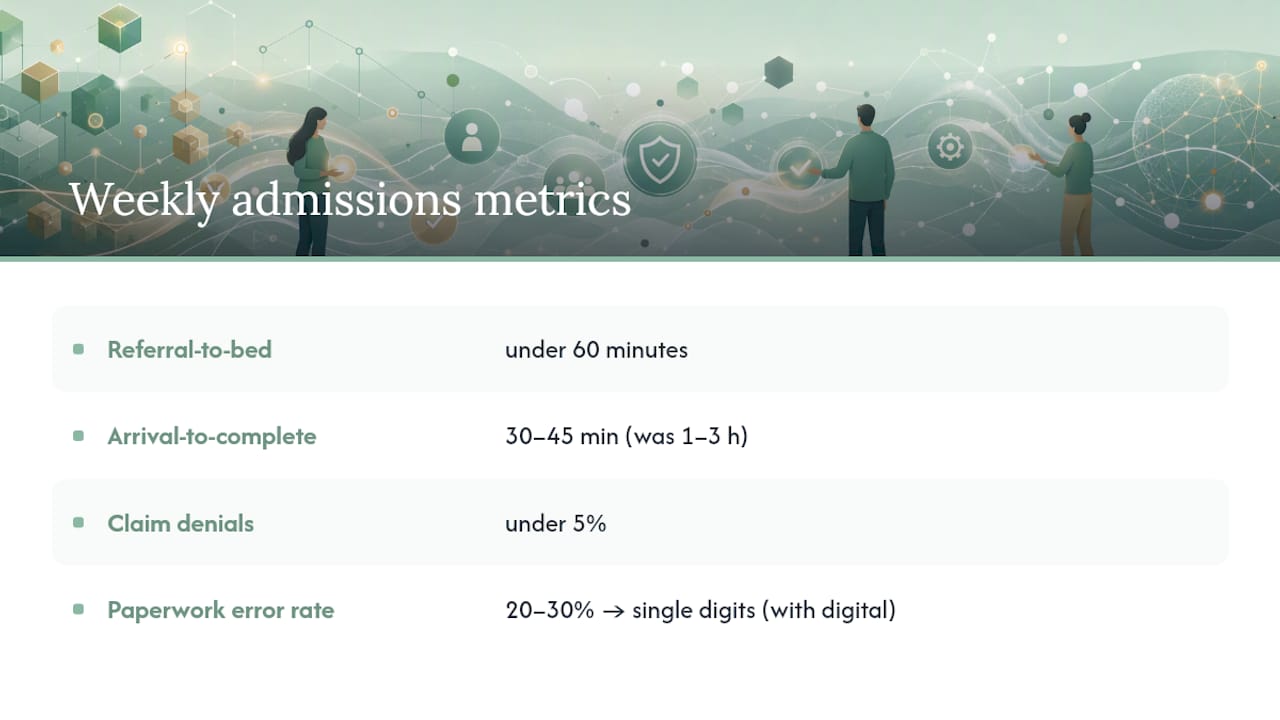
Assign one owner per metric and review all four on a weekly dashboard cadence. Facilities that adopt standardized digital pre-admission workflows tend to see error rates on admission paperwork fall from the 20 to 30% range down to single digits, which is the kind of number that gets an administrator’s attention at a budget meeting.
Which Technology Investments Actually Improve Data Quality?
Not every integration deserves equal priority. Start with real-time eligibility verification and secure document import before chasing a full EHR integration, since those two changes touch the most referrals with the least technical lift.
- Use structured intake templates with required fields and hard stops so a referral cannot advance with a blank payer field.
- Automate duplicate detection by matching on MRN and date of birth to stop the two-chart problem before it starts.
- Pilot with one high-volume hospital partner first. Piloting with a single partner reduces scope and produces an early, fundable win before you expand.
- Build your procurement checklist around API/HL7 support, HIPAA compliance, hands-on onboarding, and built-in analytics, not just a feature list.
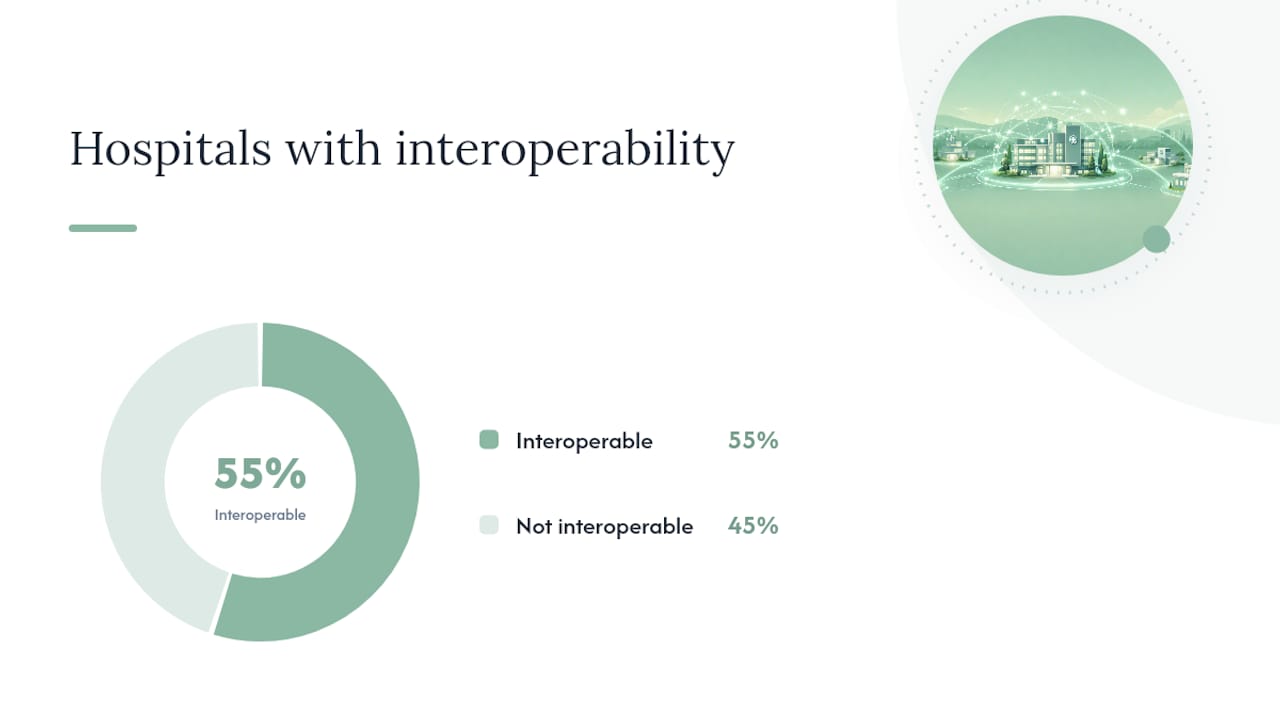
Interoperability still has real limits industry-wide. Only about 55% of hospitals can currently find, send, receive, and integrate outside patient records electronically, which is exactly why a phased approach beats waiting for a perfect data pipe.
Pro Tip: Do not treat EMR access as a replacement for a two-minute clinician phone call on complex cases. Documentation tells you what happened; a quick conversation tells you what the discharge team is actually worried about.
What Admissions Leaders Get Wrong About Data Quality
Most facilities chase the big integration first and skip the boring fix that would have paid off faster. Standardizing the intake bundle and automating eligibility checks are unglamorous, but they are also the two moves with the shortest payback period. Save the full EHR interoperability build for after you have a pilot with measurable KPI gains behind it. Small, visible wins, like fewer eligibility delays, are what earn admissions directors the budget and internal trust to fund the bigger integration later.
— Harry
How Smart Admissions Supports Better Intake Data
The platform is built around the exact workflow this guide describes: a standardized intake bundle backed by automated verification, not another portal your team has to babysit. The platform runs real-time eligibility checks against the 48 to 72 hour window, pulls documentation through EMR and secure document import, and lets you customize intake templates with the hard stops your clinical team actually needs.
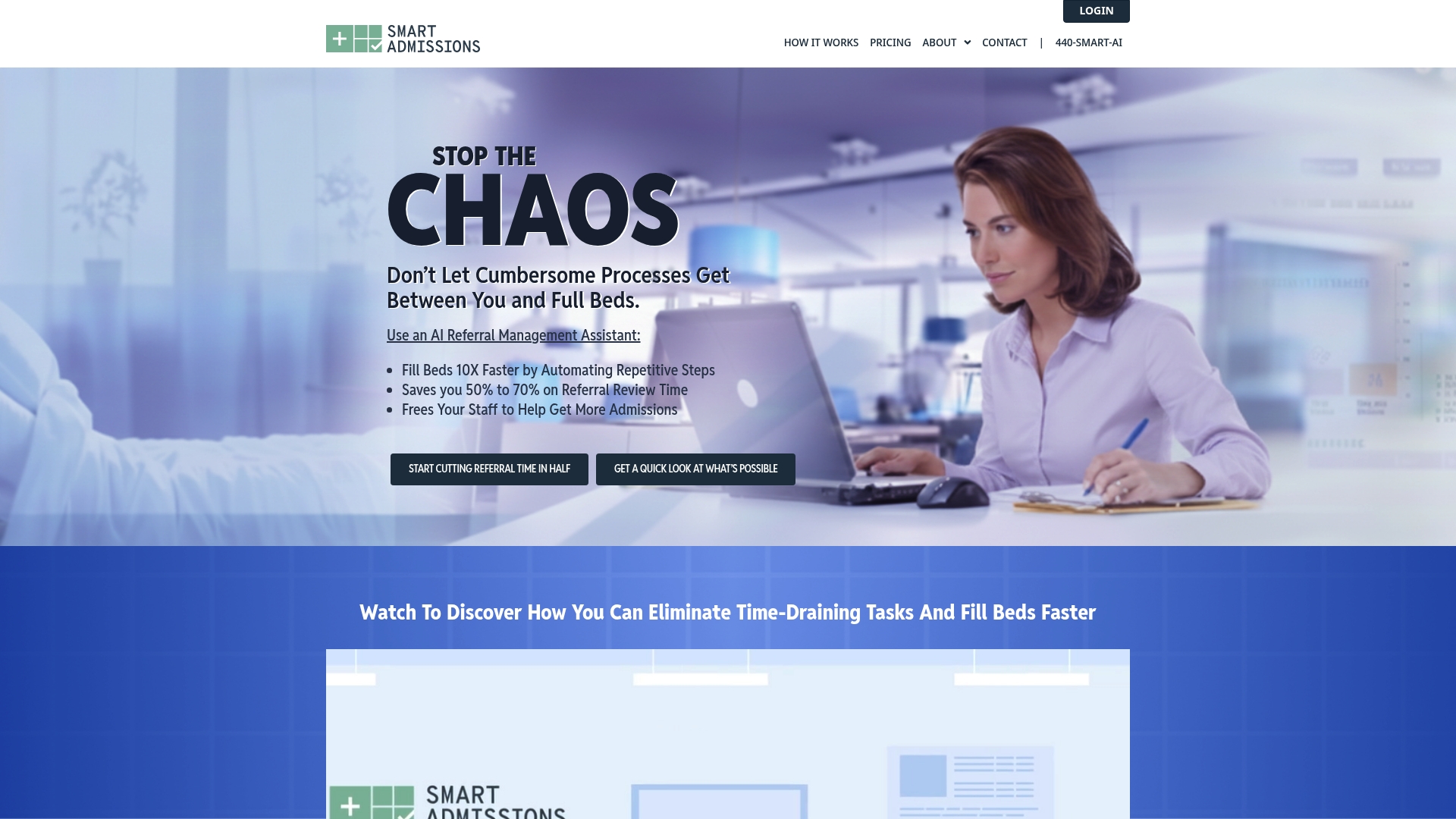
Add a built-in analytics dashboard for the KPIs covered above, plus hands-on onboarding support, and you get a faster route to fewer errors than building the checklist manually across spreadsheets and fax machines. If your team is ready to see how automated eligibility verification fits your referral volume, request a walkthrough of Smart Admissions and bring your current referral-to-bed-commit time to the conversation.
Sources
- Variability in skilled nursing facility screening and admission processes: implications for value-based purchasing – PMC
- Hospital-to-SNF referral rate stable while admission rate rises (Skilled Nursing News)
FAQ
What does high-quality admissions data actually look like?
It is accurate, complete, arrives on time, and stays consistent across every system it touches, from the referral fax to the MDS assessment.
Where should a facility start improving data quality in admissions?
Start with a standardized pre-admission intake bundle and real-time eligibility verification before committing a bed. Both moves address the highest-frequency errors with the least technical lift.
How often should eligibility be re-verified?
Verify within the 48 to 72 hour window before admission, since manual checks and Medicare Advantage prior authorizations are common sources of delay when left until arrival.
What should staff do when critical documentation arrives late?
Flag the referral as incomplete, escalate to the named clinical gatekeeper, and hold the bed commitment until the medication list and payer authorization are confirmed.
Can automation alone fix admissions data integrity?
No. Automated eligibility checks and structured intake templates close most gaps, but complex cases still benefit from a short clinician-to-clinician conversation alongside the documentation.