
7 Best Intake Workflow Improvement Ideas for Admissions. Managing patient intake at a skilled nursing facility often means dealing with overwhelming paperwork, slow verification steps, and constant pressure to keep operations efficient. The process can drain your resources and frustrate both staff and patients when things get delayed or important information is overlooked. But transforming intake from a bottleneck to a seamless experience is closer than you think.
You will discover practical strategies that make every step— from referral acceptance to eligibility verification and clinical documentation—faster and more accurate. These approaches pull from proven methods like EMR integration, AI-powered eligibility confirmation, and standardized healthcare checklists to reduce error and improve compliance. Get ready to uncover actionable insights that put time back in your day, empower your staff, and raise the quality of care for every patient coming through your doors.
Table of Contents
- Automate Patient Referral Intake With AI Tools
- Integrate EMR And Insurance Portals For Faster Processing
- Use Real-Time Eligibility Verification Systems
- Streamline Clinical Assessments And Documentation
- Create Standardized Intake Checklist For Staff
- Leverage Analytics To Improve Workflow Efficiency
- Provide Ongoing Training For Intake Team
Quick Summary
| Takeaway | Explanation |
|---|---|
| 1. Implement AI for Patient Referrals | Automating referral intake with AI can greatly reduce processing times from 45 minutes to just 5 minutes per patient. |
| 2. Integrate EMR with Insurance | Seamless integration allows for automatic insurance verification, cutting down on administrative tasks and speeding up patient onboarding. |
| 3. Utilize Real-Time Eligibility Verification | AI-driven systems enable immediate confirmation of patient insurance coverage, streamlining the intake process significantly. |
| 4. Standardize Intake Processes | Developing structured checklists ensures consistent documentation and reduces human error in patient assessment procedures. |
| 5. Provide Ongoing Staff Training | Continuous training for intake teams ensures staff remain proficient in new technologies and best practices, improving overall performance. |
1. Automate Patient Referral Intake with AI Tools
Admissions directors in skilled nursing facilities are facing unprecedented administrative burdens that slow down patient intake processes. AI referral management tools represent a powerful solution to transform how patient referrals are processed and evaluated.
Traditional referral intake workflows often involve manual data entry, complex document verification, and time consuming eligibility checks. AI technologies can now automate these repetitive tasks, reducing processing times from 45 minutes to just 5 minutes per referral. By integrating advanced machine learning algorithms, these tools can quickly extract critical patient information, validate insurance details, and pre screen clinical requirements without human intervention.
The key benefits of AI powered referral intake include:
• Faster Processing: Automatic document scanning and data extraction
• Reduced Administrative Burden: Minimize manual data entry tasks
• Improved Accuracy: Eliminate human error in patient information processing
• Real Time Eligibility Verification: Instant insurance and clinical requirement checks
Implementing AI tools requires selecting platforms with robust integration capabilities with existing Electronic Medical Record systems. Healthcare administrators should prioritize solutions that offer seamless data transfer, HIPAA compliant security protocols, and customizable workflow configurations.
Pro tip: Start with a pilot program testing AI referral tools on a small subset of incoming referrals to validate performance and identify potential optimization opportunities.
2. Integrate EMR and Insurance Portals for Faster Processing
Skilled nursing facilities continue to struggle with fragmented information systems that slow down patient intake and processing. Real time insurance verification represents a critical strategy for transforming administrative workflows.
Electronic Medical Record integration with insurance portals enables seamless data exchange using standardized healthcare communication protocols like HL7 and FHIR. These advanced integration techniques allow instant patient data transfer, automatic eligibility checks, and streamlined documentation verification without manual intervention.
Key advantages of comprehensive EMR and insurance portal integration include:
• Instant Eligibility Verification: Automated patient insurance status checks
• Reduced Administrative Workload: Elimination of duplicate data entry
• Faster Patient Onboarding: Accelerated processing times
• Enhanced Accuracy: Minimized human error in data transmission
Healthcare administrators should prioritize EMR systems with robust API capabilities and compliance with industry standard interoperability protocols. Selecting platforms that offer flexible integration options ensures smooth communication between different healthcare software systems.
Pro tip: Conduct a comprehensive audit of your current EMR system’s integration capabilities and identify potential bottlenecks before implementing new insurance verification technologies.
3. Use Real-Time Eligibility Verification Systems
Skilled nursing facilities are increasingly turning to advanced technologies to streamline patient intake processes. Real time eligibility verification represents a game changing approach to administrative workflow management.
Modern AI powered eligibility verification systems leverage machine learning algorithms to instantly confirm patient insurance coverage, validate benefits, and reduce manual processing time. These intelligent systems can cross reference multiple data sources in seconds, providing immediate confirmation of patient eligibility that traditionally took hours or even days.
Key benefits of implementing real time eligibility verification include:
• Instant Insurance Confirmation: Immediate verification of patient coverage
• Reduced Administrative Burden: Elimination of manual insurance checks
• Enhanced Accuracy: Minimized human error in benefit validation
• Faster Patient Onboarding: Accelerated admission processing
Healthcare administrators should prioritize verification systems that integrate seamlessly with existing Electronic Medical Record platforms and offer comprehensive data security protocols. Look for solutions that provide comprehensive insurance validation across multiple payer networks and support complex benefit structures.
Pro tip: Select an eligibility verification system with robust API integration capabilities that can adapt to changing insurance verification requirements and support multiple healthcare payer networks.
4. Streamline Clinical Assessments and Documentation
Skilled nursing facilities face increasing pressure to optimize clinical documentation while maintaining high quality patient care. Clinical assessment automation provides a strategic solution to reduce administrative burden and improve overall efficiency.
AI powered documentation tools can dramatically transform how clinical assessments are conducted and recorded. These intelligent systems use advanced machine learning algorithms to transcribe clinical conversations, summarize patient interactions, and generate accurate documentation in real time. By automating repetitive documentation tasks, healthcare professionals can redirect their focus toward direct patient care and critical decision making.
Key advantages of streamlined clinical documentation include:
• Reduced Administrative Burden: Minimize manual documentation time
• Enhanced Accuracy: Decrease human error in patient records
• Improved Compliance: Ensure consistent documentation standards
• Faster Assessment Processing: Accelerate patient intake workflows
Successful implementation requires selecting documentation tools that integrate seamlessly with existing Electronic Medical Record systems and maintain robust data privacy protocols. Healthcare administrators should prioritize solutions offering customizable templates and intuitive user interfaces.
Pro tip: Implement a phased approach to clinical documentation automation by first identifying and digitizing the most time consuming assessment processes in your skilled nursing facility.
5. Create Standardized Intake Checklist for Staff
Consistent and structured patient intake processes are critical for skilled nursing facilities to maintain high quality care and operational efficiency. Standardized healthcare checklists provide a systematic approach to reducing errors and ensuring comprehensive patient assessment.
Developing comprehensive intake checklists enables nursing facilities to create uniform protocols that guide staff through critical documentation and assessment steps. These structured workflows eliminate variability in patient intake procedures, ensuring that every team member follows the same evidence-based approach regardless of individual experience levels.
Key benefits of standardized intake checklists include:
• Consistent Documentation: Ensure uniform patient information collection
• Reduced Human Error: Minimize variations in intake procedures
• Enhanced Staff Training: Provide clear guidance for new employees
• Improved Compliance: Meet regulatory documentation requirements
Successful checklist implementation requires collaboration between clinical leadership, frontline staff, and administrative teams. Checklists should be dynamic documents that can be regularly updated to reflect changing healthcare regulations and best practices.
Pro tip: Design your intake checklists using input from multiple staff levels and include digital validation steps to ensure all required fields are completed accurately.
6. Leverage Analytics to Improve Workflow Efficiency
Skilled nursing facilities are increasingly recognizing the transformative power of data analytics in optimizing operational performance. Healthcare data analytics provides actionable insights that can dramatically enhance patient intake and administrative workflows.
Advanced analytics tools enable administrators to transform raw operational data into strategic intelligence. By analyzing patient referral patterns, processing times, and resource allocation metrics, facilities can identify bottlenecks, predict staffing needs, and streamline intake procedures with unprecedented precision.
Key advantages of implementing analytics driven workflow optimization include:
• Predictive Resource Planning: Anticipate staffing and capacity requirements
• Performance Benchmarking: Compare operational efficiency against industry standards
• Bottleneck Identification: Pinpoint specific workflow constraints
• Continuous Improvement: Track and measure operational enhancements
Successful analytics implementation requires investing in robust data collection systems, training staff on interpretation, and maintaining a continuous improvement mindset. Healthcare administrators should prioritize solutions that offer intuitive dashboards and actionable visualization of complex operational data.
Pro tip: Start with focused analytics on one specific workflow area like patient referral processing to demonstrate immediate value and build organizational support for broader data driven strategies.
7. Provide Ongoing Training for Intake Team
Continuous professional development is essential for maintaining high performance in patient intake workflows. Healthcare workforce training represents a critical strategy for ensuring skilled nursing facilities remain adaptive and efficient.
Ongoing training programs enable intake teams to stay current with evolving healthcare technologies, regulatory requirements, and best practices. By implementing comprehensive learning initiatives, administrators can create a culture of continuous improvement that enhances staff competence, reduces errors, and ultimately improves patient experience.
Key components of effective intake team training include:
• Technology Proficiency: Regular updates on new intake management tools
• Regulatory Compliance: Ongoing education about healthcare policy changes
• Soft Skills Development: Communication and patient interaction techniques
• Performance Optimization: Workflow efficiency and documentation standards
Successful training strategies should incorporate diverse learning formats including online modules, interactive workshops, peer mentoring, and scenario based simulations. Healthcare administrators must prioritize creating accessible and engaging training programs that accommodate different learning styles and busy professional schedules.
Pro tip: Design a quarterly training calendar with modular learning sessions that can be completed in short increments to maximize staff participation and knowledge retention.
Below is a comprehensive table summarizing the strategies and methods skilled nursing facilities can implement to optimize patient intake and administrative workflows as discussed in the article.
| Strategy | Implementation | Benefits |
|---|---|---|
| Automate Referral Intake | Use AI tools to process and verify patient referrals, reducing manual workloads. | Faster processing, reduced errors, and lighter administrative burden. |
| Integrate Systems | Connect Electronic Medical Records (EMR) and insurance portals for seamless data exchange. | Real-time eligibility verification and reduced need for redundant data entry. |
| Enable Real-Time Eligibility Checks | Implement systems capable of instant insurance and benefits validation. | Accelerates admissions and improves verification accuracy. |
| Streamline Clinical Documentation | Leverage AI-driven tools to automate recording and assessment processes. | Enhances documentation precision and allows caregivers to focus on patient care. |
| Create Standardized Checklists | Develop and enforce comprehensive workflows and documentation standards. | Ensures consistent data collection and compliance across teams. |
| Apply Analytics | Use data analysis tools to identify inefficiencies and predict service requirements. | Improves resource allocation and operational efficiencies. |
| Provide Staff Training | Offer continuous professional development and training on new technologies and processes. | Enhances staff performance and adaption to evolving administrative demands. |
Transform Your Patient Intake Workflow with Smart Admissions
The article highlights common challenges healthcare administrators face in skilled nursing facilities like slow referral processing, fragmented EMR systems, and manual eligibility verification. These pain points lead to administrative overload, longer patient onboarding times, and potential errors. If you are seeking to automate patient referral intake, integrate your EMR with insurance portals, and implement real-time eligibility verification, Smart Admissions offers solutions tailored to your needs.
Smart Admissions is an AI-powered platform designed to reduce referral review times and streamline clinical assessments while ensuring accurate documentation and compliance. With seamless integration to existing Electronic Medical Records and insurance portals, our system helps you minimize manual tasks and improve accuracy, speeding up patient admissions and bed occupancy. Solutions like automated referral management, real-time insurance verification, and powerful analytics directly address key strategies discussed in the article such as workflow automation and data-driven decision making.
Ready to enhance efficiency, reduce staffing burnout, and increase bed fill rates today?
Discover how Smart Admissions can revolutionize your facility’s intake workflow and operational performance at our website.
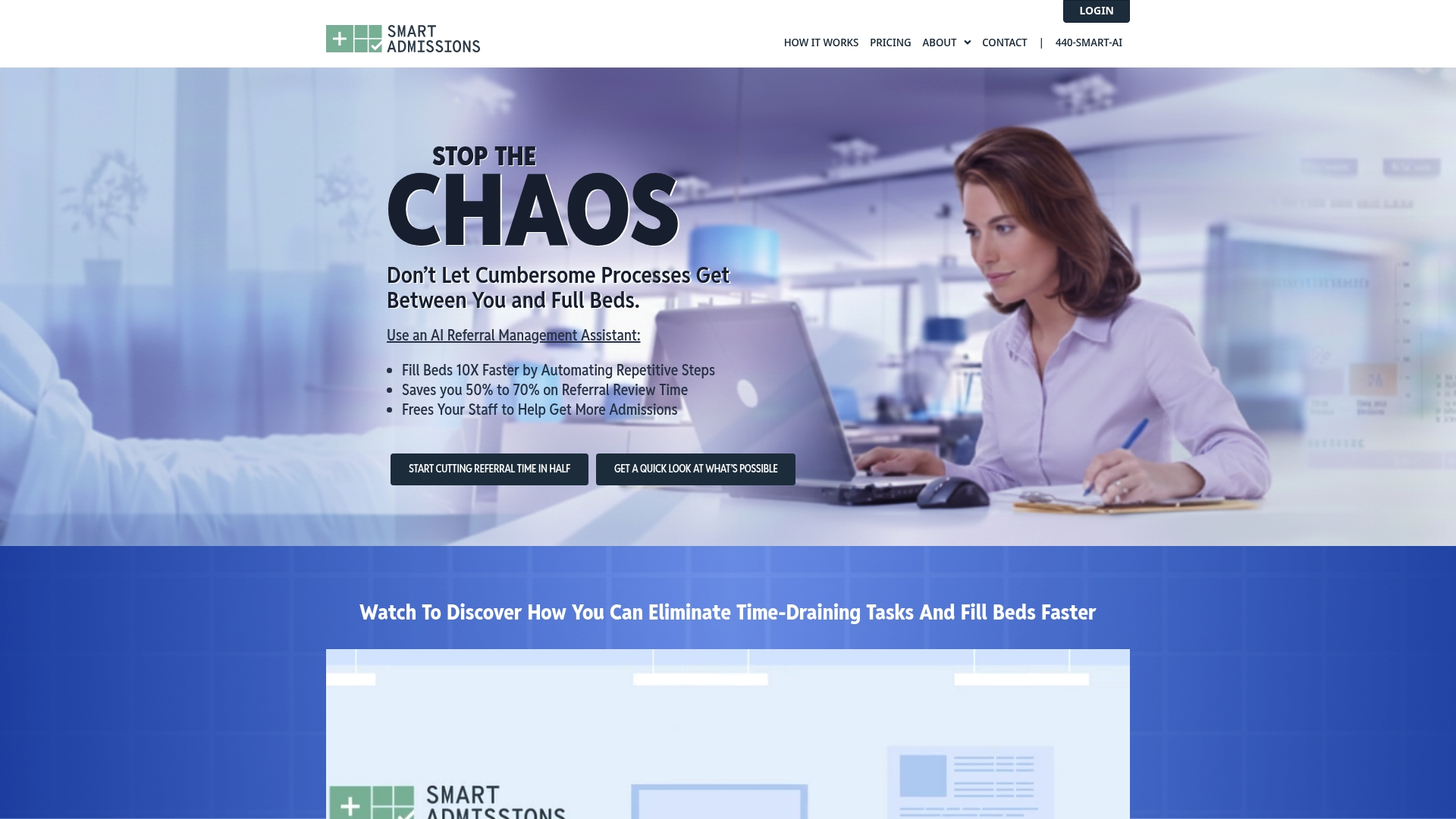
Explore the full potential of AI driven admissions management. Start your transformation now by visiting Smart Admissions. Find out how to automate referral intake and eligibility verification by exploring our platform and schedule a demo for immediate impact.
Frequently Asked Questions
How can I automate patient referral intake to improve our admissions process?
Automate patient referral intake by implementing AI tools that streamline data entry and eligibility checks. Start by running a pilot program on a small set of referrals to validate performance and optimize processes.
What steps should I take to integrate Electronic Medical Records with insurance portals?
To integrate your Electronic Medical Records (EMR) with insurance portals, prioritize systems with robust API capabilities. Conduct an audit of your current EMR’s integration potential to identify possible bottlenecks and choose a fitting solution.
How can real-time eligibility verification systems enhance patient onboarding?
By implementing real-time eligibility verification systems, you can instantly confirm patient insurance coverage and reduce manual checks. Choose a system that integrates with your existing EMR for seamless data handling and aim to cut verification time from hours to seconds.
What are the benefits of using standardized intake checklists for staff?
Standardized intake checklists ensure consistency in documentation and reduce human error in patient assessments. Design these checklists collaboratively, and update them regularly to align with best practices and evolving regulations.
How can analytics improve workflow efficiency in admissions?
Utilize analytics to identify bottlenecks and enhance operational performance within your admissions process. Start by focusing on a specific workflow area, such as patient referrals, to demonstrate immediate benefits and support broader data-driven strategies.
Why is ongoing training critical for my intake team?
Ongoing training ensures that your intake team remains proficient with the latest technologies and regulatory requirements. Design a quarterly training calendar that includes short, modular sessions to maximize participation and knowledge retention.
Recommended
- Manual vs Automated Patient Intake: Which Is Better For Your Skilled Nursing Facility? – Smart Admissions
- How Our Patient Referral Software Works | Smart Admissions
- The Busy Administrator’s Guide to Streamlining Referral Processes in Under an Hour – Smart Admissions
- 5-Minute Veteran Intake: How DD214 Checking Fits Into Complete Workflow Automation – Smart Admissions
- Ventajas de IA para docentes – Comparativa 2025 – Rescrito