
AI-powered intake platforms can cut referral review times by half, drastically speeding up patient admissions. Manual patient intake workflows in skilled nursing and rehabilitation centers cause operational bottlenecks, delayed bed occupancy, and staff burnout. Admissions coordinators spend hours reviewing referrals, verifying insurance eligibility, and managing documentation errors that reduce revenue. Technology solutions automate these repetitive tasks, enabling facilities to admit patients faster, optimize bed utilization, and support overworked staff.
Table of Contents
- Core Technologies Transforming Patient Intake
- Operational and Financial Impacts of Intake Technology
- Common Misconceptions About Healthcare Intake Technology
- Comparison Framework of Intake Technology Solutions
- Implementation Best Practices and Compliance Considerations
- Conclusion: Optimizing Intake for Better Outcomes
- Discover AI-Powered Intake Solutions for Skilled Nursing Centers
- Frequently Asked Questions
Key Takeaways
| Point | Details |
|---|---|
| AI reduces referral times by 50% | Automation accelerates patient admissions and improves bed occupancy rates significantly. |
| Staff burnout drops 30% | Eliminating repetitive tasks allows coordinators to focus on patient care decisions. |
| EMR and insurance integration is essential | Seamless data flow eliminates manual entry errors and speeds eligibility verification. |
| Technology supports staff, not replaces them | Human oversight remains critical for clinical judgment and compliance validation. |
| Customization ensures successful adoption | Platforms must align with existing workflows and meet facility-specific needs. |
Introduction to Healthcare Intake Challenges
Manual patient intake creates significant operational obstacles for skilled nursing and rehabilitation facilities. Admissions coordinators manually review referrals, contact insurance providers, retrieve medical records from multiple sources, and verify patient eligibility. These referral review inefficiencies delay admissions and reduce revenue potential.
Manual referral review times average substantially longer than automated processes, leading to lost revenue and delayed admissions. Coordinators spend 45 to 90 minutes per referral on phone calls, faxes, and portal logins to gather necessary information. This slow pace creates admission backlogs that prevent facilities from filling beds quickly.
Documentation errors compound these delays. Missing insurance information, incomplete medical histories, or eligibility verification mistakes force staff to restart the intake process. These errors extend patient wait times, increase administrative costs, and sometimes result in denied claims that hurt facility revenue.
Staff burnout intensifies as coordinators handle repetitive tasks under time pressure. The constant manual workload leaves little time for strategic planning or patient interaction. High turnover rates among admissions staff further strain operations and increase training costs. Facilities need technology solutions that eliminate these inefficiencies while supporting their teams.
Key Manual Intake Challenges:
- Slow referral review processes delay patient admissions by days
- Insurance verification requires multiple phone calls and portal access
- Documentation errors cause claim denials and revenue loss
- Staff spend excessive time on repetitive administrative tasks
- High coordinator turnover disrupts admissions workflows
Pro Tip: Track your current average referral review time and documentation error rate before implementing technology. These baseline metrics help you measure improvement and demonstrate ROI to stakeholders.
Core Technologies Transforming Patient Intake
AI-powered referral management systems combined with EMR and insurance portal integration automate eligibility checks and document retrieval effectively. These platforms use machine learning to analyze referrals, prioritize urgent cases, and flag potential issues before human review. Integration eliminates manual data entry by pulling patient information directly from electronic medical records.
Artificial intelligence transforms referral triage by instantly assessing patient acuity, insurance coverage, and bed availability. AI-powered referral management algorithms identify which referrals match facility capabilities and which require additional clinical review. This automated prioritization ensures coordinators focus on viable admissions first.
EMR and insurance integration creates seamless data flow between systems. Platforms connect to major EMR vendors and insurance portals to retrieve patient demographics, medical histories, and coverage details automatically. Real-time eligibility verification eliminates phone calls to insurance companies and reduces verification errors.
Automation handles documentation management by extracting relevant information from referral documents, organizing clinical data, and generating intake summaries. Natural language processing reads physician notes, medication lists, and diagnostic reports to create structured patient profiles. This technology reduces manual review time while maintaining accuracy.
Core Technology Components:
- AI algorithms for automatic referral scoring and prioritization
- EMR integrations for seamless patient data retrieval
- Insurance portal connections for real-time eligibility verification
- Document automation tools for extracting and organizing clinical information
- Analytics dashboards for tracking intake performance metrics
Pro Tip: Prioritize platforms that offer pre-built integrations with your existing EMR and the insurance portals you use most frequently. Custom integrations add implementation time and cost.
Operational and Financial Impacts of Intake Technology
Facilities report referral review time reductions of up to 50%, bed occupancy rate improvements of 20%, and staff burnout drops by 30% after adoption. These improvements translate directly to increased revenue through faster bed fills and reduced administrative overhead. Coordinators complete intake processes in minutes instead of hours.

Intake automation success metrics demonstrate significant operational gains across facilities. Automated eligibility verification eliminates the average 30-minute delay per referral caused by insurance phone calls. Document retrieval happens instantly instead of requiring days of follow-up requests. These time savings accumulate quickly across dozens of daily referrals.
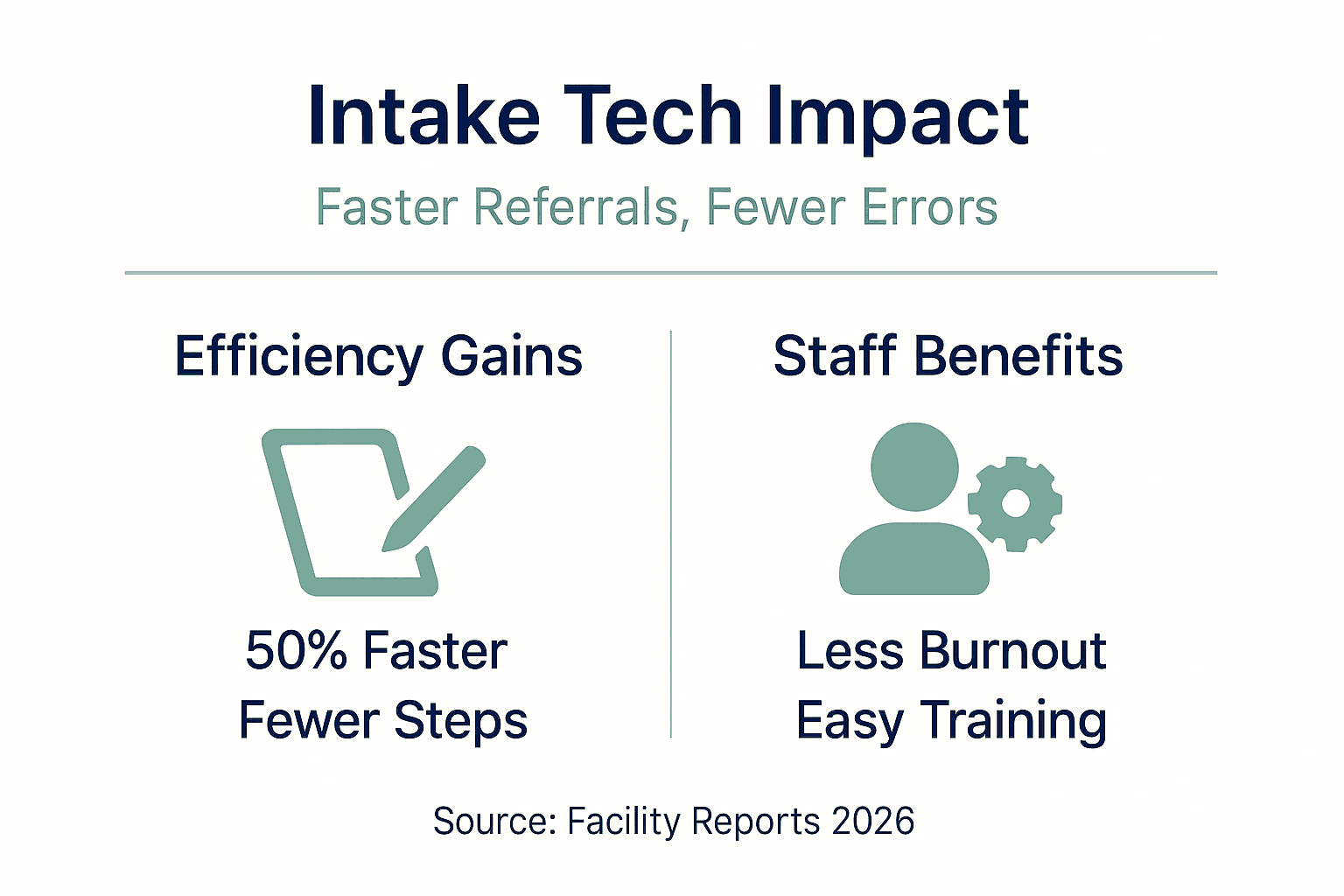
Bed occupancy rates improve when facilities admit patients faster. Each day a bed remains empty represents lost revenue that compounds over time. AI referral management impact studies show facilities fill beds 3 to 5 days faster on average, directly increasing monthly revenue by thousands of dollars per bed.
Staff burnout decreases measurably when coordinators spend less time on repetitive tasks. Technology handles insurance verification, document organization, and data entry, freeing staff for patient interaction and clinical coordination. Lower burnout reduces turnover, saving recruitment and training costs while maintaining experienced teams.
| Metric | Before Technology | After Technology | Improvement |
|---|---|---|---|
| Average Referral Review Time | 60-90 minutes | 30-45 minutes | 50% reduction |
| Bed Occupancy Rate | 85% | 95-98% | 10-13% increase |
| Staff Burnout Score | High | Moderate | 30% reduction |
| Daily Referrals Processed | 8-12 | 18-25 | 100% increase |
| Documentation Error Rate | 15-20% | 3-5% | 75% reduction |
Pro Tip: Calculate your facility’s daily empty bed cost by dividing daily operating expenses by total beds. Multiply this by the average days beds stay empty to quantify potential revenue gains from faster admissions.
Common Misconceptions About Healthcare Intake Technology
Technology augments admissions staff rather than replacing them, requiring human validation and assuring HIPAA-compliant security. Many administrators fear automation will eliminate coordinator positions or compromise patient data security. Understanding the reality helps facilities make informed adoption decisions.
The biggest myth suggests AI eliminates the need for admissions coordinators. In practice, technology handles repetitive data gathering while coordinators focus on clinical judgment, family communication, and complex case coordination. Staff become more productive rather than redundant. Human oversight remains essential for validating AI recommendations and ensuring appropriate patient placements.
Another misconception claims technology requires extensive IT infrastructure or technical expertise. Modern cloud-based platforms need minimal on-site setup and offer intuitive interfaces designed for non-technical users. Vendors provide implementation support and training to ensure smooth adoption without burdening existing IT staff.
Security concerns arise around HIPAA compliance and patient data protection. Reputable platforms meet all federal healthcare privacy requirements, often exceeding basic compliance with enhanced encryption and access controls. Technology actually improves security by reducing paper documentation and limiting unauthorized access through role-based permissions.
Common Technology Myths Debunked:
- Myth: AI replaces admissions coordinators completely
- Reality: Technology handles repetitive tasks while staff focus on clinical decisions and patient interaction
- Myth: Implementation requires expensive IT infrastructure
- Reality: Cloud platforms need minimal setup and offer vendor-supported onboarding
- Myth: Automation compromises HIPAA compliance
- Reality: Quality platforms exceed compliance requirements with enterprise-grade security
For facilities hesitant about healthcare intake technology myths, pilot programs offer low-risk ways to test benefits. Start with a single department or referral source to demonstrate value before facility-wide rollout. Measure specific outcomes like referral processing time and coordinator satisfaction to build confidence.
Comparison Framework of Intake Technology Solutions
Key selection criteria include integration ability, customization options, analytics, user support, and compliance certifications when evaluating platforms. Not all solutions offer the same features or meet every facility’s unique requirements. A structured evaluation process ensures you choose technology that delivers maximum value.
Integration capability stands as the most critical factor. Platforms must connect seamlessly with your existing EMR system, major insurance portals, and any specialized clinical software you use. Verify that vendors offer pre-built integrations rather than requiring expensive custom development. Ask about API capabilities for future system additions.
Customization determines whether technology adapts to your workflows or forces you to change established processes. Look for platforms allowing custom fields, configurable approval workflows, and adjustable scoring criteria for referral prioritization. The best solutions let you maintain your clinical standards while automating administrative tasks.
Analytics dashboards provide actionable insights for continuous improvement. Effective platforms track referral sources, admission bottlenecks, coordinator productivity, and bed occupancy trends. Real-time reporting helps administrators make data-driven decisions about staffing, marketing, and operational improvements.
| Evaluation Criteria | What to Look For | Why It Matters |
|---|---|---|
| EMR Integration | Pre-built connectors for your EMR vendor | Eliminates manual data entry and reduces errors |
| Insurance Portal Access | Direct connections to major payers | Enables instant eligibility verification |
| Workflow Customization | Configurable approval processes and scoring | Aligns technology with existing clinical protocols |
| Analytics and Reporting | Real-time dashboards with actionable metrics | Supports continuous operational improvement |
| Vendor Support | 24/7 assistance and dedicated onboarding | Ensures smooth implementation and ongoing success |
| HIPAA Compliance | Current certifications and audit trails | Protects patient data and meets legal requirements |
Platform Selection Considerations:
- Evaluate at least three vendors using consistent criteria
- Request demonstrations with your actual workflows and data scenarios
- Check references from facilities similar in size and patient population
- Clarify total cost including implementation, training, and ongoing support
- Verify contract terms for data ownership and system access if you change vendors
The intake technology comparison framework helps you systematically assess options. Create a scoring rubric weighting each criterion by importance to your facility. Involve admissions coordinators in vendor demonstrations since they will use the system daily.
Implementation Best Practices and Compliance Considerations
Successful implementation requires customization, strict HIPAA compliance, thorough training, and continuous metrics monitoring to maximize technology benefits. Rushing deployment or skipping steps compromises outcomes and frustrates staff. Follow proven methodologies to ensure smooth adoption.
Start by mapping your current intake workflow in detail. Document every step from initial referral receipt through patient admission, noting pain points, approval requirements, and data sources. This assessment identifies specific processes where automation delivers the most value and helps you configure platforms to match existing workflows.
Prioritize platforms offering deep customization and integration capabilities. Configure the system to replicate your clinical assessment criteria, approval hierarchies, and documentation requirements before going live. Test thoroughly with sample referrals to catch configuration issues early.
Enforce HIPAA regulations rigorously throughout implementation. Verify the vendor’s Business Associate Agreement covers all platform features and data handling. Establish role-based access controls limiting staff to only the information necessary for their duties. Implement audit logging to track all system access and data changes for compliance documentation.
Train staff comprehensively on both system usage and compliance protocols. Provide hands-on practice with realistic scenarios rather than just reviewing features. Schedule refresher training sessions after the first month to address questions that arise during daily use.
Implementation Steps for Success:
- Complete detailed workflow assessment documenting current processes and pain points
- Select platform meeting integration, customization, and compliance requirements
- Configure system to match clinical protocols and approval workflows
- Conduct thorough testing with sample referrals before launch
- Train all admissions staff on system use and security protocols
- Monitor key metrics weekly for first 90 days to identify issues quickly
- Gather staff feedback monthly and adjust configurations as needed
Monitor referral processing times, bed occupancy rates, and coordinator satisfaction scores after launch. Best practices for intake implementation emphasize continuous improvement based on real-world performance data. Schedule monthly reviews with your vendor to optimize configurations and leverage new features.
Pro Tip: Designate an internal champion who understands both clinical workflows and technology to coordinate implementation. This person bridges communication between coordinators, administrators, and the vendor for smoother adoption.
Conclusion: Optimizing Intake for Better Outcomes
Healthcare intake technology delivers transformative benefits for skilled nursing and rehabilitation centers facing manual workflow challenges. Automation reduces referral review times by half while cutting staff burnout by 30%, enabling faster patient admissions and improved bed utilization. These operational improvements translate directly to increased revenue and better patient outcomes.
Facilities that adopt AI-powered platforms gain strategic advantages in competitive post-acute care markets. Faster admissions capture more referrals before competitors, while analytics provide insights for targeted growth strategies. Technology supports rather than replaces admissions staff, allowing coordinators to focus on patient care and clinical coordination.
The implementation process requires careful planning around integration, customization, compliance, and training. Facilities following best practices see measurable results within weeks of launch. Success metrics demonstrate ROI through reduced empty bed days, lower administrative costs, and improved staff satisfaction.
Exploring modern intake solutions positions your facility for sustained operational excellence. The technology maturity and proven results make 2026 the ideal time to modernize patient intake workflows for competitive advantage.
Discover AI-Powered Intake Solutions for Skilled Nursing Centers
Smart Admissions offers an AI-driven platform specifically designed for skilled nursing and rehabilitation facilities seeking to eliminate intake bottlenecks. Our technology delivers the benefits discussed throughout this article, achieving up to 50% faster referral reviews and 30% reductions in staff burnout for our clients.
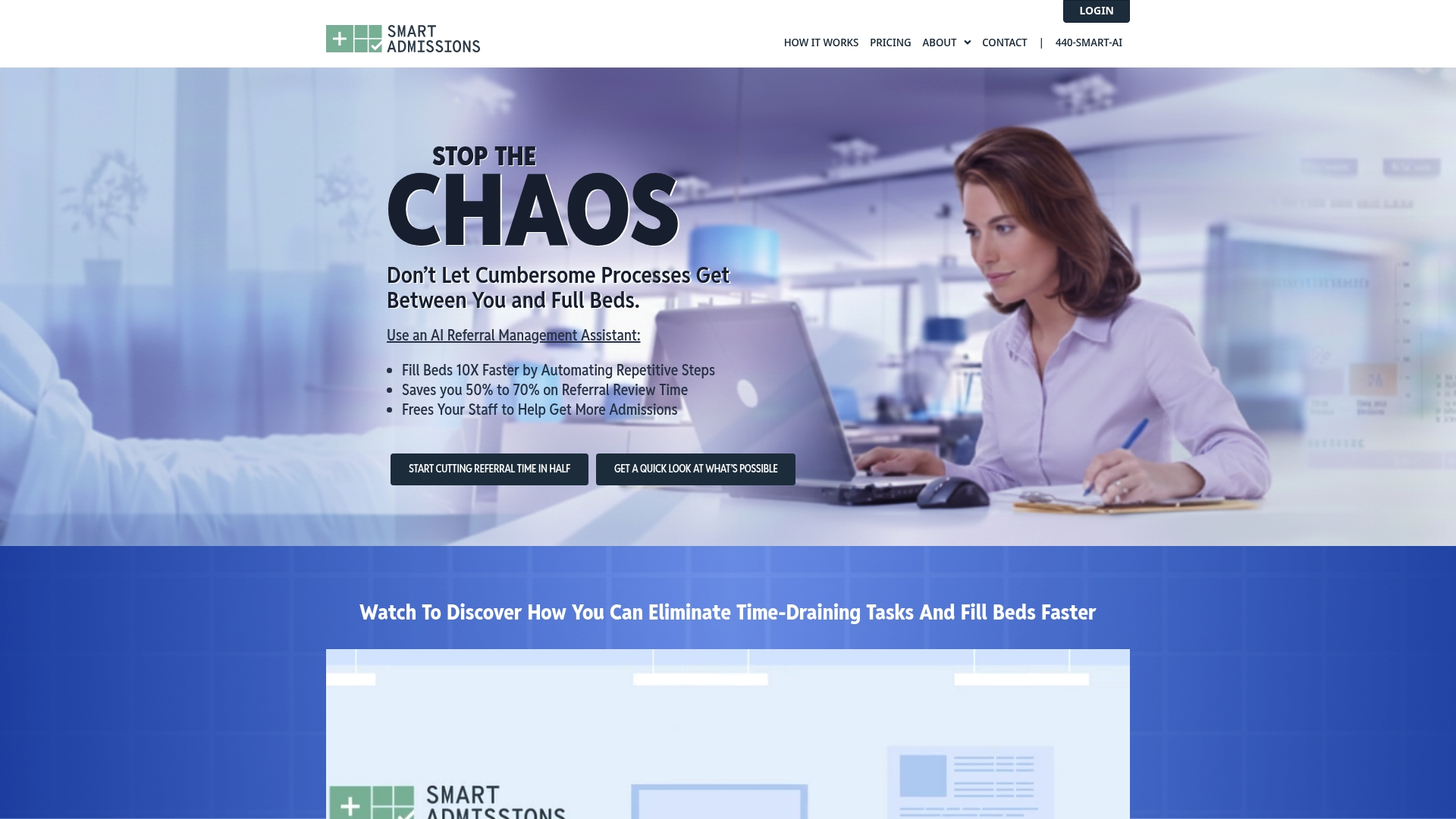
The platform provides seamless EMR and insurance integration that automates eligibility verification, document retrieval, and clinical data organization. Customizable workflows adapt to your facility’s unique protocols while maintaining compliance with all HIPAA requirements. Real-time analytics dashboards give administrators actionable insights for continuous operational improvement.
Explore how intake automation with Smart Admissions transforms patient intake workflows. Our AI-powered patient intake technology handles repetitive tasks so your coordinators can focus on patient care. Compare our platform against other referral management system options to see why skilled nursing facilities choose Smart Admissions for faster admissions and better outcomes.
Frequently Asked Questions
How does intake automation affect admissions coordinator roles?
Automation eliminates repetitive data entry and insurance verification calls, allowing coordinators to focus on clinical assessments and patient communication. Staff become more productive handling higher referral volumes without increasing work hours. Technology supports decision-making rather than replacing human judgment.
What security measures protect patient data in intake platforms?
Quality platforms exceed HIPAA requirements with end-to-end encryption, role-based access controls, and comprehensive audit logging. Data remains encrypted both in transit and at rest. Regular security audits and penetration testing ensure ongoing protection against emerging threats.
How quickly can facilities integrate intake technology with existing EMR systems?
Platforms with pre-built EMR integrations typically complete setup within 2 to 4 weeks. The timeline includes configuration, data migration testing, staff training, and validation. Cloud-based solutions require no on-site hardware installation, accelerating deployment.
What metrics indicate successful intake technology implementation?
Track referral processing time reductions, bed occupancy rate improvements, documentation error decreases, and staff satisfaction scores. Compare pre-implementation baselines to post-launch performance monthly. Successful implementations show measurable improvements within 60 to 90 days of going live.