
The role of AI-powered assistants in healthcare. Handling patient referrals and admissions in a busy skilled nursing home can feel overwhelming when every case demands precise documentation and timely coordination. Admissions coordinators everywhere face the challenge of balancing rising administrative tasks with the need for rapid, error-free patient intake. With the rise of AI-powered assistants in healthcare, advanced technologies like machine learning, natural language processing, and voice assistants are now transforming traditional workflows and making patient referral efficiency achievable for facilities around the world.
Table of Contents
- Defining AI-Powered Assistants In Healthcare
- Key Types And Core Functions In Admissions
- How AI Integrates With EMRs And Workflows
- Real-World Impact: Efficiency And Patient Outcomes
- Risks, Limitations, And Implementation Challenges
Key Takeaways
| Point | Details |
|---|---|
| AI-Powered Assistants Enhance Healthcare | These technologies optimize administrative workflows, improve patient interactions, and support clinical decision-making through automation and predictive capabilities. |
| Integration with Existing Systems is Crucial | Successful AI adoption relies on seamless integration with Electronic Health Record systems and robust data security measures. |
| Risks Must Be Managed | Organizations need to address challenges including algorithmic bias, data privacy risks, and the need for staff training to effectively implement AI solutions. |
| Focus on Customized Solutions | Prioritize AI technologies that are tailored to the specific needs of healthcare to maximize efficiency and positive patient outcomes. |
Defining AI-Powered Assistants in Healthcare
Artificial Intelligence (AI) powered assistants in healthcare represent a sophisticated technological ecosystem designed to streamline administrative processes, enhance patient interactions, and support clinical decision-making. These advanced systems leverage cutting-edge technologies to transform traditional healthcare workflows through intelligent automation and predictive capabilities.
Healthcare AI assistants encompass multiple technological domains, including machine learning and natural language processing. Their core functionality extends beyond simple task automation, integrating complex capabilities that address diverse operational challenges within medical environments:
- Diagnostic support through advanced pattern recognition
- Administrative workflow optimization
- Patient engagement enhancement
- Real-time data processing and analysis
These AI systems are not generic technological solutions but specialized platforms tailored specifically for healthcare’s unique requirements. Voice AI assistants demonstrate particular complexity, requiring nuanced understanding of functional factors like usefulness, content credibility, and security considerations specific to medical contexts.
Key technological components of healthcare AI assistants include:
- Rule-based expert systems
- Machine learning algorithms
- Natural language processing engines
- Robotic process automation frameworks
The sophistication of these systems has dramatically evolved from basic rule-based interactions to advanced generative models capable of complex reasoning and contextual understanding. Modern AI-powered healthcare assistants can interpret medical documentation, suggest treatment pathways, verify patient eligibility, and streamline administrative processes with unprecedented efficiency.
Here’s a structured overview comparing core AI technologies in healthcare assistants:
| Technology Type | Primary Healthcare Use | Key Advantage | Typical Challenge |
|---|---|---|---|
| Rule-based Expert Systems | Standardized decision protocols | Reliable consistency | Limited adaptability |
| Machine Learning Algorithms | Predictive analytics, risk scoring | Data-driven insights | Demands large data sets |
| NLP Engines | Medical text and speech analysis | Improves communication | Complex language variations |
| Robotic Process Automation | Streamlining admin tasks | Increases efficiency | Integration with legacy systems |
Pro tip: When evaluating AI assistants for healthcare settings, prioritize solutions that demonstrate robust security protocols, HIPAA compliance, and seamless integration with existing Electronic Health Record systems.
Key Types and Core Functions in Admissions
Healthcare AI-powered assistants for admissions represent a sophisticated technological approach to transforming patient intake processes through intelligent automation and targeted functionality. Natural language processing technologies enable these systems to interpret complex medical information and streamline administrative workflows with unprecedented efficiency.
The core types of AI assistants in healthcare admissions can be categorized into several critical technological domains:
- Rule-based expert systems for standardized decision making
- Machine learning algorithms for predictive patient matching
- Natural language processing engines for documentation interpretation
- Robotic process automation frameworks for administrative task management
Voice-based AI assistants play a particularly innovative role in healthcare admissions, offering specialized functionalities that address multiple operational challenges:
- Patient information verification
- Automated scheduling capabilities
- Real-time health information retrieval
- Healthcare system navigation support
These AI systems go beyond simple automation, providing intelligent solutions that dynamically adapt to complex healthcare environments. They can seamlessly integrate patient data, verify insurance eligibility, recommend optimal care pathways, and reduce administrative bottlenecks that traditionally slow down admissions processes.
Modern healthcare AI assistants leverage advanced computational techniques to transform traditionally manual and time-consuming admissions workflows. By combining predictive analytics, natural language understanding, and automated processing, these technologies enable healthcare facilities to streamline patient intake, improve operational efficiency, and enhance overall patient experience.
Pro tip: When implementing AI-powered admissions assistants, prioritize solutions that offer robust data security, HIPAA compliance, and flexible integration capabilities with existing Electronic Health Record systems.
How AI Integrates With EMRs and Workflows
Healthcare organizations are increasingly leveraging AI technologies to transform Electronic Medical Record (EMR) systems and streamline complex administrative workflows. Predictive analytics in healthcare integration enables sophisticated data interpretation, allowing medical facilities to extract unprecedented insights from patient information and operational processes.
The integration approach encompasses several critical technological strategies:
- Data standardization across multiple healthcare platforms
- Automated patient information processing
- Real-time clinical decision support
- Intelligent workflow optimization
- Comprehensive performance tracking
Enterprise resource planning systems play a crucial role in facilitating seamless AI integration by providing robust infrastructure for cross-department synchronization. These systems enable healthcare providers to:
- Automate routine administrative tasks
- Reduce manual documentation burden
- Enhance patient data accuracy
- Improve operational efficiency
AI-powered EMR integration goes beyond simple data management, creating intelligent ecosystems that dynamically adapt to complex healthcare environments. By leveraging machine learning algorithms and natural language processing, these systems can interpret complex medical documentation, predict potential patient risks, and recommend optimal care pathways with remarkable precision.

The technological framework requires sophisticated data governance, ensuring robust security protocols, HIPAA compliance, and maintaining the highest standards of patient information protection. Advanced AI models continuously learn from historical data, refining their predictive capabilities and providing increasingly accurate insights for healthcare administrators and clinical staff.
Pro tip: Prioritize AI integration solutions that offer transparent algorithmic processes, comprehensive data security measures, and flexible customization options tailored to your specific healthcare facility’s workflow requirements.
Real-World Impact: Efficiency and Patient Outcomes
Healthcare organizations are experiencing transformative changes through AI-powered technologies that dramatically enhance operational efficiency and patient care quality. Global healthcare transformation technologies are revolutionizing diagnostic accuracy, emergency resource allocation, and administrative processes with unprecedented precision.
The tangible benefits of AI integration across healthcare settings include several critical improvements:
- Faster patient referral processing
- More accurate diagnostic assessments
- Reduced administrative overhead
- Enhanced clinical decision support
- Improved resource allocation
Healthcare AI implementation strategies demonstrate measurable impacts on institutional performance, with specific advantages for skilled nursing facilities:
- Reducing clinician administrative burden
- Streamlining patient intake processes
- Minimizing manual documentation errors
- Accelerating insurance verification times
AI technologies enable healthcare providers to shift from reactive to predictive care models, identifying potential patient risks and intervention points before traditional methods would detect them. By analyzing complex datasets and historical patient information, these intelligent systems can generate nuanced insights that support more personalized and proactive healthcare delivery.
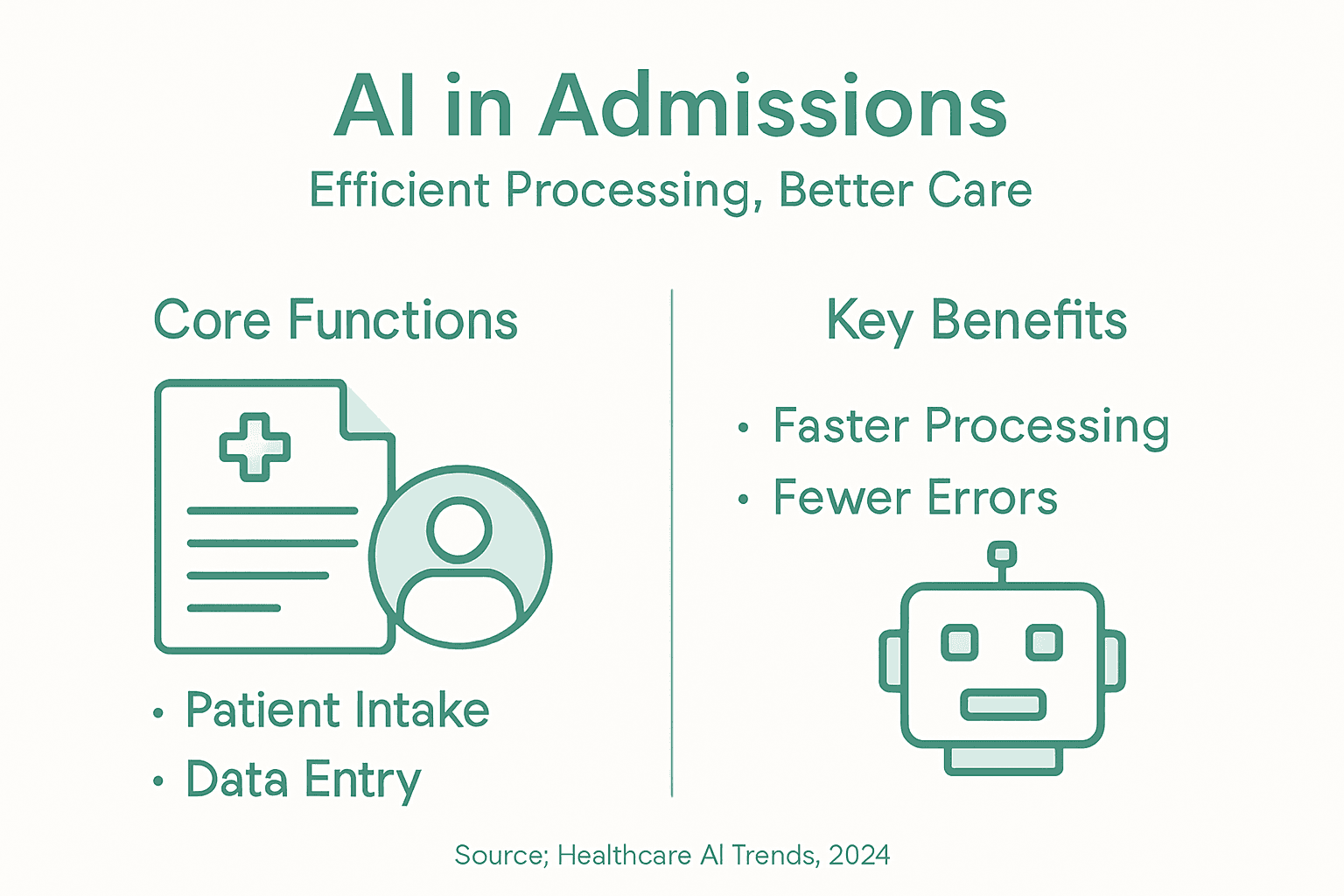
The technological landscape continues to evolve, with AI applications becoming increasingly sophisticated in interpreting medical data, supporting clinical decisions, and optimizing operational workflows. Healthcare facilities that strategically implement these technologies can achieve significant improvements in patient outcomes, operational efficiency, and overall institutional performance.
The table below summarizes the main benefits of AI integration for healthcare workflow and patient outcomes:
| Area Improved | AI Impact | Business Value | Example Result |
|---|---|---|---|
| Patient Intake | Faster processing, eligibility accuracy | Reduced bottlenecks | Quicker admissions |
| Clinical Decision Support | Real-time recommendations, risk prediction | Higher care quality | Timelier interventions |
| Administrative Efficiency | Automated documentation, fewer errors | Lower operating costs | Minimized manual data handling |
| Resource Allocation | Data-driven staffing and scheduling | Optimal use of resources | Balanced clinician workload |
Pro tip: Develop a comprehensive AI integration strategy that prioritizes staff training, data security, and incremental implementation to maximize technological benefits and minimize operational disruptions.
Risks, Limitations, and Implementation Challenges
Healthcare AI technologies, while promising transformative potential, present complex challenges that demand rigorous evaluation and strategic management. Ethical considerations in healthcare AI reveal critical concerns surrounding safety, transparency, and potential systemic biases that could impact patient care and clinical decision-making.
The primary implementation challenges healthcare organizations must navigate include:
- Technical integration complexities
- Data privacy and security risks
- Potential algorithmic bias
- Workforce adaptation requirements
- Regulatory compliance challenges
Healthcare AI deployment strategies emphasize the critical need to address multiple interdependent challenges:
- Ensuring robust data governance
- Mitigating potential technological disruptions
- Developing comprehensive staff training programs
- Maintaining transparent algorithmic processes
Healthcare professionals must critically assess AI technologies, understanding that these tools are supplementary rather than replacements for human clinical judgment. The potential risks include over-reliance on algorithmic recommendations, misinterpretation of complex medical scenarios, and the inadvertent perpetuation of existing healthcare disparities through biased training datasets.
Successful AI implementation requires a nuanced approach that balances technological innovation with ethical considerations, patient safety, and comprehensive regulatory compliance. Organizations must develop robust governance frameworks that prioritize transparency, continuous monitoring, and adaptive implementation strategies.
Pro tip: Establish a multidisciplinary AI governance committee that includes clinicians, ethicists, data scientists, and patient advocates to comprehensively evaluate and monitor AI technology integration.
Revolutionize Your Healthcare Admissions with AI-Powered Automation
The article highlights the complex challenges healthcare facilities face in admissions such as administrative bottlenecks, patient eligibility verification, and integration with Electronic Medical Records (EMR). If you are striving to reduce referral review times, minimize manual documentation, and improve bed occupancy rates, then embracing AI-powered assistants designed specifically for healthcare can transform your workflow. These systems enhance patient intake, automate repetitive tasks, and provide real-time insights that align perfectly with the goals outlined in the article.
Smart Admissions offers a state-of-the-art SaaS platform tailor-made for skilled nursing homes, rehabilitation centers, and post-acute care providers that addresses exactly these pain points. Its AI-powered referral management assistant seamlessly integrates with your existing EMR and insurance portals, delivering faster patient eligibility verification, streamlined clinical assessment, and automated documentation management. This means less staffing burnout, quicker admissions, and ultimately higher revenue through optimized bed fill rates. Discover how you can implement cutting-edge AI that respects healthcare security and compliance standards without the need for complicated technical support by visiting Smart Admissions.
Enhance your admissions process now and lead your healthcare facility to new levels of operational efficiency and patient care.
Explore the future of admissions automation and workflow optimization with Smart Admissions today.
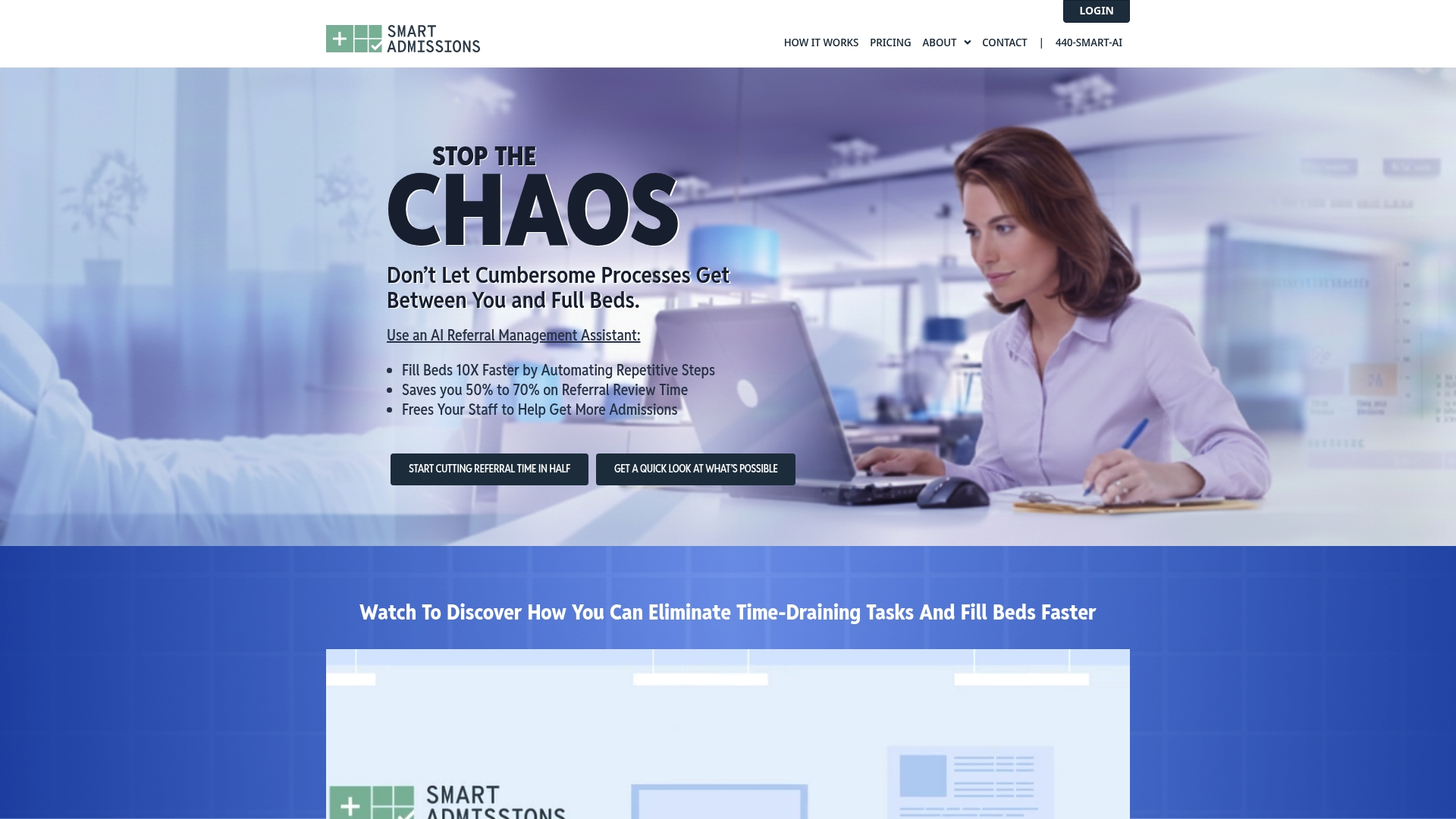
Ready to streamline patient intake and reduce administrative overhead with a proven AI solution designed for healthcare? Visit Smart Admissions to learn more and request a demo.
Frequently Asked Questions
What are AI-powered assistants in healthcare admissions?
AI-powered assistants in healthcare admissions are sophisticated technological systems designed to streamline patient intake processes, optimize administrative workflows, and enhance patient interactions through intelligent automation and advanced functionalities like natural language processing and machine learning.
How do AI systems improve the admissions process in healthcare?
AI systems improve the admissions process by automating routine tasks such as patient information verification, scheduling, and retrieving real-time health data. This leads to faster patient processing, reduced administrative overhead, and better patient experience overall.
What technologies are commonly used in healthcare AI admissions assistants?
Common technologies used in healthcare AI admissions assistants include rule-based expert systems for decision making, machine learning algorithms for predictive analytics, natural language processing engines for documentation interpretation, and robotic process automation frameworks for managing administrative tasks.
What are the key benefits of implementing AI-powered admissions assistants?
The key benefits include enhanced operational efficiency, reduced bottlenecks during patient intake, improved accuracy in processing health information, and better resource allocation within healthcare facilities.
Recommended
- Clinical Assessment Automation: What to Automate (and What to Keep Manual) – Smart Admissions
- From 45 Minutes to 5: How AI Is Transforming Referral Reviews – Smart Admissions
- How Our Patient Referral Software Works | Smart Admissions
- Manual vs Automated Patient Intake: Which Is Better For Your Skilled Nursing Facility? – Smart Admissions