
Picture this: A 92-year-old Korean War veteran arrives at your skilled nursing facility. His family hands over a folded, yellowed DD214 that's been sitting in a shoebox since 1953. The typewritten text is faded, there's a coffee stain in the corner, and half the service codes are barely visible. Your admissions coordinator squints at it, tilts it toward the light, and silently panics.
Sound familiar?
For SNF admissions teams working with veteran patients, this scenario plays out daily. And while the challenge of DD214 format variations is well-documented, there's another layer to this problem: the physical degradation of these critical military documents over time.
The good news? Specialized OCR technology is changing the game entirely.
The Paper Trail: 80+ Years of DD214 History
The DD214 form has been the official discharge document for U.S. military service members since 1950. But here's what most people don't realize: these documents weren't always created equal.
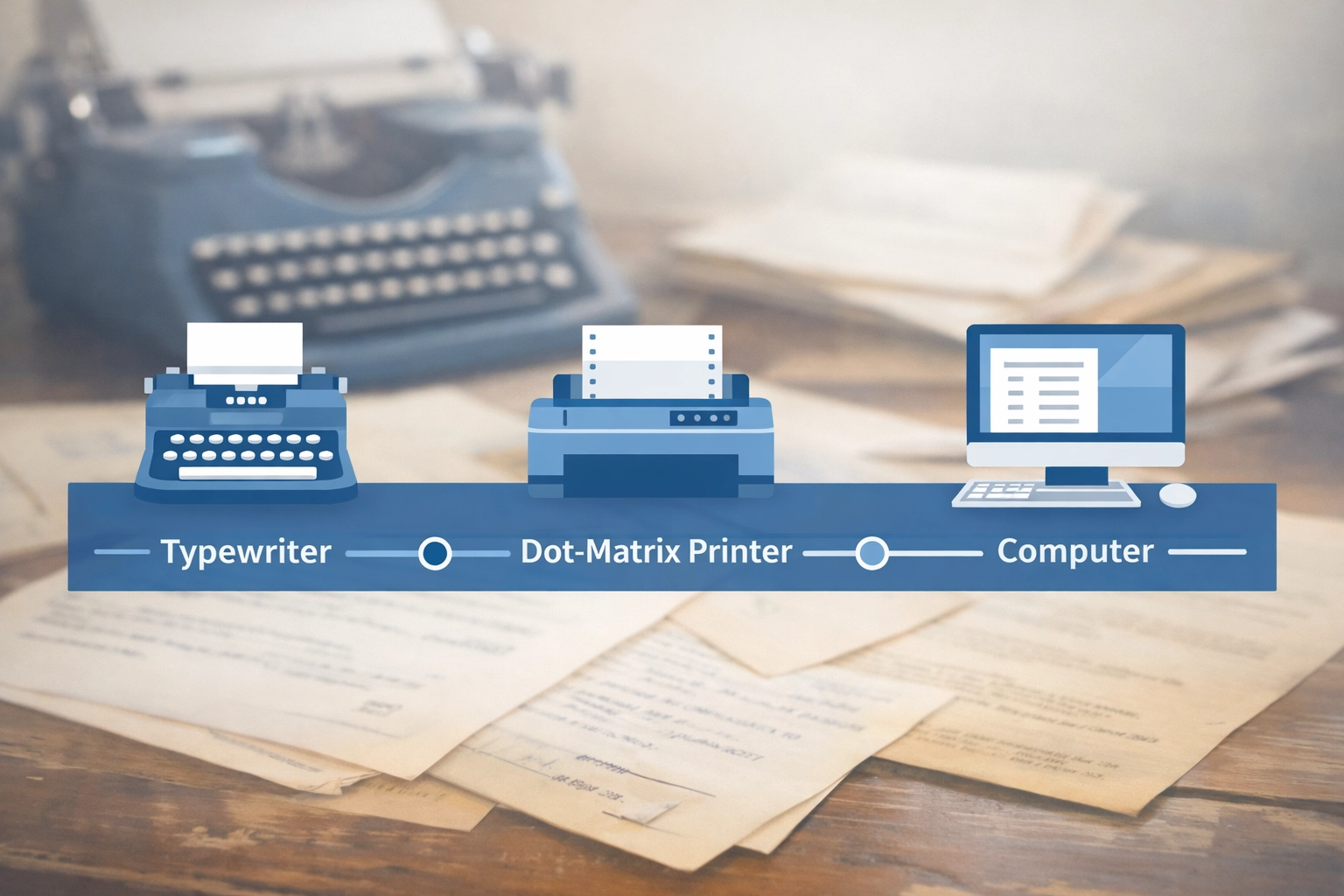
Pre-1980s documents were typically produced on typewriters. Different military branches used different machines. Some were electric, some manual. Ribbon quality varied. Carbon copies were common, and let's just say those copies didn't age gracefully.
1980s through early 2000s saw a gradual shift to dot-matrix printers and eventually laser printing. But many veterans from this era still have documents that have been folded, stored improperly, or exposed to humidity for decades.
Modern DD214s are often digitally generated, but even these can become degraded when printed, faxed multiple times, or scanned on low-quality equipment.
The result? Your admissions team might receive DD214 documents spanning seven decades of printing technology, each with its own unique degradation challenges.
Why Human Eyes and Basic Scanners Fall Short
Let's be honest about what happens when a faded DD214 hits a standard office scanner.
Generic scanning software looks for high-contrast text on a clean background. When it encounters a document where the ink has faded to a light gray, where the paper has yellowed to nearly match the text color, or where creases have created shadows across critical information: it struggles. Badly.
Basic OCR (Optical Character Recognition) technology was designed for modern documents. It expects:
- Consistent font styles
- Clear contrast between text and background
- Standardized layouts
- Minimal damage or distortion
A 1960s typewritten DD214 that's been folded in quarters for 60 years meets exactly zero of these criteria.
And human verification? It's not much better. Even experienced admissions coordinators can misread faded service codes, mistake damaged characters for different letters, or simply miss information that's become too faint to see clearly. When you're dealing with verification mistakes that can cost thousands, guesswork isn't an option.
How AI-Powered OCR Actually Works on Degraded Documents
Here's where things get interesting.
Modern AI-powered OCR doesn't just "read" documents: it interprets them. The technology used by organizations like the National Archives and the Department of Veterans Affairs goes far beyond simple pattern matching.
Image Enhancement Processing
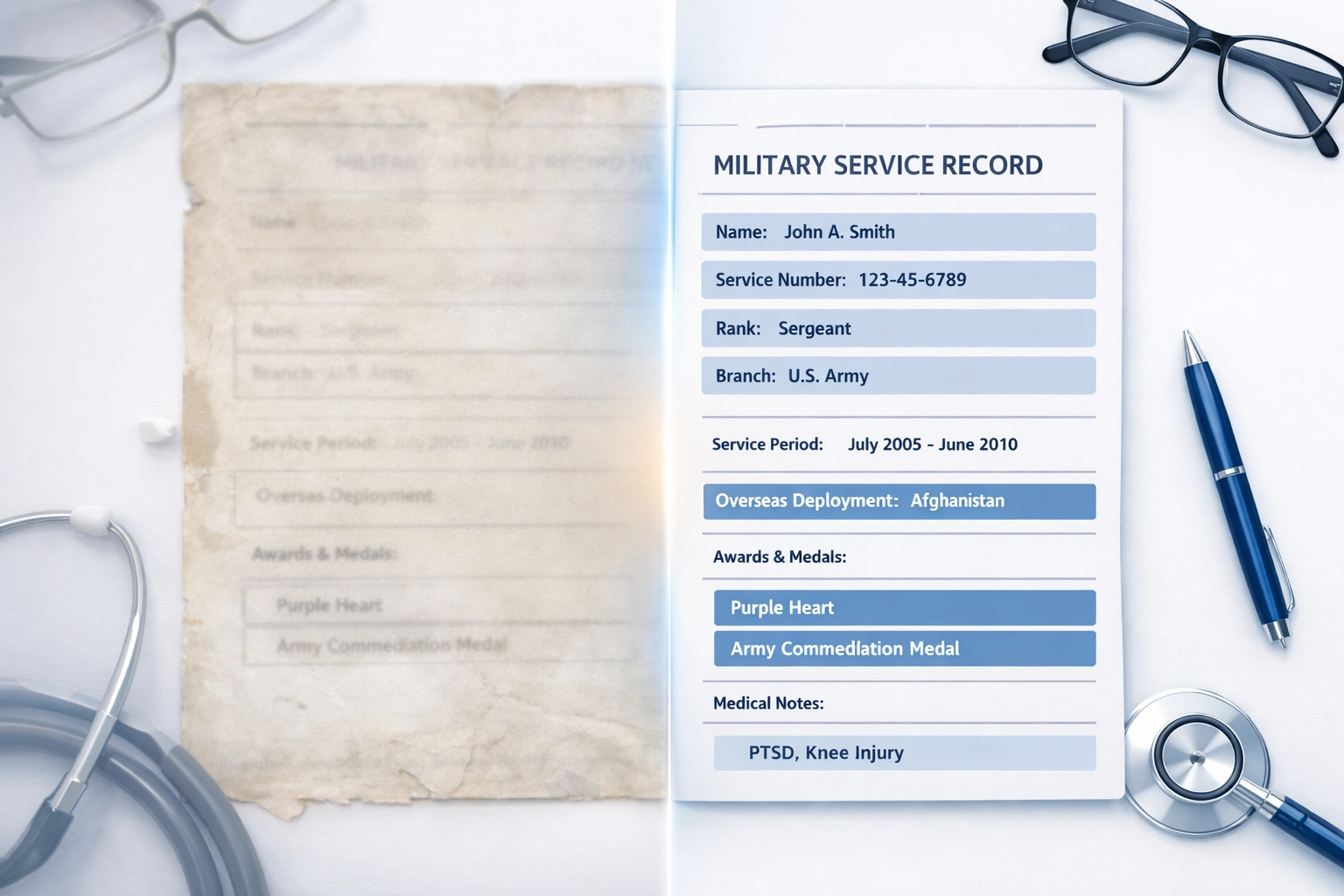
Before any text recognition happens, specialized OCR systems apply sophisticated image processing algorithms. These can:
- Adjust contrast dynamically across different areas of the document
- Remove background noise and discoloration
- Sharpen edges of faded characters
- Compensate for uneven lighting and shadows from folds or creases
Think of it like photo editing on steroids, but automated and specifically trained for document recovery.
Contextual Character Recognition
This is where AI really shines. Instead of looking at each character in isolation, advanced OCR systems analyze context. If the system can clearly read "HONORAB_E DISCHARGE" but one letter is completely illeged, it understands from context that the missing character is an "L."
For DD214s specifically, the AI can be trained on the expected structure, common service codes, standard military terminology, and typical formatting patterns across different eras. This contextual understanding dramatically improves accuracy on degraded documents.
Multi-Pass Analysis
Rather than making a single attempt to read a document, AI systems can make multiple passes with different processing parameters. One pass might optimize for faded text, another for damaged areas, and a third for handwritten annotations. The system then combines these results for maximum accuracy.
The VA's Smart OCR (SOCR) system, for example, uses these advanced capabilities to extract specific data points including names, Social Security numbers, dates of birth, and military service information from documents in varying conditions.
What This Means for SNF Admissions Teams
Let's bring this back to your facility and your daily workflow.
When you're processing a veteran admission, time matters. Every hour spent manually deciphering a faded DD214 is an hour that bed sits empty. Every verification error is a potential compliance issue or revenue loss.
Speed Without Sacrificing Accuracy
Automated DD214 verification using specialized OCR can process documents in seconds rather than minutes. Even when that document looks like it survived a flood, a fire, and three decades in someone's attic. The technology that verifies DD214 eligibility in seconds isn't just faster: it's more reliable than manual review on degraded documents.
Consistent Results Across Document Types
Whether you receive a crisp 2024 DD214 or a faded 1965 carbon copy, automated systems apply the same rigorous processing. No more variation based on which staff member happens to be working that day or how tired they are at 4 PM on a Friday.
Audit-Ready Documentation
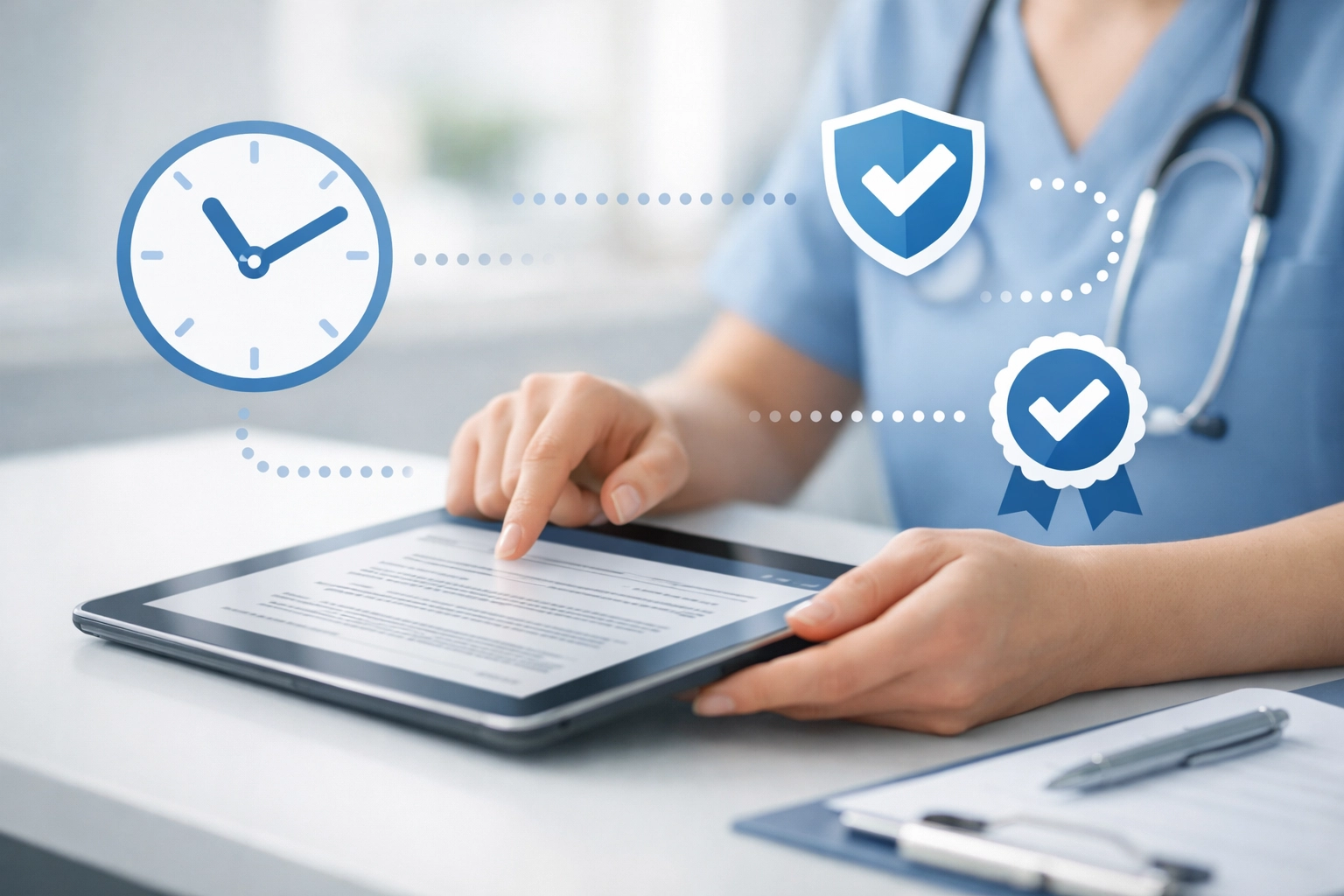
When the AI processes a document, it creates a detailed record of what it extracted and its confidence level for each data point. This creates the kind of paper trail that makes VA audits significantly less stressful.
Reduced Staff Burnout
Let's not underestimate this one. Asking admissions coordinators to decipher illegible documents all day is a recipe for frustration, errors, and turnover. Automating the most tedious parts of verification lets your team focus on what humans do best: building relationships with veterans and their families.
The Bigger Picture: Automation as a Competitive Advantage
The shift from manual to automated patient intake isn't just about efficiency: it's about capability. Facilities that can quickly and accurately process any DD214, regardless of condition, can accept referrals that competitors might struggle with or reject entirely.
With roughly 500,000 pages of historical military records being digitized through initiatives at the National Archives, the expectation for digital-first document processing is only growing. Veterans and their families increasingly expect the same smooth, technology-enabled experience they get from other healthcare providers.
The facilities that invest in this capability now will be positioned to capture a larger share of veteran admissions as the population continues to age.
Ready to See AI-Powered DD214 Verification in Action?
If you're attending NASVH this year, stop by Booth #6 and we'll show you exactly how our OCR technology handles even the most challenging DD214 documents. Bring your worst examples: we love a challenge.
Can't make it to the conference? Book a demo and see how Smart Admissions can transform your veteran intake process. From faded typewriter text to modern digital forms, we've got you covered.