
Admissions teams at skilled nursing facilities face mounting pressure: referrals pile up, manual reviews consume hours, and bed occupancy lags behind revenue targets. Meanwhile, staffing shortages leave little room for error. Healthcare analytics automates referral processing, cutting intake time and reducing the need for additional staff. This article walks you through the top eight benefits of analytics-driven admissions, compares real facility outcomes, and shows you how to choose solutions that deliver measurable ROI.
Table of Contents
- What makes healthcare analytics vital for admissions and operations?
- The top 8 benefits of healthcare analytics for skilled nursing admissions
- Comparing analytics-driven outcomes: Case studies and benchmarks
- Challenges and solutions in healthcare analytics adoption
- Who benefits most? Situational recommendations for SNFs and rehab centers
- Next steps: Practical tools and solutions for admissions efficiency
- Frequently asked questions
Key Takeaways
| Point | Details |
|---|---|
| Faster admissions | Analytics can cut intake and processing times by automating and tracking referrals. |
| Cost savings | Facilities have saved millions and reduced labor needs by leveraging analytics tools. |
| Quality improvement | Predictive analytics helps reduce readmissions and spot operational risks early. |
| Overcoming challenges | Investing in staff training and piloting analytics solutions address most adoption barriers. |
| Best-fit facilities | High-volume and public SNFs often see the fastest and largest gains from analytics. |
What makes healthcare analytics vital for admissions and operations?
Having established the need for analytics-driven improvement, let’s clarify what to look for when evaluating or implementing these solutions. Healthcare analytics encompasses several methodologies, each serving distinct operational needs. Data Envelopment Analysis (DEA) benchmarks quality across multiple dimensions, business intelligence (BI) dashboards surface real-time metrics, predictive analytics forecast risk, and workflow intelligence automates repetitive tasks. For skilled nursing and rehabilitation centers, these tools directly address efficiency bottlenecks, compliance tracking, and competitive benchmarking.
When selecting an analytics platform, prioritize four criteria. First, scalability matters: your solution should grow with census fluctuations and multi-site expansion. Second, seamless integration with existing EHR and EMR systems prevents data silos and reduces manual entry. Third, staff usability determines adoption rates; complex interfaces lead to alert fatigue and resistance. Fourth, actionable insights trump raw data: dashboards must translate metrics into clear next steps for admissions coordinators and clinical teams. Platforms that combine these elements reduce training time, accelerate ROI, and support automation and analytics in admissions workflows.
Pro Tip: Start with referral conversion metrics for fastest ROI. Tracking time-to-admit and conversion rates reveals immediate process gaps and justifies further investment in predictive or workflow analytics.
Facilities that deploy analytics solutions report tangible gains in both operational efficiency and clinical quality. By automating referral tracking, you free admissions staff to focus on high-value tasks like relationship building with hospital discharge planners. Real-time dashboards enable faster decision-making, while predictive models flag at-risk patients before readmissions occur. The result is a leaner, more responsive intake process that streamlines administrative tasks and improves patient outcomes.
The top 8 benefits of healthcare analytics for skilled nursing admissions
With a criteria framework in place, here are the eight most impactful, research-backed benefits you can expect from deploying healthcare analytics.
1. Faster referral processing and reduced intake time
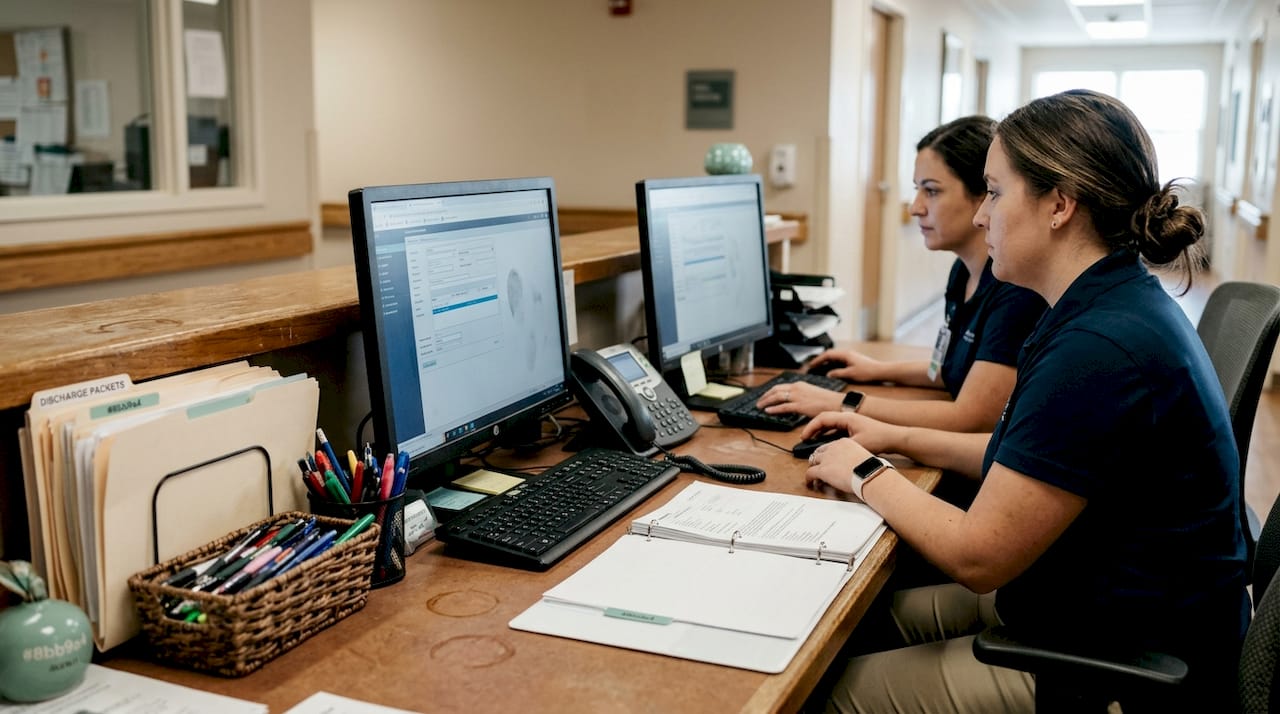
Automated referral tracking cuts intake time by eliminating manual data entry and routing referrals to the right clinical reviewers instantly. Facilities report 30-50% reductions in time-to-admit, translating to faster bed occupancy and higher revenue per available bed. Admissions coordinators spend less time chasing missing documentation and more time engaging with referral sources.
2. Significant cost savings through operational efficiency
Cleveland Clinic saved $150 million by deploying BI dashboards that identified redundant processes and optimized resource allocation. For skilled nursing facilities, similar analytics reveal staffing inefficiencies, reduce overtime costs, and minimize bad debt by flagging insurance eligibility issues before admission. Even mid-sized facilities see six-figure annual savings when analytics inform scheduling, supply chain, and billing workflows.
3. Lower readmission rates and improved quality metrics
Kaiser Permanente reduced readmissions by 30% using predictive analytics to identify high-risk patients and intervene early. Allina Health cut readmissions by 10.3%, saving $4.2 million annually. For skilled nursing facilities, lower readmission rates improve star ratings, attract higher-acuity referrals, and strengthen relationships with hospital partners. Predictive alerts enable care teams to adjust treatment plans proactively, reducing emergency transfers and enhancing patient satisfaction.
4. Real-time benchmarking against industry standards
Analytics platforms compare your facility’s performance to regional and national benchmarks, highlighting areas for improvement. You can track occupancy rates, average length of stay, and payer mix against peer facilities, then adjust marketing and clinical strategies accordingly. Real-time dashboards surface trends as they emerge, enabling agile responses to market shifts or regulatory changes.
5. Enhanced revenue through optimized bed occupancy
By automating referral workflows and reducing intake bottlenecks, analytics solutions accelerate bed fill rates. Facilities using automated referrals see faster processing and higher occupancy, directly boosting revenue. Predictive models also forecast discharge dates, allowing admissions teams to line up new referrals before beds become available. This proactive approach minimizes vacancy gaps and maximizes reimbursement opportunities.
6. Improved staff productivity and reduced burnout
Manual referral review consumes 45 minutes or more per case, contributing to staff fatigue and turnover. AI streamlines intake workflows, automating eligibility checks, clinical assessments, and documentation routing. Admissions coordinators report higher job satisfaction when freed from repetitive tasks, and facilities experience lower turnover costs. Analytics also identify process bottlenecks, enabling targeted training and workflow redesign.
7. Data-driven decision-making for strategic planning
Historical data and predictive models inform strategic decisions, from capital investments to service line expansion. Analytics reveal which payer sources yield the highest margins, which referral sources convert most reliably, and which clinical programs drive occupancy. Leadership teams use these insights to allocate resources, negotiate contracts, and prioritize quality improvement initiatives.
8. Compliance and risk management support
Analytics platforms track regulatory metrics, flagging potential compliance issues before surveys occur. Automated reporting reduces the administrative burden of quality assurance, while predictive models identify patients at risk for falls, infections, or other adverse events. By addressing risks proactively, you minimize citations, protect your facility’s reputation, and maintain eligibility for value-based reimbursement programs.
“Analytics transforms admissions from a reactive, paper-driven process into a strategic, data-informed operation that drives both clinical quality and financial performance.”
Pro Tip: Combine referral conversion analytics with readmission tracking to identify which hospital partners send the most appropriate, high-acuity patients. This insight strengthens your marketing focus and improves overall census quality.
Comparing analytics-driven outcomes: Case studies and benchmarks
Now, let’s see how these benefits stack up by looking at concrete case studies and relevant benchmarks. The table below summarizes real facility results, helping you benchmark expectations and pitch analytics solutions internally.
| Facility/Organization | Analytics Intervention | Efficiency Gain | Cost Savings | Quality Improvement |
|---|---|---|---|---|
| Cleveland Clinic | BI dashboards for process optimization | Streamlined workflows, reduced redundancies | $150 million | Improved resource allocation |
| Kaiser Permanente | Predictive analytics for readmission risk | Proactive care interventions | Not disclosed | 30% readmission reduction |
| Allina Health | Predictive models and care coordination | Targeted high-risk patient management | $4.2 million annually | 10.3% readmission cut |
| Elevation Group (SNF) | PDPM analytics and workflow intelligence | Optimized reimbursement capture | ROI increased from $1.73 to $18.83 per dollar invested | Enhanced documentation accuracy |
These outcomes demonstrate the range of benefits analytics delivers across different facility types and sizes. Cleveland Clinic’s $150 million savings came from enterprise-wide BI deployment, while Elevation Group’s ROI surge highlights the impact of targeted PDPM analytics in skilled nursing. Kaiser’s 30% readmission reduction and Allina’s $4.2 million savings underscore the clinical and financial value of predictive models.
For skilled nursing facilities, the most relevant benchmarks focus on referral conversion, occupancy rates, and readmission metrics. Facilities that track these KPIs consistently outperform peers in revenue growth and quality ratings. AI benefits for admissions extend beyond cost savings to include faster decision-making, improved staff morale, and stronger hospital partnerships.
Key Takeaway: Analytics ROI varies by facility size and market, but even modest implementations yield measurable gains. Start with high-impact metrics like referral conversion and readmission rates to build internal buy-in, then expand to broader operational analytics.
Challenges and solutions in healthcare analytics adoption
While these case studies show dramatic potential, it’s essential to be aware of and plan for adoption hurdles. Common challenges include high costs, ranging from $500,000 to $1.3 million for enterprise systems, data quality issues, integration silos, privacy risks, and staff resistance. Alert fatigue from poorly configured dashboards leads to disengagement, while under-reporting of incidents like falls undermines data accuracy. Facilities must also navigate bias risks in predictive models and ensure HIPAA compliance across all analytics workflows.
To overcome these barriers, start with pilot programs that target specific pain points, such as referral tracking or readmission prediction. Validate data accuracy by cross-referencing analytics outputs with manual audits, addressing under-reporting of falls and other incidents. Invest in staff training to build confidence and reduce resistance; interdisciplinary collaboration ensures clinical and administrative teams align on goals and workflows. Choose vendors that offer responsive support and customizable features, minimizing the need for extensive technical expertise.
Actionable Solutions:
- Pilot programs: Test analytics on a single unit or referral source before facility-wide rollout.
- Data validation: Regularly audit analytics outputs against manual records to catch under-reporting or errors.
- Staff training: Provide hands-on training and ongoing support to reduce alert fatigue and build user confidence.
- Targeted investments: Prioritize high-ROI metrics like referral conversion and readmission rates to justify costs.
- Integration planning: Work with vendors to ensure seamless EHR/EMR connectivity and minimize data silos.
“The key to successful analytics adoption is balancing ambition with pragmatism. Start small, validate results, and scale based on demonstrated ROI.”
Facilities that address these challenges proactively see faster adoption, higher user satisfaction, and stronger financial returns. Automation hacks for analytics adoption include integrating analytics with existing workflows, using pre-built templates for common reports, and leveraging vendor support for initial configuration.
Who benefits most? Situational recommendations for SNFs and rehab centers
Every facility is different. Here’s how to determine if analytics investment is right for you, and how to maximize upside. Public nursing homes show higher efficiency than private counterparts, making them ideal candidates for analytics that optimize resource allocation. High-volume admissions facilities, multi-site chains, and centers in competitive hospital markets gain the most from referral tracking and predictive models. If your facility already collects data but struggles to act on it, focus on activation: turning raw metrics into workflows, alerts, and decision-support tools.
Profiles that gain most from analytics:
- High-volume admissions facilities: Automate referral processing to handle increased volume without adding staff.
- Multi-site chains: Centralize analytics across locations for consistent benchmarking and best-practice sharing.
- Competitive hospital markets: Use predictive models to identify and prioritize high-value referrals before competitors.
- Public nursing homes: Leverage efficiency analytics to optimize staffing and resource allocation.
- Facilities with existing data collection: Activate dormant data by integrating analytics into daily workflows and decision-making.
If your facility fits one or more of these profiles, analytics investment offers clear ROI. Start by identifying your highest-impact pain point, whether referral bottlenecks, readmission rates, or occupancy gaps, then select analytics tools that address that specific need. AI efficiency for SNFs scales with your facility’s growth, supporting expansion into new service lines or payer contracts.
For smaller facilities or those with limited budgets, consider cloud-based analytics platforms that offer subscription pricing and minimal upfront costs. These solutions provide enterprise-grade functionality without the capital expense of on-premise systems, making advanced analytics accessible to facilities of all sizes.
Next steps: Practical tools and solutions for admissions efficiency
Armed with this knowledge, you can explore tools that deliver the analytics-powered benefits outlined above. Smart Admissions offers AI-driven referral management that integrates with your existing EHR and insurance portals, automating eligibility checks, clinical assessments, and documentation routing. By reducing manual review time, you achieve faster bed occupancy and higher revenue per available bed.
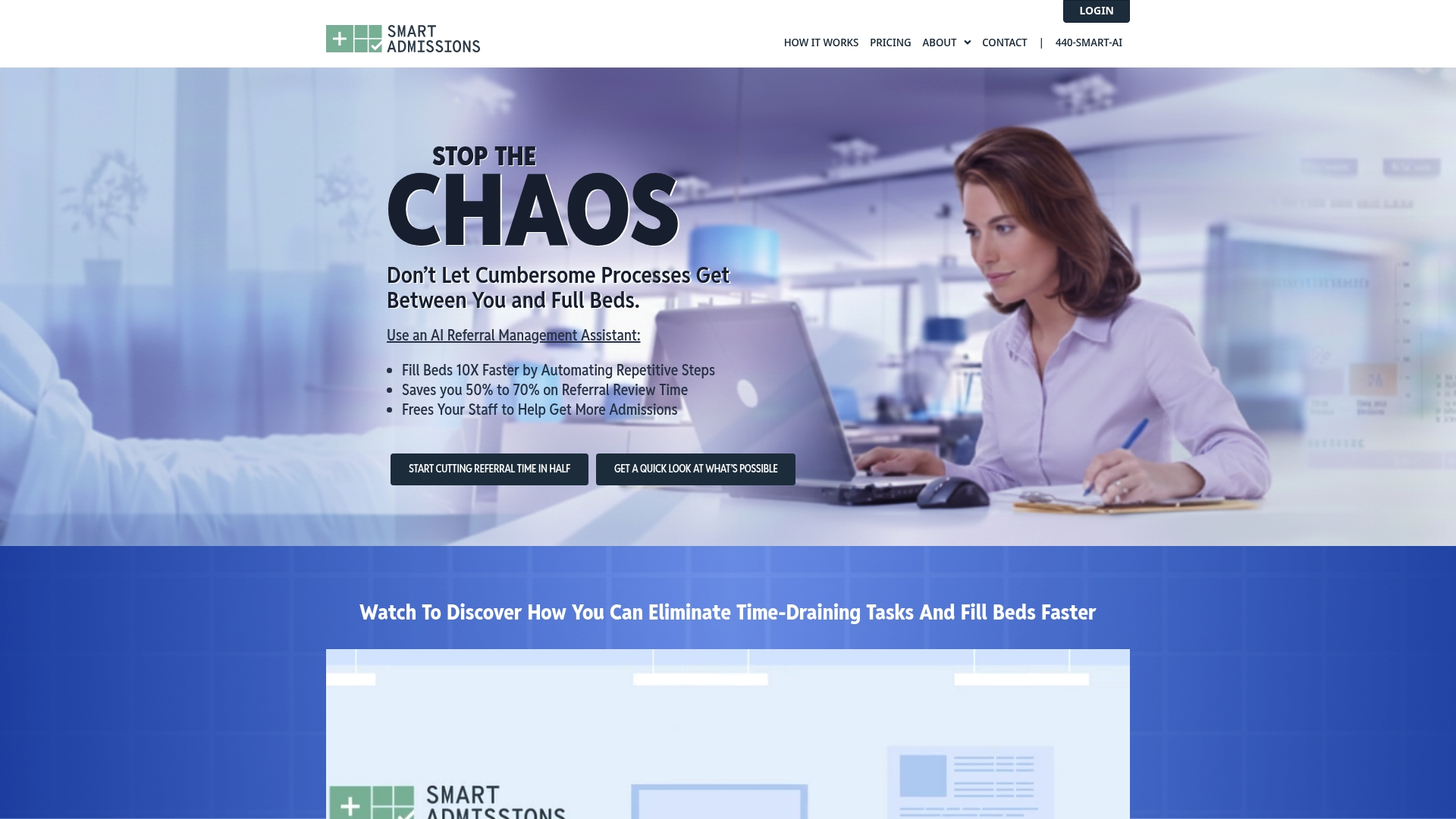
Our platform provides real-time dashboards that track referral conversion, time-to-admit, and payer mix, enabling data-driven decisions without the complexity of enterprise BI systems. Customizable workflows adapt to your facility’s unique processes, while responsive support ensures smooth onboarding and ongoing optimization. Whether you’re a single-site facility or a multi-location chain, Smart Admissions scales with your needs, delivering measurable ROI within the first quarter. Explore admissions efficiency automation and referral management examples to see how analytics transforms intake workflows and drives sustainable growth.
Frequently asked questions
How does healthcare analytics directly impact patient intake speed?
Analytics automates referral tracking, reducing intake time and staff workload significantly. Facilities report 30-50% faster admissions by eliminating manual data entry and routing referrals instantly.
What is Data Envelopment Analysis (DEA) and how is it used in skilled nursing?
DEA benchmarks quality and efficiency across multiple metrics, helping nursing facilities identify operational strengths and weaknesses. It compares your performance to peer facilities, revealing improvement opportunities.
What are the biggest challenges with analytics adoption in healthcare admissions?
Major barriers include high costs, data quality issues, staff resistance, and alert fatigue from poorly integrated systems. Pilot programs, staff training, and vendor support mitigate these challenges.
How can facilities maximize ROI on analytics solutions?
Focus first on high-volume referral markets, validate data accuracy, invest in staff training, and start with pilot programs. Target high-impact metrics like referral conversion and readmission rates to justify costs and build internal buy-in.