
TL;DR:
- Cloud-based admissions systems automate patient intake, reducing processing time and increasing staff efficiency. They enhance enrollment yield, improve accuracy, and strengthen referral relationships through automated communication. Proper integration with existing EMR and payer systems is essential for maximizing their benefits.
Cloud-based admissions is defined as the use of SaaS platforms to manage patient intake, referral processing, and documentation through internet-hosted systems rather than on-premises software. Healthcare administrators who prefer cloud-based admissions report measurable gains in speed, accuracy, and staff capacity. Facilities processing 2,000 applications annually have saved over 1,300 staff hours through automation alone. For skilled nursing homes, rehabilitation centers, and post-acute care providers, the shift from paper-driven or legacy systems to cloud-based admission systems is no longer optional. It is the operational standard that separates high-performing facilities from those struggling with avoidable delays and missed bed occupancy.
Why prefer cloud-based admissions for operational efficiency
Cloud-based admissions systems reduce document processing time by 77% per application, cutting manual review from 8–15 minutes down to seconds. That time savings compounds fast. A facility handling 2,000 referrals per year recovers more than 1,333 staff hours, which your admissions team can redirect toward clinical assessments and patient communication.

The technology behind this efficiency is AI-driven document classification combined with optical character recognition (OCR). These tools achieve 95%+ classification accuracy, extracting structured data directly from submitted documents without manual re-entry. The result is a faster, more consistent intake process that does not depend on individual staff performance or shift coverage.
Cloud platforms also reduce data entry errors by 87%, dropping error rates from 15% to 2%. Fewer errors mean fewer rejected claims, fewer compliance risks, and less time spent correcting records after the fact.
Key efficiency drivers in cloud-based admission systems include:
- Automated document intake: Referral packets, insurance authorizations, and clinical notes are captured and classified without staff intervention.
- Real-time eligibility verification: Integration with insurance portals confirms coverage before a bed is assigned, preventing revenue loss.
- Workflow routing: Applications move automatically to the correct reviewer based on clinical criteria, eliminating manual handoffs.
- Audit trails: Every action is logged automatically, supporting HIPAA compliance without additional administrative work.
Pro Tip: When evaluating cloud admissions vendors, prioritize platforms with native EMR integration using FHIR or HL7 standards. Solutions that require manual data exports between systems recreate the exact bottlenecks you are trying to eliminate.
How do cloud admissions systems boost enrollment yields?
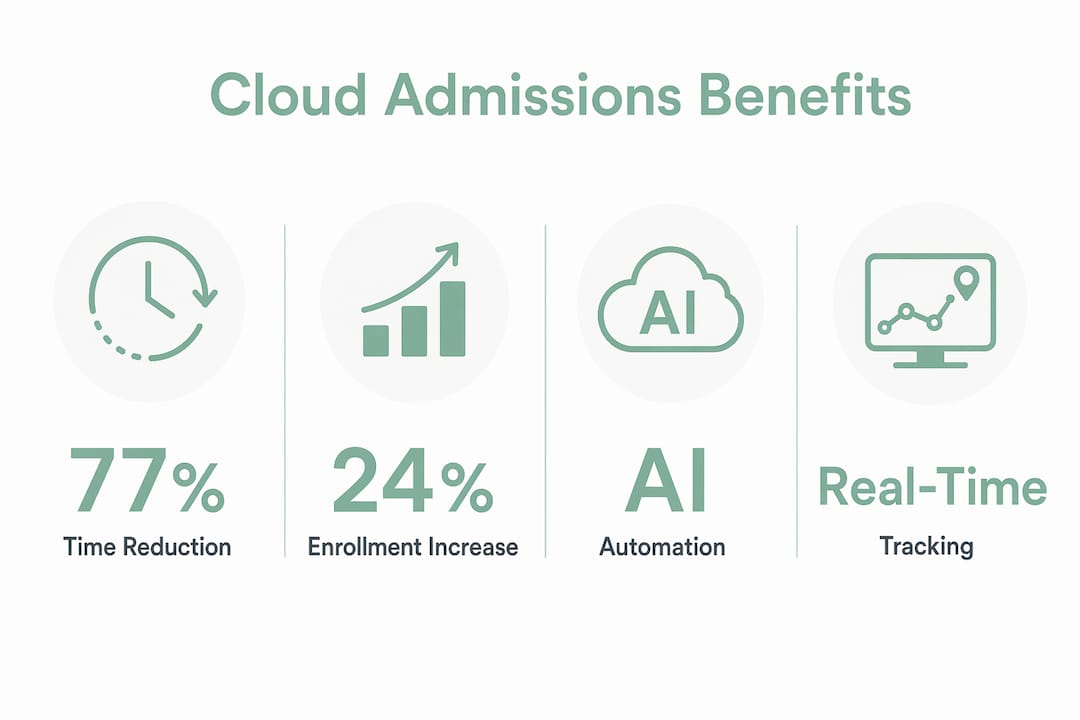
Cloud adoption increases enrollment yield by 24%, raising acceptance rates from 38% to 47% in documented implementations. For a facility processing 2,000 referrals annually, that translates to approximately 180 additional admissions. At an average revenue per patient of $15,000, the financial impact reaches $2.7 million per year.
The mechanism behind this improvement is consistent, automated communication throughout the referral cycle. Facilities that rely on manual follow-up lose applicants and referral sources to slower competitors. Cloud platforms close that gap through structured nurture sequences.
Here is how automated communication drives higher yield in healthcare admissions:
- Immediate acknowledgment: The system sends a confirmation to the referring provider within minutes of receiving a referral, signaling responsiveness.
- Status updates: Patients and families receive real-time tracking notifications, reducing inbound calls to your admissions staff.
- Multi-touch follow-up: Automated sequences deliver reminders, document requests, and next-step guidance over multiple days without staff involvement.
- Escalation alerts: If a referral stalls at any stage, the system flags it for human review before the opportunity is lost.
“Maintaining applicant engagement sustains momentum toward acceptance. Automated multi-week nurture sequences that include tour invites, housing information, and reminders can boost enrollment yield by up to 24%.”
Applicant satisfaction scores also rise with cloud adoption. Real-time status tracking and faster communication push satisfaction from 3.2 out of 5 to 4.4 out of 5. Higher satisfaction scores strengthen your facility’s referral relationships, which are the primary driver of long-term bed occupancy. You can explore how these dynamics connect in this overview of healthcare SaaS benefits for skilled nursing admissions.
Cloud admissions vs. traditional on-premises systems
The decision between cloud-based and on-premises admissions software is a financial and operational one. The table below compares the two models across the criteria that matter most to healthcare administrators.
| Criteria | Cloud-Based Systems | On-Premises Systems |
|---|---|---|
| Upfront cost | Low. Subscription-based pricing with no hardware purchase. | High. Requires server infrastructure and licensing fees. |
| Scalability | Scales up or down during peak admissions seasons without IT involvement. | Capacity is fixed at purchase. Scaling requires hardware upgrades. |
| Maintenance | Vendor-managed updates, patches, and security monitoring. | Your IT team handles all maintenance and downtime. |
| Accessibility | Any device, anytime, from any location with internet access. | Typically requires VPN or on-site access. |
| Integration | Native API connections to EMR, insurance portals, and referral networks. | Custom integrations are costly and time-intensive. |
| Compliance | HIPAA-compliant hosting with built-in audit logging and encryption. | Compliance is the facility’s responsibility to configure and maintain. |
| Disaster recovery | Automatic cloud backups with rapid restoration. | Requires separate backup infrastructure and manual processes. |
Cloud-based SaaS systems eliminate on-premises infrastructure and provide predictable subscription costs. That predictability matters for budget planning in skilled nursing facilities, where reimbursement timelines are already variable. The flexibility to scale during high-census periods without emergency IT spending is a practical advantage that on-premises systems cannot match.
Accessibility is another decisive factor. Always-on access from any device eliminates the need for costly VPNs or special configuration. Your admissions coordinator can review a referral from a tablet at a hospital discharge meeting, not just from a desktop in the office.
What to know before implementing cloud admissions in healthcare
The most common reason cloud admissions implementations underperform is poor integration with existing systems. Real-time integration with EMR and admission registers is not optional. Platforms that operate as isolated tools force staff to re-enter data manually, which recreates the exact inefficiencies the cloud system was purchased to eliminate.
Before selecting a vendor, your team should evaluate the following criteria:
- EMR compatibility: Confirm the platform supports FHIR and HL7 standards and has documented integrations with your current EHR system, whether that is PointClickCare, MatrixCare, or another platform.
- Insurance portal connectivity: Real-time eligibility verification requires direct API connections to Medicare, Medicaid, and commercial payer portals.
- Data migration support: Ask vendors for a documented migration process. Incomplete data transfers create gaps in patient records that affect care continuity.
- Security certifications: Look for SOC 2 Type II certification and HIPAA Business Associate Agreements as baseline requirements.
- Vendor support model: Evaluate response times, onboarding resources, and whether support is available during your peak intake hours.
Cloud platforms that consolidate applications, records, and communication logs into a single authoritative source reduce delays and version control conflicts. That consolidation is the foundation of the efficiency gains described throughout this article. Without it, you have digital tools producing analog problems.
Pro Tip: Do not treat cloud admissions as a digital replacement for paper forms. The real value comes from AI classification, automated workflows, and real-time data exchange. If your implementation plan does not include those elements, you are leaving the majority of the efficiency gains on the table.
Reviewing your current admissions workflow step by step before implementation helps identify exactly where automation will have the greatest impact. That pre-work also gives your team a clear baseline for measuring results after go-live.
Key takeaways
Cloud-based admissions systems deliver measurable efficiency gains, higher bed occupancy, and lower administrative costs when implemented with proper EMR integration and automated workflows.
| Point | Details |
|---|---|
| Processing time reduction | Cloud automation cuts document review from 8–15 minutes per referral down to seconds. |
| Enrollment yield improvement | Cloud adoption raises admission yield by 24%, adding significant revenue per 2,000 referrals. |
| Error rate reduction | AI-driven data entry drops error rates from 15% to 2%, reducing compliance risk. |
| Cloud vs. on-premises | Cloud systems offer lower costs, better accessibility, and vendor-managed compliance vs. on-premises alternatives. |
| Integration is non-negotiable | Real-time EMR and payer portal integration prevents manual backlogs that negate automation benefits. |
What 5 years of cloud admissions work has taught me
The efficiency numbers in this article are real, and they are achievable. What the data does not capture is the organizational resistance that slows most implementations down. In my experience, the technology is rarely the obstacle. The obstacle is staff who have built their workflows around manual processes and are skeptical that automation will handle edge cases correctly.
The facilities that see the fastest results are the ones that involve their admissions coordinators in the vendor selection process. When your team understands why a platform was chosen and how it handles the scenarios they deal with daily, adoption is faster and the efficiency gains arrive sooner.
The second pattern I have observed is that facilities underestimate the value of the nurture sequence. Most administrators focus on intake speed, which is the right priority. But the 24% yield improvement comes from what happens after the referral is received. Automated follow-up with referring providers and patient families is where cloud systems earn their cost many times over.
The future of cloud admissions in healthcare points toward predictive analytics. Platforms are beginning to surface risk scores for referrals, flagging patients likely to require extended stays or specialized resources before admission. That capability will shift admissions from a reactive process to a proactive one. Facilities that build their cloud infrastructure now will be positioned to use those tools when they become standard.
— Harry
How Smartadmissions puts these benefits to work for your facility
Smartadmissions is built specifically for skilled nursing homes, rehabilitation centers, and post-acute care providers that need to move faster without adding headcount. The platform connects directly to your existing EMR system and insurance portals, enabling real-time eligibility verification and automated referral routing from day one.
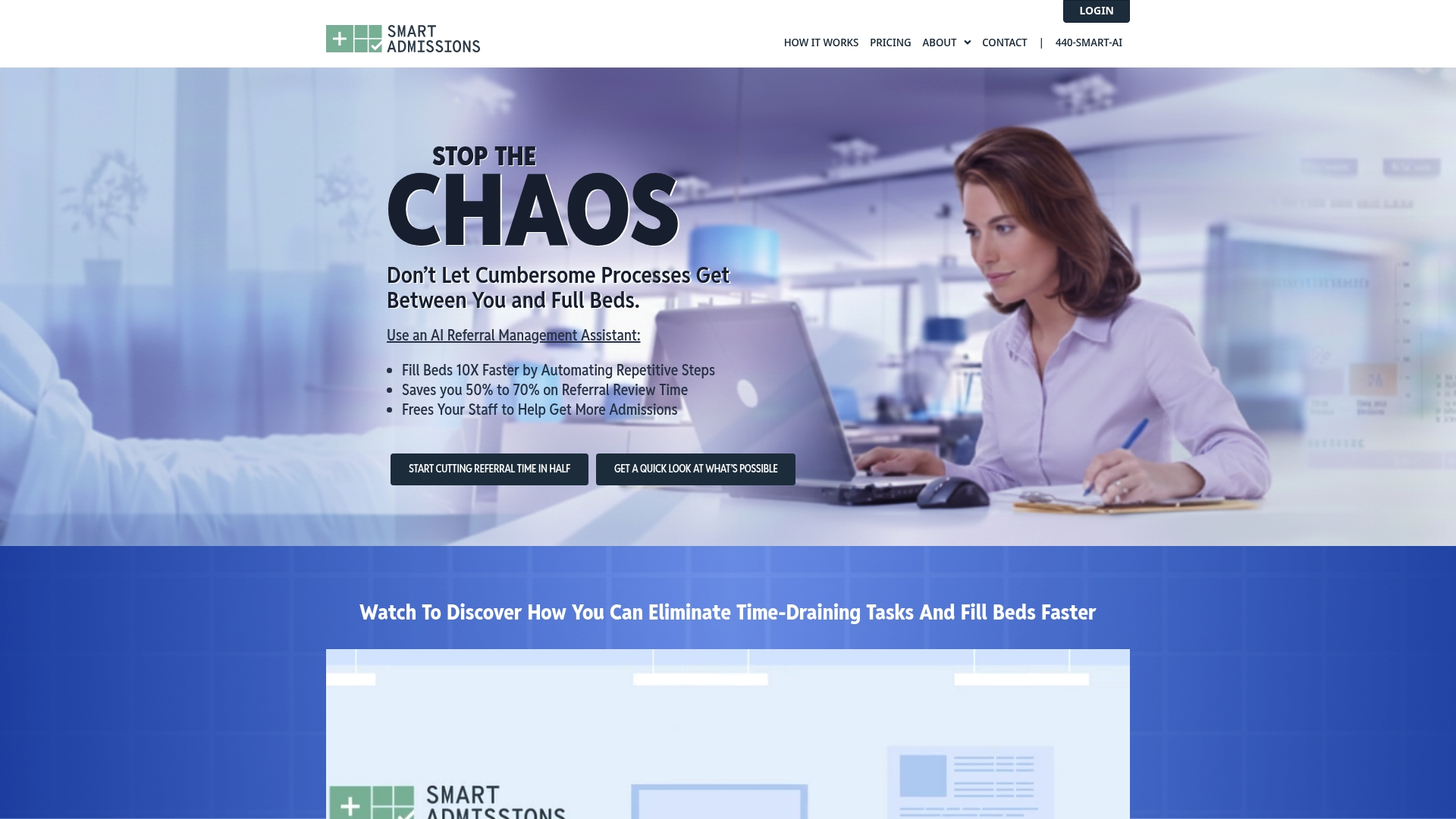
Your admissions team gets AI-powered document classification, automated communication workflows, and a single dashboard for every active referral. If you want to see the operational difference between manual and automated intake, the breakdown of manual vs. automated admissions is a practical starting point. For facilities focused on bed fill rates, the guide on automation for faster bed occupancy shows exactly how the numbers work. Smartadmissions is designed to be operational within days, not months.
FAQ
What is a cloud-based admissions system in healthcare?
A cloud-based admissions system is a SaaS platform that manages patient referrals, intake documentation, and eligibility verification through internet-hosted software rather than on-premises infrastructure. It automates manual tasks and integrates with EMR and payer systems in real time.
How much time do cloud admissions systems save?
Cloud automation reduces document processing time by 77%, cutting review from 8–15 minutes per application to seconds. Facilities processing 2,000 referrals annually recover more than 1,333 staff hours per year.
Are cloud admissions systems HIPAA compliant?
Yes. Reputable cloud admissions platforms provide HIPAA-compliant hosting, built-in audit logging, data encryption, and Business Associate Agreements. Compliance configuration is managed by the vendor, not your internal IT team.
How do cloud systems improve bed occupancy rates?
Automated referral routing, real-time eligibility verification, and structured follow-up sequences reduce the time between referral receipt and bed assignment. Faster decisions mean fewer referrals lost to competing facilities.
What is the biggest risk when implementing cloud admissions?
The biggest risk is deploying a cloud platform without real-time integration with your EMR and insurance portals. Without that connection, staff must re-enter data manually, which eliminates the efficiency gains the system was purchased to deliver.