
TL;DR:
- Technology reduces manual tasks in healthcare admissions by automating routine processes and providing real-time data.
- Successful integration requires process redesign, staff training, and leadership involvement to realize measurable efficiency gains.
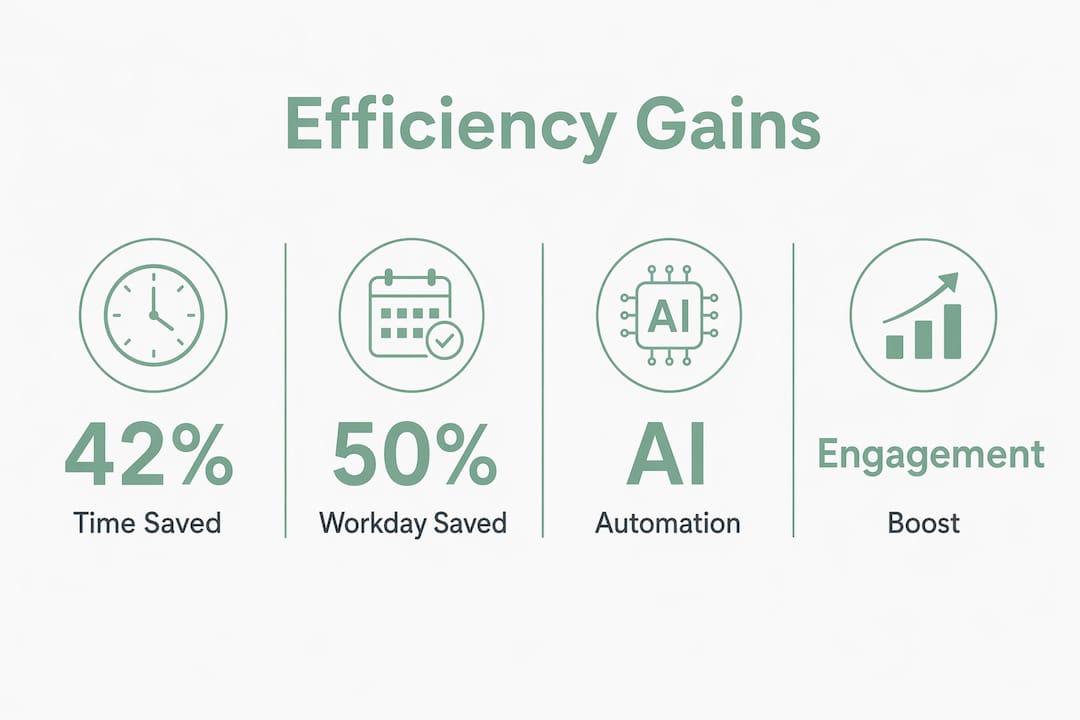
The role of technology in staff efficiency is to reduce manual workload, automate routine tasks, and give healthcare administrators the data they need to make faster, better decisions. 42% of frontline employees using AI report saving eight hours every week. That is a full workday returned to your team, every single week. For skilled nursing facilities and post-acute care providers, where admissions staff are already stretched thin, that kind of time savings is not a minor convenience. It is an operational advantage that directly affects bed fill rates, staff retention, and patient outcomes.
How does the role of technology in staff efficiency play out in healthcare?
Technology enhancing employee performance in healthcare works through one core mechanism: removing repetitive, low-judgment tasks from your team’s daily workload. When admissions staff spend hours manually verifying insurance eligibility, cross-referencing EMR records, or chasing referral documentation, they are not doing the work that requires human judgment. Automation handles those tasks faster and with fewer errors.

The industry term for this shift is workforce digitization, the systematic replacement of manual administrative processes with software-driven workflows. The role of technology in staff efficiency becomes measurable when you track time spent per admission, referral review turnaround, and documentation error rates before and after implementation.
AI-driven employee performance management systems significantly increase staff efficiency by automating frequent feedback and reducing manual oversight. That means your supervisors spend less time tracking individual task completion and more time coaching staff on complex cases. The downstream effect on team morale is real and documented.
How AI and automation reduce administrative workload
Automation delivers the clearest, most immediate gains in admin-heavy functions. Here is where the impact of technology on productivity shows up most concretely in healthcare admissions:
- Eligibility verification: AI tools query insurance portals in real time, cutting verification from hours to minutes.
- Referral triage: Automated scoring systems flag high-priority referrals so your team reviews the right cases first.
- Documentation management: AI pre-populates intake forms using data pulled directly from EMR systems, reducing manual data entry.
- Feedback loops: Automated performance tracking alerts managers to workflow bottlenecks without requiring manual audits.
- Staffing forecasts: Predictive analytics identify periods of high referral volume so you can schedule staff proactively.
Among HR and admin-heavy functions specifically, 50% of AI users save at least one full workday per week. That figure reflects how much of the traditional admissions workflow is genuinely automatable.
Pro Tip: Pair AI tools with a workflow redesign, not just a workflow addition. Dropping automation into a broken process speeds up the bottleneck without fixing it. Map your current admissions steps first, then identify which ones AI should own entirely.
Adopting AI in isolated tasks without redesigning workflows risks speeding up bottlenecks rather than eliminating them. End-to-end process redesign is what produces real efficiency gains. That distinction separates facilities that see measurable results from those that add technology and wonder why nothing changed.
The benefits of AI in healthcare admin extend beyond speed. When your team is no longer buried in data entry, they engage more meaningfully with referral sources, families, and clinical staff. That relationship quality directly supports census growth.
What do digital HR practices add beyond automation?
Digital HR tools address a different layer of workforce efficiency: decision-making quality and staff engagement. Digital HR practices reduce workload and improve workforce efficiency by supporting better time management and decision-making accuracy, confirmed in a study with 144 HR managers showing measurable improvements from digital HR tool integration. The gains are not just about speed. They are about making better calls with better information.
The table below shows where traditional and digital HR approaches diverge in practice:
| Outcome area | Traditional HR approach | Digital HR approach |
|---|---|---|
| Performance tracking | Manual observation and periodic reviews | Continuous automated data collection and alerts |
| Staffing decisions | Experience-based scheduling | Predictive analytics using historical referral and census data |
| Burnout detection | Reactive, after staff disengage | Early warning flags from workload and output data |
| Documentation accuracy | Dependent on individual staff diligence | System-enforced data validation at point of entry |
| Feedback frequency | Quarterly or annual reviews | Real-time or weekly automated feedback loops |
Predictive analytics help optimize staffing, manage burnout, and improve operational performance in healthcare settings. The key word is “manage.” Predictive tools surface the data, but your managers still need to act on it. Technology enhancing employee performance requires human follow-through to translate insights into scheduling changes, workload redistribution, or targeted support.
Administrative automation in healthcare admissions also reduces the cognitive load on individual staff members. When the system handles data validation and flags exceptions automatically, your admissions coordinators can focus on the judgment calls that actually require their expertise.
What challenges come with implementing technology for staff efficiency?
Technology solutions for workforce improvement do not deploy themselves. The most common obstacles are cultural, not technical. Your team needs to understand why the change is happening and what it means for their roles.
The primary challenges healthcare administrators face include:
- Fear of job displacement: Staff worry that automation replaces their positions rather than supporting them. Clear communication about role evolution, not elimination, is the first step.
- Algorithmic bias concerns: Staff may distrust AI recommendations, particularly in performance management. Transparent documentation of how AI decisions are made builds credibility.
- Cognitive load from validation tasks: AI systems often require staff to review and confirm automated outputs. Without proper training, this adds work rather than reducing it.
- Inconsistent adoption: When some staff use new tools and others do not, workflow gaps emerge that undermine the efficiency gains.
Initial cultural resistance and concerns over algorithmic bias and job displacement can hinder AI integration in healthcare. Transparent communication and ethical guidelines are the foundation of staff buy-in. This is not a soft issue. It directly determines whether your technology investment delivers its projected return.
Employees’ psychological readiness affects whether AI is perceived as a helpful job resource or a stressful job demand, influencing engagement and performance. Training and workflow integration that reduces validation burden mitigates burnout risk. The difference between a team that embraces new tools and one that resists them often comes down to how well leadership prepared them before go-live.
Pro Tip: Frame AI tools as job resources, not job demands. When staff see automation as something that removes the tasks they dislike most, adoption rates climb. When they see it as additional oversight, resistance follows. Your internal communication strategy matters as much as your implementation plan.
Best practices for integrating technology into admissions workflows
Effective technology integration in healthcare admissions follows a clear sequence. Skipping steps creates the gaps that undermine efficiency gains.
- Audit your current workflow end-to-end. Document every step in your referral and admissions process before selecting any tool. Identify which steps consume the most time and which require the least human judgment. Those are your automation targets.
- Select technology that integrates with your existing EMR. Tools that require manual data transfer between systems create new bottlenecks. FHIR and HL7 standards enable real-time data exchange between platforms without duplicate entry.
- Train staff before go-live, not after. Role-specific training that shows each team member exactly how their daily tasks change reduces resistance and accelerates adoption. Address the “what happens to my job” question directly in training sessions.
- Designate a workflow governance owner. Assign one person or team responsible for monitoring how the technology performs post-implementation. Efficiency gains erode when no one is tracking whether the system is working as designed.
- Reinvest saved time into high-value tasks. When your team recovers hours from automation, direct that capacity toward referral source relationships, clinical assessments, and family communication. Time savings only improve outcomes when they are redirected deliberately.
Effective technology implementation in healthcare prioritizes AI handling routine verification and documentation, freeing staff for complex interpersonal communication. The synergy between AI and human judgment is what sustains both efficiency and care quality over time.
Strategic clarity and leadership are critical for successful AI adoption and realizing efficiency gains beyond deploying tools alone. Organizations that redesign processes end-to-end with a clear AI strategy create the most value and the strongest staff engagement. That finding from BCG applies directly to healthcare admissions, where the process complexity is high and the margin for error is low.
Smartadmissions supports this approach by integrating AI-powered referral management with EMR systems, automating eligibility verification, and providing real-time clinical assessment support. Your admissions team gets a system that handles the data work so they can focus on the decisions that require their expertise. Explore how AI transforms patient intake to see how these principles apply in practice.
Key Takeaways
Technology improves staff efficiency in healthcare admissions when it automates routine tasks, integrates with existing EMR systems, and is supported by end-to-end workflow redesign and targeted staff training.
| Point | Details |
|---|---|
| AI saves measurable time | 42% of AI users save eight hours weekly, with the largest gains in HR and admin functions. |
| Workflow redesign is required | Adding automation to a broken process speeds up bottlenecks. Redesign the process first. |
| Digital HR improves decisions | Predictive analytics and digital tools improve staffing accuracy and reduce burnout risk. |
| Staff readiness determines outcomes | Psychological readiness and role-specific training determine whether AI becomes a resource or a burden. |
| Human judgment stays central | AI handles routine verification and documentation. Staff handle patient-facing communication and complex assessments. |
Why the tools are only half the answer
The facilities I see get the most from technology are not the ones with the most sophisticated platforms. They are the ones where leadership was clear about what they wanted the technology to do before they bought it.
The most common mistake is treating a technology purchase as the solution itself. Your team installs a new referral management tool, and six months later, the efficiency gains are smaller than projected. The tool works fine. The process around it was never redesigned. Staff are using the new system to do the same broken workflow faster.
The BCG research on AI at work makes this explicit: organizations that redesign processes end-to-end create the most value. That is not a technology finding. It is a leadership finding. The technology is the enabler. The strategy is the driver.
The second thing I would push back on is the assumption that time savings automatically improve outcomes. When your admissions coordinator recovers two hours a day from automation, those two hours need a destination. If leadership does not redirect that capacity toward referral source development, clinical review quality, or family communication, the efficiency gain stays on paper and never shows up in census or satisfaction scores.
Technology enhancing employee performance is a management discipline, not a software feature. The platforms that work best are the ones where administrators stayed involved after go-live, monitored what the data was showing, and adjusted workflows when the numbers indicated a problem.
— Harry
Smartadmissions and the efficiency gains your team needs
Healthcare admissions teams carry a heavy administrative load. Smartadmissions is built specifically to reduce that load through AI-powered referral management, real-time EMR integration, and automated eligibility verification.
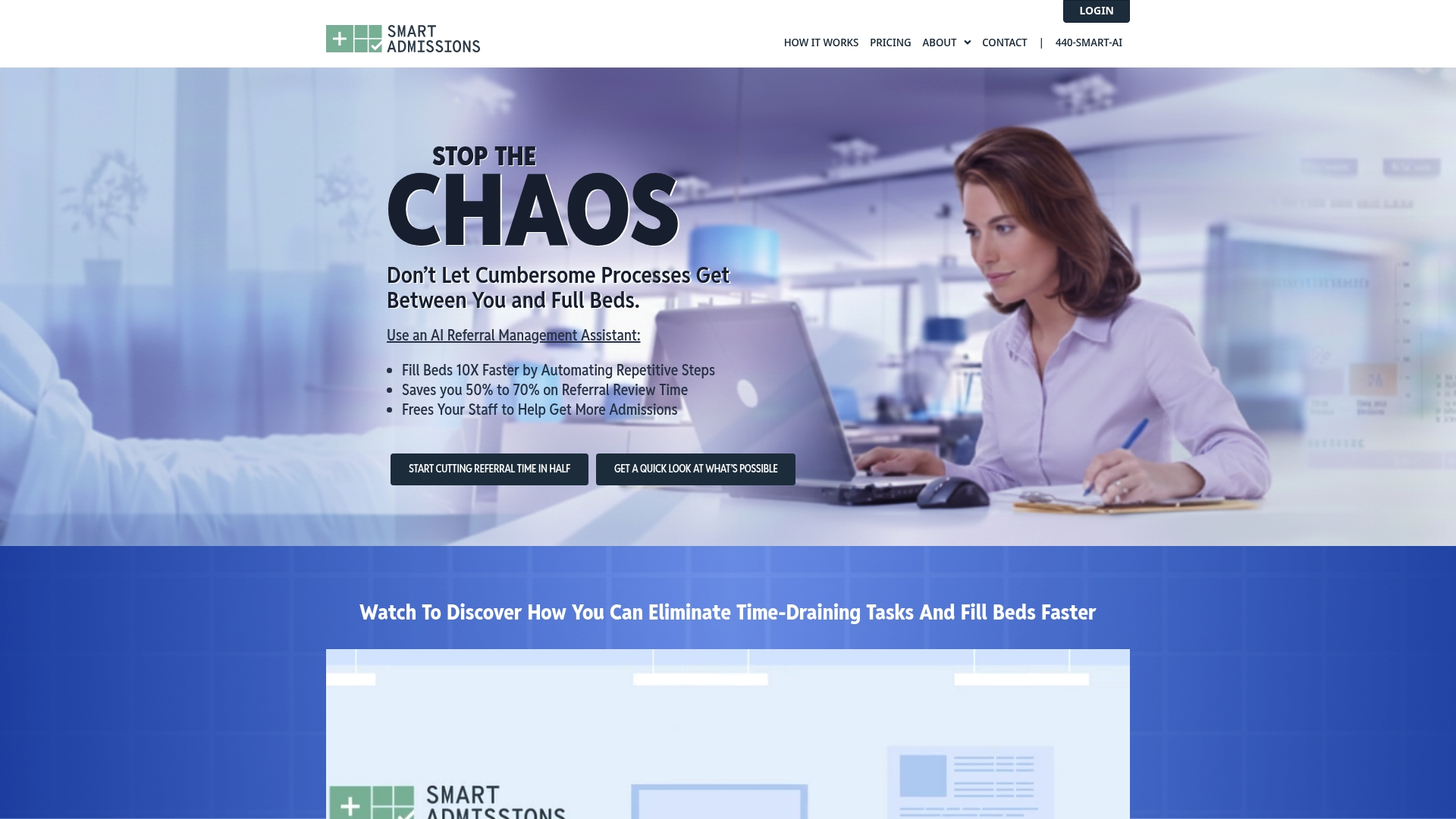
When your team spends less time on manual data entry and referral chasing, they spend more time on the decisions that fill beds and serve patients well. Smartadmissions connects directly with your existing EMR and insurance portals, so the transition does not require a technical overhaul. See how automating admissions delivers faster bed occupancy and what that means for your facility’s revenue and staff workload. For a broader view of what automation covers, the automation in healthcare admissions resource walks through the full scope of what your team can hand off to the system.
FAQ
How does technology improve staff efficiency in healthcare?
Technology improves staff efficiency by automating routine tasks like insurance verification, referral triage, and documentation, freeing staff for higher-judgment work. AI-driven systems also provide real-time performance data that helps managers allocate resources more accurately.
How much time can AI save healthcare admissions staff?
42% of frontline employees using AI save eight hours per week, with 50% of those in HR and admin roles saving at least one full workday weekly.
What is the biggest risk when implementing technology in healthcare workflows?
The biggest risk is adding automation to an unredesigned process. Adopting AI in isolated tasks without end-to-end workflow redesign speeds up existing bottlenecks rather than eliminating them.
How do you get staff to accept new technology in admissions?
Transparent communication and ethical guidelines are the foundation of staff buy-in. Role-specific training that shows staff how automation removes their least-preferred tasks, rather than replacing their roles, drives adoption.
What role does digital HR play in workforce efficiency?
Digital HR practices reduce workload and improve decision-making accuracy, confirmed across a study of 144 HR managers. Predictive analytics within digital HR systems also detect early signs of burnout before they affect performance or retention.
Recommended
- How to Cut Referral Processing Time from 45 to 5 Minutes | AI Admissions Automation for Skilled Nursing Facilities
- What Top-Performing SNFs Do Differently in Their Admissions Process – Smart Admissions
- Stop Wasting 45 Minutes on Each Referral: Try These 5 Post-Acute Care Automation Hacks – Smart Admissions
- Role of Data in Operational Efficiency: 5 Proven Wins