
TL;DR:
- Responsive healthcare support reduces intake delays by over 70 percent and increases census conversions.
- It replaces manual workflows with automated, real-time digital systems for faster, smoother admissions processes.
- Implementing responsive support improves operational metrics, staff efficiency, patient experience, and revenue.
Intake delays cost skilled nursing facilities far more than time. Responsive digital tools cut intake time by over 70%, boost census conversions by 21 times, and reduce no-shows by 72%. These are not projections. They are documented results from facilities that replaced legacy processes with adaptive, real-time support systems. Yet many administrators still rely on paper-based workflows and manual coordination, assuming the status quo is “good enough.” This guide breaks down what responsive healthcare support actually means, how it works in practice, and why making the shift is one of the most impactful operational decisions your facility can make in 2026.
Table of Contents
- What is responsive healthcare support?
- Key benefits: Why responsive support changes admissions
- How responsive support actually works: Systems and strategies
- Measuring the impact: Metrics that matter
- Beyond the tools: A leadership mindset for responsive admissions
- Supercharge your admissions with responsive healthcare solutions
- Frequently asked questions
Key Takeaways
| Point | Details |
|---|---|
| Accelerated intake | Responsive support slashes patient intake time and improves census conversion rates. |
| Staff efficiency | Automation and digital tools reduce administrative workload, freeing staff for higher-value tasks. |
| Better patient experience | Patients and families benefit from fewer errors, faster onboarding, and higher satisfaction. |
| Data-driven results | Key metrics like onboarding time, error rates, and NPS scores show measurable improvements. |
What is responsive healthcare support?
Responsive healthcare support is not simply faster customer service. In the context of skilled nursing and rehabilitation admissions, it refers to timely, adaptive support systems that include rapid response teams, digital intake tools, and coordinated partnerships designed to keep patient flow moving without unnecessary delays. According to Leeds Community Healthcare, responsive support systems encompass real-time communication infrastructure, proactive care coordination, and flexible digital tools that adapt to patient and operational needs as they arise.
Traditional admissions support relies on phone calls, faxed referrals, and manual data entry. These methods introduce friction at every step. Responsive support replaces those friction points with automation, real-time data sharing, and coordinated handoffs between clinical and administrative teams. The practical difference is significant.
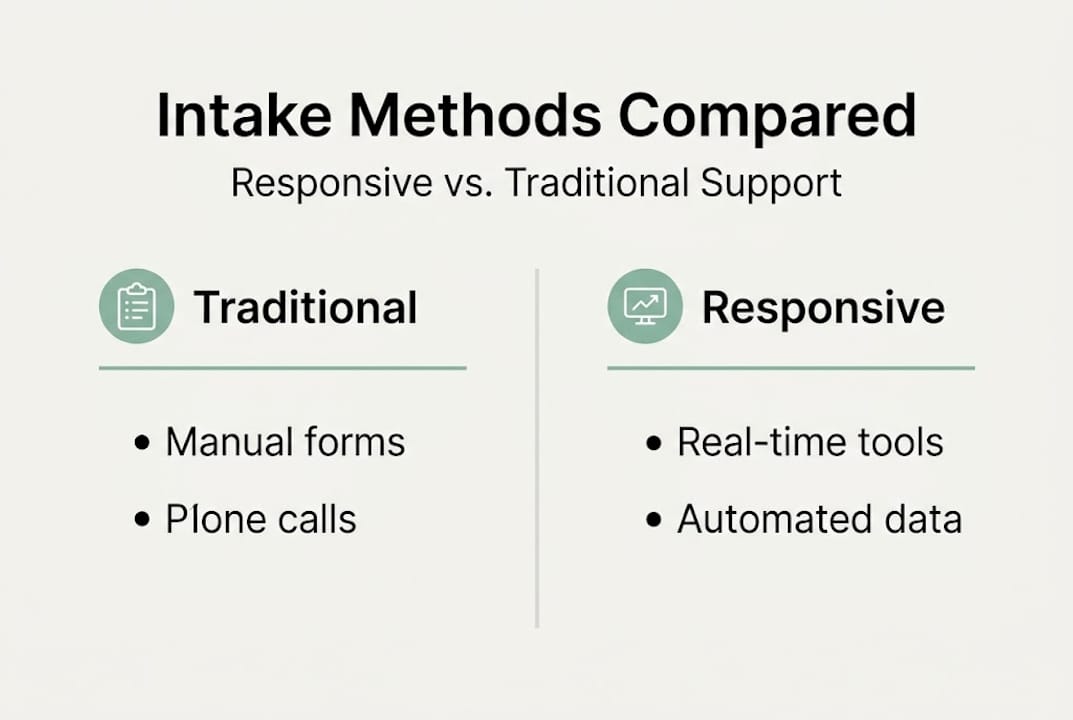
| Dimension | Traditional support | Responsive support |
|---|---|---|
| Referral intake | Manual fax or phone | Automated digital intake |
| Eligibility verification | Days-long manual process | Real-time EMR integration |
| Staff coordination | Phone tag and paper handoffs | Centralized digital dashboard |
| Response to emergencies | Reactive, delayed | Proactive alerts and fast routing |
| Patient communication | Sporadic, uncoordinated | Automated, consistent touchpoints |
Three core features define a responsive support model:
- Real-time communication: Clinical and administrative staff share live updates through integrated platforms, reducing the lag between referral receipt and bed assignment.
- Automation: Repetitive tasks like insurance verification, document collection, and status notifications are handled by software rather than staff.
- Proactive partnership: Relationships with referral sources, hospitals, and care coordinators are structured so that handoffs happen smoothly, not reactively.
For administrators looking to reduce bottlenecks, automation improves nursing home intake by eliminating the manual steps that slow down every referral. When your team spends less time chasing paperwork, they spend more time on clinical assessment and patient family engagement. That shift improves staff satisfaction alongside operational outcomes.
With this context, the next step is discovering specific advantages responsive support brings to your operation.
Key benefits: Why responsive support changes admissions
The operational case for responsive healthcare support is grounded in measurable results. Facilities that implement digital intake tools and rapid response systems report intake time reductions of 70%+, along with a 21-times increase in census conversions and a 72% drop in no-shows. For a facility managing dozens of referrals each week, these numbers translate directly to revenue and occupancy.
Here is a summary of the key benefits your facility can expect:
- Faster onboarding: Automated workflows eliminate manual data re-entry, cutting days off the intake timeline.
- Higher census conversion: Real-time eligibility checks and instant insurance verification prevent delays that cause referral sources to redirect patients elsewhere.
- Fewer no-shows: Automated reminders and pre-admission communication keep patients and families engaged through the process.
- Staff shortage mitigation: Digital intake tools reduce administrative burden significantly. Facilities using responsive systems report savings of 500+ staff hours annually and a 30% reduction in administrative costs.
- Improved patient and family experience: Transparent, timely communication builds trust. Healthcare NPS scores in facilities using digital intake tools consistently reach the 30 to 50 range, compared to lower baselines at facilities using manual methods.
For a structured overview of how these gains compound over time, the intake automation guide provides benchmark data and implementation frameworks. You can also review how intake workflow optimization specifically affects skilled nursing census outcomes.
Pro Tip: If you are evaluating intake tools, prioritize platforms that include conditional logic forms and native EHR integration. Conditional logic forms adapt in real time based on patient responses, collecting only relevant data and reducing completion time. When that data feeds directly into your EHR system, you eliminate duplicate entry entirely, which is where most administrative time is lost.
To get the most from these benefits, you need to know how responsive support actually works.
How responsive support actually works: Systems and strategies
Responsive healthcare support is built on a coordinated set of systems that activate at the moment a referral is received. The workflow begins with digital referral intake, where patient data is captured automatically and routed to the appropriate clinical reviewer. From there, insurance eligibility is verified in real time against your EMR and payer portals. Clinical assessments are flagged and assigned, and the patient or family receives automated communication throughout.
The following table outlines the key systems involved and their roles:
| System | Function | Impact |
|---|---|---|
| EMR integration | Syncs patient data across platforms | Eliminates duplicate data entry |
| Digital intake forms | Captures referral data automatically | Reduces intake processing time |
| Insurance verification portal | Confirms eligibility in real time | Prevents billing delays |
| Care coordination tools | Manages handoffs between teams | Reduces readmissions |
| Referral management dashboard | Tracks referral status live | Improves conversion visibility |
For a step-by-step view of how this unfolds in practice, intake workflow automation walks through the sequence from first referral contact to patient onboarding:
- Referral received via digital portal or integrated fax capture.
- Patient data auto-populated into the intake form and routed to clinical review.
- Real-time insurance eligibility check initiated against payer database.
- Clinical assessment assigned and completed within defined response window.
- Bed assignment confirmed and admission documentation prepared automatically.
- Patient and family notified with onboarding instructions and next steps.
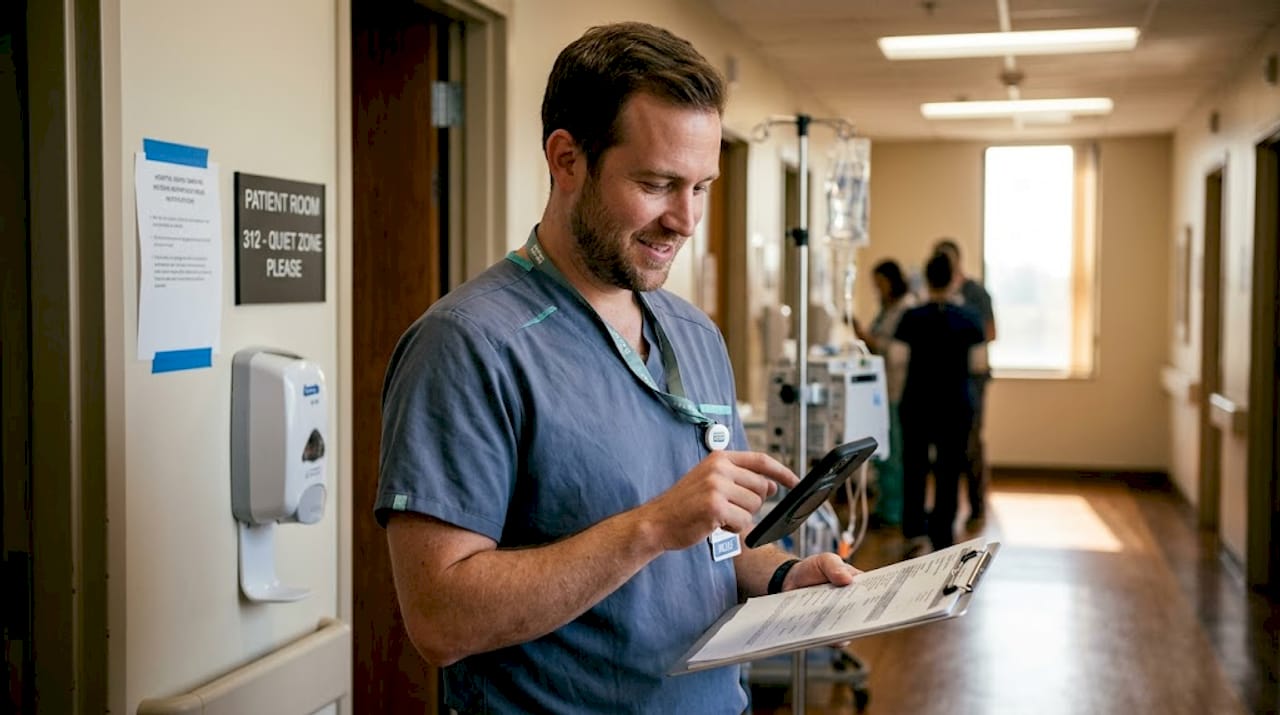
Mobile-first design matters more than most administrators realize. When clinical reviewers can assess referrals from a tablet or phone, response time drops considerably. Conditional logic in intake forms ensures that reviewers only see fields relevant to each patient’s clinical profile, which reduces cognitive load and speeds decision-making.
Healthcare partnerships are equally critical. Care transition partnerships improve efficiency through real-time data coordination, reduce readmissions, and increase referral volume from trusted hospital discharge planners. These relationships are supported, not replaced, by technology.
Pro Tip: Underestimating the value of referral partnerships is one of the most common mistakes facilities make when implementing responsive support. Technology enables faster communication, but the relationships you build with hospital case managers and discharge planners are what generate consistent, high-quality referral volume.
Understanding systems is only half the equation. Real improvement comes from what you measure and change based on results.
Measuring the impact: Metrics that matter
Implementing responsive healthcare support without tracking outcomes is like running a treatment protocol without monitoring patient progress. You need clear metrics to confirm that changes are working and to identify where further adjustment is needed.
The five metrics every admissions team should track are:
- Intake processing time: How long from referral receipt to bed assignment? Track this weekly and set a reduction target of at least 30% within the first 90 days.
- Error rates: How often do incomplete forms, missing insurance data, or documentation gaps create rework? Errors increase cost and delay admission.
- Census conversion rate: What percentage of referrals result in actual admissions? This is your most direct revenue indicator.
- Net Promoter Score (NPS): Patient and family satisfaction during intake predicts long-term reputation and referral source loyalty.
- Staff hours saved: Track administrative time before and after implementation to quantify efficiency gains and justify ongoing investment.
A real-world benchmarking approach starts with a 30-day baseline measurement before any system changes. Capture each of these five metrics manually if needed. After implementing responsive intake tools, measure again at 30, 60, and 90 days. The comparison gives you concrete evidence of impact.
“Minimizing documentation errors and speeding up onboarding through intake automation directly improves financial outcomes for skilled nursing facilities, particularly through faster eligibility verification and reduced claim denials.”
Using this data to build a continuous improvement cycle is what separates high-performing facilities from average ones. Review your metrics in monthly leadership meetings. When a metric plateaus or declines, trace it back to a specific step in the intake workflow and adjust. Compare your outcomes against benchmarks from similar facilities. For a direct comparison of approaches, manual vs. automated intake provides a structured analysis. You can also explore how admissions efficiency through automation compounds across the full referral lifecycle.
Now let’s consider what these advancements mean for your leadership approach.
Beyond the tools: A leadership mindset for responsive admissions
Most facilities approach responsive healthcare support as a technology purchase. They buy the software, train the staff, and expect results. What they often miss is that the technology is only as effective as the organizational culture surrounding it.
The administrators who see the greatest results from responsive support are not the ones with the most sophisticated tools. They are the ones who treat intake automation insight as an ongoing learning process, not a one-time implementation. They build feedback loops between frontline staff and leadership. They invest in upskilling their admissions coordinators so staff see automation as a support system, not a threat.
Resistance to change is real in healthcare administration. The way to lead through it is not to mandate adoption but to demonstrate value early, involve staff in evaluating tools, and celebrate measurable wins as a team. No single platform fixes intake. What creates lasting improvement is the system of practices, partnerships, and accountability you build around the tools you choose.
Supercharge your admissions with responsive healthcare solutions
If the benefits and systems described in this guide resonate with the challenges your facility faces, Smart Admissions is built to help you act on them. Our platform aligns directly with responsive support best practices, offering AI-powered referral management, real-time insurance verification, and EMR integration designed for skilled nursing and post-acute care providers.
Explore the SaaS benefits for nursing admissions to see how a purpose-built platform removes the friction from your intake process. Or start with our overview of referral management solutions to understand how structured referral workflows increase census conversions. Smart Admissions gives your team the infrastructure to respond faster, fill beds more consistently, and serve patients better from day one.
Frequently asked questions
What is the difference between responsive and traditional healthcare support?
Responsive support uses real-time tools and adaptive systems, while traditional models rely on manual, slower processes that often delay patient onboarding and increase administrative errors.
How does responsive support help during staff shortages?
It automates repetitive admin tasks, which means fewer staff members are needed to process each referral, freeing your clinical team to focus on direct patient care instead of paperwork.
Which metrics should we track to measure responsive support success?
Monitor intake processing time, documentation error rates, census conversion rates, NPS scores, and staff hours saved for the most actionable picture of your admissions performance.
Can responsive support integrate with our existing EHR system?
Yes. Modern responsive intake platforms are built to integrate with major EHR systems using FHIR and HL7 standards, allowing data to flow between systems without manual re-entry or duplicate documentation.
How quickly can a facility expect to see results after implementing responsive support?
Most facilities report measurable improvements in intake processing time and error rates within the first 60 to 90 days, with census conversion gains becoming visible in the following quarter as workflows stabilize.