
TL;DR:
- Automated documentation enhances speed, accuracy, and compliance in patient admissions.
- It reduces manual tasks, improves staff satisfaction, and ensures audit readiness.
- Data integration supports faster decisions and better care coordination.
Managing patient admissions at a skilled nursing or rehabilitation center involves dozens of moving parts: referral reviews, insurance verifications, clinical assessments, and regulatory documentation. When your team handles these tasks manually, errors accumulate, processing slows, and staff burn out. The stakes are real because delays in admissions directly reduce bed occupancy and revenue. Automated documentation changes that equation. This article walks through the top seven advantages of adopting automation in your admissions workflow, giving you a concrete framework to evaluate your current processes and make a confident decision about the right solution for your facility.
Table of Contents
- Automated documentation: What it is and why it matters
- Top efficiency gains: Speed, accuracy, and reduced manual tasks
- Regulatory compliance and audit readiness: Minimize risk
- Data integration and accessibility: Better decisions, faster care
- Staff and patient experience: Less burnout, better service
- Our perspective: Stop treating automation as an IT project
- See how Smart Admissions fits your facility
- Frequently asked questions
Key Takeaways
| Point | Details |
|---|---|
| Save time and reduce errors | Automated documentation speeds up admissions and slashes manual mistakes. |
| Ensure compliance | Automation helps meet CMS and HIPAA rules and prepares facilities for audits. |
| Improve decision-making | Seamless data integration allows for faster, more informed care planning. |
| Increase staff and patient satisfaction | Less paperwork means happier teams and a better experience for patients and families. |
Automated documentation: What it is and why it matters
Automated documentation uses purpose-built software to capture, process, and store patient intake and clinical details without relying on manual data entry at every step. Instead of your admissions coordinator filling out the same fields across multiple forms and systems, structured digital forms pull information from referral packets, EHR records, and insurance portals automatically.
Traditional manual methods create significant risk. A single transposed number in a diagnosis code or a missed required field can trigger a claim denial, delay a placement decision, or expose your facility to a compliance audit. These aren’t rare events; they’re predictable outcomes of high-volume, repetitive work done under time pressure.
The efficiency gains from switching are measurable. Automated documentation cuts referral review time by up to 40%, which means your team can process more referrals in less time without adding headcount.
Key features to look for in any automated documentation platform include:
- Structured digital intake forms that enforce required fields at the point of entry
- EHR and EMR integration using FHIR and HL7 standards for seamless data exchange
- Real-time validation that flags inconsistencies before a record is saved
- Role-based access controls to protect sensitive patient information
Pro Tip: Before evaluating any automation tool, map out every step in your current admissions process. Identify where documentation errors most often occur and where your team loses the most time. Those specific bottlenecks should be your primary selection criteria. Understanding admissions automation efficiency starts with knowing exactly what you need to fix.
Top efficiency gains: Speed, accuracy, and reduced manual tasks
With the foundation in place, examine the concrete ways automation transforms core processes for admissions teams. The most immediate impact is speed. When referral data flows directly from the hospital or discharge planner into your system, your team is not rekeying information from a faxed document. That alone can save hours per week across a busy admissions department.
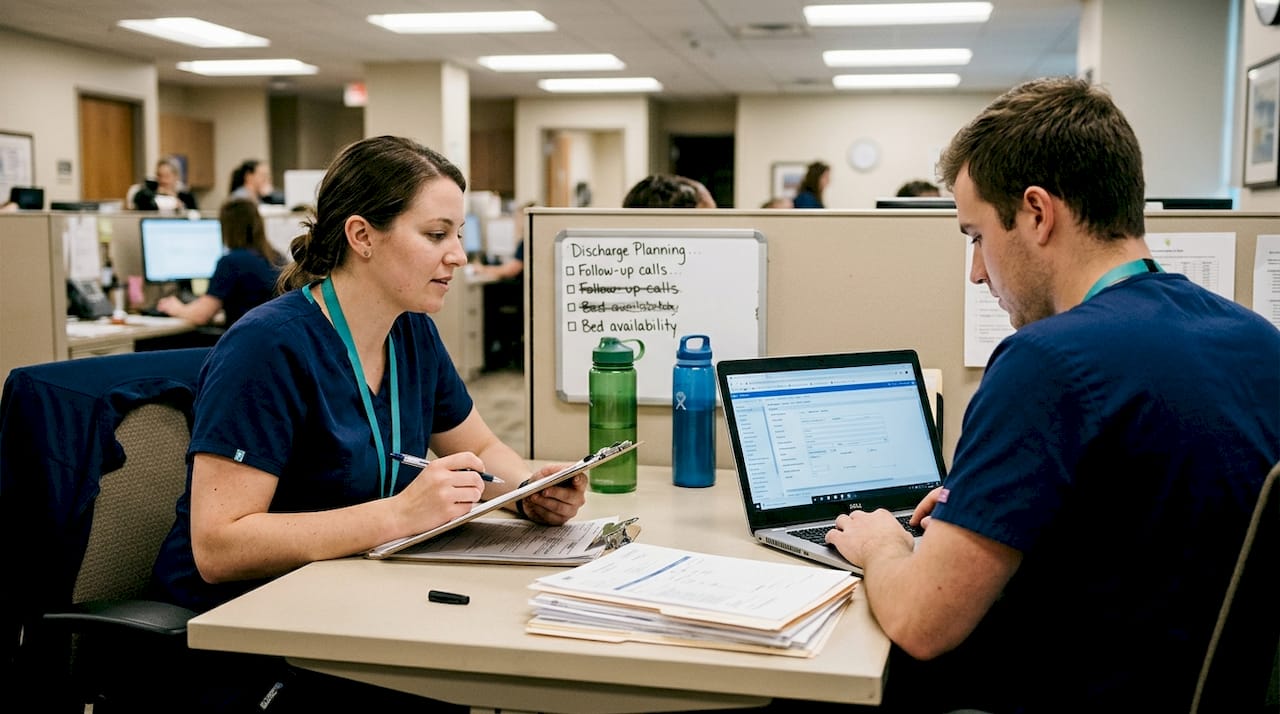
Accuracy improves in parallel. Automated systems eliminate the class of errors caused by fatigue, distraction, or unclear handwriting. Automated workflow benefits for healthcare admissions include fewer claim denials, reduced rework, and stronger audit performance.
Here is a direct comparison of manual versus automated documentation across four key dimensions:
| Dimension | Manual documentation | Automated documentation |
|---|---|---|
| Processing speed | Hours to days per referral | Minutes with real-time data pull |
| Error rate | High due to repeated manual entry | Low with validation at point of entry |
| Compliance readiness | Inconsistent, depends on staff | Consistently enforced by system rules |
| Cost per admission | Higher due to labor and rework | Lower with reduced manual intervention |
Beyond speed and accuracy, your staff experience a meaningful reduction in repetitive task load. When AI-powered assistants handle data population, checklist completion, and eligibility lookups, admissions coordinators can focus on clinical judgment and family communication. That shift matters for retention. Staff who spend less time on low-value tasks report higher job satisfaction and are less likely to leave, reducing costly turnover in a role that is difficult to fill quickly.
Regulatory compliance and audit readiness: Minimize risk
Efficiency isn’t the only benefit. Automation directly addresses the compliance challenges that keep admissions directors awake at night. When documentation standards are enforced by the system rather than left to individual staff discretion, your facility consistently meets the requirements set by HIPAA, CMS, and state-specific regulatory bodies.
Automated platforms maintain a complete, timestamped audit trail for every record. If a surveyor requests documentation from a specific admission date, your team can retrieve it in seconds rather than searching through physical files or multiple system logins. Automation in healthcare makes audits measurably easier by centralizing records and preserving change history automatically.
Specific compliance safeguards built into quality automated systems include:
- Mandatory field enforcement that prevents incomplete records from being saved
- HIPAA-compliant data storage with encryption at rest and in transit
- CMS documentation standards built into intake templates
- State regulation modules that can be configured for your jurisdiction
- Change logs that record who edited a record and when
Pro Tip: Even with automation in place, schedule quarterly spot-checks of a random sample of completed records. Early detection of configuration gaps or staff workarounds protects your facility before a formal audit surfaces them.
As one healthcare operations consultant noted, facilities that automate their documentation workflow reduce regulatory risk not just by storing data correctly, but by making compliance the default outcome of every admissions interaction rather than a result of individual effort.
For a closer look at how AI in patient intake supports these compliance outcomes, the connection between real-time validation and regulatory readiness is particularly clear.
Data integration and accessibility: Better decisions, faster care
Compliance and accuracy are critical, but the ability to integrate and use data unlocks even more value. Automated documentation systems connect referral information, EHR records, and clinical assessment data in a single view. Your admissions director no longer needs to toggle between three platforms to build a complete picture of an incoming patient.
Integrated EMR and referral data leads to faster, more informed decisions at every stage of the admissions process. Here is how that data flow works in practice:
- A referral arrives and the system automatically pulls patient demographics, diagnosis codes, and payer information.
- Clinical data from the referring hospital’s EHR populates the intake assessment template.
- Insurance eligibility is verified in real time against payer portals.
- The completed record is routed to the appropriate clinical and administrative reviewers simultaneously.
- A decision is communicated to the referral source, often within minutes rather than hours.
The downstream effects on care coordination are equally significant. When interdisciplinary teams access the same up-to-date patient record from day one, care planning meetings are more productive and transition-of-care delays decrease. Faster decisions also mean faster bed assignments, which directly improves your occupancy rate and revenue cycle performance.
| Integration benefit | Impact on operations |
|---|---|
| Unified patient record | Eliminates duplicate data entry across systems |
| Real-time eligibility verification | Reduces pre-authorization delays |
| Simultaneous reviewer access | Speeds up interdisciplinary coordination |
| Automated status updates | Keeps referral sources informed without staff follow-up calls |
For facilities focused on streamlining patient intake, data integration is where the most visible operational gains emerge.
Staff and patient experience: Less burnout, better service
All these operational and compliance gains create a better environment for both staff and residents. When your admissions team is not buried in paperwork, they can spend more time with patients and families during what is often a stressful transition. That shift in focus improves the quality of the admissions experience for everyone involved.
Streamlined automation reduces admissions bottlenecks and the stress that comes with them. Staff onboarding is also easier when digital workflows guide new coordinators through each required step rather than relying on institutional knowledge passed down informally.
Specific patient-facing improvements your facility can expect include:
- Shorter wait times from referral receipt to admission decision
- Fewer intake errors that require follow-up calls or corrected paperwork
- Clearer, timely updates for families on admission status
- More consistent communication from staff who are not overwhelmed by manual tasks
Pro Tip: Use the analytics built into your automated documentation platform to track individual staff workload over time. If one coordinator consistently handles a disproportionate volume, redistribution before burnout occurs is far more effective than replacing staff after they leave.
The connection between staff experience and patient outcomes is well established in post-acute care settings. When your team has the tools to automate skilled nursing documentation, the quality of human interaction at the bedside improves because your staff has the time and mental bandwidth to deliver it.
Our perspective: Stop treating automation as an IT project
The most common reason healthcare facilities delay automation adoption is that they frame it as a technology implementation rather than an operational strategy. When it lands on the IT department’s project list, it stalls. Procurement cycles stretch out, pilot programs run indefinitely, and your admissions team keeps managing the same manual workload.
The facilities that see the fastest results approach automation as an admissions leadership decision, not a systems decision. Your director of admissions should own the selection criteria, define the success metrics, and drive the rollout timeline. IT supports the integration work, but the operational logic has to come from the people who live inside the admissions workflow every day.
We also see a consistent pattern in facilities that underinvest in configuration. They purchase a capable platform and deploy it with default settings, then wonder why outcomes fall short of expectations. Automation tools deliver their full value only when they are configured to match your specific workflows, payer mix, and regulatory requirements. That configuration investment pays back quickly, but it requires your team’s direct involvement upfront.
Finally, the ROI case for automated documentation is not speculative. Facilities that commit fully to automation see measurable gains in bed fill rates, claim acceptance rates, and staff retention within the first few months. Those are outcomes you can present to your board with confidence.
See how Smart Admissions fits your facility
If your facility is ready to reduce review times, strengthen compliance, and give your admissions team back hours every week, Smart Admissions was built specifically for that challenge.
Smart Admissions integrates directly with your existing EHR and insurance portals, automates eligibility verification, and provides real-time clinical assessment tools designed for skilled nursing and rehabilitation environments. Your team gets a platform that enforces documentation standards automatically, keeps audit trails current, and delivers analytics that support smarter decisions. Onboarding is straightforward, support is responsive, and the platform is configurable to your workflows without requiring a large internal IT effort. Contact us to see how your facility can start reducing admissions friction today.
Frequently asked questions
How quickly can healthcare facilities see benefits from automated documentation?
Facilities often report measurable efficiency improvements within weeks of implementation, with review time reductions of up to 40% achievable early in the rollout.
Does automation improve compliance with CMS or HIPAA regulations?
Yes, automated systems enforce required fields, maintain complete change logs, and support audit readiness by centralizing records with full traceability.
Will automated documentation reduce staff workload?
Automation removes repetitive data entry and checklist tasks, and streamlined workflow steps free your team to focus on clinical decision-making and patient interaction.
Is automated documentation secure for patient information?
Leading platforms use HIPAA-compliant encryption both at rest and in transit, combined with role-based access controls that limit data visibility to authorized users only.