
Healthcare facilities lose valuable bed days when patient referrals drag on for weeks. Administrators and admissions coordinators face mounting pressure to accelerate intake while maintaining care quality and compliance. The strategies outlined here address automation, communication centralization, smart triage, leakage prevention, and AI-powered processing to help you cut referral times and improve throughput. Each approach offers measurable gains when implemented thoughtfully within your existing workflows and systems.
Table of Contents
- Key takeaways
- How to evaluate referral reduction strategies: key criteria
- Automate referral workflows with integrated management systems
- Centralize communication and track referral metrics for continuous improvement
- Use smart triage rules and order sets to prioritize urgent referrals
- Address referral leakage and optimize provider lists
- Leverage AI and automation for faster data extraction and intake processing
- Comparing strategies to reduce referral times
- Explore smart referral management solutions for faster admissions
- Frequently asked questions
Key Takeaways
| Point | Details |
|---|---|
| Automation of referrals | Automated workflows eliminate manual data entry and phone tag, speeding intake. |
| Centralized communication | Consolidated messaging and status updates provide real time visibility and reduce delays. |
| Smart triage rules | Rules prioritize urgent cases to route them quickly and shorten wait times. |
| Leakage prevention | Identifying and closing referral leakage preserves patient flow and bed availability. |
| AI assisted intake | Artificial intelligence speeds data extraction and accelerates initial referral processing. |
How to evaluate referral reduction strategies: key criteria
Selecting the right approach requires understanding what matters most for your facility. Efficiency gains mean little if implementation disrupts operations or staff reject the new system. Start by assessing how much manual labor each strategy eliminates, since coordinators typically manage 20 to 30 referrals daily through phone calls, faxes, and spreadsheets.
Integration with your existing Electronic Health Records system determines whether data flows seamlessly or requires double entry. Administrative automation in healthcare admissions works best when systems communicate without manual intervention. Scalability matters too, especially for facilities planning to expand services or bed capacity. A solution that handles 50 monthly referrals may buckle under 200.
Consider how each strategy affects referral completeness and clinician workload. Incomplete referrals create rework cycles that negate time savings. Implementation complexity and training requirements directly impact adoption success. Staff resistance derails even the most sophisticated technology if training falls short or workflows feel cumbersome.
Pro Tip: Pilot new strategies with a single service line or unit before facility-wide rollout to identify friction points early and refine processes based on real user feedback.
Automate referral workflows with integrated management systems
Referral Management Systems eliminate the repetitive tasks that consume coordinator time and delay patient placement. These platforms automate referral creation, status updates, and reminders, replacing fax machines and phone tag with digital workflows. When integrated with your EHR, they pull patient data automatically and push updates back to clinical teams without manual data entry.
Coordinators managing referrals manually spend hours each day tracking down missing information, calling specialists, and updating spreadsheets. Automation scales this workload infinitely, handling hundreds of referrals with the same effort previously required for dozens. The elimination of fax and phone bottlenecks alone cuts days from typical referral cycles.
Accuracy improves when systems validate data at entry rather than discovering errors during review. Examples of referral management systems for efficiency show facilities achieving same-day referral processing where manual methods took a week or more. Real-time tracking gives administrators visibility into pipeline status and identifies stalled referrals before they age out.
Key automation benefits include:
- Instant referral creation from EHR data
- Automatic routing to appropriate specialists or facilities
- Status notifications to all stakeholders
- Integrated document management and secure messaging
- Audit trails for compliance and quality review
Pro Tip: Prioritize systems offering seamless EHR integration over standalone platforms to avoid creating new data silos that require manual reconciliation.
Centralize communication and track referral metrics for continuous improvement
Scattered communication across phone, fax, email, and paper creates gaps where referrals stall or disappear entirely. Centralized platforms consolidate all referral-related messages in one accessible location, ensuring coordinators see complete conversation histories. This visibility prevents duplicate outreach and catches referrals that slip through cracks when staff members are out or roles change.

Maintaining curated specialist directories with current contact information, availability, and acceptance criteria reduces referral decision times significantly. Coordinators spend less time researching options and more time moving patients forward. Regular directory updates prevent referrals to providers no longer accepting new patients or outside network.
Tracking turnaround times, completion rates, and bottleneck locations transforms referral management from reactive to proactive. Monthly metric reports highlight which specialties or facilities consistently delay responses, enabling targeted interventions. Modernized workflows deliver faster care when teams use data to refine processes continuously rather than relying on anecdotal observations.
| Common Bottleneck | Root Cause | Solution |
|---|---|---|
| Missing clinical documentation | Incomplete initial referral | Automated validation at submission |
| Specialist non-response | Outdated contact information | Centralized directory with verification |
| Insurance verification delays | Manual benefit checks | Real-time eligibility integration |
| Internal approval backlogs | Unclear routing rules | Automated triage and escalation |
Centralized tracking also supports compliance by documenting every referral touchpoint and decision. Enhanced referral tracking provides the audit trail regulators and quality teams require while giving administrators actionable insights into process performance.
Use smart triage rules and order sets to prioritize urgent referrals
Not all referrals carry equal urgency, yet manual processing often treats them identically. Smart order sets built into EHR workflows validate referral completeness before submission, catching missing information that would otherwise trigger back-and-forth delays. Required fields, appropriate documentation, and clinical justification get verified upfront rather than discovered days later during specialist review.
Triage rules route urgent or direct referrals immediately to appropriate specialists while standard referrals follow normal queues. This prioritization ensures critical cases receive attention within hours instead of waiting behind routine requests. One health system demonstrated a 93% reduction in referral-to-scheduling time, cutting gastrointestinal screening referrals from 422 days down to just 28 days through smart triage implementation.
Customizable triage criteria adapt to your facility’s specialty mix and patient population. Rehabilitation centers might prioritize post-surgical patients with limited therapy windows, while skilled nursing facilities fast-track medically complex admissions requiring specialized equipment setup. The flexibility to define urgency parameters ensures resources align with actual care needs.
Benefits of smart triage include:
- Reduced wait times for time-sensitive conditions
- Improved resource allocation and bed utilization
- Better patient outcomes through faster access
- Decreased coordinator frustration from unclear priorities
- Data-driven capacity planning
Pro Tip: Review and adjust triage criteria quarterly based on actual outcomes and changing service priorities to maintain effectiveness as your facility evolves.
Validated referrals also improve relationships with receiving providers who appreciate complete, appropriate requests. Intake documentation quality directly impacts specialist acceptance rates and processing speed.
Address referral leakage and optimize provider lists
Referral leakage occurs when patients seek care outside your network or never complete recommended services, undermining both care continuity and facility revenue. Outdated provider directories contribute significantly to leakage, sending coordinators down dead ends that frustrate staff and delay patient placement. When preferred specialists no longer accept referrals or insurance changes network status, leakage rates exceed 20% for high-volume services.
Regular provider list optimization requires quarterly reviews of specialist availability, acceptance criteria, typical turnaround times, and quality metrics. Remove providers who consistently decline referrals or miss response deadlines. Add new specialists as they join networks or expand capacity. This maintenance prevents wasted outreach and keeps referral cycles moving.
Staff training on referral protocols and available resources reduces leakage from coordinator uncertainty. When team members understand which specialists handle specific conditions and how to navigate complex cases, referrals reach appropriate destinations faster. Training also reinforces the importance of patient follow-up to ensure completed referrals translate into actual appointments.
| Service Category | Typical Leakage Rate | Primary Causes | Mitigation Strategy |
|---|---|---|---|
| Imaging services | 22-28% | Multiple provider options, patient convenience | Preferred provider education, scheduling assistance |
| Specialty consults | 15-20% | Insurance barriers, long wait times | Real-time eligibility checks, alternative specialists |
| Post-acute care | 18-25% | Discharge planning delays, bed availability | Early referral initiation, facility partnerships |
Focus leakage reduction efforts on high-cost, high-volume services where even small percentage improvements generate substantial impact. Imaging, specialty procedures, and post-acute placements offer the greatest return on optimization investment. Understanding referral management basics helps coordinators recognize and prevent common leakage patterns.
Leverage AI and automation for faster data extraction and intake processing
Artificial intelligence transforms referral processing by extracting structured data from unstructured documents automatically. Referrals arrive as faxed forms, scanned PDFs, and handwritten notes that traditionally require manual review and data entry. AI systems read these documents, identify relevant clinical information, and populate intake forms without human intervention.
This automation reduces processing times from hours or days to minutes while achieving accuracy rates above 98%. Coordinators review AI-extracted data rather than typing everything manually, catching errors faster and moving referrals forward immediately. The technology handles variations in document formats and handwriting that would challenge traditional optical character recognition.
Generative AI goes further by drafting clinical summaries, identifying missing information, and suggesting appropriate care settings based on patient characteristics. One national outpatient provider documented 98.6% robotic process automation completion rates for referral intake, freeing staff to focus on complex cases requiring clinical judgment rather than data transcription.
AI automation advantages include:
- Instant data extraction from faxes, PDFs, and images
- Reduced manual entry errors and omissions
- 24/7 processing without staff overtime
- Scalability to handle referral volume spikes
- Consistent quality regardless of coordinator experience
Pro Tip: Start AI adoption with low-risk, high-volume referral types to build staff confidence and demonstrate value before expanding to complex clinical scenarios requiring nuanced judgment.
Intake automation in healthcare admissions represents the future of referral management, with early adopters gaining competitive advantages through faster response times and improved patient experiences.
Comparing strategies to reduce referral times
Each strategy offers distinct benefits depending on your facility’s current challenges and resources. This comparison helps administrators prioritize investments based on expected impact, implementation effort, and alignment with existing systems.
| Strategy | Referral Time Reduction | Implementation Complexity | Staff Training Required | Best For | Scalability |
|---|---|---|---|---|---|
| Automated workflows | 40-60% | Moderate, needs EHR integration | Moderate, 2-4 weeks | Facilities with high manual workload | Excellent |
| Centralized communication | 25-35% | Low to moderate | Low, 1-2 weeks | Multi-site organizations | Good |
| Smart triage rules | 30-50% for urgent cases | Moderate, requires customization | Moderate, ongoing refinement | Specialty-focused facilities | Good |
| Leakage management | 15-25% | Low, process-focused | Low to moderate | High-volume referral services | Moderate |
| AI data extraction | 50-70% | Moderate to high | Low, intuitive interfaces | Document-heavy intake processes | Excellent |
Facilities with limited IT resources should start with leakage management and centralized communication, which deliver meaningful improvements without major system changes. Organizations ready for technology investment gain the most from automation and AI, especially when processing hundreds of monthly referrals. Phased rollouts reduce disruption and allow iterative refinement based on user feedback.
Combining strategies multiplies benefits. Automated workflows paired with smart triage rules create comprehensive solutions addressing multiple bottlenecks simultaneously. Referral management systems increasingly bundle these capabilities into integrated platforms that simplify implementation and maintenance.
Explore smart referral management solutions for faster admissions
Reducing referral times requires the right combination of technology, processes, and staff engagement. Smart Admissions brings together automated workflows, intelligent triage, AI-powered data extraction, and centralized tracking in one platform designed specifically for post-acute care facilities. Our solutions integrate with your existing EHR and insurance systems to eliminate manual work while improving referral quality and speed.
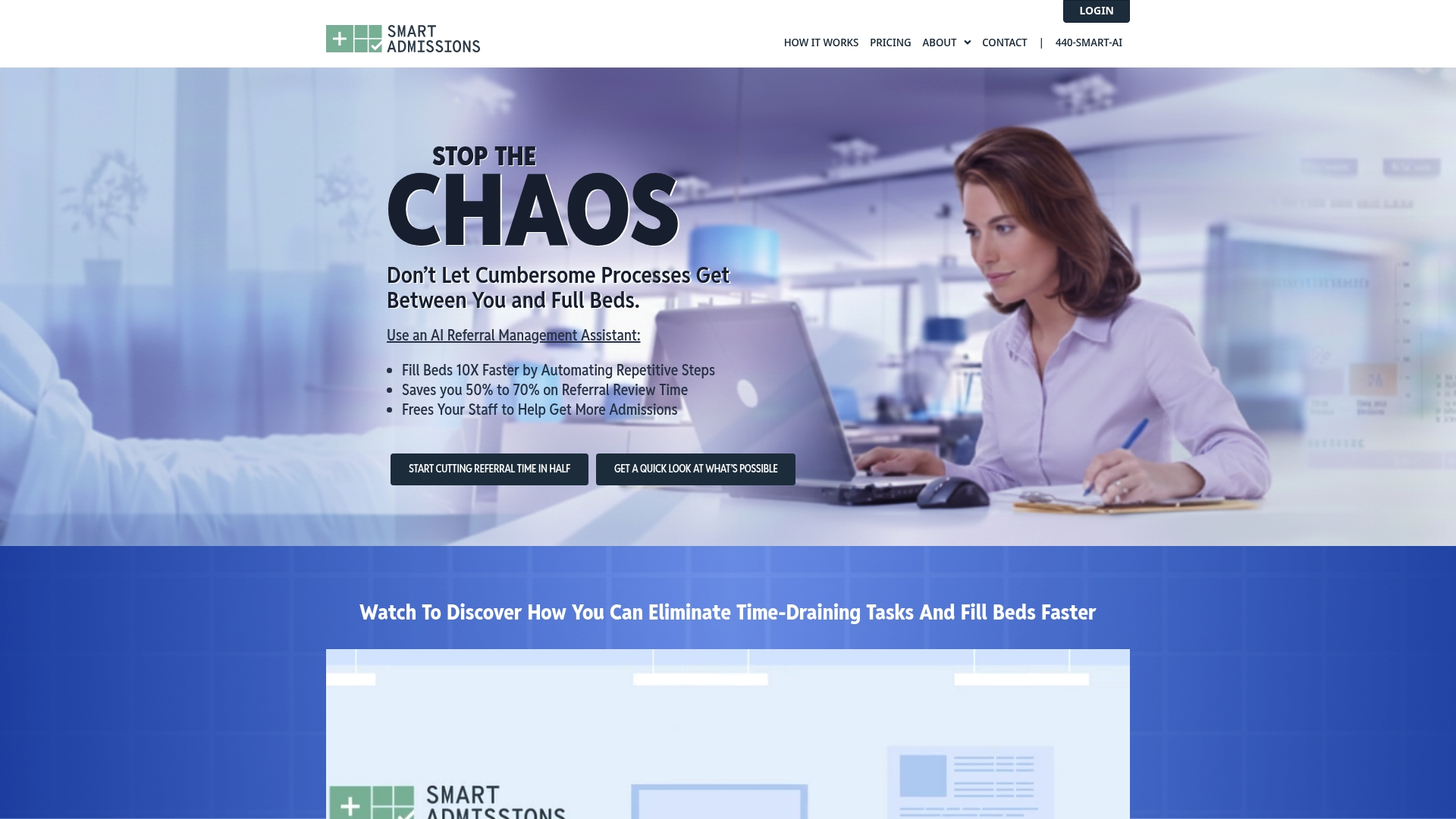
Healthcare administrators using Smart Admissions report substantial improvements in bed fill rates, coordinator productivity, and patient satisfaction. The platform handles everything from initial referral receipt through admission, providing real-time visibility and actionable insights at every step. Explore examples of referral management systems to see how facilities like yours achieve faster admissions and better outcomes. Learn more about automation in healthcare admissions efficiency and discover how intake automation transforms your admissions process.
Frequently asked questions
How can automating referrals reduce staff burnout?
Automation eliminates repetitive manual tasks like data entry, fax management, and status tracking that consume coordinator time and energy. Fully automated systems free 60-80% of staff workload, allowing teams to focus on complex cases requiring clinical judgment and patient interaction. Gradual rollout with comprehensive training ensures staff feel supported rather than threatened by new technology. Administrative automation in healthcare admissions improves job satisfaction when implemented thoughtfully.
What are common causes of referral leakage and how can they be fixed?
Referral leakage stems from outdated provider lists and insufficient staff training on referral protocols. Patients seek care elsewhere when coordinators cannot quickly identify appropriate specialists or when preferred providers no longer accept referrals. Regular directory updates, staff education on network resources, and patient follow-up systems prevent most leakage. Focus on high-volume services where small improvements generate substantial revenue retention.
How does AI help speed up referral intake processing?
AI automates data extraction from unstructured documents with over 98% accuracy, reading faxed forms, scanned PDFs, and handwritten notes to populate intake systems instantly. This eliminates hours of manual data entry per referral while reducing transcription errors that cause delays. Coordinators review AI-extracted information rather than typing everything manually, moving referrals from receipt to review in minutes instead of days. The technology scales effortlessly to handle volume spikes without additional staff.
What challenges exist when implementing referral management automation?
Successful automation adoption requires change management and phased implementation to address staff concerns and workflow disruptions. Coordinators may resist new systems if training feels inadequate or if automation threatens job security. Technical integration with existing EHR and insurance systems can prove complex, requiring IT resources and vendor coordination. Starting with pilot programs in single departments builds confidence and identifies issues before facility-wide rollout, increasing long-term adoption success.