
Manual patient intake in skilled nursing and rehabilitation facilities consumes hours of staff time and introduces errors that delay admissions and impact patient care. Referral documents arrive via fax, email, and portals, requiring admissions teams to manually review, extract, and enter data into multiple systems. This labor-intensive process creates bottlenecks, extends empty bed days, and contributes to staff burnout. Automated intake systems address these challenges by leveraging artificial intelligence to digitize, validate, and route patient information instantly. This article explores the criteria for evaluating automated intake solutions and the measurable benefits they deliver to healthcare admissions teams.
Table of Contents
- Key takeaways
- Criteria for evaluating automated intake systems
- Top benefits of automated intake systems
- How automation streamlines intake processes
- Balancing automation with human oversight
- Streamline your skilled nursing admissions with Smart Admissions
- FAQ
Key Takeaways
| Point | Details |
|---|---|
| Faster processing time | Automated intake reduces processing time by up to 90 percent, enabling same day admission decisions. |
| Near perfect data accuracy | Automated extraction delivers near perfect accuracy, reducing transcription errors and associated clinical and billing delays. |
| Saves staff bandwidth | Automation handles routine data capture and routing, freeing admissions teams to focus on complex cases and reducing delays. |
| Compliance and audits | It maintains HIPAA compliant data security and generates documentation that supports regulatory audits and CMS requirements. |
| Handles peak volumes | Solutions must scale to process dozens of simultaneous referrals without performance degradation during high demand periods. |
Criteria for evaluating automated intake systems
Selecting the right automated intake solution requires understanding which features matter most for skilled nursing and rehabilitation admissions workflows. Not all systems deliver equal value, and administrators must assess capabilities against their facility’s specific needs and regulatory requirements.
Speed and accuracy form the foundation of effective automation. The system must extract patient demographics, insurance details, and clinical information from diverse document formats without introducing errors. Automation excels in routine tasks but requires human oversight to avoid complacency risks, so look for solutions that flag uncertain extractions for staff review.
Compliance capabilities determine whether automation simplifies or complicates regulatory obligations. Your system must maintain HIPAA-compliant data security, support PDPM assessment requirements, and generate documentation that meets CMS standards. Integration with existing EMR and EHR platforms ensures automated data flows directly into clinical workflows without manual re-entry.
Volume handling separates enterprise-ready solutions from basic tools. Peak referral periods test system capacity, and your intake automation must process dozens of simultaneous referrals without degradation. Facilities pursuing intake process optimization faster admissions need platforms that scale effortlessly during high-demand periods.
Human oversight mechanisms balance automation benefits with clinical judgment requirements. Complex cases involving multiple comorbidities, unusual insurance situations, or incomplete documentation need experienced staff review. The best systems identify these scenarios automatically and route them appropriately while handling straightforward referrals end to end.
Top benefits of automated intake systems
Healthcare facilities implementing automated intake realize immediate and sustained improvements across multiple operational dimensions. These benefits compound over time as staff adapt workflows and facilities optimize bed occupancy strategies.
Processing time reduction represents the most visible improvement. Manual referral review typically consumes 45 minutes per patient as staff locate documents, extract information, verify insurance, and enter data across systems. Automated solutions reduce processing time by up to 90% and cut bottlenecks by 75%, bringing review time down to 5 minutes. This acceleration enables same-day admission decisions that were previously impossible.
Data accuracy improvements eliminate costly errors that delay admissions and create billing complications. Manual entry introduces transcription mistakes, misread handwriting, and overlooked details that require correction cycles. Automated systems achieve near-perfect accuracy in extracting clinical diagnoses, medication lists, insurance policy numbers, and patient demographics. This precision reduces claim denials and prevents readmissions caused by incomplete medical histories.
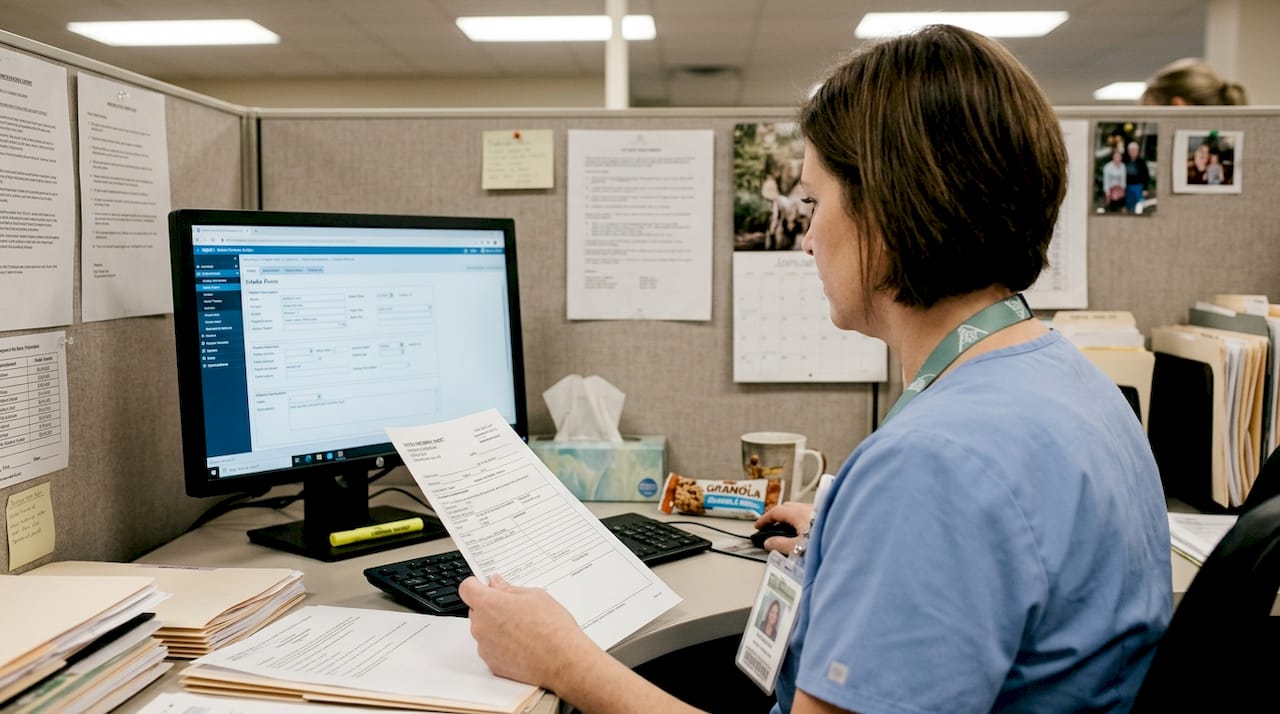
Staff bandwidth liberation transforms how admissions teams allocate their time and expertise. Automation handles 60% of routine data processing, freeing staff to focus on patient communication, care coordination, and complex case evaluation. Facilities report that admissions coordinators spend more time building hospital relationships and less time chasing missing documents. This shift improves job satisfaction and reduces turnover in high-stress roles.
Cost savings from reduced empty bed days deliver substantial financial impact. Each day a bed remains unfilled represents lost revenue, and manual intake delays extend these gaps. Automated systems decrease empty bed days by 15 to 20%, translating to thousands of dollars saved monthly for typical facilities. Faster processing means patients arrive sooner, improving both occupancy rates and revenue predictability.
Patient outcome improvements emerge from faster, more accurate admissions processes. When facilities admit patients quickly with complete medical information, care teams can initiate appropriate treatment immediately. This reduces complications, shortens stays, and lowers readmission rates. Facilities using intake automation healthcare admissions report better patient satisfaction scores and improved clinical outcomes.
Pro Tip: Track processing time per referral before and after automation implementation to quantify efficiency gains and justify ongoing investment in AI in healthcare admissions streamline patient intake technology.
How automation streamlines intake processes
Understanding the technical mechanisms behind automated intake helps administrators evaluate solutions and optimize implementation. Modern systems combine multiple technologies to replicate and enhance human data processing capabilities.
Optical character recognition and natural language processing form the core extraction engine. AI extracts data from faxes, portals, and EMRs via OCR and NLP, with real-time insurance verification and EHR integration. OCR digitizes printed and handwritten documents while NLP interprets medical terminology, abbreviations, and unstructured clinical notes. This combination handles the document variety typical in healthcare referrals.
Parallel processing architecture enables high-volume handling without proportional staff increases. Traditional intake requires one coordinator per referral at a time, creating linear capacity constraints. Automated systems process dozens of referrals simultaneously, analyzing documents, verifying insurance, and populating intake forms in parallel. This scalability means facilities can handle referral surges without overtime costs or delayed responses.
Real-time insurance verification prevents payment delays that extend admission timelines. The system queries payer databases instantly to confirm coverage, identify authorization requirements, and flag potential reimbursement issues. This front-loaded verification eliminates surprises during the billing cycle and reduces claim denials from eligibility problems.
Intelligent routing ensures referrals reach appropriate staff based on patient needs, bed availability, and care specialization. The system evaluates clinical complexity, insurance type, and facility capacity to assign each referral optimally. High-priority cases requiring immediate attention get flagged, while routine admissions flow through standard channels. This orchestration prevents referrals from getting lost and ensures timely follow-up.
Seamless EHR integration automates data transfer between intake and clinical systems. Rather than requiring staff to manually enter information twice, automation populates patient records directly from verified referral data. This integration creates complete audit trails showing data provenance and changes, supporting compliance requirements. Facilities pursuing how to integrate EMR with referrals benefit from reduced errors and improved care coordination.
Pro Tip: Pilot automated intake with a subset of referral sources to validate extraction accuracy and integration reliability before full deployment across all admission channels.
Balancing automation with human oversight
While automation delivers substantial benefits, healthcare administrators must recognize its limitations and maintain appropriate human involvement in clinical decision-making. A balanced approach maximizes efficiency gains while preserving quality and safety.
Automation bias and complacency represent real risks when staff over-rely on system outputs. Automation requires human oversight to avoid risks like complacency, algorithmic bias, and ensures handling of complex clinical nuances. Coordinators may stop questioning extracted data or skip verification steps, assuming the system is always correct. Regular training and spot-checking protocols help maintain healthy skepticism and catch the occasional error.
Complex clinical assessments demand human expertise that current AI cannot replicate. Patients with rare conditions, conflicting medical histories, or unusual social situations require experienced clinical judgment. Automated systems should flag these cases for manual review rather than attempting algorithmic decisions. Facilities must define clear criteria for when automation hands off to human experts.
Algorithm validation against real-world data ensures system accuracy across diverse patient populations. Before deployment, test the system with historical referrals representing your facility’s typical case mix. Monitor extraction accuracy by diagnosis type, payer category, and document source. Ongoing validation catches model drift and identifies scenarios requiring algorithm refinement.
Regulatory compliance and data privacy safeguards must meet or exceed manual process standards. Automated systems handle sensitive health information and must implement appropriate access controls, encryption, and audit logging. Ensure your solution provides business associate agreements covering HIPAA obligations and supports compliance with state-specific privacy regulations.
Hybrid models combining AI speed with human expertise deliver optimal results for most facilities. Automation handles routine extractions, verifications, and data entry while staff focus on relationship building, complex case evaluation, and care coordination. This division of labor plays to each party’s strengths. Administrators implementing clinical assessment automation what to automate and what to keep manual report the best outcomes with this balanced approach.
“The goal of automation in healthcare admissions is not to replace human judgment but to amplify it by eliminating repetitive tasks and surfacing the cases that truly need expert attention.”
Streamline your skilled nursing admissions with Smart Admissions
Smart Admissions delivers the automated intake capabilities discussed throughout this article, helping skilled nursing and rehabilitation facilities reduce processing time, improve accuracy, and optimize bed occupancy. Our AI-powered platform integrates seamlessly with existing EMR systems to extract referral data, verify insurance eligibility, and route patients to appropriate care teams.
Facilities using Smart Admissions report dramatic improvements in admission speed and staff efficiency. Explore referral management systems examples to see how leading providers structure their intake workflows. Learn benefits of automating admissions and discover why facilities achieve 20% faster bed occupancy with our platform. Our solutions support compliance requirements while reducing the administrative burden on your admissions team. Get started with healthcare admissions automation that scales with your facility’s needs.
FAQ
What are the main benefits of automated intake in skilled nursing facilities?
Automated intake reduces referral processing time from 45 minutes to approximately 5 minutes, enabling same-day admission decisions. The technology achieves near-perfect data accuracy, eliminating transcription errors that delay admissions and create billing complications. Facilities save substantial costs by decreasing empty bed days by 15 to 20%, improving both occupancy rates and revenue predictability. Automation also frees up to 60% of staff bandwidth, allowing admissions coordinators to focus on patient communication and complex case evaluation rather than repetitive data entry.
How does automated intake reduce staff burnout?
By eliminating repetitive data entry and document chasing, automated systems reduce staff burnout and allow focus on patient care, improving satisfaction. Admissions coordinators spend less time on administrative tasks and more time building relationships with referral sources and supporting patient transitions. This shift from clerical work to meaningful patient interaction improves job satisfaction and reduces turnover in high-stress admissions roles. Staff report feeling more valued when their expertise is applied to complex problem-solving rather than routine processing.
Can automated intake ensure compliance with CMS and HIPAA regulations?
Automated systems standardize documentation processes and maintain comprehensive audit trails that demonstrate compliance with regulatory requirements. The technology improves compliance with PDPM and CMS, reduces audit risks, provides audit trails, and ensures HIPAA compliance through encrypted data handling and access controls. Automated workflows enforce consistent data collection that meets PDPM assessment requirements while generating the documentation CMS expects during surveys. Facilities benefit from reduced compliance risk compared to manual processes where documentation gaps and inconsistencies are common.
What types of documents can automated intake systems process?
Modern automated intake platforms handle diverse document formats including faxed referrals, PDF attachments, portal submissions, and direct EMR feeds. The systems use optical character recognition to digitize printed and handwritten documents while natural language processing interprets medical terminology and clinical notes. This versatility means facilities can accept referrals through multiple channels without requiring source standardization. The technology adapts to your existing referral ecosystem rather than forcing changes on hospital partners and other referral sources.
How long does it take to implement automated intake in a skilled nursing facility?
Implementation timelines vary based on facility size, EMR complexity, and integration requirements, but most facilities complete deployment within 4 to 8 weeks. The process includes system configuration, EMR integration setup, staff training, and pilot testing with a subset of referrals. Facilities should plan for an initial validation period where staff compare automated extractions against manual review to verify accuracy before full deployment. Ongoing optimization continues as the system learns from your specific referral patterns and document types, with measurable efficiency gains typically visible within the first month of operation.