
TL;DR:
- Workflow redesign effectively reduces staff burnout, turnover, and improves patient care quality.
- Addressing friction points like documentation, communication, and role clarity is crucial.
- Ongoing measurement and leadership commitment sustain long-term improvements in healthcare settings.
Staff burnout in healthcare facilities is not just a morale issue. It drives up turnover costs, degrades patient care quality, and creates a cycle that becomes harder to break the longer it goes unaddressed. For administrators at skilled nursing facilities and post-acute care providers, the pressure is especially acute: your admissions and clinical staff handle complex, high-volume work with limited time and frequent interruptions. The good news is that workflow redesign offers one of the most effective and measurable paths forward. This guide delivers research-backed steps to help your team build more sustainable, efficient workflows.
Table of Contents
- Understanding staff burnout and workflow’s role
- Prepare: Critical elements for designing better workflows
- How to implement an optimized admissions workflow
- Verifying success and sustaining gains
- Why focusing on workflow, not resilience, is the real game-changer
- Take the next step: Streamline your admissions with SmartAdmissions
- Frequently asked questions
Key Takeaways
| Point | Details |
|---|---|
| Target workflows first | Redesigning organizational workflows is more effective than resilience training for reducing burnout. |
| Delegate administrative tasks | Assign non-clinical work to support staff to free up clinicians for patient care and boost morale. |
| Leverage digital tools | Using electronic medical records and workflow automation relieves administrative burdens and enables efficiency. |
| Involve your team | Engage staff in workflow design, gather regular feedback, and calibrate changes for sustainable improvement. |
| Measure and adapt | Track burnout metrics, patient outcomes, and staff input to ensure changes deliver lasting results. |
Understanding staff burnout and workflow’s role
Burnout in healthcare is a specific, recognized condition. It manifests as emotional exhaustion, depersonalization (a feeling of disconnect from patients and colleagues), and a reduced sense of personal accomplishment. When your admissions coordinator dreads opening the referral queue first thing in the morning, or when your nursing staff stays late to finish documentation that should have been completed hours earlier, those are early indicators of burnout taking hold.
The organizational and financial consequences are significant. Facilities experiencing high burnout see increased absenteeism, higher turnover rates, and measurable declines in patient satisfaction scores. Replacing a single experienced nurse can cost anywhere from 75% to 200% of their annual salary once recruitment, onboarding, and lost productivity are factored in.
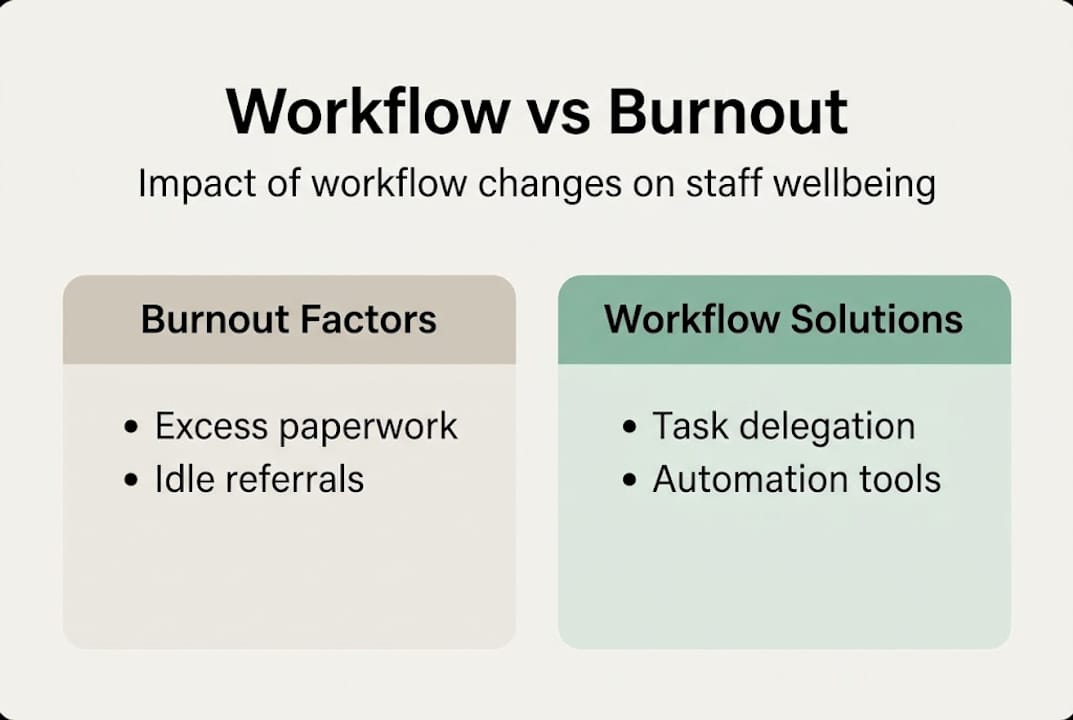
What makes workflow design so important is that it sits at the intersection of the problem and the solution. Poor workflow design creates the conditions for burnout: excessive documentation requirements, unclear role boundaries, repetitive manual tasks, and fragmented communication. Redesigning those workflows removes the friction that exhausts your staff.
Research confirms this clearly. Organizational-level interventions are more effective than individual approaches at reducing burnout, meaning that asking staff to practice resilience or attend mindfulness sessions without fixing the underlying systems produces limited, short-lived results. The most effective approach targets the system itself.
| Intervention type | Focus area | Effectiveness | Duration of impact |
|---|---|---|---|
| Workflow redesign | System-level processes | High | Long-term |
| Task delegation | Role clarity and distribution | High | Long-term |
| Resilience training | Individual coping | Moderate | Short-term |
| Mindfulness programs | Individual stress management | Low to moderate | Short-term |
| EMR optimization | Documentation efficiency | High | Long-term |
Common workflow stressors in skilled nursing and post-acute care include:
- Excessive documentation that pulls clinicians away from direct patient care
- Role confusion when admissions tasks fall on clinical staff without clear assignment
- Manual referral processing that creates delays and redundant data entry
- Lack of automation for eligibility verification, insurance checks, and intake forms
- Fragmented communication between admissions, clinical, and administrative teams
Each of these stressors is addressable. And each one you remove reduces the cumulative load that pushes staff toward burnout.
Prepare: Critical elements for designing better workflows
Now that we see why workflow matters, it’s time to identify what you’ll need to implement meaningful change. Successful workflow redesign is not about overhauling everything at once. It starts with a clear-eyed assessment of where friction currently lives in your processes.
The four core areas you need to evaluate are:
- Admissions and intake processes: How referrals arrive, who reviews them, how long decisions take, and where handoffs occur
- Documentation practices: What gets documented, by whom, on what system, and how much is duplicated or redundant
- Team role definitions: Whether administrative tasks are handled by the right roles, or defaulted to clinical staff who should be focused on care
- Digital tools in use: Whether your current EMR, referral platforms, and communication tools support or complicate the workflow
Pro Tip: Before changing any technology, map your current admissions journey from the moment a referral arrives to the moment a patient is admitted. Interview the staff who handle each step. You will almost always find bottlenecks that no one has formally named yet, and those are your highest-priority targets for change.
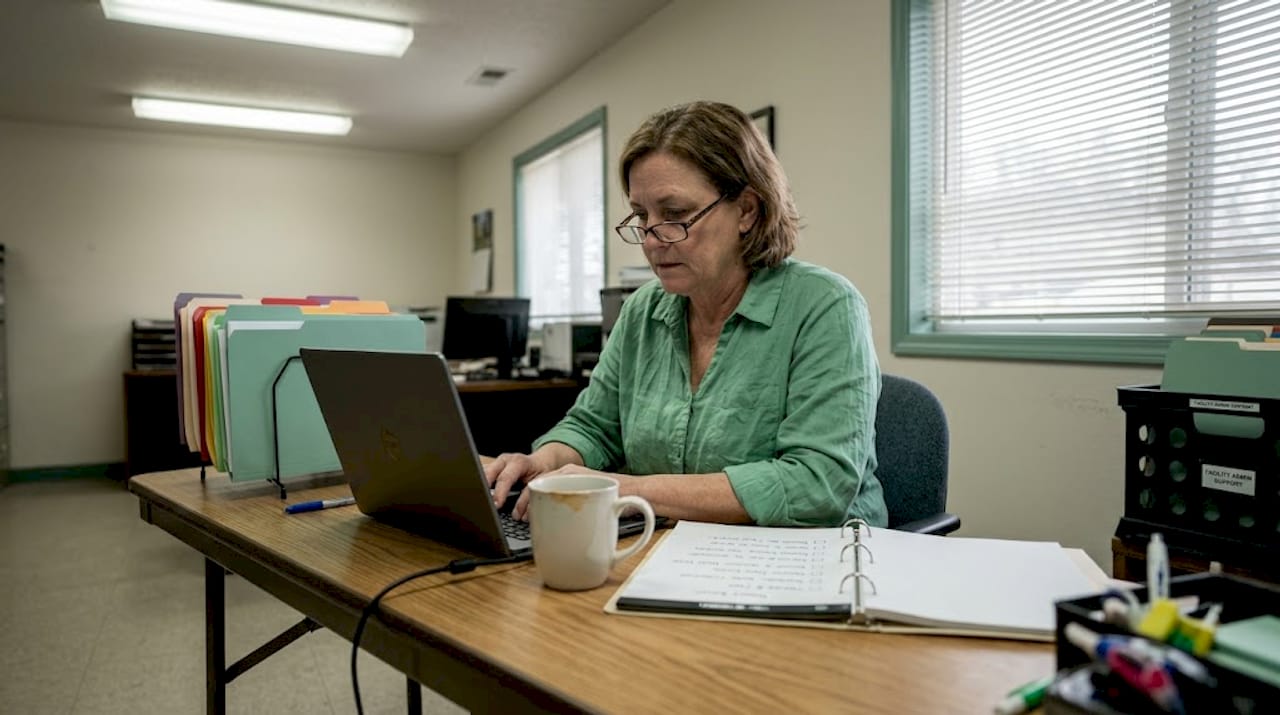
One of the most impactful early changes many facilities make is task redistribution. When clinical staff spend significant portions of their shifts on administrative work, it wastes their specialized skills and accelerates burnout. Delegating administrative tasks and properly leveraging EMRs relieves clinicians and directly reduces burnout scores. This means assigning insurance verification, intake paperwork, and referral coordination to trained administrative support roles rather than defaulting those tasks to nurses or therapists.
Digital tools also play a foundational role. Platforms that enable EMR and referral integration eliminate the need for manual data re-entry across systems, reduce the risk of errors, and speed up the information flow your team needs to make faster admission decisions. Reviewing workflow automation examples from similar facilities gives you a realistic picture of what’s achievable before you commit to any changes.
| Workflow element | Key roles involved | Technology needed | Priority level |
|---|---|---|---|
| Referral intake | Admissions coordinator | Referral management platform | High |
| Insurance eligibility | Administrative support | EMR with payer portal integration | High |
| Clinical assessment review | Director of nursing | Integrated clinical data tools | High |
| Documentation completion | Clinical and administrative staff | EMR with automation features | Medium |
| Bed assignment and coordination | Admissions and operations | Real-time occupancy tracking | Medium |
How to implement an optimized admissions workflow
With the right foundation, you’re ready to make targeted workflow changes. Here’s how to execute step by step.
Step 1: Assess your current workflow in detail
Pull data on how long each stage of admissions takes. Track where referrals sit idle, where staff spend the most time, and where errors or rework happen most often. Use this data as your baseline so you can measure improvement later. Involve frontline staff in this assessment. They know exactly where the process breaks down.
Step 2: Reassign tasks to appropriate roles
Create a clear task matrix that assigns each step of the admissions workflow to a specific role. Administrative tasks go to administrative staff. Clinical review goes to clinical leads. No step should default to whoever is available. Role clarity reduces stress and prevents the overloading of any single team member.
Step 3: Digitize and automate documentation
Identify every form, checklist, or data entry task that is currently done manually and evaluate which ones can be automated. Automated eligibility verification, pre-filled intake forms from referral data, and digital signature collection are practical starting points. These changes alone can save hours per admission and free staff to focus on higher-value tasks.
Step 4: Involve all staff in the redesign process
Workflow changes imposed top-down without staff input often fail or create new friction. Hold structured sessions where admissions coordinators, nurses, and administrative staff can flag problems with proposed changes before rollout. This builds buy-in and catches issues early.
Step 5: Build a continuous feedback loop
Set a regular cadence, perhaps monthly at first, to review how the new workflow is performing. Collect structured feedback from staff on what is working and what isn’t. Use burnout screening tools such as the Maslach Burnout Inventory (MBI) to track emotional exhaustion and engagement over time.
“Team-based workflow and role clarity lead to high engagement and retention rates.”
Real-world results back this approach. Virginia Mason Kirkland Clinic’s team-based workflow redesign, which integrated medical assistants and pharmacists into structured roles, reduced intent to leave to below 7%, achieved 93% staff content engagement, and generated $15 million in savings. These are not abstract outcomes. They reflect what happens when workflow design is treated as a strategic priority rather than an administrative afterthought.
Similarly, the Magnet4Europe program’s Magnet model intervention demonstrated reduced nurse burnout and intent to leave, along with measurable improvements in care quality and safety metrics. The model’s emphasis on shared governance and clear role structures provides a replicable framework for post-acute and skilled nursing environments.
Pro Tip: Build documentation pauses into your clinical schedule rather than expecting staff to catch up at the end of a shift. When documentation is completed in real time, immediately after each patient interaction or intake step, accuracy improves and after-hours workload drops significantly.
Reviewing workflow automation best practices and applying workflow efficiency strategies from facilities similar to yours can accelerate the implementation process and help you avoid common pitfalls.
Verifying success and sustaining gains
Once you’ve implemented a new workflow, it’s crucial to know whether it’s working and keep the momentum alive. Without structured measurement, it’s easy to assume improvement is happening when staff are simply adapting to a new version of the same problem.
Use these specific metrics to track progress:
- Maslach Burnout Inventory (MBI) scores: Measure emotional exhaustion, depersonalization, and personal accomplishment before and after changes
- Staff turnover and retention rates: Track whether fewer staff are leaving over a 6 to 12 month period
- Admissions cycle time: Measure how long it takes from referral receipt to admission decision
- Documentation completion rates: Track whether documentation is being completed on time and by the right roles
- Staff engagement survey results: Use pulse surveys to capture morale and workload perceptions monthly
- Patient satisfaction scores: Improvement in staff conditions typically correlates with improved patient experience
- Bed fill rates and occupancy: Faster, smoother admissions directly support higher occupancy
Post-intervention surveys are especially valuable. They provide direct evidence of whether staff experience their workload as more manageable, and they surface issues that data alone won’t reveal. If your MBI scores show that emotional exhaustion has dropped but depersonalization remains high, that tells you something specific: the workload may be lighter, but staff still feel disconnected, which may indicate a culture or communication issue to address next.
Sustained improvements require leadership buy-in, regular feedback, and culture change in addition to workflow tweaks. This is a critical point. Administrators who treat workflow redesign as a one-time project rather than an ongoing commitment will see gains plateau or reverse within 12 to 18 months. Sustaining results means building a culture where staff feel comfortable raising workflow problems, where leaders respond to that feedback with action, and where process improvement is a regular agenda item rather than a crisis response.
Track your workflow efficiency metrics consistently and share results transparently with your team. When staff see that their feedback leads to real changes, engagement increases and the feedback loop strengthens.
| Metric | Measurement method | Review frequency |
|---|---|---|
| MBI burnout scores | Validated survey tool | Quarterly |
| Staff turnover rate | HR data | Monthly |
| Admissions cycle time | System timestamps | Weekly |
| Documentation completion | EMR audit reports | Weekly |
| Bed fill rate | Occupancy tracking | Daily |
| Staff pulse survey | Anonymous survey tool | Monthly |
Why focusing on workflow, not resilience, is the real game-changer
Here’s where most advice gets it wrong. The majority of burnout reduction efforts in healthcare still center on individual interventions: mindfulness apps, employee assistance programs, resilience workshops. These are not without value. But they treat burnout as a personal failing rather than a systems problem, and that framing leads to investments that produce minimal, short-lived results.
The evidence is direct. Organizational-level interventions drive longer-term, widespread reductions in healthcare staff burnout compared to resilience or mindfulness training alone. Yet the default response at many facilities when burnout surfaces is to schedule another wellness seminar, not to audit the admissions intake process.
The uncomfortable truth is this: if your admissions coordinator is manually re-entering the same patient data across three systems, no amount of meditation will make that task less exhausting. If your nurses are finishing documentation at 8 PM because the workflow doesn’t allow time during the shift, stress management training will not close that gap.
What does close the gap is assigning administrative work to people trained and positioned to handle it, integrating your workflow automation perspective into actual operational decisions, and using technology to eliminate the repetitive manual tasks that consume time and cognitive energy without adding clinical value.
Healthcare leaders who make this shift see something consistent: when the friction in daily work decreases, engagement rises on its own. Staff who feel that their time is respected and their roles are clear are less likely to leave, more likely to deliver high-quality care, and better positioned to handle the genuine complexity of their jobs. That is the outcome worth pursuing.
Take the next step: Streamline your admissions with SmartAdmissions
If you’re ready to apply what you’ve learned, here’s where SmartAdmissions can help you accelerate results. Redesigning your admissions workflow is far more achievable when you have purpose-built tools supporting each step of the process.
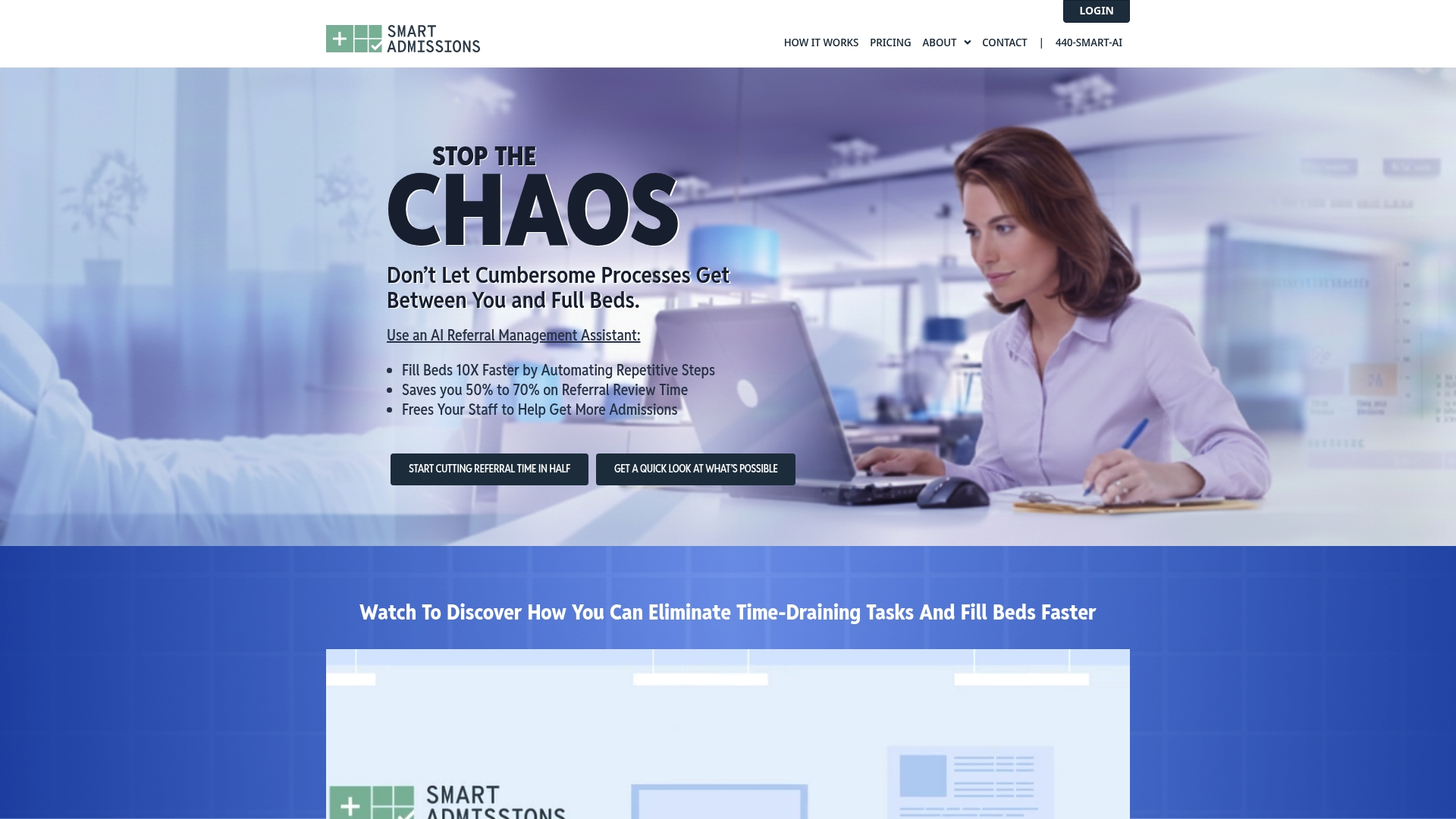
SmartAdmissions is built specifically for skilled nursing facilities, rehabilitation centers, and post-acute care providers. Our AI-powered referral management platform automates eligibility verification, streamlines intake documentation, and integrates directly with your existing EMR so your team spends less time on manual data entry and more time on high-value work. Start with our admissions workflow guide to see how a structured intake process reduces staff workload from day one. Explore referral system examples to understand what an optimized referral process looks like in practice. And review the workflow automation benefits that facilities like yours are already experiencing. Your team’s workload does not have to stay this heavy.
Frequently asked questions
What are the first signs of staff burnout in healthcare?
Early warning signs include emotional exhaustion and reduced efficacy, alongside increased absenteeism, lower job satisfaction, and declining care quality.
Which workflow changes have the biggest impact on reducing burnout?
Delegating administrative tasks and properly leveraging EMRs are among the highest-impact changes, alongside digitizing documentation and adopting team-based workflow models.
How soon can facilities expect improvements after workflow interventions?
Post-intervention surveys from workflow redesign studies show decreased staff workload and burnout within several months of consistent implementation.
Do workflow changes help during crisis periods like pandemics?
Yes. During major healthcare surges, the Magnet model still reduced burnout and improved care quality and safety, demonstrating that organized workflow models sustain benefits even under extraordinary pressure.
How can leadership sustain workflow improvements long-term?
Long-term success depends on consistent leadership commitment, structured feedback processes, and a willingness to adapt workflows continuously as staff needs and operational conditions evolve.