
TL;DR:
- Manual patient intake wastes staff time, increases errors, and reduces revenue.
- Digital automation streamlines intake, cuts processing time, and improves data accuracy.
- Implementing automated intake enhances staff satisfaction, patient experience, and financial performance.
Manual patient intake is costing skilled nursing and rehabilitation facilities far more than most administrators realize. Every paper form, duplicate data entry, and unverified insurance record adds friction to a process that directly affects bed occupancy, revenue, and staff morale. Facilities that rely on outdated intake workflows lose hours per admission to avoidable delays, while competitors using digital and AI-powered tools are filling beds faster and retaining staff longer. This article gives you a clear, evidence-based roadmap for understanding the real costs of inefficient intake, how streamlining transforms your admissions process, and what practical steps your team can take to see measurable results.
Table of Contents
- The high cost of inefficient patient intake
- How streamlining intake transforms admissions
- Benefits for skilled nursing and rehab facilities
- Implementation strategies and key considerations
- Hard-won lessons: What actually matters for intake success
- Take the next step: More resources for streamlined admissions
- Frequently asked questions
Key Takeaways
| Point | Details |
|---|---|
| Drastic time savings | Automating intake reduces staff workload by up to 65% and significantly cuts patient wait times. |
| Boosted revenue | Streamlined intake speeds up admissions, increases bed occupancy, and drives higher up-front collections. |
| Error reduction | Automation enhances data accuracy and sharply cuts denied claims and billing oversights. |
| Improved satisfaction | Faster, digital-first intake boosts both patient and staff satisfaction and creates better first impressions. |
The high cost of inefficient patient intake
The numbers are hard to ignore. Manual intake wastes 8-10 minutes per patient on data entry alone, and that figure compounds across dozens of admissions each week. For a facility processing 20 referrals weekly, that translates to over 3 hours of staff time lost to a task that automation can eliminate entirely. Multiply that across a year, and you are looking at hundreds of hours redirected away from patient care.
Beyond time, the financial impact is significant. Delays from slow referral intake can mean hours lost per case and directly reduce bed occupancy rates. An empty bed is lost revenue. When intake bottlenecks slow your admissions team, you risk losing referrals to competing facilities that can respond and confirm placement faster.
The most common inefficiencies in traditional intake include:
- Duplicate data entry across paper forms, spreadsheets, and EHR systems
- Incomplete documentation that delays clinical review and insurance verification
- Unverified insurance status leading to claim denials after admission
- Unstructured fax data that requires manual reading and transcription
- Error-prone handoffs between referral coordinators, clinical staff, and billing
These inefficiencies also affect patients and families. Long waits for admission confirmation create anxiety during an already stressful transition. Families want answers quickly, and delays signal disorganization, even when your clinical care is excellent.
| Intake method | Time per admission | Error rate | Claim denial risk |
|---|---|---|---|
| Manual/paper | 60-90 minutes | High | Elevated |
| Partial digital | 30-50 minutes | Moderate | Moderate |
| Fully automated | 10-20 minutes | Very low | Minimal |
“Inefficient intake is not just an operational inconvenience. It is a direct threat to revenue, staff retention, and the patient experience your facility works hard to deliver.”
Addressing these problems starts with understanding what streamlining administrative tasks actually looks like in practice. With the problem set, let’s look at what streamlined intake really means and how it works.
How streamlining intake transforms admissions
Streamlining patient intake means replacing manual, paper-based steps with digital tools, automation, and system integration. It is not about removing the human element. It is about giving your team better tools so they spend time on decisions, not data entry.
Here is how a modernized intake process works step by step:
- Digital collection: Patients or referral sources submit information via secure digital forms sent by SMS or email, eliminating paper and illegible handwriting.
- AI-powered data extraction: AI reads unstructured documents like faxed referral packets. AI can process a 50-page referral in under 5 minutes, compared to 30 or more minutes manually.
- Real-time insurance verification: The system checks eligibility instantly against payer databases, flagging issues before admission rather than after.
- EHR/EMR integration: Data flows directly into your existing electronic health record system, eliminating duplicate entry and reducing transcription errors.
- Clinical decision support: Automated scoring and alerts help your team prioritize complex cases and make faster accept or decline decisions.
- Documentation management: All records are stored, organized, and audit-ready, supporting HIPAA compliance across single and multi-location settings.
The results of this transformation are measurable. Digitizing forms saves 10 minutes per patient, and integration cuts decision time by up to 90%. Digital intake tools boost data accuracy and reduce claims denial rates, which directly protects your revenue cycle.
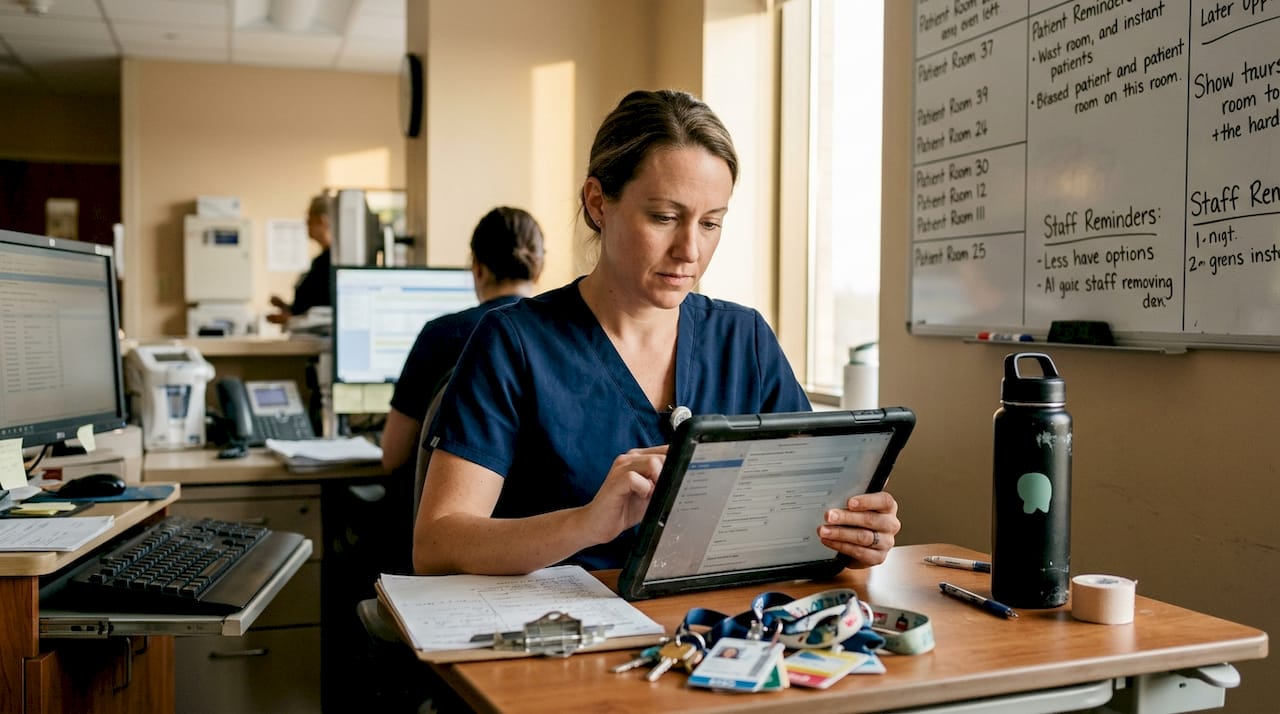
For facilities serving elderly or tech-novice populations, inclusivity matters. Offer staff-assisted digital completion, printed backup options, or simple guided prompts. The goal is speed and accuracy for your team, not a barrier for your patients.
Explore workflow optimization strategies and intake automation in healthcare to see how other SNF and rehab facilities have applied these steps.
Pro Tip: Do not overhaul your entire workflow at once. Pilot digital intake forms with one referral source or one admission type first. Measure the time savings and error reduction before expanding. Small wins build staff confidence and leadership support.
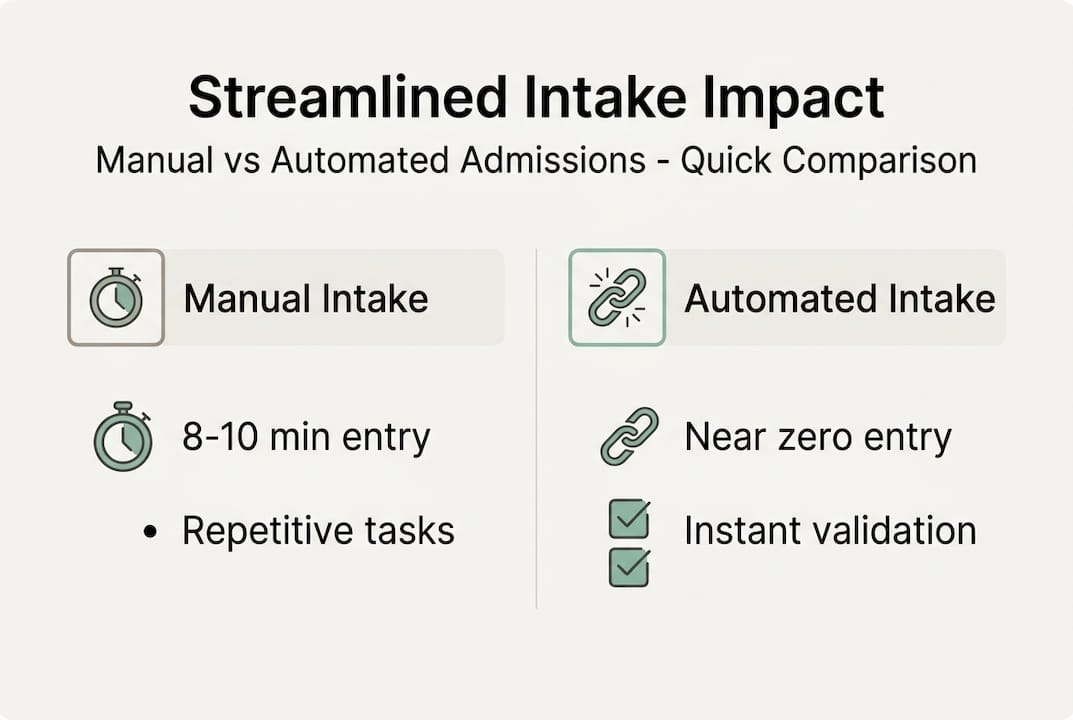
| Factor | Manual intake | Automated intake |
|---|---|---|
| Data entry time | 8-10 min per patient | Near zero |
| Insurance verification | 1-2 days | Real-time |
| Error rate | High | Very low |
| Staff satisfaction | Lower | Higher |
With the transformation defined, let’s look at the direct, measurable benefits for SNF and rehab facilities.
Benefits for skilled nursing and rehab facilities
The return on investment from streamlining intake is visible across three areas: staff performance, financial outcomes, and patient experience.
Staff efficiency and burnout reduction
Your admissions coordinators are skilled professionals. When they spend their day re-entering data, chasing fax confirmations, and manually verifying insurance, that skill is wasted. Automated intake saves 3-5 direct hours per admission, freeing your team to focus on clinical assessment, family communication, and care coordination. Reduced administrative burden is one of the most direct ways to address staff burnout in a high-pressure environment.
Financial performance
- Faster bed fill: Streamlining reduces empty bed days by 15-20%, directly increasing revenue per available bed
- Fewer claim denials: Real-time insurance verification catches eligibility issues before admission
- Higher upfront collections: Digital intake enables payment processing at the point of admission
- Better referral conversion: Faster response times mean fewer referrals lost to competing facilities
Review your admissions process optimization options to benchmark your current performance against these targets.
Patient and family experience
Families choosing a skilled nursing or rehab facility are under significant stress. A smooth, fast, and transparent intake process signals competence and care. Facilities that have streamlined intake report 97% patient satisfaction rates, compared to significantly lower scores in facilities still using paper-based processes.
Standout statistics your team should know:
- 65% reduction in staff time per admission after digital intake implementation
- 90% faster processing for complex, multi-document referral cases
- 97% patient satisfaction reported by facilities using streamlined intake tools
- 3x higher upfront collection rates at the point of admission
Pro Tip: Set up a simple KPI dashboard tracking three metrics from day one: average processing time per admission, referral-to-bed conversion rate, and claim denial rate. These three numbers will tell you whether your intake changes are working and where to focus next. Browse workflow improvement ideas for additional metrics worth tracking.
The benefits are clear. Now let’s look at how your facility can implement these changes effectively.
Implementation strategies and key considerations
A successful intake transformation follows a clear sequence. Skipping steps, especially the assessment and pilot phases, is the most common reason facilities stall or revert to old habits.
- Assess your current workflow: Map every step from referral receipt to bed assignment. Identify where time is lost, where errors occur, and where staff frustration is highest. This baseline is essential for measuring improvement.
- Select the right tools: Prioritize solutions with EMR integration, real-time insurance verification, AI-based document processing, and HIPAA-compliant data storage. Avoid platforms that require heavy IT customization.
- Pilot with one referral source: Choose a high-volume or high-complexity referral partner and run a 30-day pilot. Track processing time, error rates, and staff feedback closely.
- Integrate with existing systems: Ensure your intake platform connects with your EHR, insurance portals, and billing systems. Multi-site consistency and compliance require seamless data flow, not manual exports.
- Train your team and build buy-in: Share early wins openly. When staff see that processing time dropped by 40% in week two of the pilot, skepticism fades. Transparency about outcomes drives cultural adoption.
- Expand and optimize: Once the pilot proves results, roll out to all referral sources. Continue tracking KPIs and refining workflows based on real data.
The most common hurdles your team will face include legacy system compatibility, staff resistance to change, and maintaining HIPAA compliance during transition. Integration and staff training challenges are predictable, which means they are manageable with the right planning.
For populations that are not comfortable with digital tools, assign a staff member to guide them through the process. Paper backup options should remain available during the transition period.
Pro Tip: Focus your pilot on one high-volume referral source rather than trying to modernize everything at once. A focused pilot generates cleaner data, faster wins, and stronger evidence to present to leadership.
Explore intake workflow improvement ideas and learn more about automating patient intake to support your planning process.
Hard-won lessons: What actually matters for intake success
Here is what most technology vendors will not tell you: software alone does not fix a broken intake process. Facilities that invest in the best platform but skip workflow discipline and staff engagement see minimal improvement. The technology amplifies whatever process it sits on top of. If your referral review steps are unclear before automation, they will still be unclear after.
The administrators who see the biggest gains share one trait: they lead the change visibly. They share KPI results in team meetings, celebrate time-to-bed improvements, and make it clear that the new process is not optional. Staff mindset shifts when leadership is consistent.
The most overlooked opportunity in intake optimization is the power of saying no faster. Facilities that use automation best practices to screen out incomplete or clinically mismatched referrals before intake begins save significant time and protect bed availability for better-fit patients. Chasing every referral to completion is not efficiency. Qualifying referrals quickly and decisively is.
Avoid the trap of chasing features. A platform with 40 capabilities you will never use is less valuable than one with 10 that your team actually adopts. Poor data cleanup before migration and neglecting patient support during the transition are two other pitfalls that derail otherwise well-planned rollouts.
Take the next step: More resources for streamlined admissions
If this article has reinforced that your intake process needs attention, the next step is to review what is actually possible for your facility size, referral volume, and existing systems.
Smart Admissions offers resources designed specifically for skilled nursing and rehab administrators ready to act. Learn how AI-powered tools drive faster bed occupancy, review the complete intake automation guide to understand implementation options, and explore referral management examples from facilities that have already made the shift. Your team deserves tools that match the complexity of the work they do every day.
Frequently asked questions
How much time can streamlining patient intake actually save per admission?
Digital intake and automation can save up to 65% of staff time per admission, eliminating 8-10 minutes of manual data entry per patient and freeing 3-5 hours of direct staff time per case.
Will automating intake increase data accuracy and reduce claim denials?
Yes. Digital intake solutions use automated validation to achieve near 100% data accuracy, which significantly reduces transcription errors and the claim denials that follow from them.
What features should we prioritize when selecting an intake solution?
Prioritize platforms that include digital forms, AI extraction, EMR integration, real-time insurance eligibility checks, and built-in HIPAA compliance tools. These five capabilities address the most common intake failure points.
How can we support patients who are not tech-savvy or are elderly?
Offer staff-assisted digital completion and maintain printed form options during the transition period to ensure every patient can complete intake comfortably, regardless of their technology comfort level.